Genetic Screening for Huntington’s Disease: Who May Consider Testing and Why

Huntington’s disease is caused by a change in the HTT gene and follows an autosomal dominant inheritance pattern. Genetic testing may be considered by people with symptoms, a family history, or specific reproductive planning goals.
Key Takeaways
- Huntington’s disease is caused by a change in the HTT gene and follows an autosomal dominant inheritance pattern.
- Genetic testing may be considered by people with symptoms, a family history, or specific reproductive planning goals.
- Testing should usually be done with pre-test and post-test genetic counseling.
- A positive test can confirm the gene change but cannot predict exactly when symptoms will begin or how severe they will be.
- Testing minors who do not have symptoms is generally not recommended for adult-onset Huntington’s disease.
- Emotional, social, insurance, and family implications are important parts of the decision-making process.
Genetic screening for Huntington’s disease can help clarify whether a person carries the gene change that causes this inherited neurological condition. Testing is a personal decision that is usually approached with careful genetic counseling, emotional support, and discussion of medical, family, and future planning needs.
Overview: what genetic screening for Huntington’s disease means
Genetic screening for Huntington’s disease refers to testing that looks for a specific change in the HTT gene. Huntington’s disease is an inherited condition that affects the brain and nervous system. It can lead to movement changes, thinking and memory difficulties, and emotional or behavioral symptoms over time.
The condition is passed down in an autosomal dominant pattern. This means a child of a parent with the gene change has a 50% chance of inheriting it. A genetic test can determine whether that gene change is present, but it does not fully predict when symptoms will appear or exactly how the disease will progress in one person.
For many people, the decision to test is deeply personal. Some want clarity for future planning, while others prefer not to know. Because the result can affect emotional well-being, family relationships, and practical decisions, testing is usually offered as part of a structured process that includes genetic counseling.
Who may consider testing
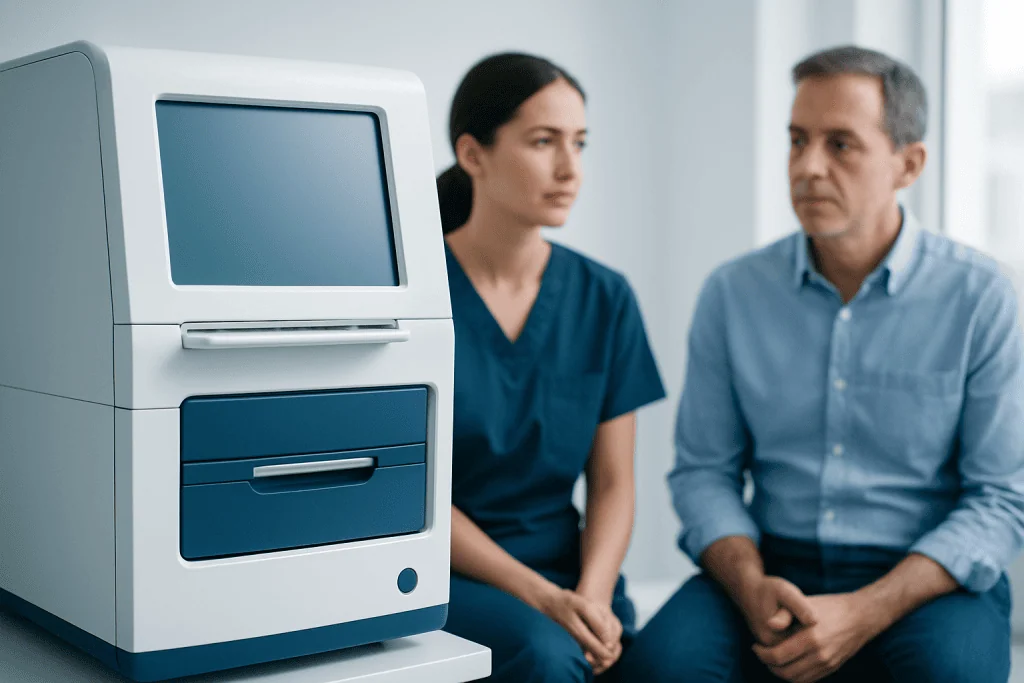
Several groups of people may consider Huntington’s disease genetic testing. One group includes adults who have symptoms that could suggest Huntington’s disease, especially if there is a known family history. In this setting, testing may help confirm a diagnosis and guide next steps in care.
Another group includes adults who do not have symptoms but know that Huntington’s disease runs in their family. This is called predictive or presymptomatic testing. Some people choose it to reduce uncertainty, make personal or financial plans, or think through work, relationships, and future care decisions.
Testing may also be considered by people who are planning a pregnancy and want to understand the chance of passing the condition to a child. In these situations, healthcare professionals may discuss reproductive options and referral to specialists in genetics or fertility care.
In most cases, children who do not have symptoms are not routinely tested for adult-onset Huntington’s disease. This approach helps protect the child’s future ability to make an informed choice as an adult, unless there is a strong medical reason to investigate symptoms that suggest juvenile-onset disease.
Why people choose testing—and why some choose not to

People seek testing for different reasons. Some feel that having a clear answer helps them regain a sense of control. Knowing their status may support decisions about education, career plans, long-term finances, relationships, or whether and when to have children.
Others pursue testing because uncertainty itself is difficult to live with. A result may also help explain symptoms that have already begun. When a person has changes in movement, mood, or thinking, genetic testing can be one part of a broader evaluation for Huntington’s disease.
At the same time, some people decide not to be tested. They may feel that knowing would increase anxiety, affect family dynamics, or create concerns about privacy and future planning. This choice is also valid. Genetic counseling is designed to help people consider both the possible benefits and the possible burdens before making a decision.
There is no single “right” choice for everyone. The best approach is one that matches the person’s values, readiness, support system, and reasons for wanting or avoiding the information.
How Huntington’s disease genetic testing works
The test usually involves a blood sample, although other sample types may sometimes be used. A laboratory analyzes the HTT gene to look for an expanded CAG repeat, which is the genetic change associated with Huntington’s disease. The number of repeats helps doctors interpret whether the result is normal, intermediate, reduced penetrance, or fully penetrant.
These categories can be complex, which is one reason specialist counseling is so important. In general, a clearly expanded repeat range is associated with developing the disease during a person’s lifetime, while some intermediate or borderline results may be less straightforward and can raise questions about future risk in the person or their children.
Testing is not only about the laboratory result. The full process often includes a neurological assessment, a detailed family history, and discussion of emotional readiness and support. When symptoms are present, doctors may also use neurological examination, cognitive assessment, and sometimes MRI imaging or other tests to rule out other causes of symptoms.
For those considering predictive testing, many centers follow a stepwise protocol. This often includes at least one counseling visit before the sample is taken and a separate visit to review the result in a supportive setting.
Understanding the results and their limits
A positive result means the disease-causing gene expansion has been found. In a person with symptoms, this can confirm the diagnosis. In a person without symptoms, it means they are at risk of developing Huntington’s disease in the future, but it still does not give a precise timeline for when symptoms will begin.
A negative result means the person did not inherit the Huntington’s disease gene expansion that is present in their family. This can bring relief, but it may also lead to complicated emotions, including guilt toward affected relatives. Emotional follow-up after results can be just as important as support before testing.
Some results fall into a less clear range. These may not allow definite predictions about symptom development, especially in asymptomatic people. In addition, the test cannot accurately forecast how symptoms will affect movement, thinking, mood, independence, or daily life in one individual.
When symptoms are already present, doctors may combine the genetic result with clinical evaluation and supportive services such as neurological rehabilitation planning. Huntington’s disease care often involves long-term follow-up rather than a one-time test result.
The role of genetic counseling and emotional support
Genetic counseling is a central part of responsible Huntington’s disease testing. A genetic counselor or trained physician explains inheritance, possible results, limitations of testing, and how the outcome may affect the individual and their family. This conversation helps make sure consent is informed and thoughtful.
Counseling also creates space to discuss emotional preparedness. Learning one’s genetic status can bring relief, grief, fear, anger, or mixed feelings. Reactions can change over time, and even people who expect a certain result may find the experience more intense than anticipated.
Practical topics are also important. These may include family communication, future care planning, reproductive choices, and concerns related to privacy, employment, or insurance depending on local laws and policies. A counselor can help people think through what they want to do with the information before they receive it.
Many people benefit from involving a trusted partner, family member, or friend in the process. Some also choose support from a psychologist, psychiatrist, or social worker, especially if there is a history of anxiety, depression, trauma, or family conflict.
Diagnosis, treatment, and ongoing care after testing
If a person tests positive and has symptoms, the next step is usually a comprehensive evaluation by a neurology team. Huntington’s disease affects more than movement alone, so care may include assessment of mood, sleep, behavior, swallowing, nutrition, speech, cognition, and daily function. This broad approach helps build a treatment plan around the person’s current needs.
There is currently no cure that stops or reverses Huntington’s disease, but treatment can help manage symptoms and support quality of life. Depending on the person’s needs, care may include medicines for movement problems or mood symptoms, speech and swallowing support, physical and occupational therapy, nutrition guidance, and regular neurological follow-up. Some people may also benefit from advanced neurological procedures in selected movement-disorder settings, although this is not standard treatment for Huntington’s disease itself.
Supportive care often changes over time. Early on, the focus may be work, driving, mood, and family planning. Later, attention may shift toward mobility, home safety, communication, and caregiver support. When planning care, clinicians may also consider conditions with overlapping movement features, such as Parkinson’s disease, to make sure symptoms are assessed accurately.
For international patients seeking multidisciplinary neurological care, Acibadem International’s specialists and JCI-accredited hospitals evaluate and treat Huntington’s disease with coordinated support across diagnosis, counseling, rehabilitation, and long-term follow-up.
When to speak with a doctor
A person should consider speaking with a doctor or genetic counselor if Huntington’s disease is known in the family, especially before making a decision about predictive testing. Medical advice is also important if there are symptoms such as involuntary movements, increasing clumsiness, personality changes, depression, memory problems, or difficulty with planning and concentration.
Professional support is particularly helpful before pregnancy planning, after a relative receives a diagnosis, or when family members disagree about sharing genetic information. A clinician can explain available options and help identify the most appropriate testing pathway.
Urgent evaluation is needed if there are serious mental health concerns, suicidal thoughts, unsafe behavior, choking, repeated falls, or rapid worsening of symptoms. In these situations, immediate medical care and mental health support should not be delayed.
Even when there are no symptoms, choosing whether to be tested can feel overwhelming. A specialist team can help the person move step by step, at a pace that feels informed and manageable.
Frequently asked questions
Can genetic screening for Huntington’s disease tell when symptoms will start?
No. The test can show whether the Huntington’s disease gene expansion is present, but it cannot accurately predict the exact age when symptoms will begin. It also cannot fully predict how quickly the condition will progress or which symptoms will be most prominent.
Should someone with a parent who has Huntington’s disease get tested right away?
Not necessarily. Each child of an affected parent has a 50% chance of inheriting the gene change, but testing is a personal choice. Most experts recommend meeting with a genetic counselor first so the person can understand the implications and decide whether they feel ready.
Is Huntington’s disease genetic testing recommended for children?
In general, predictive testing for children without symptoms is not recommended for adult-onset Huntington’s disease. This helps preserve the child’s future autonomy to decide as an adult. Testing may be considered if a child has symptoms that raise concern for juvenile-onset disease and a doctor believes the result would directly affect care.
What is the difference between diagnostic and predictive testing?
Diagnostic testing is used when a person already has symptoms and doctors want to confirm whether Huntington’s disease is the cause. Predictive testing is for adults who do not have symptoms but have a family history and want to know whether they carry the gene change. The laboratory test may be similar, but the counseling process and emotional considerations can differ.
Can a negative test result still bring emotional challenges?
Yes. Although a negative result often brings relief, some people experience survivor guilt, family tension, or difficulty adjusting after years of uncertainty. Ongoing support and counseling can help process these feelings in a healthy way.
Are there treatment options if the test is positive?
A positive result does not mean symptoms will start immediately, and care depends on whether symptoms are present. While there is no cure, treatment can help manage movement, mood, sleep, and daily function. Regular follow-up with a neurologist and supportive therapies can make an important difference.
References
- World Health Organization
- National Institute of Neurological Disorders and Stroke
- National Institute of Mental Health
- Huntington's Disease Society of America
- GeneReviews
This article is for general information only and is not a substitute for professional medical advice. Please consult a qualified doctor about your individual situation.
Oncology care in Turkey — second opinion and treatment plan
JCI-accredited · board-certified surgeons · reply within 24h
Add us as a Preferred Source to see more of our trusted health content across Google Search, AI Overviews and Discover.

More from the Health Library



Related Specialists

Prof. Dr. Hakan Seyisoğlu
Gynecology & Obstetrics
Assoc. Prof. Dr. Hakan Yardımcı
General Surgery
Assoc. Prof. Dr. Işık Türkalp
Clinical Laboratory
Dr. Selim Çepel
Orthopedic Surgery & Traumatology