Get Screening: How It Works, Results and What to Expect

Screening tests look for disease or risk factors in people who may feel well; they do not provide a diagnosis on their own. A normal result can be reassuring, but it does not rule out every condition or remove the need to seek care for new symptoms.
Key Takeaways
- Screening tests look for disease or risk factors in people who may feel well; they do not provide a diagnosis on their own.
- A normal result can be reassuring, but it does not rule out every condition or remove the need to seek care for new symptoms.
- An abnormal screening result often needs repeat testing or diagnostic follow-up and does not necessarily mean a person has a disease.
- Preparation varies by test; patients should ask whether fasting, medication adjustments or avoidance of certain activities is needed.
- The frequency of screening should be individualized according to evidence-based recommendations and personal risk.
- Urgent symptoms should be medically assessed rather than waiting for a routine screening appointment.
To get screening means having recommended health checks or tests before symptoms appear, with the aim of finding certain conditions early or identifying risk factors. The right tests, timing and interpretation depend on age, sex, personal health, family history and lifestyle, so a clinician can help create an appropriate plan.
Overview: What It Means to Get Screening
To get screening is to have a test, examination or questionnaire designed to identify a health condition or a risk factor before it causes noticeable symptoms. Screening can support prevention and earlier treatment, but it is different from diagnostic testing. Diagnostic tests are performed when a person has symptoms, an injury, or a previous result that requires closer investigation.
Examples include blood pressure checks, cholesterol and diabetes blood tests, cervical cancer screening, mammography, colorectal cancer screening, vaccinations reviewed during preventive visits, and assessments for certain infections. Not every test is suitable for every person. The value of a screening test depends on whether it is accurate, whether early detection improves outcomes, and whether the likely benefits outweigh possible harms.
A clinician can consider the person’s age, sex, pregnancy status, medical conditions, medicines, family history, smoking history, previous test results and personal preferences. This helps avoid both missed recommended tests and unnecessary testing.
How Screening Works and Who May Benefit
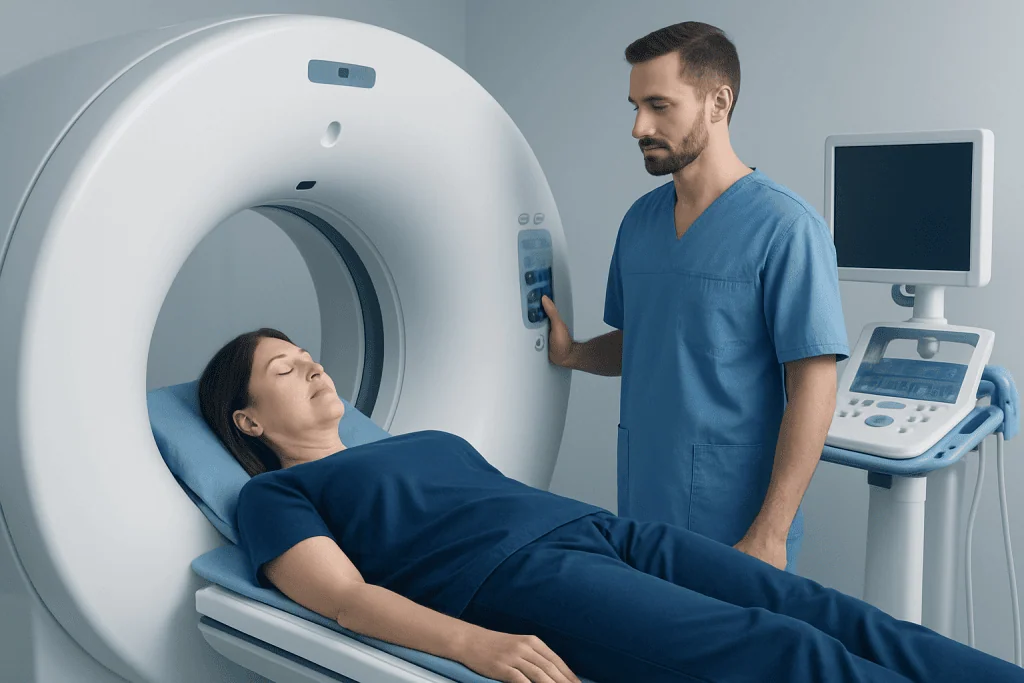
Screening may involve a conversation about health history, a physical examination, a sample of blood, urine or stool, imaging, or a simple measurement such as weight or blood pressure. Some checks are performed in primary care, while others are arranged through specialist services or laboratories. The test chosen should match the condition being assessed and the individual’s level of risk.
People without symptoms may benefit from routine screening at life stages supported by public-health guidance. People with a close relative affected by cancer, heart disease, diabetes, inherited conditions, or other illnesses may need an earlier or more tailored approach. A clinician may also recommend additional checks for those with high blood pressure, obesity, tobacco exposure, occupational exposures, or previous abnormal results.
Screening is not one universal package. Broad testing without a clear reason can produce findings that are not clinically important, leading to anxiety or further procedures. A targeted plan offers a more useful way to get a screening test while keeping decisions focused on individual health needs.
What Not to Do Before Health Screening

Preparation depends on the test. Patients should not assume that fasting is always necessary; many modern blood tests do not require it, while some may. Before the appointment, it is helpful to ask the clinic whether food, alcohol, caffeine, exercise, smoking, supplements or medicines could affect the result.
People should generally not stop prescribed medication without advice from the clinician who manages it. They should bring a current medication and supplement list, relevant previous reports, vaccination information if available, and details of important family health history. Honest information about symptoms, smoking, alcohol use, sexual health and lifestyle enables safer, more accurate recommendations.
For some tests, such as cervical screening or stool-based colorectal screening, there may be specific instructions about timing, menstruation, sexual activity, vaginal products, diet, or sample collection. Following the instructions supplied by the healthcare team helps reduce the chance that a test will need to be repeated.
What Happens During a Screening Test?
Most screening visits begin with registration, confirmation of medical history and a discussion of the reason for testing. A nurse, technician or clinician may measure blood pressure, pulse, height, weight or waist circumference. They may ask about current health, past conditions, family history and whether any symptoms have recently appeared.
The next step depends on the screening method. Blood tests involve a small sample taken from a vein, while urine or stool tests are usually collected in a container and sent to a laboratory. Imaging tests, such as mammography or low-dose CT in selected high-risk groups, use specialized equipment and are performed by trained professionals. Screening examinations may also include visual inspection or a clinician-performed test.
Many screening procedures take minutes, although a full preventive health appointment can take longer if several assessments are planned. Most people can return to usual activities immediately after simple measurements, samples or imaging. If a test requires sedation, a bowel preparation, contrast material or a procedure such as endoscopy, the care team will provide more detailed instructions and recovery guidance.
Screening Results: What Does Screening Result Mean?
A screening result is usually described as normal, negative, abnormal, positive, unclear or requiring follow-up. A normal or negative result means the test did not identify the particular finding it was designed to detect at that time. It can be reassuring, but it is not a guarantee that a condition is absent or will not develop later.
An abnormal or positive result means the test found something that should be assessed further. It may reflect a true health issue, a temporary change, a benign finding, or a false-positive result. Follow-up can include repeating the screening test, having a more specific blood test, imaging, or seeing a relevant specialist. It is important not to interpret an abnormal result as a diagnosis until this evaluation is complete.
How long it takes to get screening results varies. Some measurements are available at the visit, while laboratory or imaging reports may take several days or longer, depending on the test and whether additional review is needed. Patients should ask when and how results will be communicated, and whom to contact if they have not received them within the expected timeframe.
What Is the Downside to Life Line Screening?
The term “life line screening” is often used for commercial packages that offer several tests outside a usual medical visit. The possible downside is that a test may be performed in someone unlikely to benefit from it, or it may identify an uncertain finding that would never have caused harm. This can create worry, extra appointments, costs and sometimes invasive follow-up procedures.
Screening tests also have limitations. A false-positive result suggests a problem when none is present, while a false-negative result fails to detect a problem that is present. Some tests may expose patients to radiation, cause discomfort, or lead to overdiagnosis—finding a slow-growing condition that might not have affected health during the person’s lifetime.
These limitations do not mean that screening is unhelpful. Many evidence-based programs provide important benefits for appropriately selected groups. The safest approach is to discuss any proposed test with a qualified clinician, including why it is recommended, what the results may lead to, and whether established guideline-based screening would be more suitable.
Benefits, Risks, Recovery and Follow-Up
The potential benefit of screening is earlier recognition of a condition or risk factor, allowing monitoring, lifestyle support, treatment or specialist referral when appropriate. Detecting high blood pressure, diabetes risk, certain cancers or infectious diseases before complications develop can help guide timely care. Screening can also provide a useful opportunity to discuss sleep, nutrition, exercise, mental wellbeing and preventive vaccinations.
Recovery after routine screening is usually immediate. A person may have mild bruising after a blood draw or short-lived discomfort after some examinations, but serious complications are uncommon. Procedures that involve sedation, tissue sampling, contrast dye or more invasive testing have different risks and recovery timelines; the healthcare team should explain these clearly before consent is given.
How often should a person get a screening test? The interval differs widely by test and risk level. It may range from regular checks at routine appointments to testing every few years or at longer intervals. Follow-up recommendations should be based on the exact test, previous results and current medical guidance rather than a fixed schedule for everyone.
Acibadem International’s multidisciplinary specialists and JCI-accredited hospitals support international patients who need assessment, interpretation of screening findings and coordinated follow-up care.
When to Seek Medical Care
Routine screening is intended for people without symptoms. Anyone with a new, persistent or worsening symptom should arrange medical assessment rather than waiting for their next screening test. Examples include unexplained bleeding, a new lump, persistent change in bowel or bladder habits, unintentional weight loss, ongoing fever, severe fatigue, chest discomfort, shortness of breath, or neurological changes.
Urgent medical attention is appropriate for warning signs such as sudden chest pain, severe breathing difficulty, fainting, signs of stroke such as facial weakness or speech difficulty, severe allergic symptoms, heavy bleeding, or sudden severe headache. These symptoms need prompt evaluation even if a recent screening result was normal.
Patients who receive an abnormal result should contact the clinician or service that arranged the test to understand the next step. Bringing questions to the follow-up visit can help, including what was found, how certain the result is, what additional tests are recommended, and what the possible outcomes may be.
Frequently asked questions
How long does it take to get screening results?
Some screening results, such as blood pressure or certain point-of-care tests, may be available during the appointment. Laboratory and imaging results often take several days, although timing varies by test, laboratory workload and whether specialist review is needed. The clinic should explain when results are expected and how they will be shared.
What does a positive screening result mean?
A positive result means the screening test detected a finding that needs further assessment. It does not automatically mean that a person has the condition being screened for. Additional diagnostic tests are often needed to confirm or rule out a diagnosis.
Can a normal screening result rule out disease?
No screening test is perfect, and a normal result cannot rule out every possible condition. It means the test did not identify the targeted finding at that time. New or persistent symptoms should always be discussed with a healthcare professional, regardless of previous screening results.
How often should I get a screening test?
The appropriate interval depends on the screening test, age, medical history, family history and previous findings. Some checks are done regularly during routine care, while others are recommended at longer intervals or only for people at increased risk. A clinician can help create a schedule that fits the person’s circumstances.
Do I need to fast before a health screening?
Not always. Some blood tests may require fasting, but many do not, and requirements vary between clinics and tests. Patients should follow the instructions provided and should not stop prescribed medicines unless their clinician specifically advises it.
What should I do after an abnormal screening result?
The next step is to discuss the result with the clinician or service that ordered the test. They can explain whether repeat testing, diagnostic imaging, laboratory analysis or specialist referral is appropriate. Seeking clarification promptly helps ensure that follow-up is organized safely and efficiently.
References
- World Health Organization
- U.S. Preventive Services Task Force
- Centers for Disease Control and Prevention
- National Cancer Institute
- National Health Service
This article is for general information only and is not a substitute for professional medical advice. Please consult a qualified doctor about your individual situation.
Explore treatments in Turkey — costs, top hospitals & a free quote
JCI-accredited · board-certified surgeons · reply within 24h
Add us as a Preferred Source to see more of our trusted health content across Google Search, AI Overviews and Discover.
Check your numbers in seconds
BMI, calories, due date, blood pressure and 30+ more clinical calculators — free, instant, doctor-reviewed ranges.