Ghd Treatment: How It Works, Results and What to Expect

GHD treatment is recommended only after specialist assessment confirms growth hormone deficiency. Recombinant human growth hormone is usually given as a small injection under the skin.
Key Takeaways
- GHD treatment is recommended only after specialist assessment confirms growth hormone deficiency.
- Recombinant human growth hormone is usually given as a small injection under the skin.
- Treatment is generally most effective for childhood growth when started before growth plates close, but adults with confirmed GHD may also benefit.
- Response is monitored through growth, symptoms, examination findings and blood tests rather than day-to-day changes alone.
- Side effects are often manageable, but new headaches, vision changes, limping or marked swelling should be assessed promptly.
GHD treatment uses prescribed growth hormone replacement to address confirmed growth hormone deficiency (GHD). It is individualized by an endocrinologist, with regular monitoring to support safe growth in children and improve selected health effects in adults.
GHD treatment: an overview
GHD treatment, or growth hormone deficiency treatment, replaces the growth hormone that the body does not make in sufficient amounts. For most eligible people, this means recombinant human growth hormone, a laboratory-made version of the natural hormone, prescribed and monitored by an endocrinologist. In children, the main aim is to support normal linear growth; in adults, treatment may help address some effects of confirmed deficiency on body composition, bone health, energy and quality of life.
Growth hormone deficiency is different from simply being shorter than average, having a larger body size, or feeling tired. These common concerns can have many explanations. A specialist confirms GHD through a careful review of growth or symptoms, hormone testing and, when appropriate, imaging and assessment of the pituitary gland.
Therapy is not a one-size-fits-all procedure. The decision to treat, the treatment plan and follow-up schedule depend on age, the cause of deficiency, other medical conditions and treatment response. Treatment is most often long term and should be reviewed regularly as needs change.
How growth hormone treatment works
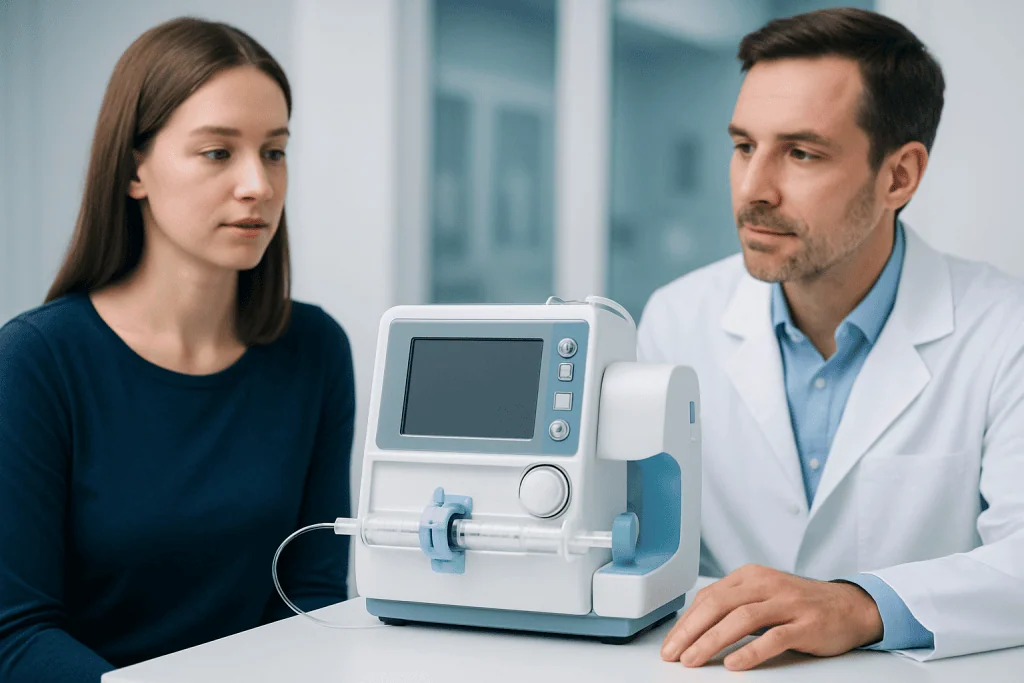
Growth hormone is produced by the pituitary gland, a small gland at the base of the brain. It contributes to normal childhood growth and helps regulate muscle, fat, bone and metabolism throughout life. When production is inadequate, replacement therapy supplies growth hormone in a controlled way.
The medicine is usually administered as a subcutaneous injection, meaning it is placed into the fatty tissue just under the skin. Modern devices are designed for home use. A doctor or specialist nurse teaches the person or caregiver how to prepare the device, choose injection sites, rotate sites and store the medication correctly.
In children, growth hormone supports growth partly by increasing insulin-like growth factor 1 (IGF-1), a substance made largely by the liver and other tissues. In adults, clinicians use symptoms, physical findings and laboratory values, including IGF-1 where appropriate, to guide treatment. The goal is hormone replacement within a safe, individualized range rather than achieving unusually high hormone levels.
Some people have GHD alongside other pituitary hormone deficiencies. In this setting, the endocrinology team also evaluates whether thyroid, adrenal, reproductive or other hormone replacement is needed. Treating related deficiencies appropriately is important for both wellbeing and the safe use of growth hormone.
Who may be a candidate for GHD treatment?

Children may be considered for treatment when they have confirmed GHD and poor growth or a slowing growth rate compared with expected patterns. Causes can include congenital differences in pituitary development, genetic conditions, brain or pituitary tumors, surgery, radiotherapy, head injury, inflammation or no clearly identified cause.
Adults may be candidates when they have proven GHD, usually related to pituitary or hypothalamic disease, prior brain surgery or radiotherapy, significant head injury, or childhood-onset deficiency that persists into adulthood. Adult treatment is considered individually because symptoms such as low energy, reduced muscle mass and changes in body composition are not specific to GHD.
Evaluation commonly includes a medical history, physical examination, review of height and growth records for children, and blood tests. Because growth hormone levels naturally fluctuate during the day, a single random growth hormone level is usually not enough to diagnose deficiency. A specialist may recommend a stimulation test, which assesses the pituitary gland’s ability to release growth hormone under controlled conditions.
Growth hormone should not be started in people with active cancer, and it may be unsuitable or require delayed use in certain other situations. The treating clinician reviews individual contraindications, medicines and health conditions before prescribing therapy.
What happens during GHD treatment?
There is no operation involved in standard GHD treatment. After diagnosis, the endocrinologist discusses expected benefits, limitations, possible side effects and the practical details of injections. Baseline measurements may include height, weight, body proportions, puberty stage in children, blood pressure, IGF-1 and other relevant pituitary hormone tests.
The medicine is typically started at an individualized dose and adjusted over time. Children often receive treatment on a regular schedule until an endocrinologist determines that growth is complete or reassessment is needed. Adults are commonly started cautiously, with gradual adjustments based on clinical response, IGF-1 levels and side effects.
At home, the injection is usually given into an area such as the abdomen, thigh, upper arm or buttock, following the device-specific training provided by the clinical team. Rotating sites helps reduce skin irritation. It is important not to share injection devices, even when needles are changed, and to follow the product instructions for refrigeration and disposal of used needles.
Follow-up appointments are an essential part of treatment. For children, clinicians track height velocity, weight, pubertal development and any symptoms. For adults, visits focus on wellbeing, physical changes, blood tests and safety. The care plan may be adjusted after changes in health status, weight, puberty, other hormone therapies or pregnancy planning.
Results, recovery and how long HGH takes to work
There is usually no recovery period after an injection. Most people can continue everyday activities immediately. The adjustment period is instead related to learning injection technique, establishing a routine and attending follow-up visits. Mild redness or discomfort at the injection site can occur and often improves with correct technique and rotation of sites.
How long does it take for HGH to kick in? The hormone begins acting biologically after it is administered, but noticeable results develop gradually. In children, changes are assessed over months through improved growth velocity rather than within days or weeks. In adults, some people notice changes in energy or wellbeing over several months, while measurable changes in body composition or bone-related outcomes may take longer.
How do I know if my growth hormone is working? The most reliable answer comes from planned clinical monitoring. For children, a favorable response may include a better growth rate, while maintaining healthy overall development. For adults, clinicians consider symptoms, examination findings, IGF-1 results and treatment tolerability; there is no single sensation or home measurement that confirms effectiveness.
Response varies. Consistent use, appropriate technique and attendance at follow-up appointments all help clinicians make informed adjustments. A person should not raise, lower or stop the dose independently, even if they do not notice an immediate change.
Benefits, risks and safety monitoring
For children with confirmed GHD, treatment can improve the rate of linear growth and may help them move closer to their genetic growth potential when started at an appropriate time. For eligible adults, possible benefits include improvements in body composition, exercise capacity, bone health indicators and quality of life. The extent of benefit differs between individuals and depends on the underlying cause of GHD and other health factors.
Potential side effects can include injection-site reactions, fluid retention, joint or muscle discomfort, tingling or numbness, headache and changes in blood sugar regulation. These effects are often dose-related and may improve after assessment and treatment adjustment. Adults, particularly older adults, may be more prone to fluid-related side effects when therapy begins.
In children, clinicians monitor for uncommon but important concerns such as hip or knee pain with limping, worsening scoliosis during rapid growth, persistent severe headache, visual changes or symptoms suggesting increased pressure inside the skull. These symptoms do not necessarily mean treatment is the cause, but they need timely medical assessment.
Growth hormone therapy requires extra attention in people with diabetes, a history of cancer, certain genetic syndromes or complex endocrine conditions. Regular monitoring allows the team to balance potential benefits with safety and to address side effects early.
At what age is GHD treatment most effective?
At what age is GHD treatment most effective? In children with confirmed deficiency, treatment generally has the greatest potential to improve adult height when started before the growth plates in the bones close. Starting earlier after diagnosis often allows more time for healthy linear growth, but age is only one factor; the cause and severity of GHD, current height and growth rate, puberty timing, family height pattern and adherence also matter.
GHD can be diagnosed in infancy, childhood, adolescence or adulthood. A child should not be considered too old for assessment simply because they are already in puberty. An experienced pediatric endocrinologist can assess remaining growth potential using growth records, physical development and, where useful, bone-age imaging.
Adults do not gain height from growth hormone replacement because their growth plates are closed. However, adults with carefully confirmed GHD may still be offered therapy for non-height-related effects of deficiency. Decisions should be personalized, with a clear discussion of likely benefits, monitoring and possible risks.
First signs of GHD and when to seek medical care
What are the first signs of GHD? In children, one of the earliest clues is growing more slowly than expected over time, rather than simply being shorter than classmates. A child may progressively fall across height percentiles on a growth chart. Some children also have a younger-looking appearance, delayed puberty or increased body fat around the waist, although these findings alone do not diagnose GHD.
In infants, severe congenital GHD can occasionally be associated with low blood sugar or prolonged jaundice, but these signs have many possible causes and require prompt pediatric assessment. In adults, possible features may include reduced energy, decreased muscle mass, increased body fat, low bone density or reduced quality of life. These are nonspecific and should not be used to self-diagnose a hormone disorder.
Parents or caregivers should arrange a medical review if a child’s growth has clearly slowed, if a child is much shorter than expected for their family pattern, or if puberty seems unusually delayed. Adults should seek medical advice for persistent symptoms, especially when there is a history of pituitary disease, brain injury, brain surgery or radiotherapy.
Urgent medical attention is appropriate for severe or persistent headache, vision changes, vomiting, marked weakness, fainting, confusion, or new hip or knee pain with a limp during therapy. Acibadem International’s multidisciplinary specialists at JCI-accredited hospitals can assess and treat pituitary and endocrine conditions for international patients.
Frequently asked questions
Is GHD treatment the same as taking HGH?
GHD treatment commonly uses recombinant human growth hormone, often called HGH or somatropin. It is prescribed to replace a confirmed deficiency and is not the same as non-medical hormone use for athletic performance, anti-aging or cosmetic goals. Treatment should be supervised by an endocrinologist.
Are growth hormone injections painful?
The injections use a small needle or an injection pen and are placed under the skin. Many people find discomfort is brief, especially after training and with regular rotation of injection sites. A clinician can review technique if injections are consistently painful or cause skin reactions.
Can a child stop growth hormone treatment once growth improves?
Treatment should not be stopped based only on visible improvement in growth. The endocrinology team reviews growth rate, pubertal development, bone maturity and the cause of GHD to decide how long treatment should continue. Some people who had childhood GHD need reassessment after final height is reached to determine whether deficiency persists in adulthood.
Does growth hormone treatment make a child taller than expected?
The aim is to help a child with confirmed GHD achieve healthy growth and, when possible, move toward their individual genetic height potential. It does not guarantee a particular adult height and should not be used to make a healthy child unusually tall. Outcomes depend on many clinical factors.
What monitoring is needed during GHD treatment?
Monitoring usually includes regular clinical appointments, measurements of growth and development in children, and blood tests such as IGF-1 when appropriate. The clinician may also monitor blood sugar, thyroid function, other pituitary hormones and symptoms of side effects. The schedule is tailored to the person’s age, diagnosis and treatment plan.
Can adults benefit from GHD treatment?
Adults with clearly confirmed growth hormone deficiency may benefit from replacement therapy, particularly when deficiency is related to pituitary or hypothalamic disease. Potential improvements can involve body composition, bone health and quality of life, but results vary. A specialist weighs these possible benefits against risks and the person’s overall health.
References
- Endocrine Society
- Pediatric Endocrine Society
- National Institute of Diabetes and Digestive and Kidney Diseases
- MedlinePlus
- National Health Service
This article is for general information only and is not a substitute for professional medical advice. Please consult a qualified doctor about your individual situation.
Explore treatments in Turkey — costs, top hospitals & a free quote
JCI-accredited · board-certified surgeons · reply within 24h
Add us as a Preferred Source to see more of our trusted health content across Google Search, AI Overviews and Discover.
Check your numbers in seconds
BMI, calories, due date, blood pressure and 30+ more clinical calculators — free, instant, doctor-reviewed ranges.