Gleason Score 3+3 Treatment: How It Works, Results and What to Expect

Gleason 3+3 means the most common and second most common patterns seen in the biopsy are both grade 3, resulting in Grade Group 1. Active surveillance is commonly recommended for suitable people because it monitors low-risk cancer while delaying or avoiding treatment side effects.
Key Takeaways
- Gleason 3+3 means the most common and second most common patterns seen in the biopsy are both grade 3, resulting in Grade Group 1.
- Active surveillance is commonly recommended for suitable people because it monitors low-risk cancer while delaying or avoiding treatment side effects.
- Radical prostatectomy and radiation therapy are established curative options when active treatment is needed or preferred.
- PSA results, MRI findings, biopsy extent, clinical stage, age, overall health and personal values all guide treatment decisions.
- A Gleason score alone does not predict an individual life expectancy; the full risk profile and general health matter.
Gleason score 3+3, also called Gleason score 6 or Grade Group 1 prostate cancer, is usually a low-risk cancer that grows slowly. Many people can safely begin with active surveillance, while surgery or radiation may be appropriate when cancer features, follow-up results or personal priorities support treatment.
Overview: What Does Gleason Score 3+3 Mean?
Gleason score 3+3 treatment is often active surveillance rather than immediate treatment, because this score usually indicates low-risk, slow-growing prostate cancer. If treatment becomes necessary or is preferred, surgery and radiation are effective options intended to control or cure cancer confined to the prostate.
A pathologist assigns a Gleason score after examining prostate biopsy tissue. The first number describes the most common cell-growth pattern and the second describes the next most common pattern. A 3+3 score totals 6 and is also called Grade Group 1, the lowest prostate cancer grade group. Although a total of 6 may sound moderate, Gleason scoring begins at 6 for cancers detected on biopsy; it does not mean that the cancer is midway through a 10-point scale.
Grade Group 1 cancer cells generally still resemble normal prostate tissue more than higher-grade cancer cells do. However, the score is only one part of the assessment. PSA level, digital rectal examination, MRI findings, number and proportion of biopsy samples containing cancer, and whether cancer appears contained within the prostate all help determine the likely behavior of the cancer.
People should discuss their individual pathology report with a urologist and, where appropriate, a radiation oncologist. Learning about prostate cancer risk groups can also help patients take part in a well-informed decision.
How Gleason Score 3+3 Treatment Is Chosen
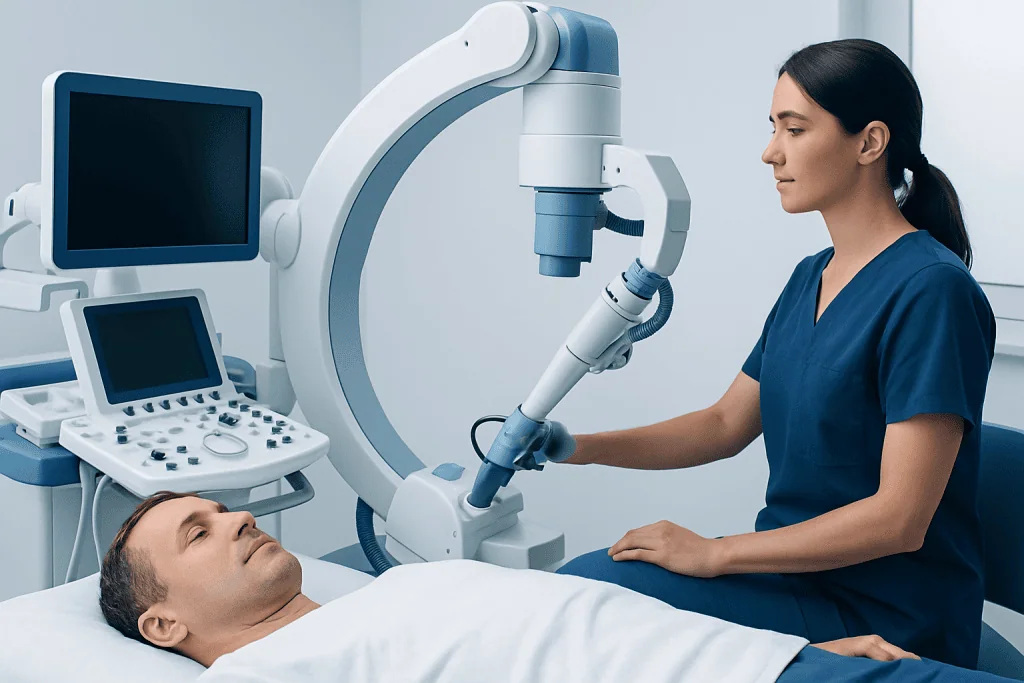
For many people with Grade Group 1 prostate cancer, active surveillance is the preferred first approach. This is not the same as ignoring cancer. It is a structured monitoring plan designed to identify the uncommon cases that show signs of progression while treatment is still likely to be effective.
A person may be a suitable candidate for active surveillance when cancer is present in a limited number of biopsy samples, PSA is low, imaging does not suggest more extensive disease, and regular follow-up is practical. It can be particularly valuable for people who wish to avoid or postpone possible urinary, sexual and bowel side effects from treatment.
Immediate treatment may be considered when there is a larger amount of cancer in the biopsy, a rising PSA or concerning MRI result, uncertainty about the true grade, a strong family history or inherited cancer-risk mutation, or a personal preference for definitive treatment. Anxiety about living with an untreated cancer is also a valid concern to discuss; the aim is a choice that balances medical evidence with the person’s priorities.
Before deciding, clinicians may recommend a multiparametric MRI, review of biopsy slides by an experienced genitourinary pathologist, or repeat targeted biopsy. These assessments can help confirm that a higher-grade area was not missed in the original samples.
Active Surveillance: How It Works and What to Expect

Active surveillance follows the cancer closely without treating it immediately. The purpose is to preserve quality of life while retaining the opportunity for curative treatment if test results indicate that the cancer is becoming more significant.
Monitoring schedules vary, but commonly include PSA blood tests at regular intervals, clinical review, periodic prostate MRI and repeat biopsy when indicated. PSA can rise for reasons other than cancer progression, including prostate enlargement, inflammation or recent ejaculation. For this reason, doctors interpret a PSA change alongside MRI findings, examination results and, when needed, biopsy results.
Treatment is usually reconsidered if a repeat biopsy finds a higher Gleason grade, more extensive cancer, or if imaging shows changes that raise concern. Some people remain on surveillance for many years without requiring surgery or radiation. Others transition to treatment after changes are identified or because their preferences change over time.
The main benefit is avoiding or delaying treatment-related effects. The main responsibility is attending planned appointments and living with some uncertainty between tests. A clear follow-up plan and access to a care team can make surveillance more manageable.
Surgery and Radiation: Step-by-Step Treatment Options
When active treatment is selected, the main options for localized Gleason 3+3 cancer are radical prostatectomy and radiation therapy. Both are used with curative intent for appropriately selected patients, and neither is automatically best for everyone.
Radical prostatectomy removes the prostate gland and seminal vesicles, usually through minimally invasive or robotic-assisted techniques when suitable. Before surgery, the team reviews imaging, medical history, medications and anesthesia needs. During the procedure, the surgeon removes the gland and reconnects the bladder to the urethra. A urinary catheter is usually needed for a short period afterward, and the removed tissue provides a complete pathology assessment. Patients can learn more about robotic prostatectomy when discussing surgical approaches.
Radiation therapy treats the prostate without removing it. External-beam radiation is commonly delivered in carefully planned sessions over several days or weeks, depending on the technique and schedule. Planning typically involves imaging and positioning measures to target the prostate while limiting dose to nearby bladder and rectal tissue. In selected cases, internal radiation, called brachytherapy, may be discussed.
For Grade Group 1 disease, hormone therapy is generally not a routine part of treatment when radiation is used, unless other clinical features change the risk assessment. The treating team explains the expected schedule, preparation, follow-up and alternatives before treatment begins.
Benefits, Risks and Recovery Timeline
The potential benefit of surgery or radiation is definitive local treatment of cancer. For low-risk prostate cancer, outcomes are generally very favorable, but treatment can cause side effects. Because active surveillance is often safe for appropriate Grade Group 1 cancers, the possible benefit of immediate treatment should be considered alongside its impact on day-to-day life.
After prostatectomy, hospital discharge may occur within a short period, depending on the surgical approach and recovery needs. The catheter is removed after the surgical connection has healed. Tiredness and activity restrictions are common initially; gradual return to normal activity often takes several weeks. Urinary leakage may improve over months, and pelvic floor rehabilitation may be recommended. Erections can take longer to recover and may be affected by age, baseline sexual function and whether nerves can be preserved.
During and shortly after external-beam radiation, some people experience fatigue, more frequent urination, urgency, burning with urination, looser stools or rectal irritation. These effects are often temporary, although some urinary, bowel or sexual effects can appear later or persist. Radiation does not involve a surgical catheter, but PSA declines gradually over time rather than becoming immediately undetectable.
There is no universally risk-free choice. A urologist, radiation oncologist and the patient can compare likely cancer control, recovery, continence, sexual function, bowel health, other medical conditions and practical preferences. Acibadem International’s multidisciplinary specialists at JCI-accredited hospitals evaluate and treat prostate cancer for international patients.
How Long Can You Live With Grade 3 Prostate Cancer?
The phrase “grade 3 prostate cancer” can be confusing. Gleason pattern 3, such as Gleason 3+3, is usually Grade Group 1 and is considered low risk when other findings are also favorable. Many people with this type of cancer live for many years and may never need treatment, particularly when they follow an appropriate active-surveillance program.
It is not possible to estimate survival from one number alone. PSA level, cancer stage, MRI and biopsy findings, age, other health conditions and the presence of higher-grade cancer all influence outlook. A clinician can place the result into a recognized risk group and discuss what it means for that individual.
Importantly, active surveillance does not mean that cancer has been judged unimportant. It means the available evidence suggests that careful monitoring is likely to be safer than immediate intervention for many suitable patients.
Is It Better to Have Your Prostate Removed or Radiation?
Neither prostate removal nor radiation is inherently better for every person with localized prostate cancer. Both can be effective curative treatments, and the most appropriate choice depends on the cancer’s features, overall health, age, anatomy, previous pelvic treatment and individual priorities.
Surgery provides a full pathology report and causes PSA to fall to a very low or undetectable level after recovery. Its more immediate concerns include urinary incontinence and erectile dysfunction. Radiation avoids surgery and may be preferable for some people, but can cause urinary or bowel irritation and may lead to gradual sexual side effects over time.
For a true Gleason 3+3, low-risk cancer, a third option often deserves equal attention: active surveillance. A consultation with both a urologic surgeon and radiation oncologist can help ensure that choices are compared fairly before a decision is made.
When to Seek Medical Care
A person with a new prostate cancer diagnosis should arrange timely follow-up with a qualified urologist, even when the Gleason score is 3+3. Prompt review is especially important if the pathology report is unclear, PSA is rising, MRI suggests a more significant lesion, or there is difficulty arranging recommended surveillance testing.
Urinary symptoms such as weak stream, urgency or nighttime urination are common and are often caused by noncancerous prostate enlargement. However, blood in urine or semen, inability to pass urine, persistent bone pain, unexplained weight loss or worsening symptoms should be assessed by a doctor without delay. These symptoms do not necessarily mean cancer has spread, but they should not be self-diagnosed.
Anyone considering surgery or radiation should seek advice about expected recovery, side effects and fertility or sexual-health concerns before treatment starts. A second pathology review or second specialist opinion can be useful when the treatment decision is uncertain.
Frequently asked questions
What is the best Gleason score for prostate cancer?
Among prostate cancers diagnosed on biopsy, Gleason 3+3=6, also called Grade Group 1, is the lowest Gleason score and generally has the most favorable outlook. A lower score is not assigned to cancer because patterns 1 and 2 are rarely used in modern prostate biopsy reporting. The best interpretation also includes PSA, stage, MRI and biopsy extent.
What is the life expectancy for someone with a Gleason score of 4-3?
Gleason 4+3=7 is Grade Group 3 and is more concerning than Gleason 3+4=7 because pattern 4 is the dominant pattern. Life expectancy cannot be determined from the Gleason score alone, as stage, PSA, treatment response, age and general health are important. Many people with localized Gleason 4+3 cancer can still receive treatment intended to cure the disease.
Can Gleason 3+3 prostate cancer spread?
Gleason 3+3 cancer is generally considered to have a very low risk of spread when accurately sampled and classified. A key reason for surveillance monitoring is to identify the occasional case in which higher-grade cancer was not detected initially or develops over time. Keeping scheduled PSA, MRI and biopsy appointments is important.
Does Gleason 3+3 always need treatment?
No. Many people with suitable low-risk Gleason 3+3 cancer choose active surveillance instead of immediate surgery or radiation. Treatment may be recommended later if follow-up suggests progression, or it may be chosen earlier based on clinical details and personal preference.
Can a Gleason score change over time?
The original biopsy score does not itself change, but later biopsies can find a different or higher-grade area of cancer. This may reflect cancer evolution or a higher-grade focus that was not sampled initially. Repeat assessment is therefore an important part of active surveillance.
What questions should someone ask before choosing Gleason score 3+3 treatment?
Useful questions include whether active surveillance is appropriate, how often follow-up tests will be needed, and what findings would trigger treatment. It is also reasonable to ask about expected urinary, sexual and bowel effects of each treatment option. Reviewing the pathology, MRI and personal health priorities with a urologist and radiation oncologist can support a balanced decision.
References
- American Urological Association
- National Cancer Institute
- European Association of Urology
- American Cancer Society
- National Comprehensive Cancer Network
This article is for general information only and is not a substitute for professional medical advice. Please consult a qualified doctor about your individual situation.
Oncology care in Turkey — second opinion and treatment plan
JCI-accredited · board-certified surgeons · reply within 24h
Add us as a Preferred Source to see more of our trusted health content across Google Search, AI Overviews and Discover.