Glioma: Diagnosis, Outlook, and Modern Treatment Approaches

Glioma is not one single disease; it includes several tumor types and grades. Symptoms often relate to where the tumor is located in the brain or spinal cord.
Key Takeaways
- Glioma is not one single disease; it includes several tumor types and grades.
- Symptoms often relate to where the tumor is located in the brain or spinal cord.
- Modern diagnosis includes MRI, biopsy or surgery, and molecular testing of the tumor.
- Treatment may involve surgery, radiation therapy, chemotherapy, targeted approaches, or careful monitoring.
- Outlook depends on age, overall health, tumor grade, location, and genetic features.
Glioma is a type of brain tumor that begins in the glial cells that support and protect nerve cells. Its outlook and treatment can vary widely, so diagnosis usually combines brain imaging, tissue analysis, and molecular testing to guide the most appropriate care.
Overview: what glioma means
Glioma is a tumor that starts in glial cells, the supporting cells of the brain and spinal cord. These cells help protect nerve cells, maintain the environment around them, and support normal brain function. When a glioma forms, the cells grow in an abnormal and uncontrolled way.
The term glioma covers a group of tumors rather than one single diagnosis. Some gliomas grow slowly and may be monitored for a time, while others are more aggressive and need prompt treatment. Doctors classify gliomas by the type of cell they most resemble, such as astrocytoma, oligodendroglioma, or ependymoma, and by grade, which reflects how abnormal the cells look and how likely the tumor is to grow quickly.
Modern care also looks beyond the microscope. Today, tumor tissue is often tested for molecular features, such as IDH mutation status and other markers, because these findings can influence the diagnosis, expected behavior, and treatment plan. This more precise approach helps specialists tailor care to the individual rather than relying only on the tumor’s appearance.
Symptoms and how glioma can present
Glioma symptoms vary because they depend mainly on where the tumor is located, how large it is, and how quickly it grows. Some people develop symptoms gradually over weeks or months, while others notice a more sudden change. In a few cases, a glioma is found incidentally during brain imaging done for another reason.
Possible symptoms include persistent headaches, seizures, nausea, vomiting, changes in memory or concentration, personality or behavior changes, weakness on one side of the body, balance problems, speech difficulty, or vision changes. A tumor near the spinal cord may cause back pain, weakness, numbness, or bowel and bladder problems.
These symptoms do not always mean a person has a brain tumor. Many common conditions, including migraines, inner ear problems, stroke, infections, or medication effects, can cause similar complaints. Still, new, unexplained, or progressive neurological symptoms should be assessed by a qualified doctor so that the cause can be identified and managed appropriately.
- Headaches that are new or different from usual
- Seizures in a person without a known seizure disorder
- Progressive weakness, numbness, or balance difficulty
- Speech, memory, or personality changes
- Blurred vision, double vision, or visual field loss
Types, causes, and risk factors

Gliomas are commonly grouped by their cell type and grade. Astrocytomas arise from astrocyte-like cells and include a range from lower-grade tumors to more aggressive forms. Oligodendrogliomas tend to have specific molecular changes that help define them, while ependymomas arise from cells lining fluid-filled spaces in the brain or central canal of the spinal cord. A specialist may also discuss whether the tumor is diffuse, meaning it spreads into nearby tissue, or more localized.
In most people, there is no single clear cause of glioma. These tumors are usually not linked to anything a person did or did not do. Researchers believe gliomas develop through changes in the DNA of glial cells that allow them to keep dividing, but why this happens is often unknown.
Some factors can increase risk, although they do not mean a person will definitely develop a glioma. These include increasing age for some glioma types, certain rare inherited syndromes, and previous exposure to ionizing radiation to the head. Routine use of phones, ordinary headaches, or stress are not established causes of glioma. If there is a strong family history of brain tumors or a known genetic condition, a doctor may consider genetic counseling as part of the evaluation.
How glioma is diagnosed today
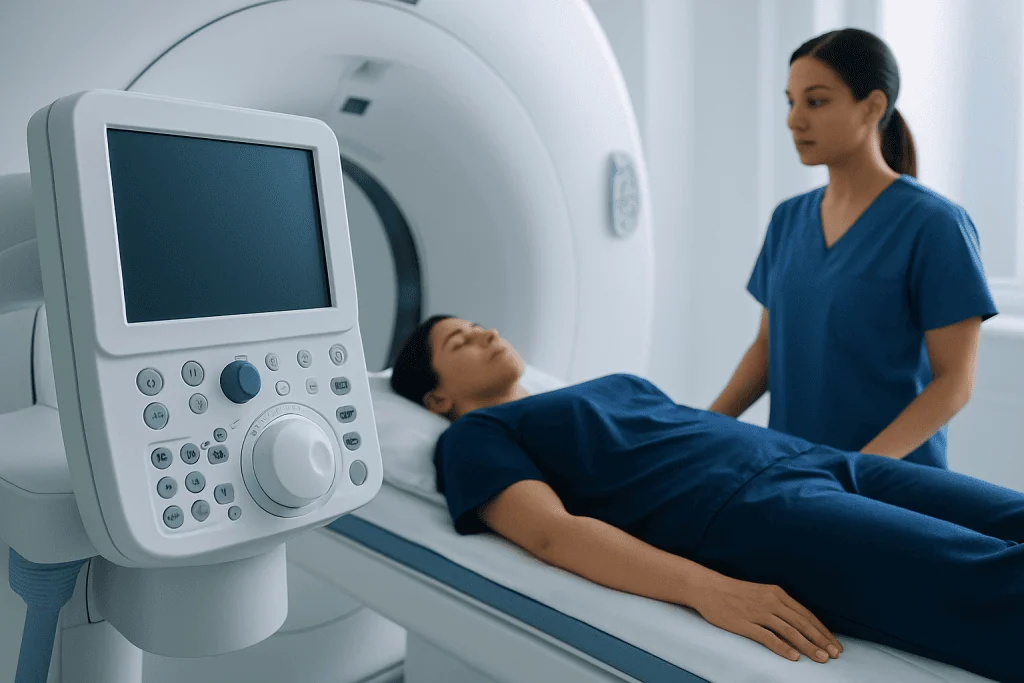
Diagnosis usually begins with a neurological examination and brain imaging. Magnetic resonance imaging is often the main test because it provides detailed pictures of the brain and can show the tumor’s size, location, and relationship to nearby structures. In some situations, advanced imaging techniques may help estimate how active the tumor is or assist with surgical planning. When appropriate, doctors may evaluate a suspected brain tumor in a multidisciplinary setting that includes neurology, neuroradiology, neurosurgery, pathology, and oncology.
Imaging alone usually cannot provide the full diagnosis. A tissue sample is often needed, either through biopsy or during surgery, so that a pathologist can examine the tumor under a microscope. This confirms the tumor type and grade and helps distinguish glioma from other conditions that can mimic it on scans.
Molecular testing has become a central part of diagnosis. Specialists may test for markers such as IDH mutation, 1p/19q codeletion, MGMT promoter methylation, and other genetic alterations, depending on the tumor type. These results can clarify the diagnosis and help predict how the tumor may behave and which treatments are more likely to be helpful. Blood tests are not enough to diagnose glioma, but they may be used to assess overall health before treatment.
Modern treatment approaches
Treatment for glioma is individualized. The plan depends on the tumor type, grade, location, size, symptoms, molecular findings, and the person’s age and general health. The main goals are to remove or control the tumor as safely as possible, relieve symptoms, preserve neurological function, and support quality of life.
Surgery is often the first step when it can be done safely. An operation may be performed to obtain tissue for diagnosis, reduce pressure in the brain, improve symptoms, and remove as much of the tumor as possible without harming critical brain areas. In selected cases, this may involve brain tumor surgery planned with advanced imaging and mapping techniques. If a tumor is located in a highly sensitive area or is not safely removable, a stereotactic biopsy may be used to obtain tissue with less disruption.
Radiation therapy is commonly used after surgery or biopsy, especially for higher-grade gliomas or tumors that cannot be completely removed. It uses carefully planned beams to target tumor cells while limiting exposure to surrounding tissue. Some patients also receive radiation therapy together with or followed by chemotherapy, depending on the tumor’s features.
Drug treatment may include chemotherapy or other systemic therapies chosen according to the glioma subtype and molecular profile. For some tumors, specialists may discuss medical oncology care that includes chemotherapy, symptom control medications, and supportive management. In lower-grade gliomas, careful observation after surgery may sometimes be appropriate, while more aggressive tumors usually need combination treatment. Rehabilitation, seizure control, and steroid treatment to reduce swelling may also be important parts of care.
Outlook and living with glioma
The outlook for glioma varies widely. Some low-grade gliomas can remain stable for years, while higher-grade gliomas may grow more quickly and need intensive treatment. Doctors estimate outlook by considering many factors together, including age, neurological function, tumor grade, how much tumor could be removed, and molecular characteristics identified on pathology testing.
It is often helpful to think of prognosis as a range rather than a fixed prediction. Two people with tumors in the same general category may still have different experiences because of tumor biology, treatment response, and overall health. Follow-up imaging is an important part of care because it helps doctors assess treatment response and monitor for recurrence or progression.
Living with glioma can affect physical, emotional, and cognitive well-being. Fatigue, changes in concentration, mood shifts, and anxiety about scans or symptoms are common concerns. Supportive care may include neuro-rehabilitation, counseling, nutrition guidance, speech or occupational therapy, and palliative care focused on symptom relief at any stage of illness. Near the end of the treatment journey, some international patients may choose to seek evaluation at centers such as Acibadem International, where multidisciplinary specialists in JCI-accredited hospitals diagnose and treat glioma.
Self-care, monitoring, and prevention
There is no known way to prevent most gliomas. Because the cause is usually not related to a modifiable lifestyle factor, people should not blame themselves for the diagnosis. Instead, practical self-care focuses on following treatment recommendations, managing symptoms, and protecting overall health during and after therapy.
Helpful steps may include taking medicines exactly as prescribed, especially anti-seizure drugs or steroids if they are part of the plan; attending scheduled MRI scans and follow-up visits; getting enough rest; and staying as physically active as a doctor advises. People who have had seizures may need guidance about driving, working at heights, or swimming alone. Family members can often help by noticing changes in memory, speech, or behavior that the patient may not recognize.
General health measures can support recovery and resilience. These include balanced nutrition, hydration, avoiding tobacco, limiting alcohol if advised by the medical team, and asking about rehabilitation services when strength, speech, or thinking are affected. It is also reasonable to discuss fertility preservation, return to work, or school accommodations when treatment planning begins.
When to seek medical care
Medical evaluation is important for any new or worsening neurological symptom. A person should arrange prompt medical care for persistent headaches that are unusual for them, a first seizure, unexplained weakness, confusion, difficulty speaking, vision changes, or problems with balance. Even when the cause is not a glioma, these symptoms deserve careful assessment.
Urgent care is needed for sudden severe headache, loss of consciousness, repeated vomiting, a seizure that does not stop, rapidly worsening weakness, or sudden major changes in speech or awareness. These symptoms can have several causes, including stroke or bleeding, and should not be ignored.
After a glioma diagnosis, patients should contact their care team if they develop new seizures, worsening headaches, increasing drowsiness, signs of infection, medication side effects, or any significant change in daily function. Early communication can help manage problems before they become more disruptive.
Frequently asked questions
Is glioma always cancer?
Glioma is a tumor of glial cells, but not all gliomas behave the same way. Some are lower grade and grow more slowly, while others are higher grade and more aggressive. A doctor uses pathology and molecular testing to define the exact diagnosis.
What is the difference between glioma and glioblastoma?
Glioma is a broad category that includes several types of tumors arising from glial cells. Glioblastoma is one specific, high-grade type of glioma. In other words, all glioblastomas are gliomas, but not all gliomas are glioblastomas.
Can an MRI alone diagnose glioma?
MRI is very important and often strongly suggests a glioma, but it usually cannot provide the full diagnosis by itself. In most cases, doctors need a biopsy or surgical tissue sample to confirm the tumor type and perform molecular testing. This information is essential for treatment planning.
What treatments are commonly used for glioma?
Common treatments include surgery, radiation therapy, and chemotherapy, used alone or in combination. The choice depends on the tumor's grade, location, and molecular features, as well as the patient's overall health. Some lower-grade gliomas may be monitored for a period after surgery.
How is the outlook for glioma determined?
Doctors consider several factors, including the person's age, symptoms, tumor grade, location, extent of surgical removal, and molecular test results. These details help estimate how the tumor may behave and how well it may respond to treatment. Outlook is individualized and best discussed with the treating specialist.
Can people live for years with glioma?
Yes, some people, especially those with lower-grade gliomas or favorable molecular features, may live with the condition for many years. Others may need more intensive treatment and closer follow-up because their tumor is more aggressive. Regular monitoring helps guide care over time.
References
- World Health Organization
- National Cancer Institute
- National Institute of Neurological Disorders and Stroke
- American Brain Tumor Association
- National Comprehensive Cancer Network
This article is for general information only and is not a substitute for professional medical advice. Please consult a qualified doctor about your individual situation.
Joint and spine care in Turkey — expert assessment & treatment
JCI-accredited · board-certified surgeons · reply within 24h
Add us as a Preferred Source to see more of our trusted health content across Google Search, AI Overviews and Discover.