Glycolic Peel Freckles: What Patients Need to Know

Glycolic acid peels can gradually reduce the appearance of some superficial freckles and sun-related pigment. Freckles commonly return or darken with ultraviolet exposure, even after successful treatment.
Key Takeaways
- Glycolic acid peels can gradually reduce the appearance of some superficial freckles and sun-related pigment.
- Freckles commonly return or darken with ultraviolet exposure, even after successful treatment.
- Darker skin tones and people prone to post-inflammatory hyperpigmentation need individualized assessment before peeling.
- Professional peels are generally stronger than at-home products and should be selected by a qualified clinician.
- Sunscreen, shade and gentle skin care are central to maintaining results and reducing complications.
A glycolic peel may help lighten freckles and uneven skin tone by accelerating removal of surface skin cells, but it does not permanently prevent freckles from returning. The safest results come from appropriate peel selection, careful aftercare and consistent daily sun protection.
Glycolic Peel Freckles: The Short Answer
A glycolic peel may lighten freckles by exfoliating the outer skin layers that contain visible pigment. It is most useful for superficial, evenly colored freckles, but the response differs between individuals and more than one treatment may be needed.
Freckles are linked mainly to genetics and ultraviolet exposure. A peel can improve their appearance, but it cannot change the tendency to form freckles; without reliable sun protection, treated areas may darken again and new freckles can develop.
Glycolic acid is an alpha hydroxy acid (AHA) derived from sugar cane. In professional chemical peels, its concentration, formulation, application time and neutralization are tailored to the person’s skin type, pigment concerns and tolerance.
How Glycolic Acid Affects Freckles
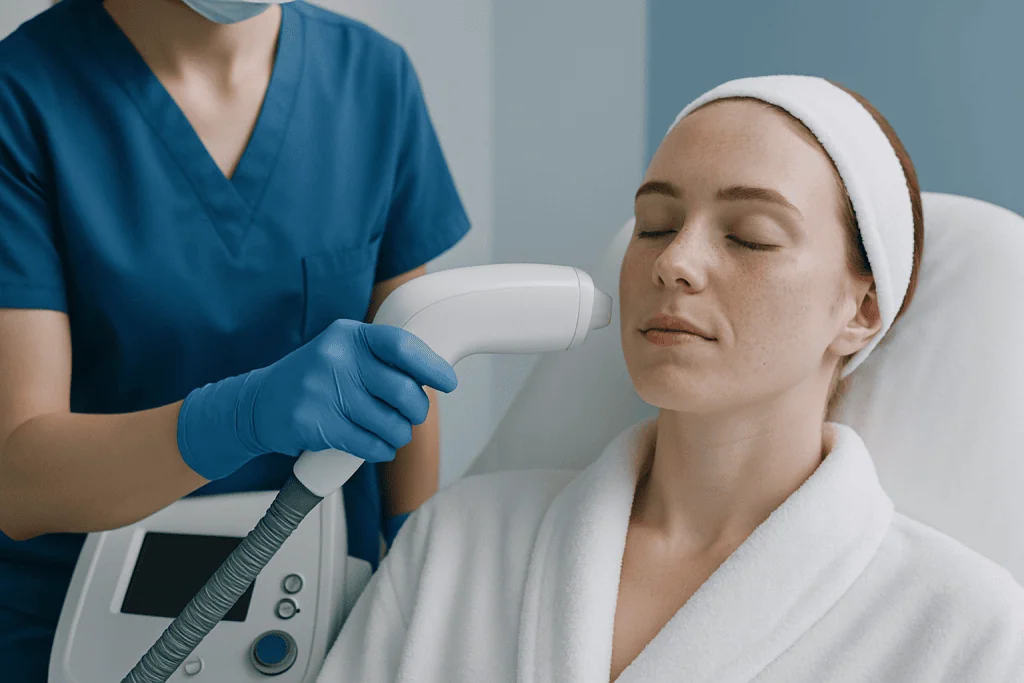
Glycolic acid loosens bonds between dead cells in the outermost layer of skin. This controlled exfoliation can make the skin surface look smoother and can help disperse or remove pigment-containing cells closer to the surface. Over a series of treatments, freckles may appear lighter and the overall complexion may look more even.
Not all brown marks are freckles. Solar lentigines, often called age spots or sun spots, melasma, post-inflammatory hyperpigmentation and some moles can look similar. Because treatment depends on the cause, a clinician should assess persistent, changing or unusual marks before they are treated cosmetically.
A glycolic peel is generally a superficial peel. It may be considered as part of a broader pigment-management plan that includes daily ultraviolet protection and, when appropriate, dermatologist-recommended topical treatments. Stronger or deeper procedures are not automatically better for pigment and can carry greater risk of irritation or discoloration.
Who May Benefit and Who Needs Extra Caution

People with stable, sun-related freckles who want a gradual, non-surgical improvement may be suitable candidates for a glycolic peel. A consultation helps determine whether the concern is truly freckles, whether the skin barrier is healthy and whether a superficial peel is likely to provide meaningful benefit.
People with medium to deep skin tones, a history of dark marks after spots or injuries, melasma, eczema, rosacea, active acne inflammation or sensitive skin require extra care. In these situations, irritation from a peel can trigger post-inflammatory hyperpigmentation, which may be more noticeable and longer-lasting than the original freckles.
Peels may need to be postponed in the presence of sunburn, open skin, an active facial infection or a herpes simplex outbreak near the treatment area. A clinician should also review current skin products and medicines, including retinoids, exfoliating acids and any treatment that increases sensitivity to sunlight or affects healing.
- Pregnant or breastfeeding individuals should ask their obstetric and dermatology teams before using peel products or pigment treatments.
- People with a history of <a href="https://acibademinternational.com/diseases/keloid-scars/”>keloid scars or poor wound healing should discuss individualized risks.
- Recent tanning, including tanning beds or self-tanner use, can make pigment assessment and treatment planning less reliable.
What to Expect Before, During and After a Peel
Before a professional glycolic peel, the clinician examines the skin, reviews medical history and explains expected benefits and limitations. Some people are advised to simplify their routine beforehand, avoiding potentially irritating products for a period recommended by the treating professional. It is important not to wax, scrub or use strong at-home exfoliants immediately before treatment unless specifically advised.
During the peel, the skin is cleansed and glycolic acid is applied for a controlled period. A mild tingling, warmth or stinging sensation can occur. The peel is then neutralized or removed according to the product protocol. The appointment is usually brief, and anesthesia is generally not needed for a superficial glycolic peel.
Afterward, temporary redness, tightness, dryness and fine flaking are common. Visible peeling may be minimal or may occur for several days, depending on the product and the person’s skin. Skin should be handled gently: use a bland moisturizer, avoid picking or scrubbing, and follow the clinician’s instructions about restarting active products.
Broad-spectrum sunscreen is especially important after any peel. A product with SPF 30 or higher, used as directed and paired with shade, hats and protective clothing, helps reduce irritation and lowers the likelihood that freckles or new pigment will become more apparent.
Results, Limitations and Possible Side Effects
Improvement from a glycolic peel is usually gradual rather than immediate. Some people notice brighter-looking skin after healing, while freckles may require a planned series of treatments to fade. The result depends on the depth of pigment, skin type, sun exposure, home skin care and the strength and technique of the peel.
Common short-term effects include mild burning during application, redness, dryness, flaking and sensitivity. Less commonly, a peel can cause prolonged irritation, acne-like eruptions, infection, changes in skin color or scarring. These risks increase when a peel is too strong, left on too long, applied to damaged skin or followed by sun exposure and harsh skin products.
Over-the-counter glycolic acid products are usually lower strength than professional peels, but they can still irritate skin if used too frequently or combined with other exfoliants. A patch test does not guarantee that a full-face peel will be tolerated. It is generally safer to introduce one active product at a time and stop use if significant burning, swelling or rash develops.
Other options may be appropriate when freckles are resistant or when a different pigment condition is diagnosed. A dermatologist may discuss topical therapies, other superficial peels, light-based procedures or laser treatment after considering skin tone, pigment pattern and individual risk. For example, laser treatment may be considered for selected pigment concerns, but it also requires expert assessment and careful sun avoidance.
Protecting Skin Between Treatments
The most effective long-term measure for freckles is limiting ultraviolet exposure. Sun protection is not only aftercare; it is the foundation of preventing existing freckles from becoming darker and reducing the formation of new ones. Ultraviolet radiation can reach the skin on cloudy days and through reflected light from water, sand and snow.
A practical routine includes applying broad-spectrum sunscreen with SPF 30 or higher to exposed skin each morning, reapplying according to the product label and after swimming or sweating, and using a wide-brimmed hat and sunglasses outdoors. Seeking shade during periods of strong sunlight provides further protection. Tanning beds should be avoided because they deliver ultraviolet radiation that can worsen pigment changes and damage skin.
Gentle cleansing and regular moisturizing support the skin barrier after glycolic acid use. Until the skin has fully settled, people should avoid facial scrubs, picking flakes, waxing the treated area and layering several potentially irritating ingredients, such as retinoids, benzoyl peroxide or other acids, unless their clinician has advised a specific routine.
Acibadem International’s multidisciplinary specialists and JCI-accredited hospitals can assess pigment concerns and discuss appropriate dermatologic care for international patients.
When to Seek Medical Care
Freckles themselves are usually harmless, but a brown spot should not be assumed to be a freckle without appropriate assessment. Medical evaluation is important for a new mark that changes in size, shape, color or texture, bleeds, crusts, itches persistently or looks different from other spots on the skin.
Promptly contact a clinician after a glycolic peel if there is severe or worsening pain, marked swelling, blistering, pus, fever, spreading redness or a darkening of the skin that does not settle. These symptoms may indicate a significant reaction or infection and should not be managed by applying more exfoliating products.
People who feel uncertain about whether pigmentation is cosmetic or medical should see a dermatologist before pursuing a peel. A skin examination can distinguish common freckles from other conditions and support a safer, more personalized treatment plan.
Frequently asked questions
Can a glycolic peel remove freckles permanently?
No. A glycolic peel can fade visible freckles, but it does not remove the genetic tendency to form them or stop ultraviolet light from stimulating pigment. Daily sun protection is needed to help maintain improvement and limit new freckles.
How many glycolic peels are needed for freckles?
The number varies according to the depth and amount of pigmentation, skin sensitivity and the type of peel used. A clinician may recommend a series of gentle treatments rather than one stronger treatment, with time for the skin to recover between sessions.
Is a glycolic peel safe for dark skin?
It can be used in some people with darker skin tones, but it requires careful selection and technique. Inflammation can lead to post-inflammatory hyperpigmentation, so a dermatologist or qualified skin professional should assess the person’s pigment history and skin condition first.
Can glycolic acid make freckles darker?
Freckles can appear darker if a peel causes irritation followed by pigment change, or if the skin is exposed to ultraviolet light during healing. Using too many exfoliating products and skipping sunscreen can increase this risk.
Should glycolic acid be used at home for freckles?
Lower-strength glycolic acid products may gradually improve uneven tone for some people, but they are not risk-free. It is best to start cautiously, avoid combining them with other irritating active ingredients, and seek professional advice if there is sensitivity, melasma or a history of dark marks after inflammation.
What is the difference between freckles and sun spots?
Freckles are small pigment spots that often become more visible with sun exposure and may fade when exposure decreases. Sun spots, also called solar lentigines, tend to persist and are associated with cumulative sun exposure. A clinician can help distinguish them and recommend suitable treatment.
References
- American Academy of Dermatology
- American Society for Dermatologic Surgery
- National Cancer Institute
- Mayo Clinic
- World Health Organization
This article is for general information only and is not a substitute for professional medical advice. Please consult a qualified doctor about your individual situation.
Explore treatments in Turkey — costs, top hospitals & a free quote
JCI-accredited · board-certified surgeons · reply within 24h
Add us as a Preferred Source to see more of our trusted health content across Google Search, AI Overviews and Discover.