Google Breathing Exercise: What Patients Need to Know

Google breathing exercise is a brief on-screen breathing guide designed for relaxation and stress management. It may help reduce momentary tension by encouraging slower, more regular breaths.
Key Takeaways
- Google breathing exercise is a brief on-screen breathing guide designed for relaxation and stress management.
- It may help reduce momentary tension by encouraging slower, more regular breaths.
- It is not a substitute for medical evaluation if someone has new, severe, or ongoing breathing problems.
- Gentle breathing exercises are generally safe, but people with lung, heart, or anxiety-related conditions may need personalized advice.
- Professional assessment is important when symptoms suggest asthma, panic attacks, sleep-disordered breathing, or another health condition.
Google breathing exercise is a built-in guided breathing prompt that can help some people slow their breathing and feel calmer during stress. It is best used as a short wellness tool, not as a treatment for chest pain, severe shortness of breath, or other urgent symptoms.
Overview: what the Google breathing exercise does
The google breathing exercise is a simple guided breathing feature that appears in Google search for users looking for a quick calming tool. In practice, it gives a visual prompt to breathe in and out at a slower rhythm for a short period, often around one minute. For many people, this can be a convenient way to pause, focus attention, and reduce the sense of being overwhelmed in the moment.
Its main purpose is wellness support rather than diagnosis or treatment. Slower, more deliberate breathing can activate the body’s relaxation response and may ease temporary stress, mild nervousness, or mental tension. That said, a digital breathing guide cannot determine why a person feels breathless, dizzy, tight-chested, or anxious.
Patients should think of this tool as a basic self-care aid. It may be useful before a stressful meeting, after upsetting news, or during a brief pause in a busy day. It should not be relied on as the only response to repeated breathing difficulty, fainting, significant chest discomfort, or symptoms that interfere with daily life.
How guided breathing may help the body and mind
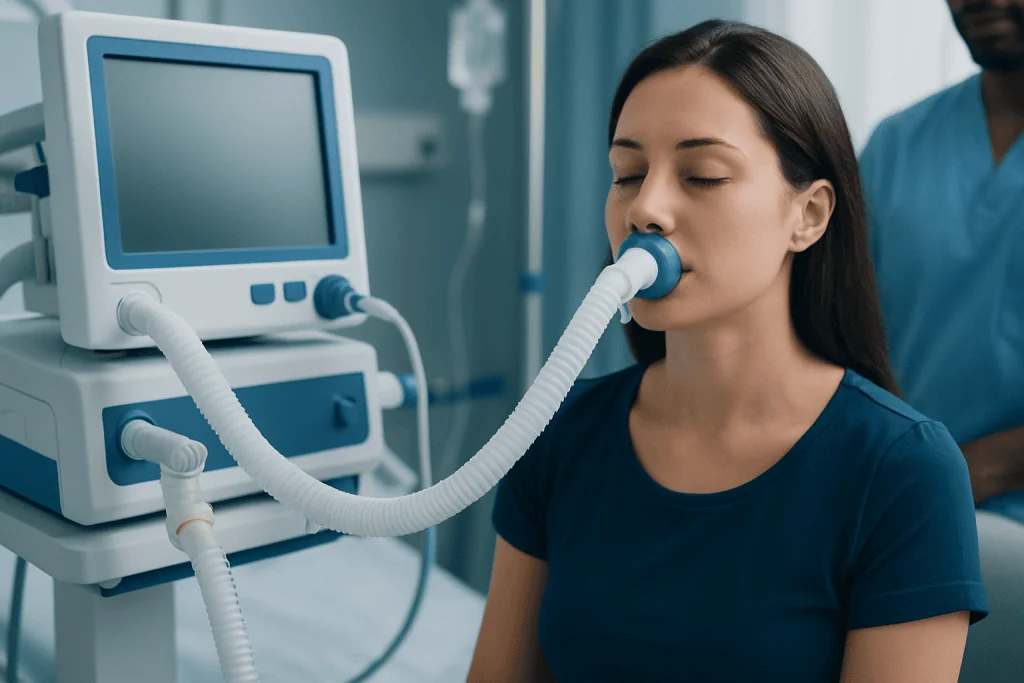
Breathing patterns often change during stress. Many people begin to breathe quickly, shallowly, or irregularly without noticing it. Guided breathing can help restore a steadier rhythm, which may reduce physical signs of tension such as a racing heartbeat, muscle tightness, and the feeling of being unable to settle down.
For some patients, the benefit comes from pacing. A visual cue gives the mind one simple task: inhale, exhale, and repeat. This can interrupt spiraling thoughts and bring attention back to the present moment. The effect is not the same for everyone, but many people find that one or two minutes of slower breathing makes them feel more in control.
These exercises are often described as supportive rather than curative. They do not treat the underlying causes of breathlessness, such as lung disease, heart disease, anemia, or infection. They also do not replace structured mental health care when anxiety is persistent or severe, although they may be one useful coping skill within a broader care plan.
- May help lower momentary stress
- Can encourage slower, deeper breaths
- May improve focus during brief periods of anxiety
- Works best as a short-term wellness tool
When it may be useful, and when it may not

The google breathing exercise may be helpful for healthy adults who want a quick, accessible relaxation technique. It can fit into daily routines, travel days, work breaks, or bedtime wind-down periods. Some people also use guided breathing before public speaking, medical appointments, or other situations that trigger mild situational anxiety.
It may be less helpful when symptoms stem from a medical problem rather than temporary stress. For example, wheezing, ongoing cough, or tightness in the chest may point to an airway condition that needs proper assessment, such as asthma. Similarly, if stress episodes include strong fear, palpitations, shaking, or a sense of losing control, the person may benefit from evaluation for panic attacks or another anxiety-related condition.
It is also important to avoid forcing the breath. Taking overly deep breaths too quickly can sometimes worsen lightheadedness or discomfort. The goal is usually gentle, smooth breathing rather than very large breaths. If the exercise increases distress, dizziness, numbness, or chest symptoms, it is sensible to stop and seek medical advice if needed.
Safe ways to try the exercise
Most people can try a short guided breathing exercise safely while seated comfortably with good back support. It often helps to relax the shoulders, place both feet on the floor, and follow the on-screen rhythm without straining. Gentle nasal inhalation and unforced exhalation through the nose or mouth may feel more natural than trying to breathe as deeply as possible.
Patients who live with chronic respiratory or cardiac conditions may need to adjust the pace. A rhythm that feels calming to one person may feel too slow or uncomfortable to another. People recovering from illness, surgery, or significant fatigue should keep the exercise light and stop if symptoms worsen. In some cases, supervised respiratory therapy may be more appropriate than self-guided online breathing prompts.
For those who want a broader stress-management plan, guided breathing can be paired with evidence-based approaches such as regular physical activity, sleep care, and psychological support. Some patients find benefit from structured psychotherapy if stress, health anxiety, or panic symptoms recur often. The breathing exercise can then serve as one practical tool within a larger treatment plan.
- Choose a calm place to sit
- Breathe gently rather than forcefully
- Stop if symptoms become uncomfortable
- Use it as support, not as a diagnosis tool
How doctors evaluate breathing-related symptoms
If a person is using breathing exercises because of repeated shortness of breath, chest tightness, or unexplained anxiety, a medical review can help clarify the cause. A doctor will usually ask when symptoms happen, how long they last, what triggers them, and whether there are associated signs such as cough, wheezing, fever, palpitations, or poor sleep.
Evaluation may include a physical examination, oxygen level check, blood pressure measurement, and sometimes lung function tests, heart tests, imaging, or blood tests. The goal is to separate temporary stress-related symptoms from conditions that need treatment. Depending on the findings, care may involve a pulmonologist, cardiologist, primary care doctor, or mental health professional.
When sleep-related breathing symptoms are part of the picture, such as loud snoring, choking during sleep, or excessive daytime sleepiness, assessment for sleep apnea may be appropriate. In some cases, a clinician may recommend a sleep study to understand whether disrupted breathing during sleep is contributing to fatigue, headaches, or poor concentration.
Other evidence-based ways to support healthy breathing and stress control
Guided breathing works best when it is part of a wider approach to well-being. Good sleep habits, regular movement, hydration, and limiting excessive caffeine can all affect how calm or breathless a person feels during the day. Posture also matters: sitting hunched forward for long periods can make breathing feel less comfortable, especially during stress.
People with frequent anxiety symptoms may benefit from learning multiple coping skills rather than depending on only one method. Examples include mindfulness practices, grounding techniques, counseling, and relaxation training. If symptoms are persistent, clinicians may also assess for depression, trauma-related stress, or other mental health concerns that can overlap with breathing discomfort.
For patients with known lung conditions, following the prescribed treatment plan is essential. Rescue inhalers, maintenance inhalers, pulmonary rehabilitation, or other therapies target the medical cause of symptoms in a way that a general online breathing prompt cannot. Guided breathing may still be useful, but it should complement, not replace, a personalized care plan.
When to seek medical care
Medical attention is important if breathing symptoms are new, severe, repetitive, or difficult to explain. Urgent care is needed for chest pain, bluish lips, severe shortness of breath, confusion, fainting, or symptoms that rapidly worsen. These signs should not be managed with a breathing app or search-based exercise alone.
A non-urgent medical appointment is a good idea if someone regularly feels short of breath, wakes up gasping, has a persistent cough or wheeze, notices panic-like episodes, or feels that stress is becoming hard to manage. Children, older adults, pregnant patients, and people with heart or lung disease may need earlier evaluation because symptoms can be more complex in these groups.
If a person needs specialist assessment, coordinated care can be helpful. Acibadem International’s multidisciplinary specialists and JCI-accredited hospitals evaluate breathing, sleep, and anxiety-related concerns for international patients. The most appropriate next step depends on the individual’s symptoms, medical history, and examination findings.
Frequently asked questions
What is the Google breathing exercise?
It is a simple visual breathing guide that may appear in Google search results when someone looks for breathing exercises. Its aim is to help users slow their breathing briefly and feel calmer during stress.
Can the Google breathing exercise help with anxiety?
It may help some people manage short-term stress or mild anxiety by creating a slower, steadier breathing pattern. However, it is not a full treatment for anxiety disorders, panic disorder, or ongoing mental health symptoms.
Is the Google breathing exercise safe for everyone?
It is generally safe when done gently and comfortably. People with asthma, chronic lung disease, heart conditions, dizziness, or a history of panic symptoms should stop if it feels uncomfortable and ask a doctor whether a tailored approach is better.
Can it treat shortness of breath?
No. It may briefly ease the feeling of tension-related overbreathing, but it does not treat medical causes of shortness of breath such as asthma, infection, heart problems, or sleep-related breathing disorders.
How long should someone use a guided breathing exercise?
Many people use it for one to a few minutes at a time, especially during stressful moments. The best length is one that feels calming without strain, dizziness, or discomfort.
When should someone see a doctor instead of using a breathing exercise?
A doctor should be consulted if symptoms are recurrent, unexplained, or getting worse, or if they include cough, wheeze, palpitations, poor sleep, or panic-like episodes. Emergency care is needed for severe shortness of breath, chest pain, fainting, bluish lips, or confusion.
This article is for general information only and is not a substitute for professional medical advice. Please consult a qualified doctor about your individual situation.
Explore treatments in Turkey — costs, top hospitals & a free quote
JCI-accredited · board-certified surgeons · reply within 24h
Add us as a Preferred Source to see more of our trusted health content across Google Search, AI Overviews and Discover.

More from the Health Library

Thyroid Biopsy — Explained by Medical Evidence, Not Myths

Apex of Heart: An Evidence-Based Guide for Patients

Prosthesis — Explained by Medical Evidence, Not Myths

Relationship Anxiety: What Patients Need to Know

Ectropion of Cervix Uteri: A Complete Medical Overview