Hair Growth Supplements: Evidence-Based Benefits, Risks, and Practical Guidance

Hair growth supplements are most likely to help when a person has a documented nutrient deficiency. Many popular ingredients, including biotin, have weak evidence for routine use in people without deficiency.
Key Takeaways
- Hair growth supplements are most likely to help when a person has a documented nutrient deficiency.
- Many popular ingredients, including biotin, have weak evidence for routine use in people without deficiency.
- Too much of certain vitamins and minerals can worsen health or even contribute to hair shedding.
- A medical evaluation is important because hair loss may be linked to thyroid disease, anemia, hormonal changes, stress, or scalp disorders.
- People who are pregnant, breastfeeding, have chronic illness, or take regular medicines should check supplement safety with a doctor or pharmacist.
Hair growth supplements can be useful in selected cases, especially when hair loss is related to a nutrient deficiency, but they are not a universal solution for thinning hair. The strongest approach is to identify the cause first, because some supplements have limited evidence, side effects, or drug interactions.
Overview: what hair growth supplements can and cannot do
Hair growth supplements are products that contain vitamins, minerals, amino acids, botanicals, or mixed formulas marketed to support stronger or fuller hair. In practice, they may help some people, but mainly when hair loss is connected to low nutrient intake, poor absorption, restrictive dieting, or a proven deficiency such as low iron, zinc, vitamin D, or protein intake. They do not reliably treat every type of hair loss.
Hair growth depends on the normal function of the hair follicle, enough protein and energy intake, balanced hormones, and good overall health. Because many different conditions can disrupt the hair cycle, the same supplement will not work for everyone. For example, a person with stress-related shedding may improve over time without supplements, while someone with scarring hair loss needs specialist treatment rather than nutrition products.
For this reason, an evidence-based approach starts with the cause. Hair thinning may be related to patterned hair loss, childbirth, illness, medications, thyroid disease, anemia, menopause, or inflammatory scalp disease. In those cases, supplements are supportive at most, and treatment should focus on the underlying problem such as hair loss or alopecia.
What symptoms and situations may suggest a deficiency-related problem
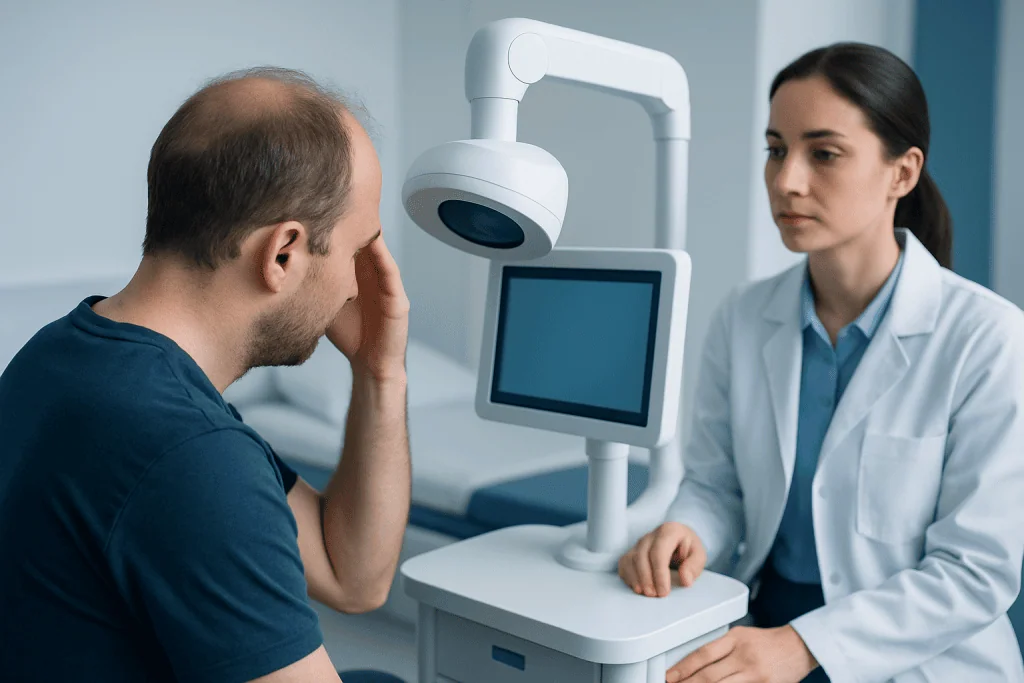
People often consider hair growth supplements when they notice gradual thinning, increased hair shedding in the shower or on the pillow, a widening part, or slower regrowth after hair falls out. These changes can occur with normal aging, but they can also appear after illness, weight loss, childbirth, major stress, or a restrictive eating pattern.
Some clues make a nutrition-related cause more likely. These include fatigue, brittle nails, pale skin, dizziness, heavy menstrual bleeding, digestive disorders that affect absorption, vegan or highly restrictive diets, and a history of bariatric surgery. In these situations, low iron stores, low vitamin D, low zinc, inadequate protein intake, or other deficiencies may play a role.
Scalp symptoms also matter. Itching, redness, pain, scaling, or patchy bald areas are less likely to be solved by supplements alone and may point to eczema, psoriasis, fungal infection, autoimmune hair loss, or another skin condition. A dermatologist may use scalp examination and history to distinguish shedding from follicle miniaturization, breakage, or inflammatory disease.
- Diffuse shedding after stress or illness can suggest telogen effluvium.
- A receding hairline or widening part often suggests androgenetic hair loss.
- Patchy smooth bald spots may suggest alopecia areata.
- Broken hairs with scale or inflammation may suggest a scalp disorder rather than a nutrient problem.
Which ingredients have evidence, and which claims are less certain

The evidence for hair growth supplements is mixed. Iron can help when laboratory testing confirms iron deficiency or low iron stores, especially in people with heavy menstrual bleeding or other risk factors. Zinc, vitamin D, and protein repletion can also be beneficial when a deficiency is present. In these cases, correcting the deficiency supports normal hair cycling rather than acting like a cosmetic quick fix.
Biotin is one of the most marketed hair ingredients, but routine use is often overstated. True biotin deficiency is uncommon, and high-quality evidence that biotin improves hair growth in otherwise healthy people is limited. The same caution applies to many blended “hair vitamins” that combine multiple ingredients without clear proof that the formula works better than treating a documented deficiency.
Some products include marine collagen, amino acids, saw palmetto, selenium, antioxidants, or herbal extracts. Research on these ingredients varies in quality, and many studies are small, short-term, or industry funded. That does not mean they never help, but it does mean the expected benefit should be discussed realistically. A supplement should not replace established care such as hair restoration treatment or medical evaluation when hair loss is progressing.
People should also remember that hair grows slowly. Even when a deficiency is corrected, visible improvement usually takes time because new growth follows the hair cycle. Marketing that promises rapid, dramatic regrowth can be misleading.
Risks, side effects, and interactions to know about
Because supplements are widely available, they are often assumed to be harmless. In reality, taking more than the body needs can cause problems. Excess vitamin A has been linked to hair shedding. Too much selenium can cause hair and nail changes, gastrointestinal symptoms, and other adverse effects. Iron can cause constipation, nausea, and toxicity if used unnecessarily, especially in children if accidentally ingested.
Biotin deserves special mention because high-dose biotin can interfere with certain laboratory tests. This may affect blood test results used to assess heart problems, thyroid disease, and other conditions. A person taking biotin should tell clinicians and the laboratory before blood work, since test interference can lead to misleading results.
Herbal ingredients may interact with medicines. Depending on the formula, there may be concerns with blood thinners, diabetes medications, hormone-sensitive conditions, liver disease, or surgery. Multi-ingredient products also make it harder to identify which component caused a reaction. Side effects can include stomach upset, headaches, rash, acne, and allergic reactions.
Quality is another issue. Products may vary in dose, purity, and ingredient accuracy. Choosing reputable manufacturers and avoiding megadoses reduces risk, but it does not eliminate it. A clinician or pharmacist can help review a product label for safety before use.
Who should avoid or be especially cautious with hair growth supplements
Hair growth supplements are not appropriate for everyone. Pregnant or breastfeeding people should be cautious because some ingredients may not be well studied in these groups, and excess vitamin A can be harmful during pregnancy. Children and teenagers should not use adult hair supplements unless a pediatric clinician advises it.
People with thyroid disease, kidney disease, liver disease, hemochromatosis, a history of kidney stones, or disorders that affect mineral balance should avoid self-prescribing supplements without medical guidance. Individuals being treated for anemia, cancer, or autoimmune disease should also ask their care team before starting any new product.
Caution is especially important for anyone taking anticoagulants, anti-seizure drugs, thyroid medicine, diabetes drugs, acne medicine, or multiple daily supplements. Combining products can accidentally push intake above safe upper limits. This is one reason a tailored plan is safer than taking several “beauty” formulations at once.
If hair loss is persistent or distressing, it may be more useful to seek expert assessment than to continue changing supplements. In some cases, people may benefit from a dermatologist’s evaluation and treatments such as dermatology care or, for advanced patterned loss, hair transplant options after a proper diagnosis.
How doctors evaluate hair thinning before recommending supplements
A medical evaluation usually begins with the pattern and timing of hair loss. Doctors ask about recent illness, fever, childbirth, emotional stress, surgery, weight loss, medications, menstrual history, family history, and hair care practices. They also examine the scalp for inflammation, scaling, scarring, and the distribution of thinning.
When a deficiency is suspected, blood tests may be recommended. These can include a complete blood count, iron studies such as ferritin, thyroid testing, vitamin D, zinc in selected cases, and other tests guided by symptoms and medical history. Testing helps avoid unnecessary supplements and focuses treatment where it is most likely to help.
Sometimes the main problem is not a deficiency at all. A patient may have androgenetic hair loss, telogen effluvium, traction-related damage, or a scalp disease that needs targeted treatment. In those cases, supplements alone are unlikely to give meaningful results. Evaluation can also identify broader health issues that need attention, such as thyroid disease or nutritional problems after restrictive eating.
At centers such as Acibadem International, multidisciplinary specialists and JCI-accredited hospitals diagnose and treat hair and scalp conditions for international patients, helping coordinate dermatology, endocrinology, nutrition, and other care when needed.
Practical guidance for safe use and realistic expectations
If a clinician recommends a supplement, the safest plan is usually the simplest one: correct the specific deficiency or nutritional gap rather than taking many overlapping products. Following the recommended dose, reviewing all current medicines, and checking whether blood tests are needed can reduce avoidable side effects.
Food intake still matters. Hair follicles require enough protein, calories, iron-rich foods, and overall balanced nutrition. Supplements cannot fully compensate for very low energy intake, crash dieting, or an eating pattern that consistently lacks protein and micronutrients. Good sleep, stress management, and gentle hair care also support recovery from shedding.
People should track progress with realistic time frames. Hair responds slowly, so improvement often takes several months. It is helpful to use the same lighting and hairstyle when comparing photos over time rather than judging results day to day.
- Do not take multiple hair supplements together unless a doctor advises it.
- Tell clinicians about biotin before laboratory testing.
- Stop and seek advice if a product causes rash, severe stomach upset, palpitations, or other concerning symptoms.
- If thinning continues despite correcting a deficiency, ask about other evidence-based treatments such as mesotherapy in selected settings or medical therapies recommended by a specialist.
When to seek medical care
Medical care is advisable if hair loss is sudden, severe, patchy, painful, or associated with redness, scaling, or scarring. Evaluation is also important if there are symptoms such as fatigue, weight change, heavy periods, cold intolerance, fever, or signs of a broader illness. These situations suggest that an underlying medical condition may be contributing.
A person should also seek care if hair thinning lasts more than a few months, happens after starting a new medicine, or does not improve with time and good nutrition. Professional advice is especially important before using supplements during pregnancy, while breastfeeding, or when living with a chronic disease. Early assessment can help identify reversible causes and avoid unnecessary or unsafe products.
Emergency care is not usually needed for routine hair shedding, but urgent assessment may be appropriate if symptoms of a severe allergic reaction occur after taking a supplement, such as swelling, trouble breathing, or widespread rash. In all other cases, a planned appointment with a qualified doctor or dermatologist is the best next step.
Frequently asked questions
Do hair growth supplements really work?
They can help when hair loss is related to a nutrient deficiency or inadequate intake, but they do not work equally well for all causes of hair thinning. Their benefit is usually limited if the main problem is genetic hair loss, a scalp disorder, hormonal change, or medication-related shedding.
Is biotin good for hair growth?
Biotin is important for health, but true biotin deficiency is uncommon. In people without deficiency, evidence that extra biotin improves hair growth is limited, and high doses can interfere with some lab tests.
How long do hair growth supplements take to show results?
Hair grows slowly, so noticeable improvement usually takes several months rather than days or weeks. Even when a deficiency is corrected, new growth follows the normal hair cycle, so patience and consistent follow-up are important.
Can too many vitamins cause hair loss?
Yes. Excess amounts of certain nutrients, especially vitamin A and selenium, may contribute to hair shedding or other health problems. More is not always better, which is why supplements should match a real need.
Who should talk to a doctor before taking hair supplements?
Anyone who is pregnant, breastfeeding, taking regular medicines, or living with thyroid, kidney, liver, or blood disorders should check first. Medical advice is also important for children, teenagers, and people with persistent, sudden, or patchy hair loss.
What tests might be needed before starting a supplement?
Depending on symptoms and history, a doctor may suggest blood tests such as a complete blood count, ferritin or iron studies, thyroid tests, and sometimes vitamin D or zinc. Testing helps identify the cause and can prevent unnecessary or unsafe supplement use.
This article is for general information only and is not a substitute for professional medical advice. Please consult a qualified doctor about your individual situation.
Hair transplant in Turkey — costs, graft counts & a free assessment
JCI-accredited · board-certified surgeons · reply within 24h
Add us as a Preferred Source to see more of our trusted health content across Google Search, AI Overviews and Discover.
Check your numbers in seconds
BMI, calories, due date, blood pressure and 30+ more clinical calculators — free, instant, doctor-reviewed ranges.

More from the Health Library

Junk Food and: Benefits, Risks, and Safe Use

Fish Oil Supplement: Evidence-Based Benefits, Risks, and Practical Guidance

Nutrition Parmesan: What the Clinical Research Actually Says

Food Poisoning: Evidence-Based Benefits, Risks, and Practical Guidance

Novos Labs Novos Core Longevity Drink Supplement: What the Clinical Research Actually Says