Hair Thickening Shampoo — Explained by Medical Evidence, Not Myths

Hair thickening shampoo mainly improves the look and feel of fuller hair rather than reversing most forms of hair loss. Helpful formulas may contain conditioning polymers, proteins, caffeine, ketoconazole, or salicylic acid, depending on scalp needs.
Key Takeaways
- Hair thickening shampoo mainly improves the look and feel of fuller hair rather than reversing most forms of hair loss.
- Helpful formulas may contain conditioning polymers, proteins, caffeine, ketoconazole, or salicylic acid, depending on scalp needs.
- A shampoo cannot overcome genetic hair loss, hormonal causes, nutritional deficiencies, or scarring scalp disease on its own.
- Choosing a gentle shampoo and avoiding harsh hair practices can reduce breakage and help hair appear denser.
- Persistent shedding, patchy loss, scalp inflammation, or sudden thinning should be assessed by a qualified doctor.
Hair thickening shampoo can improve the appearance and feel of fuller hair by coating strands, reducing breakage, and supporting scalp comfort, but it is not a stand-alone treatment for most medical causes of hair thinning. The best approach is to understand what these shampoos can realistically do, what ingredients matter, and when a doctor should evaluate ongoing shedding or visible thinning.
Overview: what hair thickening shampoo can and cannot do
Hair thickening shampoo can help hair look fuller, feel less limp, and appear healthier after washing. In most cases, this effect comes from ingredients that coat the hair shaft, reduce static, improve strand separation, and temporarily increase the diameter or stiffness of individual hairs. Some formulas also support scalp comfort, which may help reduce breakage related to irritation.
What it usually cannot do is regrow hair in the way people often hope. If thinning is caused by genetic pattern hair loss, hormonal changes, nutrient deficiency, autoimmune disease, thyroid problems, or scalp scarring disorders, shampoo alone is rarely enough. That does not make these products useless; it means they are cosmetic or supportive tools, not complete medical treatment.
A medical-evidence view separates appearance benefits from disease treatment. A well-formulated product may make fine hair look thicker right away and may improve breakage over time, but results depend on the cause of thinning. This is why people with ongoing hair loss often need evaluation for conditions such as hair loss rather than changing shampoos repeatedly.
How thickening shampoos work
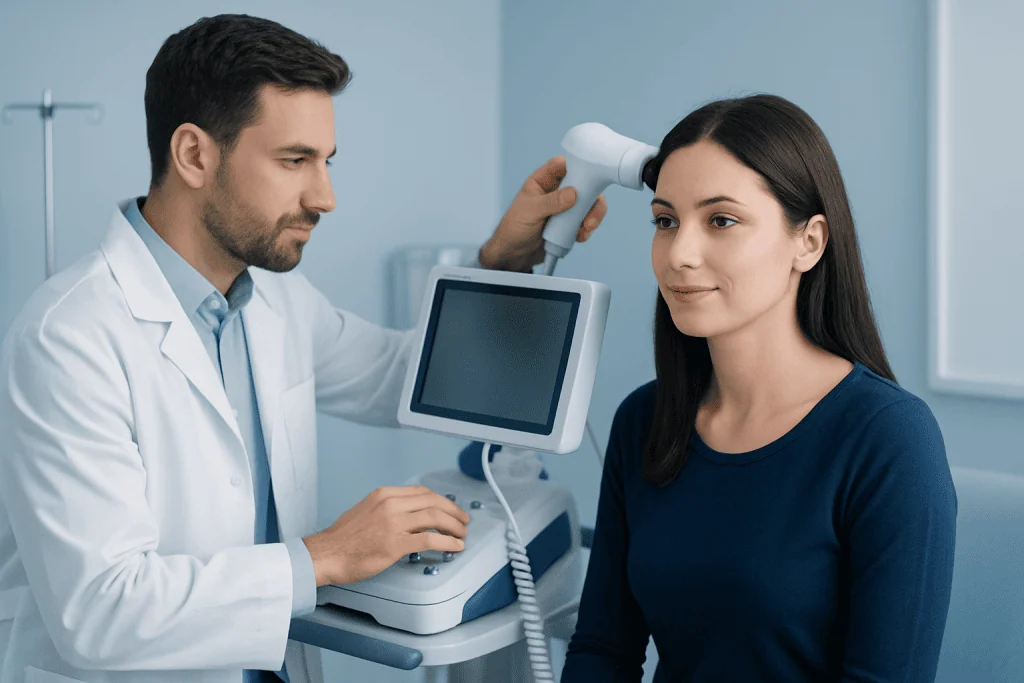
Most thickening shampoos work through physical and cosmetic mechanisms. Film-forming agents and conditioning polymers leave a light coating on the hair, which can make each strand feel slightly thicker. Proteins and certain humectants may also improve texture, while volumizing ingredients reduce the flat, weighed-down look that makes thinning more visible.
Some products focus on breakage control rather than true thickening. This matters because fragile hair can snap along the shaft, especially after heat styling, bleaching, tight hairstyles, or rough brushing. When breakage is reduced, the hair may seem denser because more strands reach full length and the overall style looks less sparse.
Other formulas target the scalp. If dandruff, excess oil, or buildup is present, washing with suitable active ingredients may create a healthier environment for existing hair and make the scalp less visible. This is supportive care, not a cure, but for some people it can make a meaningful difference in comfort and appearance.
Because shampoo is rinsed off after a short contact time, its biological effect is usually limited compared with leave-on medicines or prescription therapies. That is why claims of dramatic regrowth from shampoo alone should be viewed carefully.
Ingredients with the most reasonable evidence

Not all hair thickening shampoos are the same. Some mainly aim to improve styling and texture, while others include ingredients that may help specific scalp concerns. A practical way to choose is to match the formula to the hair and scalp problem rather than relying on marketing terms such as “miracle” or “instant growth.”
Ingredients often used in thickening or supportive shampoos include:
- Conditioning polymers and silicones: coat the hair shaft and improve fullness, smoothness, and combability.
- Hydrolyzed proteins: may temporarily strengthen the feel of hair and reduce the limp appearance of fine strands.
- Caffeine: commonly marketed for hair growth; evidence is limited, but some small studies suggest possible supportive effects.
- Ketoconazole: useful when dandruff or seborrheic dermatitis is present and sometimes discussed in pattern hair loss support because scalp inflammation may play a role.
- Salicylic acid: can help loosen scale and reduce buildup on the scalp.
- Zinc pyrithione or selenium sulfide: often used for dandruff control, which may improve scalp comfort and reduce scratching-related damage.
Ingredients with stronger medical evidence for hair regrowth are usually not standard shampoos. For example, established treatment plans for some types of thinning may involve hair transplant evaluation, topical therapies, or management of an underlying condition. A shampoo can be a useful addition, but it should not replace diagnosis when hair loss is progressive.
Fragrance, essential oils, and harsh detergents can also matter. A product that irritates the scalp may worsen discomfort or breakage, especially in people with eczema, sensitive skin, or frequent coloring treatments.
Who may benefit most from a hair thickening shampoo
These shampoos tend to help most when hair is naturally fine, limp, easily broken, or flattened by oil and buildup. In these situations, improving strand texture and reducing breakage can make hair appear fuller even without changing the number of hair follicles.
They may also be useful during periods of temporary shedding, such as after stress, illness, or hormonal shifts, when the main goal is to improve appearance while waiting for the hair cycle to recover. Still, if shedding is heavy or prolonged, a doctor may need to check for causes such as iron deficiency, thyroid disease, medication effects, or postpartum changes.
People with dandruff or inflamed scalp can benefit from formulas chosen for scalp health rather than volume alone. Treating seborrheic dermatitis or heavy scale can reduce visible flaking, itch, and follicle irritation. In some cases, evaluation by specialists in dermatology is the most effective way to select the right care plan.
By contrast, those with patchy bald spots, receding hairline, widening part, scarring, pain, or pustules should not rely only on over-the-counter shampoo. These patterns suggest a need for medical assessment.
How to choose and use one wisely
The best hair thickening shampoo is the one that fits the scalp condition, hair texture, and styling routine. Someone with oily scalp may do well with a lightweight volumizing formula, while someone with dry, fragile hair may need a gentler cleanser with strengthening and conditioning ingredients. If dandruff is part of the problem, an anti-dandruff active may be more helpful than a standard “thickening” label.
It helps to read claims realistically. Words like “fuller,” “volumizing,” and “thickening” often describe cosmetic effects. “Regrowth” or “hair loss treatment” should prompt closer scrutiny, especially if there is no clear active ingredient with evidence behind it. Very frequent switching between products can also make it harder to judge what is helping.
Use matters too. Shampoo should be massaged gently into the scalp rather than scrubbed aggressively with the nails. Rinsing thoroughly, avoiding very hot water, and following with a suitable conditioner can reduce tangling and breakage. Blow-drying on lower heat, minimizing tight hairstyles, and limiting bleach or harsh chemical processing can protect the gains made by a good shampoo.
If thinning is a major concern, shampoo works best as one part of a broader plan. Depending on the diagnosis, that plan may include scalp evaluation, blood tests, nutrition review, management of hormone-related issues, or discussion of restorative options such as surgical hair restoration for selected patients.
What medical evaluation may include
When hair thinning does not improve or becomes more noticeable, doctors look beyond the shampoo bottle. The evaluation usually begins with a history of the timeline, shedding pattern, family history, recent illness, medications, stress, weight change, pregnancy, and hair care practices. Scalp symptoms such as itching, redness, pain, or scale are especially important.
A physical examination may assess the scalp, hair shaft, part width, hairline, and areas of breakage or scarring. Sometimes the pattern clearly suggests genetic hair loss, while in other cases a doctor may suspect telogen effluvium, alopecia areata, fungal infection, traction damage, or inflammatory scalp disease. Some people may also need testing for causes linked to thyroid disease or nutritional imbalance.
Additional tests are chosen case by case. These may include blood tests, dermoscopy, hair-pull testing, or, less commonly, scalp biopsy when the diagnosis is uncertain. The purpose is not simply to label the problem, but to identify reversible causes and prevent avoidable progression.
This evidence-based approach is often more helpful than trying many shampoos in succession. A person may continue using a supportive thickening shampoo, but it should complement, not delay, a proper diagnosis.
Treatment options beyond shampoo
Treatment depends on the cause. For pattern hair loss, evidence-based care may involve topical or oral medicines chosen by a physician, alongside scalp care and cosmetic measures. For dandruff or seborrheic dermatitis, medicated shampoos or scalp treatments may be appropriate. For nutritional deficiency, correcting the deficiency is more important than any cosmetic cleanser.
Some hair loss conditions need prompt targeted treatment to avoid long-term thinning. Examples include inflammatory or scarring scalp disorders, severe alopecia areata, fungal infection, and traction-related damage that has become chronic. In these situations, over-the-counter products may provide temporary styling benefit but will not address the underlying process.
For people seeking aesthetic restoration after stable hair loss, procedural options may be discussed. These can include hair transplant procedures in carefully selected patients after medical evaluation. The right candidate is determined by the pattern of hair loss, donor hair availability, expectations, and overall scalp health.
Near the end of the care pathway, ongoing support may involve dermatologists, endocrinologists, and hair restoration specialists. Acibadem International’s multidisciplinary specialists and JCI-accredited hospitals diagnose and treat hair and scalp conditions for international patients when a more complete evaluation is needed.
When to seek medical care
Medical review is appropriate when hair thinning is sudden, persistent, or clearly worsening over weeks to months. It is especially important if the scalp is painful, itchy, inflamed, crusted, or developing patches of hair loss. These features suggest that a treatable medical condition may be present.
A doctor should also assess hair loss that occurs with fatigue, menstrual changes, major weight change, acne, excess facial hair, recent childbirth, new medication use, or signs of systemic illness. Children and teenagers with noticeable hair loss should be evaluated rather than treated only with cosmetic products.
Urgent assessment is sensible if there is rapid patchy hair loss, scarring, pus-filled bumps, or hair loss accompanied by rash. In many cases the condition is manageable, but earlier diagnosis can protect existing hair and guide more effective treatment.
Frequently asked questions
Does hair thickening shampoo really work?
It can work for appearance and texture, which is different from true regrowth. Many formulas make hair look fuller by coating strands, reducing flattening, and limiting breakage. If the problem is medical hair loss, shampoo alone is usually not enough.
Can a thickening shampoo stop hair loss?
Usually not by itself. It may support scalp health or reduce breakage, but it does not typically stop genetic, hormonal, autoimmune, or nutritional causes of hair loss. Persistent shedding should be assessed by a doctor.
What ingredients should a person look for?
That depends on the goal. For fuller-looking hair, conditioning polymers, proteins, and lightweight volumizing agents can help. For dandruff or scalp irritation, ingredients such as ketoconazole, zinc pyrithione, selenium sulfide, or salicylic acid may be more useful.
How long does it take to notice a difference?
Cosmetic thickening effects are often noticeable after the first few washes. Benefits related to reduced breakage or better scalp control may take several weeks of consistent use. If no improvement is seen and thinning continues, medical evaluation is reasonable.
Is hair thickening shampoo safe for daily use?
Many are safe when used as directed, but daily washing is not ideal for everyone. People with dry, colored, curly, or sensitive hair may need less frequent washing or a gentler formula. If irritation develops, the product should be stopped and a clinician consulted.
Can these shampoos help after stress-related shedding?
They may help hair look and feel better while shedding settles, but they do not directly reset the hair cycle. Stress-related shedding often improves gradually once the trigger resolves. If heavy shedding lasts more than a few months, a doctor may look for other causes.
This article is for general information only and is not a substitute for professional medical advice. Please consult a qualified doctor about your individual situation.
Hair transplant in Turkey — costs, graft counts & a free assessment
JCI-accredited · board-certified surgeons · reply within 24h
Add us as a Preferred Source to see more of our trusted health content across Google Search, AI Overviews and Discover.

More from the Health Library

Spatial Awareness: A Complete Medical Overview

Allosexual — Explained by Medical Evidence, Not Myths

Tabbouleh: An Evidence-Based Guide for Patients

Electrical Muscle Stimulation: What Patients Need to Know

Goosebumps in the Toilet: An Evidence-Based Guide for Patients