Heart health check vs Calcium score test: Which Is Right for You?

A heart health check provides a broad review of cardiovascular health and risk factors. A calcium score test is a quick, non-invasive CT scan that measures calcified plaque in the coronary arteries.
Key Takeaways
- A heart health check provides a broad review of cardiovascular health and risk factors.
- A calcium score test is a quick, non-invasive CT scan that measures calcified plaque in the coronary arteries.
- Neither test replaces urgent assessment for chest pain, breathlessness or other possible heart attack symptoms.
- Calcium scoring is most often considered for selected adults with borderline or intermediate cardiovascular risk.
- A result of zero does not rule out all heart disease, and a higher score does not by itself diagnose an artery blockage.
- Test selection should be individualized with a qualified clinician, based on risk factors, symptoms and medical history.
A heart health check is usually the best starting point for most people because it reviews symptoms, medical history, lifestyle and standard risk factors. A coronary calcium score test may be useful when a person without known heart disease has an uncertain risk level and needs more information about calcified plaque in the coronary arteries.
Heart health check vs calcium score test: the main difference
A heart health check is a broad cardiovascular assessment. It helps a clinician understand a person’s overall likelihood of developing heart and blood vessel disease by reviewing health history, family history, symptoms, blood pressure, cholesterol, blood sugar, body weight, smoking, activity, diet and other relevant factors. It can identify practical opportunities to reduce risk and may lead to further testing when needed.
A coronary artery calcium score, often called a calcium score test, is a specific imaging examination. It uses a low-dose CT scan to look for calcium deposits in the walls of the arteries that supply the heart. These deposits are a marker of coronary atherosclerosis, meaning plaque buildup. The scan produces a numerical score that can help refine prevention decisions for some people.
In simple terms, a heart health check asks, “What is this person’s overall cardiovascular risk and what should be done about it?” A calcium score test asks, “Is there detectable calcified plaque in the coronary arteries?” The two approaches can complement each other, but they are not interchangeable. For a broader assessment, a structured heart health check can provide an appropriate starting point.
- Heart health check: broad assessment, often including an examination and laboratory tests.
- Calcium score test: targeted CT imaging test for calcified coronary plaque.
- Best choice: depends on age, symptoms, existing conditions, family history and estimated cardiovascular risk.
What a heart health check can assess
A heart health check is designed to bring together information that affects cardiovascular risk. The clinician may ask about high blood pressure, diabetes, high cholesterol, kidney disease, inflammatory conditions, pregnancy-related complications, sleep problems and medication use. They may also ask whether close relatives had early heart disease or stroke.
Measurements commonly include blood pressure, weight or waist measures, and sometimes an electrocardiogram (ECG) when symptoms or examination findings suggest it may be helpful. Blood tests may assess cholesterol levels, blood sugar or long-term glucose control, kidney function and other factors. The exact tests vary according to the person’s circumstances rather than following a single fixed list.
The main benefit is context. A person can have a normal calcium score but still need care for high blood pressure, diabetes, smoking or markedly raised cholesterol. Likewise, a person may have no symptoms but have several modifiable risk factors. A heart health check supports prevention planning, including healthy lifestyle changes and, where appropriate, discussion of medicines that reduce cardiovascular risk.
It is also important to distinguish risk assessment from emergency assessment. A routine check does not rule out a current heart problem in someone with concerning symptoms. New, severe or persistent chest discomfort, unexplained shortness of breath, fainting or symptoms suggestive of stroke require prompt medical attention.
How a calcium score test works

Coronary artery calcium scanning is a specialized CT examination. Calcium is visible on CT images, allowing the scanner to identify and quantify calcified deposits in the coronary artery walls. A computer calculates a calcium score, often reported as an Agatston score. In general, a score of zero means no calcified plaque was detected, while higher scores indicate a greater amount of calcified plaque.
The score is not a direct measurement of how narrowed an artery is. Some plaque is not calcified and may not be reflected by the score, especially in younger adults. A high score indicates that coronary atherosclerosis is present, but it does not establish whether a particular artery has a flow-limiting blockage. Further evaluation is only considered when the person’s symptoms, examination and overall clinical picture support it.
For selected people, the result can make a prevention discussion more personalized. For example, it may help clarify whether cholesterol-lowering treatment is likely to offer meaningful benefit when standard risk estimates do not give a clear answer. It may also reinforce the importance of managing blood pressure, diabetes, tobacco exposure and physical inactivity.
Coronary calcium scanning differs from CT coronary angiography. Calcium scoring generally does not require contrast dye and does not show the artery lumen in the same detailed way as an angiographic CT scan. A clinician can explain which imaging approach, if any, fits the individual clinical question.
Who may benefit from each approach
Most adults benefit more from a conventional heart health check than from going directly to a calcium score test. This is particularly true for people with known risk factors, such as raised blood pressure, high cholesterol, diabetes, smoking, excess weight, limited physical activity or a family history of premature cardiovascular disease. The check can identify which risks are present and guide the next step.
A calcium score test is often considered for adults who do not have known coronary artery disease and have borderline or intermediate estimated risk. It may be useful when the decision about preventive medication is uncertain after a detailed consultation. It is not routinely necessary for people already known to have cardiovascular disease, those with clearly high risk who already need intensive prevention, or people with clearly low risk.
Calcium scoring is generally not used as a screening test for everyone. It may be less informative in some younger adults because early plaque may be non-calcified. It is also usually avoided during pregnancy because CT imaging involves radiation. People with symptoms that could suggest angina or another active heart condition need clinical assessment rather than relying on calcium scoring alone.
Individuals with diabetes, chronic kidney disease, very high cholesterol, a strong family history of early heart disease or other complex risk factors may need a more tailored plan. In these circumstances, a clinician may recommend broader testing, preventive treatment or referral to a cardiology team regardless of whether calcium scoring is performed.
What happens during the tests and afterward
A heart health check usually begins with a consultation. The clinician reviews personal and family history, current symptoms, lifestyle and medications, then performs appropriate measurements and may arrange blood tests. Some results are available during the appointment, while laboratory results may take longer. Follow-up commonly focuses on a personalized plan, which can include nutrition, activity, smoking cessation, sleep, stress management and treatment of medical conditions.
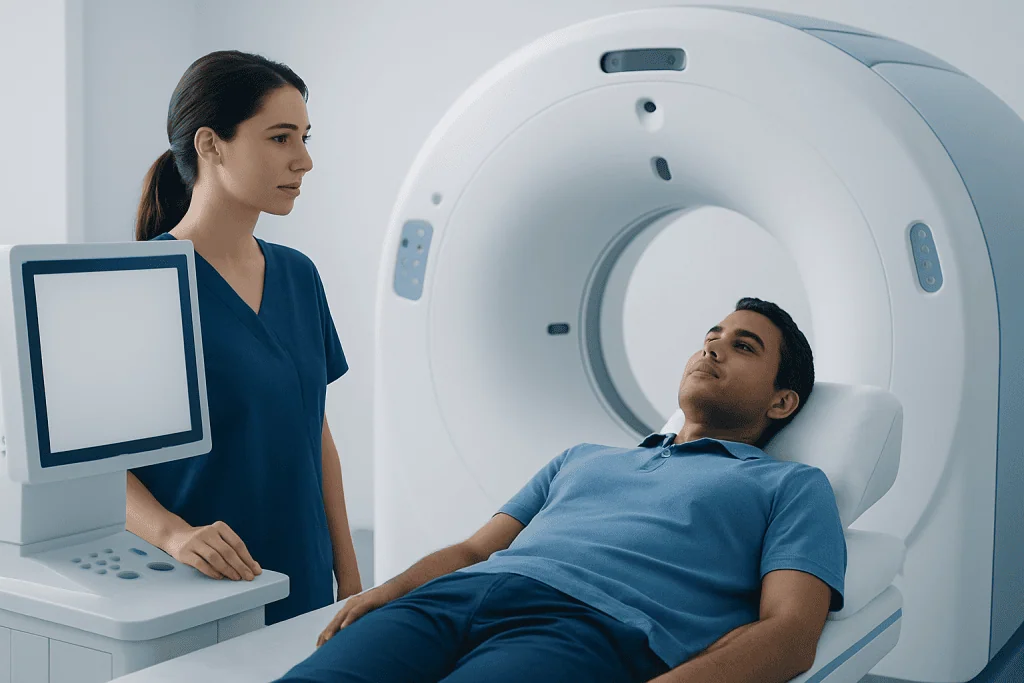
A calcium score scan is brief and non-invasive. Before the scan, the imaging team may ask about medical history, pregnancy possibility and previous scans. The person lies on a scanning table, ECG stickers are placed on the chest to time the images with the heartbeat, and the table moves through the CT scanner. They may be asked to hold their breath for a few seconds while images are taken.
The scan itself commonly takes only a few minutes, and no needles, contrast injection or sedation are usually needed. Most people can return to normal activities immediately afterward. A radiologist or cardiology clinician interprets the score in the context of the person’s age, sex, health profile and reason for testing.
The benefits of calcium scoring include speed, non-invasiveness and the ability to identify calcified coronary plaque before symptoms occur in selected people. Its limitations include a small exposure to radiation, the possibility of incidental findings and the fact that it cannot rule out non-calcified plaque or explain every cause of chest symptoms. Results should guide a conversation, not be interpreted in isolation.
Making sense of results and planning prevention
A calcium score of zero can be reassuring for many appropriately selected people because it suggests a low near-term likelihood of coronary events. However, it does not mean that all cardiovascular risk is absent. Smoking, diabetes, a strong family history of premature heart disease and some other factors may still justify active prevention, even when no calcium is detected.
When a calcium score is above zero, it confirms the presence of calcified coronary plaque. The next steps depend on the amount of calcium, overall risk, symptoms and existing treatment. The clinician may recommend intensified lifestyle measures, review of blood pressure and cholesterol targets, or discussion of preventive medication. A higher score does not automatically mean an invasive procedure is needed.
Whether or not imaging is used, heart-healthy habits remain central. Helpful measures include avoiding tobacco, following a balanced eating pattern rich in vegetables, fruit, whole grains and unsaturated fats, being physically active within individual ability, maintaining a healthy weight, sleeping adequately and managing conditions such as hypertension and diabetes. These steps support vascular health at every level of measured risk.
People who are considering testing can prepare for their appointment by bringing recent blood test results, a list of medications, details of family cardiovascular history and notes about any symptoms. This information helps the clinician decide whether a general risk assessment, calcium scoring, other testing or direct treatment is the most useful next step.
When to seek medical care
Routine heart risk assessment is appropriate for people who want to understand or improve their cardiovascular health, especially if they have risk factors or a family history of early heart disease. A clinician should also be consulted about new exercise intolerance, recurring chest discomfort, palpitations, unexplained breathlessness, dizziness or fainting. These symptoms may have many causes, but they deserve proper assessment.
Urgent medical care is needed for chest pressure, tightness, heaviness or pain that is severe, persistent, occurs with exertion or is accompanied by sweating, nausea, shortness of breath, fainting, or pain spreading to the arm, jaw, back or shoulder. Sudden weakness or numbness on one side of the body, trouble speaking, facial drooping or sudden severe imbalance also needs emergency assessment, as these can be signs of stroke.
A calcium score test should not delay urgent evaluation of possible heart attack symptoms. Emergency clinicians may use ECGs, blood tests and other investigations to assess acute symptoms. For planned prevention and diagnostic decisions, Acibadem International’s multidisciplinary specialists and JCI-accredited hospitals can assess cardiovascular risk and coordinate care for international patients.
Frequently asked questions
Is a heart health check better than a calcium score test?
Neither is universally better because they answer different questions. A heart health check provides a broad review of risk factors and is usually the first step, while a calcium score test can add information about calcified coronary plaque for selected people with uncertain risk.
Can a calcium score test detect a heart blockage?
A calcium score shows calcified plaque in the coronary artery walls, but it does not directly measure the degree of narrowing in an artery. A high score can indicate a greater plaque burden, but additional testing is only considered when clinically appropriate.
What does a calcium score of zero mean?
A score of zero means that no calcified plaque was detected on the scan. It is generally associated with lower near-term coronary risk in appropriately selected people, but it does not exclude non-calcified plaque or remove the importance of managing risk factors.
Does a calcium score test require contrast dye or injections?
A standard coronary calcium score scan usually does not require contrast dye, injections or sedation. It is a non-invasive CT scan, and most people can return to normal activities immediately afterward.
Who should not rely on a calcium score test?
People with new or concerning chest symptoms should seek clinical assessment rather than relying on a screening calcium score. The test may also be less useful for people with known coronary disease, clearly high cardiovascular risk, pregnancy, or certain situations where another test is more appropriate.
How often should a calcium score test be repeated?
There is no single repeat schedule that suits everyone. A clinician considers the initial result, age, risk factors, changes in health and whether a repeat scan would meaningfully change prevention decisions.
References
- American Heart Association
- American College of Cardiology
- European Society of Cardiology
- National Heart, Lung, and Blood Institute
- Radiological Society of North America
This article is for general information only and is not a substitute for professional medical advice. Please consult a qualified doctor about your individual situation.
Heart care in Turkey — expert evaluation and treatment
JCI-accredited · board-certified surgeons · reply within 24h
Add us as a Preferred Source to see more of our trusted health content across Google Search, AI Overviews and Discover.
Check your numbers in seconds
BMI, calories, due date, blood pressure and 30+ more clinical calculators — free, instant, doctor-reviewed ranges.