Height Surgery Cost: Candidacy, Procedure Steps, and Recovery Timeline

Height surgery usually refers to limb lengthening, a gradual process that encourages new bone to form as a bone segment is slowly separated. Total cost varies substantially with the type of device, number of bones treated, country, hospital stay, rehabilitation needs and length of follow-up.
Key Takeaways
- Height surgery usually refers to limb lengthening, a gradual process that encourages new bone to form as a bone segment is slowly separated.
- Total cost varies substantially with the type of device, number of bones treated, country, hospital stay, rehabilitation needs and length of follow-up.
- Candidates need healthy bones, realistic expectations, reliable support and the ability to participate in intensive rehabilitation.
- Recovery commonly takes many months, with regular imaging and physiotherapy needed throughout the bone-healing process.
- Possible complications include infection, joint stiffness, nerve or blood-vessel symptoms, delayed healing and differences in limb alignment or length.
Height surgery cost cannot be estimated reliably without an individual assessment because the total plan may include imaging, implants, surgery, hospital care, rehabilitation, follow-up and management of any complications. Height increase surgery is a major orthopedic process that gradually lengthens bone and requires careful candidacy screening, sustained rehabilitation and long-term follow-up.
Overview: What Does Height Surgery Cost Include?
Height surgery cost is not one fixed figure. It reflects a personalized treatment plan, including specialist assessments, X-rays and other imaging, the lengthening device, anesthesia, operating-room services, hospital admission, medicines, physiotherapy, repeat imaging, follow-up visits and, in some cases, later implant removal. The final cost can also differ according to the country, hospital, surgical complexity and whether one or both leg segments are treated.
Height surgery generally means limb lengthening surgery, an orthopedic procedure that gradually increases the length of a bone. It may be performed to address a meaningful limb-length difference caused by injury, congenital conditions or previous bone disease. Some adults also seek it for cosmetic height increase; this requires particularly thorough physical and psychological evaluation because it is elective surgery with a demanding recovery.
A responsible consultation should focus on safety and suitability rather than cost alone. The orthopedic team can explain what is included in the proposed plan, the expected duration of treatment, potential additional needs and the follow-up arrangements required after travel or discharge.
How Limb Lengthening Works
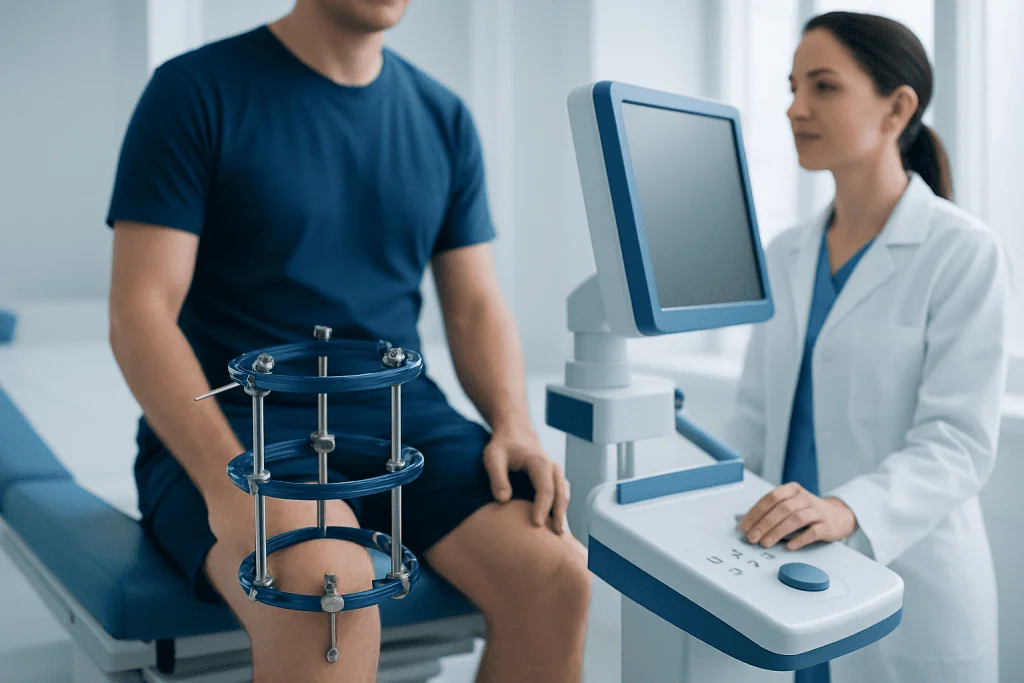
Bone has a capacity to form new tissue when it is gradually and carefully separated. During limb lengthening, the surgeon makes a controlled surgical cut in the bone, called an osteotomy, and stabilizes the bone with a specialized internal or external device. After an initial healing period, the device slowly moves the two bone ends apart in very small increments.
This gradual separation is called the distraction phase. New bone develops in the gap while surrounding muscles, nerves, blood vessels and skin adapt. Once the planned length has been reached, the new bone must harden and mature during the consolidation phase. The device remains in place until the surgeon confirms sufficient healing through clinical review and imaging.
Modern methods may use an internal lengthening nail placed within the bone and controlled externally, or an external frame attached around the limb. The most suitable approach depends on bone anatomy, the amount of correction needed, prior operations, infection history and the surgeon’s assessment. The aim is not simply to add length, but to preserve alignment, joint motion and safe bone healing.
Who May Be a Candidate?

Candidacy is individualized. For reconstructive limb lengthening, a specialist may consider surgery when a limb-length discrepancy affects walking, posture, comfort or function, or when a deformity needs correction. Before surgery, the team assesses the difference in limb length, bone alignment, joint condition, muscle strength and the health of blood vessels and nerves.
Adults considering elective height increase surgery should have completed skeletal growth and have healthy bones and joints. They need to understand that the process involves daily or regular device adjustments, frequent appointments, exercise therapy, temporary limits on activity and a recovery that may last many months. A stable home environment and practical assistance during reduced mobility are important.
Factors that can make surgery less suitable or require treatment first include uncontrolled diabetes, active infection, poor bone quality, smoking or nicotine use, certain circulation problems and an inability to attend follow-up. Mental health screening may be recommended for elective procedures to ensure expectations are realistic and the decision is well considered. A consultation with an experienced limb reconstruction orthopedic surgeon is essential.
Procedure Steps: From Planning to Lengthening
Planning begins with a detailed medical history, physical examination and standing X-rays that measure limb length and alignment. Additional imaging may be needed to evaluate bone shape, previous implants or joint health. The surgeon discusses the target correction, device options, expected mobility, rehabilitation plan and risks, then develops an individualized surgical plan.
On the day of surgery, anesthesia is used and the bone is carefully divided at the planned level. The surgeon places an internal lengthening nail or applies an external fixator, checking alignment with imaging. Depending on the treatment plan, surgery may involve the femur, tibia or another bone; procedures involving more than one segment require additional consideration and recovery planning.
There is usually a short period after surgery before active lengthening begins. During the distraction phase, the device is adjusted according to the surgeon’s instructions, often in small daily increments. Regular X-rays allow the team to monitor new bone formation, alignment and the position of the device. Physiotherapy begins early to maintain joint range of motion and reduce stiffness.
When the desired length is reached, adjustments stop and consolidation begins. The new bone needs time to become strong enough for increasing weight-bearing and, eventually, unrestricted activity. The surgical team decides when an internal nail can remain, be removed or when an external frame can be taken off, based on healing rather than a fixed calendar date.
Recovery Timeline and Rehabilitation
Recovery varies widely, so the surgeon’s instructions take priority over general timelines. In the first days and weeks, patients focus on wound care, pain control, safe movement and beginning prescribed exercises. Depending on the device and bone treated, weight-bearing may be limited initially, and crutches, a walker or a wheelchair may be needed.
The lengthening phase can last weeks to months, depending on the planned increase and the body’s response. During this period, frequent physiotherapy is central to treatment. Exercises help preserve movement in the hips, knees, ankles and surrounding muscles. Appointments and X-rays are needed regularly because early changes in stiffness, alignment or bone formation may require the plan to be adjusted.
Bone consolidation often takes longer than the active lengthening phase. Return to desk work, driving, school, travel and other daily activities depends on mobility, pain levels, the type of work and the surgeon’s guidance. Higher-impact activities, including running and contact sports, generally require confirmation that the bone has healed adequately.
Patients should plan for a prolonged commitment to rehabilitation and follow-up. For people traveling for treatment, it is especially important to clarify how postoperative reviews, physiotherapy and urgent concerns will be coordinated after they return home.
Benefits, Risks and Decisions to Discuss
For people with a clinically significant limb-length difference or deformity, limb lengthening may improve limb symmetry, walking mechanics, balance, shoe fitting and daily function. In selected cases, correcting a discrepancy may also reduce strain related to an uneven gait. The potential benefit must always be weighed against the time, physical effort and medical risks involved.
Possible complications include pain, wound or deep infection, bleeding, blood clots, stiffness or contractures around joints, irritation or injury to nerves and blood vessels, delayed bone healing, poor bone formation, implant problems, malalignment and an unplanned difference in final limb length. Additional procedures may occasionally be needed. External frames may involve pin-site care and carry their own infection risks.
Patients should contact their care team promptly for increasing pain, fever, wound drainage, new numbness or weakness, marked swelling, a cold or pale foot, trouble moving the toes, chest pain or shortness of breath. These symptoms do not always mean a serious complication, but they need timely medical assessment.
Before deciding, patients can ask how many follow-up visits are expected, who provides physiotherapy, what complications may require further treatment and what support is available after discharge. At Acibadem International, multidisciplinary orthopedic specialists in JCI-accredited hospitals assess and treat limb reconstruction needs for international patients.
When to Seek Medical Care
A person should arrange a medical assessment if one leg appears shorter than the other, walking feels uneven, shoes wear down differently, or there is persistent pain in the hip, knee, back or ankle associated with a suspected limb-length difference. Children and adolescents with a noticeable difference in gait or leg length should be evaluated by a pediatric orthopedic specialist, as treatment timing may differ while growth is continuing.
People considering elective height surgery should seek advice from a qualified orthopedic limb reconstruction team before making travel, financial or lifestyle commitments. A complete evaluation can identify whether there is an underlying condition, whether non-surgical options are appropriate and whether surgery is likely to offer a meaningful benefit.
Urgent medical care is appropriate after any orthopedic surgery for sudden shortness of breath, chest pain, fainting, severe or worsening swelling, uncontrolled pain, high fever, rapidly spreading redness, new weakness or loss of sensation. Early review helps the surgical team investigate concerns and protect recovery.
Frequently asked questions
What is included in height surgery cost?
The overall cost may include consultations, imaging, surgery, anesthesia, the lengthening device, hospital care, medicines, rehabilitation and follow-up appointments. It may also be affected by whether treatment involves one or both legs, the type of implant used and the need for further procedures. A hospital should provide an individualized estimate after clinical assessment.
How much height can limb lengthening surgery add?
The amount of lengthening that may be considered depends on the bone treated, joint and soft-tissue flexibility, overall health and the surgeon's safety assessment. There is no universally appropriate target for every person. Attempting excessive lengthening can increase the likelihood of complications, so goals should be discussed carefully with a specialist.
Is height surgery painful?
There is pain and discomfort after surgery and during rehabilitation, but the care team provides an individualized pain-management plan. Muscle tightness and joint stiffness can also occur as tissues adapt to gradual lengthening. Regular physiotherapy and communication with the surgical team are important parts of managing symptoms safely.
How long does recovery from height surgery take?
Recovery commonly takes many months and may take longer depending on the amount of lengthening, the bone involved and individual healing. The active lengthening period is followed by a consolidation period while new bone strengthens. Follow-up imaging and rehabilitation continue until the surgeon confirms adequate healing and function.
Can a person walk during limb lengthening?
Some patients can walk with mobility aids during part of treatment, but permitted weight-bearing depends on the device, bone healing and the surgeon's instructions. Others may need to place little or no weight on the limb initially. Patients should not increase activity beyond their prescribed plan because this can affect alignment or healing.
What are the main risks of limb lengthening surgery?
Risks include infection, delayed bone healing, joint stiffness, muscle tightness, nerve symptoms, blood clots, implant problems and changes in alignment. Although careful planning and close monitoring can reduce risk, they cannot remove it completely. Patients should discuss their individual risk factors and the plan for managing complications before surgery.
References
- American Academy of Orthopaedic Surgeons
- Hospital for Special Surgery
- International Center for Limb Lengthening
- National Institute of Arthritis and Musculoskeletal and Skin Diseases
This article is for general information only and is not a substitute for professional medical advice. Please consult a qualified doctor about your individual situation.
Joint and spine care in Turkey — expert assessment & treatment
JCI-accredited · board-certified surgeons · reply within 24h
Add us as a Preferred Source to see more of our trusted health content across Google Search, AI Overviews and Discover.