Hemifacial Spasm — Explained by Medical Evidence, Not Myths

Hemifacial spasm usually affects only one side of the face and often starts around the eye. The most common cause is pressure on the facial nerve by a nearby blood vessel.
Key Takeaways
- Hemifacial spasm usually affects only one side of the face and often starts around the eye.
- The most common cause is pressure on the facial nerve by a nearby blood vessel.
- Diagnosis is based on medical history, neurological examination, and often MRI imaging.
- Treatment may include botulinum toxin injections, medicines, or surgery in selected cases.
- Persistent one-sided facial twitching should be assessed by a qualified doctor to confirm the cause.
Hemifacial spasm is a neurological movement disorder that causes repeated, involuntary twitching of muscles on one side of the face. It is often linked to irritation of the facial nerve, and many people can be helped with accurate diagnosis and treatment.
Overview: what hemifacial spasm is
Hemifacial spasm is a condition that causes involuntary, repeated contractions of muscles on one side of the face. These movements are not under conscious control and may begin as subtle twitching near the eye before spreading to the cheek, mouth, or neck over time. Although the spasms can be disruptive and tiring, they are usually related to nerve irritation rather than a dangerous muscle problem.
In most cases, hemifacial spasm develops because the facial nerve is being irritated where it exits the brainstem. A small blood vessel is often responsible for this ongoing pressure. Less commonly, other structural causes may be involved, which is why proper evaluation matters.
People sometimes confuse hemifacial spasm with stress-related eye twitching, facial tics, or other movement disorders. Unlike occasional eyelid flutter, hemifacial spasm tends to be persistent, one-sided, and capable of affecting several facial muscles together. A careful neurological assessment helps distinguish it from other causes of facial movement.
How it feels: symptoms and day-to-day effects
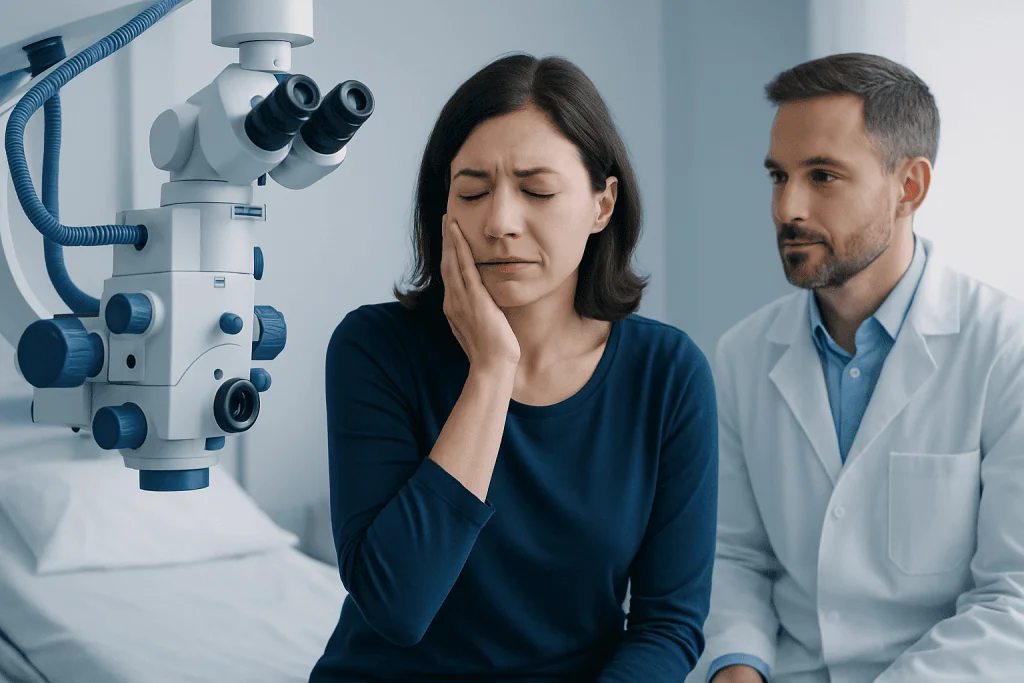
The most common early symptom is twitching around one eye. At first, it may come and go, but over time the contractions can become more frequent, stronger, and more noticeable. Some people experience brief episodes, while others have spasms that occur many times a day or continue for longer periods.
As the condition progresses, muscles in the lower face may also be involved. This can make one side of the mouth pull, the cheek tighten, or the jaw feel as though it briefly clamps. In some people, the eye may close forcefully during a spasm, which can interfere with reading, driving, or other daily activities.
Common symptoms may include:
- Repeated twitching or jerking on one side of the face
- Spasms that start around the eyelid
- Spread of twitching to the cheek, mouth, or neck
- Episodes triggered or worsened by stress, fatigue, or anxiety
- Temporary difficulty with vision when the eye closes during a spasm
Many people also notice social and emotional effects. Visible facial movements can feel embarrassing or frustrating, even though the condition is not caused by anything the person did. Understanding that hemifacial spasm is a recognized neurological disorder can help reduce self-blame and support timely care.
Causes and risk factors

The most common cause of hemifacial spasm is compression of the facial nerve by a nearby artery or vein. The facial nerve controls many of the muscles responsible for expression, blinking, and movement of the mouth. When a pulsating blood vessel repeatedly touches the nerve, it can make the nerve fire abnormally and trigger spasms.
Less often, hemifacial spasm may be linked to previous facial nerve injury, inflammation, or a structural problem such as a benign growth near the nerve. In rare cases, disorders affecting the brainstem or surrounding structures can produce similar symptoms. This is one reason doctors may recommend imaging to look for an underlying explanation.
Risk factors are not always clear, and the condition can occur without an obvious trigger. It is more common in middle and later adulthood than in childhood. A history of facial nerve problems, vascular changes, or certain neurological conditions may increase the need for further evaluation. Some conditions that can overlap with facial spasm symptoms may need to be ruled out, including trigeminal neuralgia when facial symptoms are painful rather than twitching.
How doctors diagnose hemifacial spasm
Diagnosis usually begins with a detailed conversation about the pattern of symptoms. A doctor will ask when the twitching began, whether it always affects the same side, how long episodes last, and whether stress, tiredness, or bright light seem to make it worse. This history is important because the pattern of one-sided, repeated facial contractions is often highly suggestive.
A neurological examination helps assess facial movement, muscle control, and whether any other nerves may be involved. Doctors also consider other explanations for facial twitching, such as eyelid myokymia, tic disorders, facial dystonia, or residual effects of Bell’s palsy. In some cases, a person may need assessment through neurology evaluation to clarify the diagnosis and guide next steps.
MRI is commonly used to look for blood vessel contact with the facial nerve and to exclude uncommon structural causes. If symptoms are atypical, additional testing may be considered to rule out related disorders in the brain and nerves. Imaging is especially helpful when planning treatment, including whether a person may benefit from neurosurgical care.
Treatment options and what to expect
Treatment depends on symptom severity, how much daily life is affected, and the suspected cause. For many people, the most effective non-surgical treatment is botulinum toxin injection into the affected facial muscles. These injections reduce overactive muscle contractions and often provide temporary relief that can be repeated at intervals recommended by the treating specialist.
Some people may also be offered oral medicines, especially if symptoms are mild or if injections are not suitable. Medicines can help in selected cases, but they may not work as consistently as injections and can have side effects such as sleepiness or dizziness. A doctor will balance likely benefits and risks based on the person’s age, health, and symptom pattern.
If imaging shows clear nerve compression and symptoms are significant, surgery may be considered. The main procedure is microvascular decompression, which aims to relieve pressure on the facial nerve by separating it from the vessel causing irritation. This approach is generally reserved for carefully selected patients after discussion with specialists in brain and nerve surgery.
Follow-up is important whatever treatment is chosen. Doctors monitor how well symptoms respond, whether the pattern changes, and whether another diagnosis should be reconsidered. In people with persistent or complex facial movement symptoms, related neurological conditions such as Parkinson's disease may also need to be excluded when the presentation is not typical for hemifacial spasm.
Self-care, triggers, and living with the condition
Self-care does not replace medical treatment, but it can help reduce the impact of spasms. Many people notice that fatigue, emotional stress, and lack of sleep make twitching more noticeable. Building a regular sleep routine, taking breaks during visually demanding tasks, and using stress-management techniques may help some people feel more in control.
Keeping a symptom diary can be useful before and after treatment. Noting when spasms happen, what muscles are involved, and whether certain triggers were present can help a doctor evaluate progress. This record may also help distinguish hemifacial spasm from more occasional eyelid twitching or functional symptoms.
It is generally wise to avoid self-diagnosing persistent facial twitching. Internet advice may overemphasize myths, such as caffeine being the sole cause, or suggest that every twitch is harmless. While caffeine, tiredness, or anxiety may worsen symptoms, true hemifacial spasm usually reflects facial nerve overactivity and deserves professional assessment.
When to seek medical care
Medical review is appropriate if one-sided facial twitching persists, becomes more frequent, spreads beyond the eye, or begins to interfere with reading, work, driving, or sleep. A doctor should also assess symptoms that are new, unexplained, or associated with facial weakness, hearing changes, numbness, or pain. These features do not always mean something serious, but they do need proper evaluation.
Urgent assessment is especially important if facial symptoms appear suddenly together with trouble speaking, severe weakness, severe headache, or balance problems, because these signs may point to a different neurological emergency. A clinician can determine whether the movements fit hemifacial spasm or another condition that needs prompt treatment.
For people seeking coordinated care, Acibadem International’s multidisciplinary specialists and JCI-accredited hospitals diagnose and treat hemifacial spasm for international patients. Specialist input may involve neurology, imaging, and, when needed, advanced MRI assessment and surgical planning.
Frequently asked questions
Is hemifacial spasm serious?
Hemifacial spasm is usually not life-threatening, but it can significantly affect comfort, vision, sleep, and quality of life. It should be assessed because persistent one-sided facial twitching can sometimes resemble other neurological conditions.
What is the most common cause of hemifacial spasm?
The most common cause is irritation of the facial nerve by a nearby blood vessel. This repeated contact can make the nerve send abnormal signals to the muscles on one side of the face.
Can stress cause hemifacial spasm?
Stress is not usually the root cause of hemifacial spasm, but it can make symptoms more noticeable or more frequent. Many people find that fatigue and anxiety also worsen twitching.
How is hemifacial spasm different from a simple eye twitch?
A simple eye twitch is often brief, mild, and limited to the eyelid. Hemifacial spasm is more likely to be persistent, affect one side of the face, and spread beyond the eye to the cheek or mouth.
Can hemifacial spasm go away on its own?
Some people may have fluctuating symptoms, but hemifacial spasm often persists without treatment. Because of this, medical evaluation is helpful to confirm the diagnosis and discuss treatment options that may improve control.
What treatments help hemifacial spasm?
Common treatments include botulinum toxin injections, selected oral medicines, and surgery for appropriate patients when nerve compression is confirmed. The best option depends on symptom severity, the underlying cause, and overall health.
References
- National Institute of Neurological Disorders and Stroke
- American Academy of Neurology
- National Organization for Rare Disorders
- Mayo Clinic
- Merck Manual
This article is for general information only and is not a substitute for professional medical advice. Please consult a qualified doctor about your individual situation.
Explore treatments in Turkey — costs, top hospitals & a free quote
JCI-accredited · board-certified surgeons · reply within 24h
Add us as a Preferred Source to see more of our trusted health content across Google Search, AI Overviews and Discover.

More from the Health Library

Mole on Pennies: An Evidence-Based Guide for Patients
Fluid in lungs: A Complete Medical Guide for Patients

Foot Joints: What Patients Need to Know

Normal height woman: Charts, Averages, and What’s Normal

Colace Stool Softener: What Patients Need to Know