Mole on Pennies: An Evidence-Based Guide for Patients

A mole on the penis is often harmless, but it cannot be diagnosed reliably from appearance alone. Benign causes include ordinary moles, genital melanosis and post-inflammatory color changes.
Key Takeaways
- A mole on the penis is often harmless, but it cannot be diagnosed reliably from appearance alone.
- Benign causes include ordinary moles, genital melanosis and post-inflammatory color changes.
- The ABCDE skin check can help identify changes that need prompt assessment, although genital lesions may look different from moles elsewhere.
- Sexually transmitted infections can cause genital bumps or spots, but they are not the same as a typical mole.
- A dermatologist, urologist or sexual health clinician can examine a lesion and arrange dermoscopy or biopsy when needed.
A search for “mole on pennies” commonly refers to a mole or dark spot on the penis. Many pigmented spots in this area are benign, but any new, changing, irregular, painful or bleeding lesion should be examined by a qualified clinician to identify its cause safely.
Overview: What Does “Mole on Pennies” Mean?
The phrase “mole on pennies” is often used when someone means a mole on the penis. A mole is a small collection of pigment-producing skin cells, also called melanocytes. Moles may be tan, brown, black, pink or skin-colored, and they can be flat or raised. They may occur on almost any part of the skin, including the penile shaft, glans (head of the penis), scrotum, groin and pubic region.
Most pigmented marks in the genital area are not dangerous. However, genital skin is delicate and can show a wide range of normal color variation. A dark spot may be a regular mole, genital melanosis, a mark left after inflammation or friction, or another skin condition. Less commonly, a changing pigmented lesion may need investigation for skin cancer, including melanoma.
It is not possible to confirm the cause of a mole from a written description or photograph alone. The most useful information is whether the spot is new, whether it is changing, and whether there are symptoms such as itching, pain, crusting, ulceration or bleeding. A medical examination is the safest way to obtain a clear diagnosis.
What a Normal Mole or Pigmented Spot May Look Like
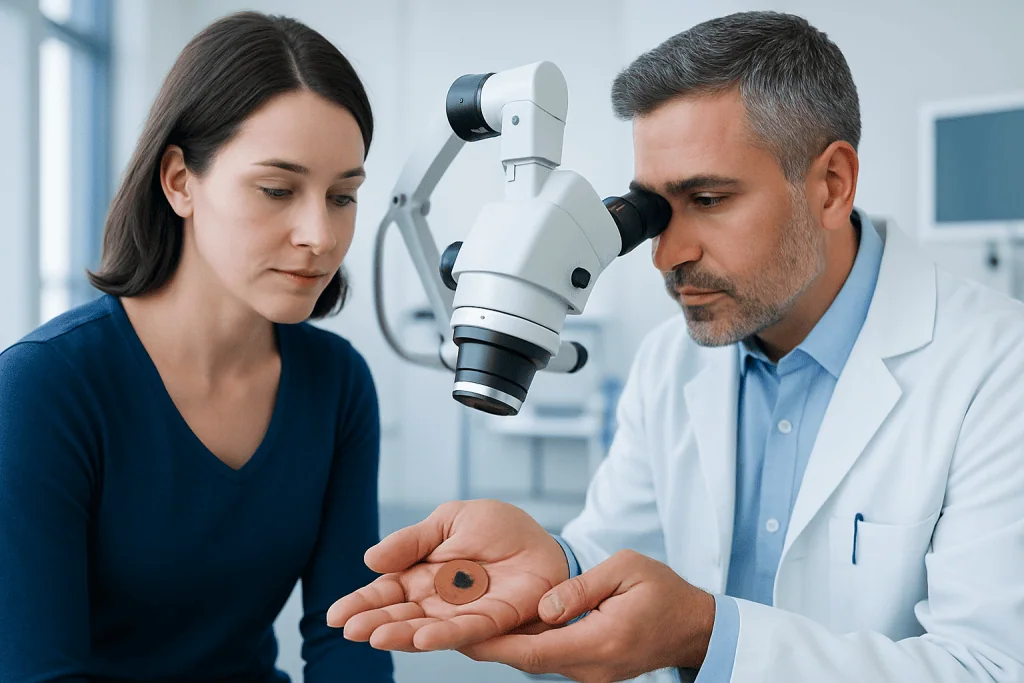
A common mole is usually round or oval, has a relatively even color, and remains stable over time. It may be flat or slightly raised. Some people have moles from childhood, while others develop them through early and middle adulthood. Having a single stable mole on the penis does not automatically indicate an infection or cancer.
Genital melanosis, sometimes called genital lentiginosis, is another benign explanation for flat brown, dark brown or black patches. These patches are caused by increased pigmentation in the skin rather than an increased number of melanocytes. They may occur as one patch or several small, irregularly shaped areas and can remain unchanged for years.
Other benign changes can include darker skin after irritation, shaving, an ingrown hair, eczema, psoriasis, a healed injury or inflammation. Friction from clothing, sexual activity or exercise may make existing color differences more noticeable. Although these causes are often harmless, a new or unexplained mark should not simply be assumed to be normal without a clinician’s advice.
- A stable spot with a consistent color is generally less concerning than one that changes.
- Skin color and pigment variation are normal in the genital area.
- A lesion can be benign even if it is darker than nearby skin, but assessment may still be appropriate if it is new.
Changes and Symptoms That Need Attention

The ABCDE method is a useful general guide for monitoring pigmented lesions. A stands for asymmetry, where one half does not resemble the other. B is for an irregular or poorly defined border. C refers to varied color within one lesion, such as combinations of brown, black, blue, red, white or pink. D means diameter, especially a spot that is growing or larger than many ordinary moles. E stands for evolving: any change in size, shape, color, surface or symptoms.
On genital skin, the “evolving” feature is particularly important. A mole that becomes raised, develops a new uneven surface, forms a scab, bleeds without injury, becomes persistently itchy or painful, or turns into a sore should be assessed. A spot that looks noticeably different from a person’s other moles, sometimes called an “ugly duckling,” also deserves clinical review.
Not every concerning-looking genital lesion is melanoma. For example, genital warts may appear as small flesh-colored, pink, brown or gray bumps; they are caused by certain types of human papillomavirus (HPV) and typically have a different texture from a mole. Herpes can cause painful blisters or ulcers, while fungal infections and dermatitis may cause redness and itching. A clinician can distinguish among these possibilities and recommend appropriate testing when indicated.
Causes and Risk Factors
Genetics, skin type and cumulative sun exposure influence the number of ordinary moles a person develops on sun-exposed skin. Sun exposure is less relevant for moles on the penis, but a personal tendency to develop moles can affect any skin area. Some people also notice pre-existing moles changing slightly in color during hormonal changes or with repeated irritation, though significant change still requires review.
Genital melanosis is not contagious and is not considered a sexually transmitted infection. Its exact cause is not always known. In some cases, it may be associated with normal pigment activity, inflammation or certain skin conditions. It can occur in people of all skin tones and may be found incidentally during a skin, urology or sexual health examination.
Risk factors that may lower the threshold for specialist assessment include a personal or family history of melanoma, many atypical moles, previous skin cancer, immune suppression, or a lesion that has changed over a short period. Melanoma of the penis is rare, but early assessment matters because treatment is generally simpler when a suspicious lesion is evaluated promptly.
Sexual contact can transmit infections that cause genital spots, bumps or sores. A new lesion after sexual contact does not prove an infection, and a long-standing mole does not indicate an STI. Still, sexual health testing may be recommended when there are new bumps, discharge, ulcers, burning during urination, a partner with an STI, or other relevant symptoms.
How Doctors Diagnose a Mole on the Penis
A doctor will usually begin by asking when the lesion was first noticed, whether it has changed, and whether there are symptoms. They may ask about prior skin conditions, medicines, immune health, personal or family history of skin cancer, and sexual health history when relevant. These questions are routine and are intended to guide safe care, not to make assumptions.
The examination may be performed by a dermatologist, urologist, primary care clinician or sexual health clinician. The clinician will look at the lesion’s size, color, borders, texture and location. A handheld magnifying device with light, called a dermatoscope, can allow a closer assessment of pigment patterns that are not visible to the naked eye.
If a lesion is clearly benign, the clinician may recommend observation and self-monitoring. If there is uncertainty or suspicion, a small biopsy may be advised. During a biopsy, a local anesthetic numbs the area and a small sample, or sometimes the whole lesion, is removed for laboratory examination. A biopsy is the only way to diagnose melanoma with certainty.
Testing for sexually transmitted infections may be offered if the lesion looks more like a wart, ulcer or infection than a mole, or if symptoms and sexual history suggest this possibility. The type of testing depends on the findings and may include swabs, urine testing or blood tests.
Treatment, Monitoring and Self-Care
Most confirmed benign moles do not require treatment. Removal may be considered if a mole is repeatedly irritated, catches on clothing, causes discomfort, or cannot be confidently assessed without tissue testing. Removal for cosmetic reasons should only be undertaken after a clinician has examined the lesion, particularly in the genital region.
Depending on the diagnosis, treatment may involve simple monitoring, surgical removal, treatment for an infection, or care for an inflammatory skin condition. It is important not to use over-the-counter wart removers, acids, bleaching products or home freezing kits on the penis or other genital skin. These products can cause chemical burns, scarring and pain, and may delay diagnosis of a condition that needs medical care.
People can monitor a stable lesion by noting its approximate size, location and appearance. A private, well-lit photograph taken periodically for personal comparison can sometimes help identify meaningful change, but it does not replace an examination. Avoid picking, squeezing, shaving directly over, or repeatedly rubbing the area, as injury can cause bleeding and temporary pigment changes.
Regular skin awareness is useful for everyone. Checking the rest of the body for changing moles is also sensible, especially for people with many moles or a family history of melanoma. A clinician can recommend an appropriate follow-up interval based on the individual lesion and risk factors.
When to Seek Medical Care
A non-urgent appointment with a doctor is appropriate for any new mole or dark spot on the penis, especially when the person is unsure how long it has been present. Assessment is also recommended for a lesion that is enlarging, changing color, developing irregular borders, or looking different from other moles. It is reasonable to seek reassurance even when there are no symptoms.
Prompt medical care is advisable if the lesion bleeds without clear injury, becomes ulcerated or crusted, is persistently painful or itchy, or is associated with swollen groin lymph nodes. A same-day or urgent evaluation may be needed for severe pain, rapidly spreading redness, fever, difficulty urinating, or a painful genital ulcer, as these symptoms can suggest infection or another condition requiring timely treatment.
People should avoid sexual contact until they have received advice if they have new blisters, ulcers, discharge, painful genital lesions, or a concern about a possible STI. Barrier protection can reduce the transmission risk of many infections, but it may not cover all affected skin. Informing recent sexual partners may be necessary if an STI is diagnosed.
Acibadem International’s multidisciplinary specialists and JCI-accredited hospitals can assess genital skin concerns and coordinate dermatology, urology and sexual health care for international patients when appropriate.
Prevention and Healthy Skin Habits
There is no guaranteed way to prevent ordinary moles or genital melanosis. However, protecting skin from unnecessary irritation can support comfort and make it easier to notice real changes. Gentle washing with water or a mild fragrance-free cleanser, avoiding harsh scrubbing, and choosing breathable underwear can reduce friction and irritation for many people.
Safer-sex practices, including condom use and regular sexual health testing when indicated, can reduce the likelihood of many sexually transmitted infections. HPV vaccination can protect against HPV types associated with genital warts and several cancers; eligibility varies by age, country and individual health circumstances. A clinician can advise whether vaccination is appropriate.
Most importantly, people should not feel embarrassed about seeking care for a genital mark. Genital skin concerns are common reasons for medical consultations, and clinicians are trained to discuss them respectfully and confidentially. Early assessment provides clarity and helps ensure that any necessary treatment is provided without unnecessary delay.
Frequently asked questions
Is a mole on the penis usually cancer?
No. Most moles and dark spots on the penis are benign, including ordinary moles and genital melanosis. However, a clinician should assess a lesion that is new, changing, irregular, bleeding, painful or otherwise concerning because appearance alone cannot reliably rule out melanoma.
Can an STI look like a mole on the penis?
Some sexually transmitted infections can cause bumps, spots, sores or color changes that may be mistaken for a mole. Genital warts, for example, can be flesh-colored, pink, brown or gray and may have a raised or textured surface. A clinician can determine whether testing is needed.
What is genital melanosis?
Genital melanosis is a benign increase in skin pigment that causes flat brown or dark patches on genital skin. It is not contagious and is not an STI. Because it can resemble other pigmented lesions, a new patch should still be examined by a qualified clinician.
Should a mole on the penis be removed?
A confirmed benign mole does not always need removal. A doctor may recommend removal or biopsy if the lesion is suspicious, repeatedly irritated, symptomatic, or difficult to diagnose by examination. People should not attempt to remove a genital mole themselves.
Can I use a wart remover on a mole or bump on my penis?
No. Over-the-counter wart treatments and home freezing products are not designed for genital skin and can cause burns, scarring and significant irritation. It is important to obtain a diagnosis before using any treatment on a penile lesion.
How quickly should I see a doctor for a changing mole?
A changing mole should be assessed promptly, ideally by arranging an appointment within the next few weeks or sooner if change is rapid. Seek urgent care for bleeding without injury, ulceration, severe pain, fever, rapidly spreading redness, or trouble urinating. When in doubt, it is appropriate to contact a healthcare professional for guidance.
References
- American Academy of Dermatology
- American Cancer Society
- Centers for Disease Control and Prevention
- National Health Service
- World Health Organization
This article is for general information only and is not a substitute for professional medical advice. Please consult a qualified doctor about your individual situation.
Explore treatments in Turkey — costs, top hospitals & a free quote
JCI-accredited · board-certified surgeons · reply within 24h
Add us as a Preferred Source to see more of our trusted health content across Google Search, AI Overviews and Discover.

More from the Health Library

Nivolumab: An Evidence-Based Guide for Patients

Hypertension: What Patients Need to Know

Tightness in Chest: A Complete Medical Overview

Connective Tissue — Explained by Medical Evidence, Not Myths

Ear Helix: An Evidence-Based Guide for Patients