A Hemorrhagic Ovarian Cyst Is Usually Benign and Self-Limiting

A hemorrhagic cyst forms when a normal ovarian cyst bleeds into itself, and most resolve on their own within a few weeks. Mild one-sided pelvic pain is common. Seek urgent care for sudden severe pain, vomiting, dizziness, or heavy bleeding, which may signal rupture or ovarian torsion.
Key Takeaways
- A hemorrhagic cyst is commonly related to normal ovulation and is often not cancerous.
- Symptoms can include one-sided pelvic pain, bloating, or no symptoms at all.
- Ultrasound is the main test used to identify and monitor a hemorrhagic cyst.
- Many cases improve with observation, while severe pain, rupture, or torsion may require urgent treatment.
- Sudden intense pain, fainting, or heavy bleeding should be assessed right away.
A sharp twinge on one side of your lower belly, then an ultrasound report with the word “hemorrhagic” on it — it sounds alarming, but it usually isn’t.
A hemorrhagic cyst is usually a functional ovarian cyst that bleeds into itself, creating a blood-filled sac. Many resolve without treatment. Some, though, can cause pain, bleeding, or complications that need prompt medical care.
What Is a Hemorrhagic Cyst?
A hemorrhagic cyst is a type of ovarian cyst that contains blood. It most often develops when a normal functional cyst, such as a follicular cyst or corpus luteum cyst, bleeds into itself. This can happen during the menstrual cycle and is a relatively common finding in people who ovulate.
In many cases, a hemorrhagic cyst is temporary and goes away on its own over several weeks. Some are discovered incidentally during imaging done for pelvic pain or another reason, while others cause symptoms such as discomfort on one side of the lower abdomen.
The word “hemorrhagic” only means there is bleeding inside the cyst — nothing more. Most of these cysts are benign. The main goals of care are to confirm the diagnosis, relieve symptoms, and watch for less common problems such as rupture, significant bleeding, or ovarian torsion.
How a Hemorrhagic Cyst Forms

During a typical menstrual cycle, an ovarian follicle grows and releases an egg. After ovulation, the follicle becomes the corpus luteum, which helps support hormone production. Either of these normal structures can fill with fluid and form a functional cyst.
If small blood vessels in the cyst wall break, blood may collect inside the cyst. This creates the characteristic appearance of a hemorrhagic cyst. On ultrasound, the contents may look complex because blood clots and fluid can create patterns that differ from a simple fluid-filled cyst.
Other gynecologic conditions can cause cysts or pelvic pain in a different way. So depending on your symptoms, age, and imaging findings, your doctor may also check for endometriosis or other types of ovarian cyst.
Symptoms and Possible Complications
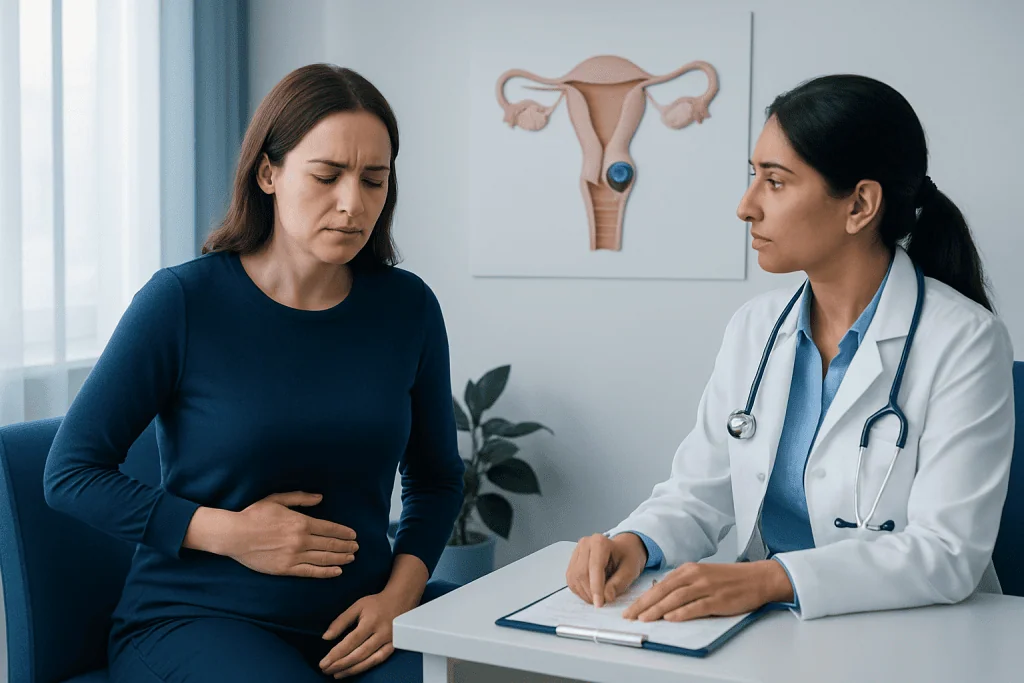
Many hemorrhagic cysts cause no symptoms and are found by chance. When symptoms occur, the most common complaint is pelvic pain, often on one side. The pain may be dull, aching, intermittent, or occasionally sharp, especially if the cyst stretches the ovary or leaks blood or fluid.
Other symptoms can include bloating, a feeling of pelvic pressure, pain during intercourse, or changes in the timing of menstrual bleeding. Some people notice discomfort that appears around ovulation or before a period. These symptoms can overlap with those of other gynecologic conditions, so an accurate diagnosis is important.
Complications are less common but can be urgent. A cyst can rupture, causing sudden pain and internal bleeding. A larger cyst may also increase the risk of ovarian torsion, which happens when the ovary twists and its blood supply is reduced. Warning signs include:
- Sudden, severe pelvic or abdominal pain
- Nausea or vomiting along with pelvic pain
- Dizziness, weakness, or fainting
- Heavy vaginal bleeding
- Fever or worsening abdominal tenderness
Causes and Risk Factors
The most direct cause of a hemorrhagic cyst is bleeding into a functional ovarian cyst. Because functional cysts are linked to ovulation, hemorrhagic cysts are most often seen during the reproductive years. They are less common after menopause, and a cyst found after menopause may need more careful evaluation.
Hormonal fluctuations can influence cyst formation. Some people are simply more prone to forming ovarian cysts during regular cycles. In others, fertility medications that stimulate ovulation may increase the likelihood of functional cysts. Conditions that affect bleeding or the use of blood-thinning medication can also make bleeding into a cyst more significant.
The cyst’s size and how freely the ovary moves also matter. Larger cysts may be more likely to cause pain or torsion. If there is ongoing pelvic pain or a history of repeated cysts, a doctor may also assess for related issues such as ovarian cysts more broadly or other pelvic conditions.
How Doctors Diagnose a Hemorrhagic Cyst
Diagnosis begins with a medical history and physical examination. A doctor will ask about the location and timing of pain, menstrual patterns, possible pregnancy, past ovarian cysts, and symptoms such as fainting or heavy bleeding. Pregnancy testing is often important because ectopic pregnancy can also cause pelvic pain and bleeding.
Pelvic ultrasound is the main imaging test used to evaluate a hemorrhagic cyst. Ultrasound can show the cyst’s size, shape, and internal appearance, helping doctors distinguish a likely hemorrhagic cyst from a simple cyst or another pelvic mass. Sometimes a follow-up ultrasound is recommended after several weeks to confirm that the cyst is shrinking or has resolved.
Additional tests may be needed in selected cases. Blood tests can help assess anemia or infection, and advanced imaging may be considered if the diagnosis is unclear. If a person has severe pain, persistent symptoms, or an uncertain ultrasound finding, a gynecology team may recommend further evaluation, including a gynecology check-up or, in urgent situations, a hospital assessment.
Treatment Options and Follow-Up
Treatment depends on symptoms, cyst size, ultrasound features, age, and whether complications are suspected. For many people with mild symptoms and a stable condition, the safest approach is watchful waiting. This usually means symptom monitoring, pain relief as advised by a doctor, and repeat ultrasound to make sure the cyst is resolving.
If pain is more significant, a clinician may recommend supportive treatment and closer observation. Surgery becomes necessary if the cyst ruptures with substantial bleeding, if ovarian torsion is suspected, or if the cyst simply doesn’t improve as expected. The aim of surgery is typically to preserve as much healthy ovarian tissue as possible while treating the urgent problem.
Minimally invasive surgery is often considered when an operation is necessary, depending on the individual case. In some settings, this may involve laparoscopy to examine and treat the ovary through small incisions. If ongoing menstrual or hormonal issues are contributing to recurring cysts, clinicians may also discuss longer-term gynecologic management and, when relevant, broader ovarian cyst treatment.
Self-Care, Prevention, and When to Seek Medical Care
There is no guaranteed way to prevent a hemorrhagic cyst because it often results from normal ovulation. Still, paying attention to recurring pelvic pain, changes in periods, and symptoms that follow a predictable cycle can help people seek evaluation earlier. Follow-up imaging should not be skipped if a doctor recommends it, because confirmation of resolution is an important part of care.
At home, self-care focuses on rest, hydration, and using medicines only as advised by a clinician. It can also help to keep a symptom diary that records the timing of pain, menstrual bleeding, and any associated nausea or dizziness. This information may make diagnosis and follow-up clearer.
Medical care should be sought promptly for sudden severe pelvic pain, pain with fainting or vomiting, heavy bleeding, or symptoms that are rapidly worsening. Routine medical review is also sensible for persistent pelvic discomfort, recurrent cysts, or cysts found after menopause. Some patients do better being assessed at a center that has gynecology, imaging, and minimally invasive surgery under one roof. Acibadem International’s multidisciplinary specialists and JCI-accredited hospitals diagnose and treat this condition for international patients.
Frequently asked questions
Is a hemorrhagic cyst the same as an ovarian cyst?
A hemorrhagic cyst is a specific type of ovarian cyst. It usually develops when a normal functional cyst bleeds into itself. So, all hemorrhagic cysts are ovarian cysts, but not all ovarian cysts are hemorrhagic.
Can a hemorrhagic cyst go away on its own?
Yes, many hemorrhagic cysts resolve naturally over time without surgery. Doctors often recommend observation and a follow-up ultrasound to confirm that the cyst is shrinking or has disappeared. The timeline varies, but improvement is common over several weeks.
How painful is a hemorrhagic cyst?
Pain can range from no symptoms at all to mild aching or sudden sharp pelvic pain. The severity often depends on the cyst’s size, whether it leaks or ruptures, and whether it causes pressure on nearby tissues. Severe or sudden pain should be evaluated urgently.
Can a hemorrhagic cyst affect fertility?
Most hemorrhagic cysts do not cause long-term fertility problems. They are usually related to normal ovulation and often resolve without affecting the ovaries permanently. Fertility concerns are more likely if there are repeated cysts, underlying gynecologic conditions, or complications that require surgery.
When is a hemorrhagic cyst an emergency?
It can be an emergency if it ruptures with significant bleeding or if ovarian torsion is suspected. Signs include sudden severe pain, fainting, dizziness, vomiting, or heavy bleeding. These symptoms need prompt medical assessment.
Does a hemorrhagic cyst mean cancer?
Usually, no. In people of reproductive age, a hemorrhagic cyst is commonly benign and linked to the menstrual cycle. However, if imaging findings are not typical, symptoms persist, or the cyst occurs after menopause, doctors may recommend closer evaluation.
This article is for general information only and is not a substitute for professional medical advice. Please consult a qualified doctor about your individual situation.
Ovarian Cyst in Turkey — costs, top hospitals & a free quote
7 JCI-accredited hospitals · board-certified surgeons · reply within 24h
Add us as a Preferred Source to see more of our trusted health content across Google Search, AI Overviews and Discover.
Check your numbers in seconds
BMI, calories, due date, blood pressure and 30+ more clinical calculators — free, instant, doctor-reviewed ranges.

Medically reviewed by the Acıbadem International Medical Board — August 24, 2026
See our medical review board →
References (2)
- Ovarian Cysts — MedlinePlus — medlineplus.gov
- Ovarian cyst — NHS — www.nhs.uk
Gynecology & Obstetrics
Women’s health across pregnancy, gynecologic surgery and high-risk pregnancy care.
186 specialists in this unitGynecology & Obstetrics Specialists at Acibadem

Prof. Dr. Cem Demirel
Gynecology & Obstetrics
Prof. Dr. Cem Fıçıcıoğlu
Gynecology & Obstetrics
Dr. Cem Öncüloğlu
Gynecology & Obstetrics
Dr. Cemile Alçay
Gynecology & Obstetrics
Assoc. Prof. Dr. Ceren Yıldız Eren
Gynecology & ObstetricsMore from the Health Library

MaryRuth Multivitamin: What It Does and Who Should Be Careful
The Vagina and Vulva Are Different, and Both Vary Widely

What Blood Is Made Of and Why Test Results Need Context

Genicular Nerve Block for Diagnosing and Easing Knee Pain

How Clinicians Grade Pitting Edema From 1+ to 4+