Herniated Disk Treatment: How It Works, Results and What to Expect
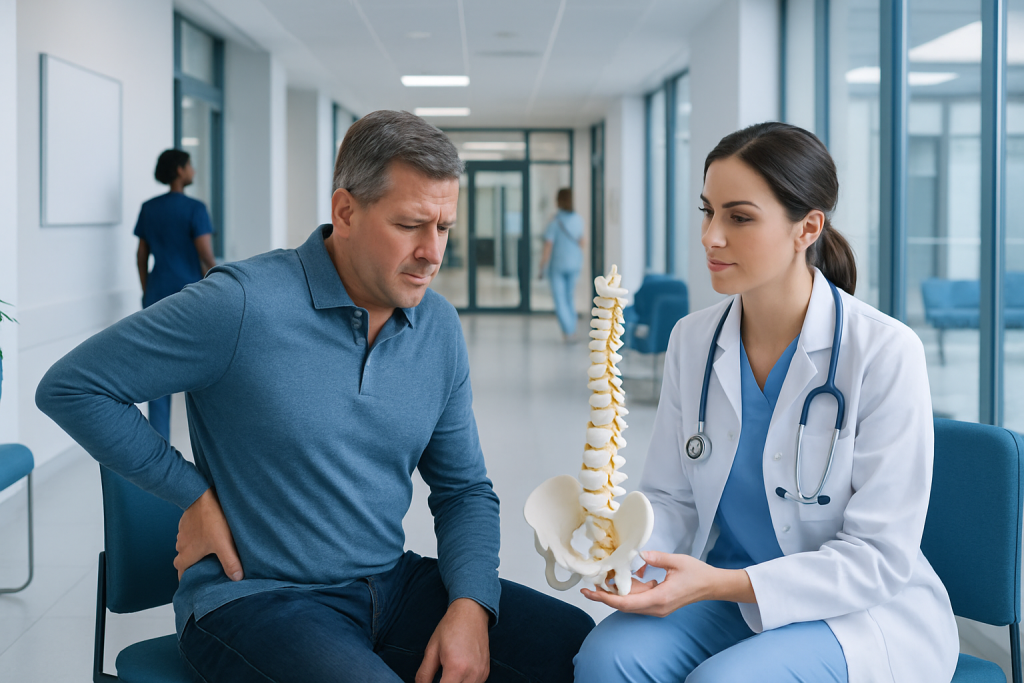
Most herniated disks improve with non-surgical care over time, although recovery varies. Treatment aims to reduce pain, protect nerve function and help a person return safely to normal movement.
Key Takeaways
- Most herniated disks improve with non-surgical care over time, although recovery varies.
- Treatment aims to reduce pain, protect nerve function and help a person return safely to normal movement.
- Surgery is usually considered for ongoing disabling leg or arm pain, progressive weakness, or urgent nerve symptoms.
- New loss of bladder or bowel control, saddle-area numbness, or rapidly worsening weakness requires urgent medical assessment.
- Imaging results are interpreted alongside symptoms and a neurological examination; a scan alone does not determine treatment.
Herniated disk treatment is tailored to symptoms, nerve involvement and daily functioning. Many people improve without surgery, while carefully selected patients may benefit from procedures that remove pressure from an affected nerve.
Overview: how herniated disk treatment works
Herniated disk treatment relieves irritation or compression of a spinal nerve while supporting a safe return to everyday activity. A spinal disk is a cushion between the bones of the spine. When part of its softer inner material pushes through a weakened outer layer, it may irritate nearby nerves and cause back or neck pain, pain traveling into an arm or leg, tingling, numbness, or weakness.
For many people, symptoms settle with time and non-surgical care. This may include staying gently active, structured physiotherapy, short-term pain management and, when appropriate, treatments such as injections. Surgery is not automatically needed because a scan shows a herniation; it is considered when symptoms remain severe despite appropriate conservative care, when nerve weakness progresses, or when there are emergency warning signs.
The most suitable plan depends on the affected spinal level, the severity and pattern of pain, physical examination findings, general health, work and activity needs, and personal goals. A clinician may also consider related spine conditions, including herniated disc disease, when building an individualized plan.
Symptoms, causes and who may need treatment
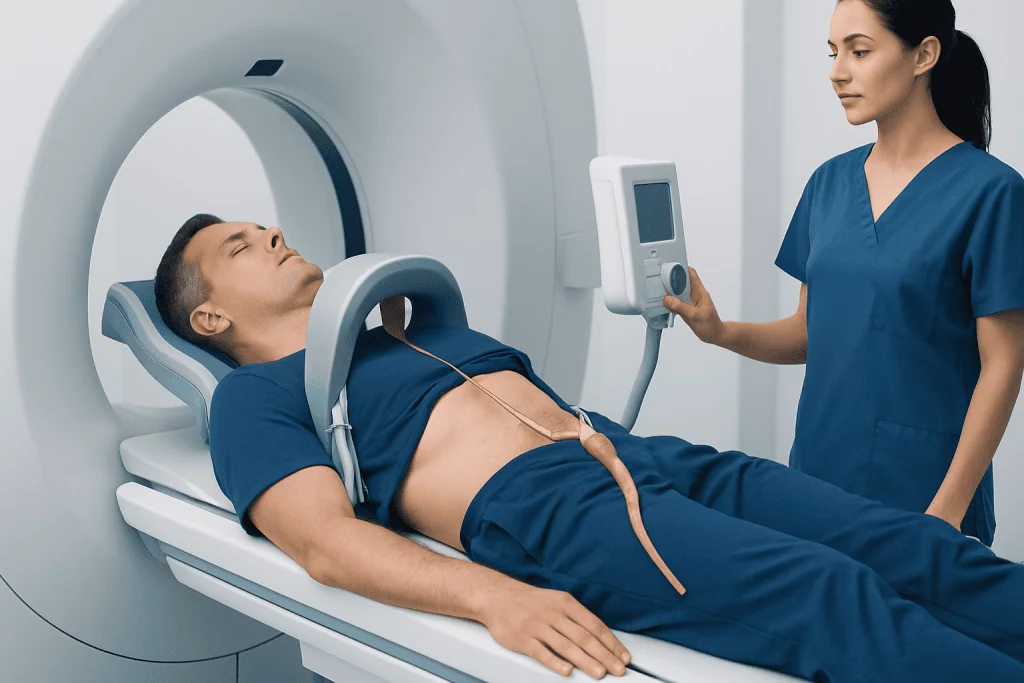
A herniated disk is most common in the lower back, where it may cause sciatica: pain that travels from the buttock down one leg. In the neck, it can cause pain spreading into a shoulder, arm or hand. Some people have little or no pain, while others experience sharp, burning, aching or electric-shock-like symptoms that worsen with coughing, sneezing, sitting, bending or certain movements.
Disk changes become more common with age as disks gradually lose water content and flexibility. A herniation may develop gradually or after an injury. Risk can be influenced by repetitive lifting or twisting, prolonged sitting, smoking, higher body weight, reduced physical conditioning and family tendency. These factors do not mean a person will develop a symptomatic herniation, and many people with disk changes on imaging have no symptoms.
Medical assessment is especially important if pain limits walking, sleep, work or self-care; if numbness is persistent; or if there is new weakness in an arm, hand, leg or foot. The aim is to identify nerve involvement early and to rule out other causes of pain that may need different treatment.
Non-surgical herniated disk treatment options

Non-surgical care is often the first approach when there is no serious or worsening neurological deficit. A clinician may recommend relative rest from movements that strongly aggravate pain, while avoiding prolonged bed rest. Gentle walking and gradual return to activity can help prevent stiffness and loss of conditioning. Temporary pain-relieving medicines may be discussed based on a person’s health history, other medicines and potential side effects.
Physiotherapy is commonly used to restore movement, build trunk or neck strength, improve posture and body mechanics, and guide a paced return to lifting, sport or work. The program should be individualized; exercises that substantially increase radiating pain, numbness or weakness should be reviewed rather than pushed through. Physical therapy and rehabilitation can also address confidence with movement and practical strategies for daily tasks.
For persistent nerve-root pain, a specialist may discuss an image-guided spinal injection. These injections may reduce inflammation around a nerve and provide a window for rehabilitation, but their benefit can be temporary and they do not repair the disk itself. The risks, likely benefit and alternatives should be discussed carefully before any injection or procedure.
- Activity modification and gradual movement may reduce symptom flares.
- Physiotherapy focuses on mobility, strength and safe function.
- Medication and injections may be used selectively for symptom control.
- Regular review helps detect worsening weakness or a change in symptoms.
When surgery is considered: candidacy, procedure and benefits
Surgery may be considered when leg or arm pain from nerve compression remains disabling after an adequate trial of non-surgical care, particularly when the symptoms and imaging findings match. It may also be recommended sooner for progressive muscle weakness or a major neurological deficit. Emergency surgery can be necessary for symptoms suggesting cauda equina syndrome, such as new bladder or bowel dysfunction and numbness around the genitals or buttocks.
The most common operation for a lumbar disk herniation is a discectomy or microdiscectomy. Under anesthesia, the surgeon makes a small incision and removes the part of the disk pressing on the nerve, while preserving as much of the disk as possible. Depending on the spinal level and anatomy, minimally invasive techniques may be appropriate. Microdiscectomy is intended primarily to ease nerve-related leg pain and improve function; it may not eliminate every type of back pain.
Before surgery, the care team reviews symptoms, neurological findings, imaging, medical conditions, medicines and anesthesia considerations. During the procedure, positioning, sterile preparation and nerve protection are used. Afterward, the person is monitored for pain control, movement and neurological status, then receives instructions for walking, wound care and a gradual return to activities. Some patients may also need evaluation for spinal fusion when instability or another structural problem is present, but fusion is not routine for an uncomplicated disk herniation.
Potential benefits include faster relief of radiating limb pain and improved ability to move and function in appropriately selected patients. No procedure can guarantee complete pain relief. Risks include infection, bleeding, spinal fluid leak, blood clots, nerve injury, anesthesia-related complications, persistent symptoms and recurrent disk herniation. A spine surgeon can explain how these considerations apply to the individual.
Recovery timeline and self-care after treatment
Recovery is different for each person and depends on the severity and duration of nerve irritation, the treatment used, overall health and job demands. With non-surgical treatment, improvement may occur gradually over several weeks, though some symptoms can take longer to settle. Pain often improves before numbness or strength fully recovers because nerves may heal slowly after irritation or compression.
After discectomy, many people begin short, frequent walks soon after surgery, following their surgical team’s advice. Return to desk-based work, driving, household tasks, exercise and lifting is staged rather than rushed. The clinician may recommend physiotherapy after the early healing phase to restore movement, core control and confidence with normal activities.
Useful self-care generally includes changing positions regularly, using safe lifting techniques, maintaining a comfortable level of activity and attending follow-up appointments. Smoking cessation, sleep, nutrition and gradual physical conditioning can support overall spine health. A sudden return to heavy lifting, high-impact exercise or repetitive twisting should be avoided until the treating team says it is appropriate.
When to seek medical care
Urgent medical care is needed for new difficulty passing urine, loss of bladder or bowel control, numbness in the saddle area between the legs, or rapidly increasing weakness in a leg or foot. These symptoms can indicate severe nerve compression and should not be managed at home.
A prompt appointment is also appropriate for severe pain that is not improving, pain after significant injury, unexplained fever or weight loss alongside back pain, a history of cancer or infection risk, or symptoms that repeatedly interfere with sleep and normal function. These features do not always mean there is a serious cause, but they require professional assessment.
Acibadem International’s multidisciplinary spine specialists and JCI-accredited hospitals assess and treat herniated disk conditions for international patients, coordinating imaging, rehabilitation, pain management and surgical care when needed.
Can you recover 100% from a herniated disc?
Many people recover very well from a herniated disc and return to work, exercise and daily activities without ongoing major limitations. Some become completely symptom-free, while others may have occasional back or neck discomfort, residual numbness, or a tendency for symptoms to flare with certain activities.
The likelihood of recovery depends on factors such as how long the nerve has been compressed, whether weakness is present, the location of the herniation and adherence to an appropriate rehabilitation plan. Improvement in pain can occur sooner than recovery of altered sensation or muscle strength. A clinician can provide a more individualized outlook after examination and, if needed, imaging.
How painful is a herniated disc on a scale of 1 to 10?
There is no single pain score for a herniated disc. Some people have no symptoms, while others report mild discomfort or severe radiating nerve pain that they may rate near 8 to 10 out of 10. Pain intensity can also change from day to day and with posture, movement, coughing or prolonged sitting.
A pain score is useful for tracking change, but it is not the only measure clinicians use. Pain traveling down an arm or leg, sleep disruption, reduced walking ability, numbness and weakness are all important. Severe pain should be assessed promptly if it is accompanied by new weakness, bladder or bowel changes, or saddle-area numbness.
Is it worth getting surgery for a herniated disc?
Surgery can be worthwhile when a herniated disc is clearly causing persistent disabling nerve pain or neurological weakness and non-surgical treatment has not provided acceptable improvement. For appropriately selected patients, removing pressure from the nerve can relieve radiating arm or leg pain more quickly and support a return to function.
However, surgery is not the best first step for everyone. Many herniated disks improve without an operation, and surgery has potential risks as well as limitations, especially for back pain that is not mainly caused by nerve compression. A shared decision with a spine specialist should weigh symptoms, examination findings, scan results, response to conservative care and the person’s goals.
What are the 5 stages of a herniated disc?
There is no universally accepted medical system describing exactly five stages of a herniated disc. Terms may be used differently by different sources, which can make online descriptions confusing. Clinicians more commonly describe disk changes by their appearance and whether disk material is irritating or compressing a nerve.
A practical progression sometimes used in education is disk degeneration, bulging, protrusion, extrusion and sequestration. In degeneration, the disk changes with age or wear; in a bulge, the disk extends broadly beyond its usual boundary; in protrusion, a more focal portion pushes outward; in extrusion, inner material breaks through the outer layer; and in sequestration, a fragment separates from the main disk. These imaging terms do not reliably predict pain severity or determine treatment on their own.
Frequently asked questions
How is a herniated disk diagnosed?
Diagnosis starts with a medical history and physical examination, including checks of strength, sensation, reflexes and movement. Magnetic resonance imaging may be used when symptoms are severe, persistent, uncertain, or when surgery or an injection is being considered. Imaging is interpreted together with symptoms because disk changes can occur without causing pain.
Can a herniated disk heal without surgery?
Yes. Many people improve without surgery as inflammation reduces and the body may gradually reabsorb some displaced disk material. Non-surgical care usually focuses on symptom relief, guided movement and rehabilitation. Persistent or worsening weakness needs medical review.
How long does herniated disk pain last?
The course varies widely. Some people begin improving within weeks, while others have symptoms for several months or longer. Ongoing severe radiating pain, functional limitation, numbness or weakness should be reassessed by a qualified clinician.
Should a person rest or exercise with a herniated disk?
Complete bed rest is generally not recommended for most people because it can increase stiffness and deconditioning. Gentle, tolerable activity and a clinician-guided exercise plan are usually preferred. Activities that significantly worsen radiating pain or neurological symptoms should be stopped and discussed with a healthcare professional.
Can a herniated disk come back after surgery?
A disk herniation can recur at the same level after surgery because disk tissue remains in place. Recurrence is not inevitable, and a careful return to activity, conditioning and attention to lifting technique may support recovery. New or returning leg or arm pain should be evaluated, especially if it occurs with weakness or numbness.
What is the difference between a bulging disk and a herniated disk?
A bulging disk generally extends more broadly beyond its usual boundary, whereas a herniated disk usually refers to a more focal displacement of disk material through or beyond the outer layer. Either finding may be painless, and either can cause symptoms if it affects a nearby nerve. Clinical symptoms and examination are more important than terminology alone when choosing treatment.
References
- American Academy of Orthopaedic Surgeons
- American Association of Neurological Surgeons
- National Institute of Neurological Disorders and Stroke
- National Institute for Health and Care Excellence
This article is for general information only and is not a substitute for professional medical advice. Please consult a qualified doctor about your individual situation.
Joint and spine care in Turkey — expert assessment & treatment
JCI-accredited · board-certified surgeons · reply within 24h
Add us as a Preferred Source to see more of our trusted health content across Google Search, AI Overviews and Discover.