HIFU Treatment: How High-Intensity Focused Ultrasound Works

HIFU treatment is a noninvasive technique that focuses ultrasound energy on a specific area inside the body. It may be used for selected cancers, uterine fibroids, prostate conditions, and some other targeted therapies depending on the case.
Key Takeaways
- HIFU treatment is a noninvasive technique that focuses ultrasound energy on a specific area inside the body.
- It may be used for selected cancers, uterine fibroids, prostate conditions, and some other targeted therapies depending on the case.
- Not every patient is a candidate; suitability depends on the condition, tumor or tissue location, size, and overall health.
- Imaging such as ultrasound or MRI helps doctors plan and guide treatment accurately.
- Recovery is often faster than with open surgery, but side effects and follow-up needs still vary by condition.
HIFU treatment uses high-intensity focused ultrasound to deliver precise energy deep inside the body without a surgical incision. It is used in selected medical situations to destroy or shrink targeted tissue while aiming to protect nearby structures.
Overview of HIFU Treatment
HIFU treatment stands for high-intensity focused ultrasound treatment. It is a medical technology that uses concentrated ultrasound waves to heat and destroy a precisely chosen area of tissue inside the body. Because the energy is focused at a target point, tissue outside that focal zone is affected much less. This allows doctors to treat some conditions without making a large incision.
Ultrasound is often known as an imaging tool, but in HIFU it is used differently. Instead of simply creating images, the sound waves are intensified and focused to produce a therapeutic effect. At the target, the energy creates heat that can damage or destroy unwanted tissue. In some situations, it may also create mechanical effects that help break down tissue in a controlled way.
HIFU is considered noninvasive or incision-free in many applications. This can make it appealing for carefully selected patients who want to avoid or reduce the impact of conventional surgery. However, HIFU is not a universal replacement for surgery, radiotherapy, or medication. It is one option among several, and the best choice depends on the exact diagnosis and treatment goals.
How High-Intensity Focused Ultrasound Works
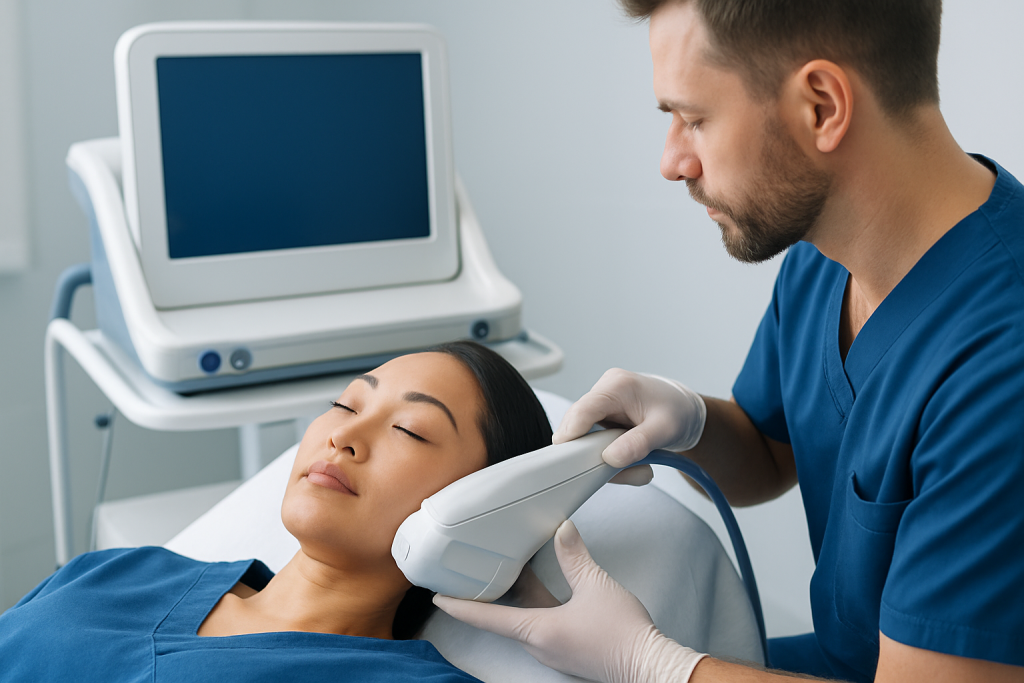
The principle behind HIFU is similar to using a magnifying glass to focus sunlight on one small point. Ultrasound waves pass through skin and other tissues, but when they are focused together at a precise depth, the energy becomes strong enough to raise the temperature in that specific area. The heat can cause coagulative necrosis, which means the targeted cells are damaged so the body can gradually clear or shrink the treated tissue.
Doctors use imaging guidance to improve precision. Depending on the condition, HIFU may be guided by ultrasound imaging or magnetic resonance imaging (MRI). Imaging helps the medical team locate the treatment area, monitor surrounding tissues, and confirm that the energy is being delivered where it is intended.
The treatment is usually delivered in multiple small pulses or sonications. Rather than treating a whole lesion at once, the doctor maps the area and treats it point by point or layer by layer. This careful approach helps protect nearby nerves, blood vessels, bowel, or other sensitive organs. The exact technique, preparation, and session length vary according to the body area and the reason for treatment.
When HIFU May Be Used

HIFU treatment is used in several fields of medicine, although its role differs from one condition to another. One well-known use is in selected prostate conditions, including some localized prostate cancers or recurrent disease after other treatment. In these cases, HIFU may be used to treat the whole prostate or a defined area, depending on the treatment plan and the features of the disease.
Another common use is the treatment of uterine fibroids, especially in people who want an incision-free option and are suitable candidates based on fibroid size, number, and location. Focused ultrasound may help shrink fibroids and reduce symptoms such as pressure or heavy bleeding. It may also be discussed for some bone or soft tissue lesions and for pain relief in selected cases related to cancer spread to bone.
Doctors may also consider HIFU in highly specific oncology settings, usually as part of a broader care plan. Patients may hear it discussed alongside other cancer treatments such as prostate cancer treatment, uterine fibroid treatment, or radiation oncology. Because each disease behaves differently, HIFU is usually recommended only after imaging, pathology review, and specialist assessment confirm that it is appropriate.
It is important to remember that availability and accepted indications can differ by country, hospital, and medical specialty. A treatment that is suitable for one patient may not be effective or safe for another. For this reason, HIFU is best understood as a precise tool for selected cases rather than a one-size-fits-all treatment.
Benefits, Limitations, and Possible Risks
A major potential benefit of HIFU treatment is that it can avoid a surgical incision. This may mean less blood loss, less visible scarring, and a shorter recovery period for some patients. Depending on the treatment area, some people may return to daily activities sooner than they would after open surgery. The focused nature of the treatment can also help preserve healthy tissue around the target.
At the same time, HIFU has important limitations. Not all targets can be safely reached with ultrasound energy. Structures such as bone, air-filled bowel, scar tissue, or difficult angles can interfere with treatment planning. Some lesions are too large, too numerous, or too close to sensitive organs to be treated effectively with HIFU alone. In these situations, doctors may recommend another approach or a combination of therapies.
Possible side effects depend on the body area being treated. They may include pain or discomfort during or after the procedure, temporary swelling, skin irritation, urinary symptoms, bleeding, discharge, or fatigue. Less commonly, unintended injury to nearby tissue can occur. The exact risk profile is different for prostate treatment, fibroid treatment, and cancer-related uses, so patients should ask for condition-specific counseling before deciding.
Another consideration is that follow-up remains important. Even when HIFU successfully treats the target area, doctors may still need repeat imaging, blood tests, symptom review, or additional therapy. In some cases, HIFU can be repeated; in others, it is one part of a longer treatment journey.
Evaluation and Diagnosis Before HIFU
Before HIFU treatment, doctors first confirm the diagnosis and decide whether this technology matches the patient’s needs. This often begins with a medical history, physical examination, and review of symptoms. Imaging tests are central to planning because they show the size, location, and relationship of the target tissue to nearby organs.
Depending on the condition, assessment may include ultrasound, MRI, CT, biopsy results, laboratory tests, or endoscopic evaluation. For prostate conditions, doctors may review PSA levels, MRI findings, and pathology. For fibroids, pelvic imaging helps define how many fibroids are present and whether their position makes HIFU technically possible. For cancer-related uses, staging tests help determine whether the disease is localized or whether another treatment path would be more effective.
Patients are also assessed for practical factors such as the ability to lie still, tolerate sedation if needed, and safely undergo the planned imaging guidance. Prior surgeries, implanted devices, bleeding risks, pregnancy status, or active infection may affect eligibility. Clear communication with the treatment team is important so they can explain the expected benefits, alternatives, and possible risks in a balanced way.
What to Expect During and After the Procedure
The HIFU procedure usually takes place in a specialized treatment suite. Preparation depends on the body area being treated and may involve fasting, bowel preparation, shaving of a treatment area, or temporary bladder management. Some patients receive sedation or anesthesia, while others may remain awake with pain control and careful monitoring.
During treatment, the patient is positioned so the ultrasound energy can reach the target as accurately as possible. The team uses imaging guidance to map the treatment area and deliver energy in a planned sequence. The patient may feel warmth, pressure, cramping, or discomfort, but the team watches closely and adjusts as needed. The session length can vary from under an hour to several hours depending on complexity.
After the procedure, many patients go home the same day, although some may need observation or a short hospital stay. Mild soreness, fatigue, temporary swelling, or treatment-area symptoms are common in the early recovery period. Doctors provide guidance on hydration, activity, pain relief, and warning signs to watch for. Follow-up visits are used to assess symptom improvement and confirm results with imaging or other tests.
In centers that offer advanced noninvasive care, HIFU may be integrated with other services such as MRI for planning or guidance and with broader pathways for prostate cancer or uterine fibroids. Near the end of the care journey, some international patients may also choose evaluation at Acibadem International, where multidisciplinary specialists in JCI-accredited hospitals diagnose and treat selected conditions that may be considered for HIFU.
Self-care, Follow-up, and When to See a Doctor
Recovery advice after HIFU treatment depends on the area treated, but general self-care often includes resting for a short period, drinking enough fluids if advised, and gradually returning to normal activity. Patients should follow all instructions about medications, catheter care if one is used, wound or skin care, and timing of exercise, work, or sexual activity where relevant.
It is helpful to keep track of symptoms after treatment. Improvement may be gradual rather than immediate, especially when the body needs time to absorb treated tissue. Follow-up appointments are important because imaging or laboratory tests can show how well the treatment worked and whether any additional care is needed.
Patients should contact a doctor promptly if they develop severe pain, high fever, heavy bleeding, difficulty passing urine, new weakness, persistent vomiting, fainting, or any rapidly worsening symptom. They should also seek advice if expected symptoms last longer than the care team suggested. Early communication helps doctors manage side effects and protect recovery.
Because HIFU is a specialized treatment, ongoing care is best coordinated by the relevant specialist, such as a urologist, gynecologist, oncologist, or interventional radiology team. A doctor can explain whether HIFU remains the right option over time or whether another treatment approach would provide better long-term control of the condition.
Frequently asked questions
Is HIFU treatment surgery?
HIFU treatment is generally considered noninvasive because it does not require a traditional surgical incision. It uses focused ultrasound energy from outside the body or through a specialized probe to target tissue internally.
What conditions can HIFU treat?
HIFU may be used for selected prostate conditions, uterine fibroids, and certain cancer-related or pain-related situations. The exact uses depend on the hospital, the medical team’s expertise, and whether the patient’s condition is technically suitable.
Is HIFU treatment painful?
Some patients feel heat, pressure, cramping, or discomfort during the procedure, but pain management is usually provided. Mild soreness or temporary symptoms after treatment can also occur, and the experience varies by treatment area.
How long does it take to recover from HIFU?
Recovery is often shorter than recovery after open surgery, but the timeline depends on the condition treated and the patient’s overall health. Some people return home the same day, while symptom improvement and full follow-up assessment may take days to weeks.
Does HIFU cure cancer?
HIFU can be an effective local treatment for selected cancers or recurrent disease, but it is not suitable for every cancer and is not always used with curative intent. Whether it is meant to cure, control, or relieve symptoms depends on the disease stage, location, and the overall treatment plan.
Who is not a good candidate for HIFU?
A person may not be a good candidate if the target tissue is too large, poorly positioned, blocked by bowel or bone, or too close to important structures. Certain medical conditions, prior surgeries, implanted devices, or imaging limitations can also affect eligibility.
References
- World Health Organization
- U.S. National Cancer Institute
- National Health Service
- Radiological Society of North America
- American Cancer Society
This article is for general information only and is not a substitute for professional medical advice. Please consult a qualified doctor about your individual situation.
Ultrasound in Turkey — costs, top hospitals & a free quote
JCI-accredited · board-certified surgeons · reply within 24h
Add us as a Preferred Source to see more of our trusted health content across Google Search, AI Overviews and Discover.

Check-up & Preventive Medicine
Comprehensive health screenings designed for early detection and prevention.
3 specialists in this unit