

HIFU vs Surgery: When a Noninvasive Option May Be Considered

HIFU uses focused ultrasound energy to treat selected tissues without surgical incisions. Surgery may offer more direct access, tissue removal, or confirmation through biopsy when needed.
Key Takeaways
- HIFU uses focused ultrasound energy to treat selected tissues without surgical incisions.
- Surgery may offer more direct access, tissue removal, or confirmation through biopsy when needed.
- The choice between HIFU and surgery depends on the diagnosis, treatment goals, anatomy, and overall health.
- Not every patient or condition is suitable for HIFU, even when a noninvasive approach is appealing.
- A specialist team can explain expected benefits, limitations, recovery time, and follow-up needs for both options.
HIFU and surgery are different treatment approaches, and the best choice depends on the medical condition being treated, the size and location of the problem, and the person's overall health. HIFU may be considered when a noninvasive option is appropriate, while surgery may remain the more suitable option in more complex situations.
Overview: Understanding HIFU and Surgery
HIFU, or high-intensity focused ultrasound, is a technology that concentrates ultrasound energy on a precise target inside the body. The goal is to heat or destroy selected tissue without making a surgical cut. Because it is noninvasive, HIFU may appeal to people who want to avoid incisions, hospital stays, or a longer recovery when that is medically appropriate.
Surgery, by contrast, involves physically accessing the body to remove, repair, or treat tissue. Depending on the condition, surgery may be open, laparoscopic, endoscopic, robotic, or otherwise minimally invasive. Even when a surgical technique uses small incisions, it is still different from HIFU because it allows the surgeon to directly see, remove, or sample tissue.
Neither option is automatically better in every situation. HIFU vs surgery is best understood as a decision between two tools with different strengths and limits. For some carefully selected patients, HIFU can offer effective treatment with less disruption to daily life. For others, surgery may provide a more complete, reliable, or necessary solution.
HIFU is used in selected areas of medicine, including some prostate conditions, uterine fibroids, and certain tumors or targeted pain-related procedures, depending on local expertise and clinical criteria. Surgery remains a standard treatment across many specialties because it can address a wider range of disease patterns and may allow tissue testing, reconstruction, or emergency treatment when needed.
When HIFU May Be Considered
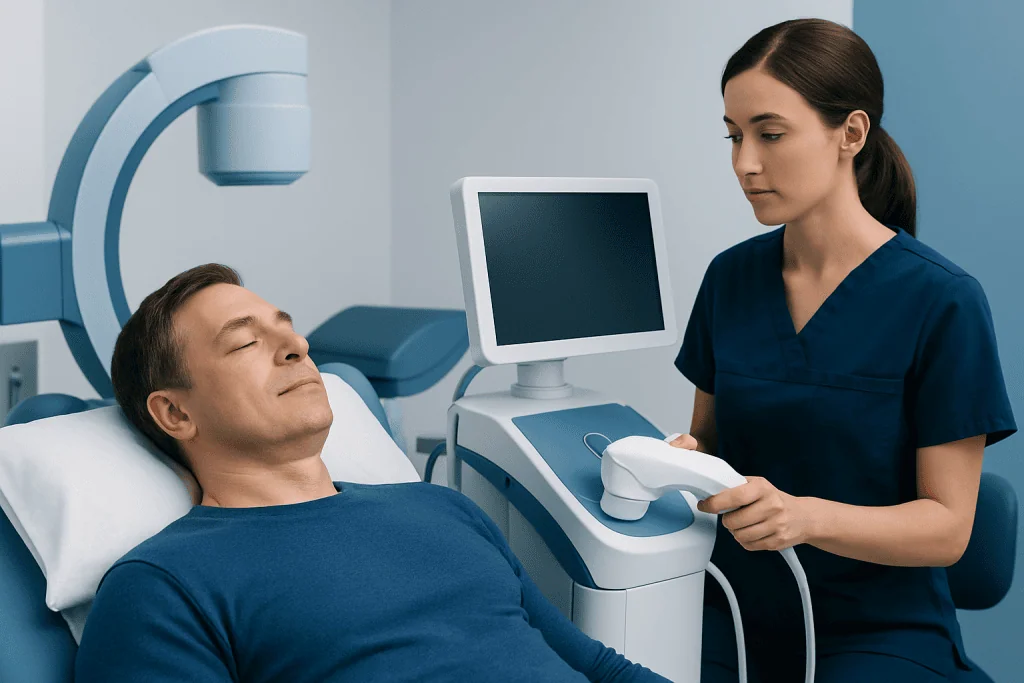
HIFU may be considered when the target tissue is clearly visible on imaging, well defined, and reachable by the ultrasound beam without harming nearby structures. It is often discussed when a person wants a noninvasive option and when the clinical team believes the expected benefit is realistic. Examples may include selected prostate conditions, certain fibroids, or localized lesions in centers with appropriate expertise.
One of the main advantages of HIFU is that it does not require a surgical incision. This can mean less blood loss, reduced need for wound care, and a faster return to usual activities for suitable patients. Some procedures may also be done with shorter hospital stays or, in some settings, as day procedures depending on the treatment area and the person’s health.
HIFU can be especially attractive when preserving surrounding tissue is important. Because the energy is focused on a selected area, treatment planning aims to limit effects on nearby structures. In the right clinical setting, this targeted approach may help reduce some of the burdens associated with conventional surgery.
Still, HIFU is not simply a replacement for surgery. Its success depends heavily on careful patient selection, precise imaging guidance, and realistic expectations. In some cases, HIFU may be used as a primary treatment; in others, it may be considered alongside other options such as monitoring, medication, radiation-based care, or surgery.
When Surgery May Be the Better Choice

Surgery may be the better option when tissue must be removed completely, when the diagnosis needs confirmation through a biopsy or pathology review, or when the condition is too large, complex, or poorly positioned for HIFU. Direct surgical access can be important if a structure needs reconstruction, if bleeding must be controlled, or if there is concern about nearby organs.
For cancers and many structural problems, surgery may remain the standard treatment because it allows the medical team to remove visible disease and examine the tissue in detail. That information can help confirm exactly what is present, whether margins are clear, and whether further treatment may be needed. HIFU does not usually provide the same direct tissue sample unless biopsy is done separately.
Surgery may also be preferred when symptoms are severe and require a definitive or immediate response. This can happen when there is pressure on surrounding organs, obstruction, infection, or an urgent need to treat damage. In these settings, the broader capabilities of surgery can be especially valuable.
Importantly, surgery is not always open or highly invasive. Many operations are now performed with minimally invasive techniques that use smaller cuts and specialized instruments. Depending on the condition, a surgeon may discuss approaches such as robotic surgery or laparoscopic surgery as alternatives to larger open procedures.
Key Factors Doctors Consider in HIFU vs Surgery
The choice between HIFU and surgery depends first on the diagnosis. A benign condition may be approached differently from a suspicious or confirmed cancer. Doctors also look at size, number, depth, and location of the target area, as well as whether the tissue can be safely visualized and reached with focused ultrasound.
The person’s age, general health, symptoms, and treatment goals also matter. Someone who wants to avoid an incision may still need surgery if the anatomy is not suitable for HIFU. On the other hand, a person with significant medical conditions that increase surgical risk may ask whether a noninvasive option could be reasonable for a carefully selected problem.
Other important questions include whether tissue sampling is needed, whether the treatment may affect fertility or organ function, and whether repeat treatment might be necessary. HIFU can sometimes leave treated tissue in place for the body to gradually absorb or shrink over time, while surgery often removes tissue immediately. That difference can influence how quickly symptoms improve and how follow-up is planned.
Imaging quality and center experience are also important. HIFU relies on accurate targeting, often using ultrasound or MRI guidance depending on the system and indication. A multidisciplinary discussion involving radiologists, surgeons, and condition-specific specialists can help clarify which approach is most appropriate for an individual patient.
Benefits and Limitations of Each Approach
HIFU’s most recognized benefits are its noninvasive nature, lack of surgical incision, and the potential for shorter recovery. Many patients value the possibility of less postoperative discomfort and a quicker return to routine activities. In selected cases, HIFU may also preserve surrounding tissue more effectively than broader interventions.
However, HIFU has limitations. Not all targets can be reached safely, and its effectiveness may be reduced by size, location, scar tissue, bowel position, bone, or nearby sensitive structures. Some people may need repeat treatment or later surgery if symptoms persist, if the response is incomplete, or if the condition changes over time.
Surgery offers direct treatment and can provide tissue for diagnosis. It may be more definitive for certain conditions, especially when complete removal is important. Surgeons can also address unexpected findings during a procedure in ways that noninvasive treatment cannot.
The trade-off is that surgery usually involves incisions, anesthesia planning, and a recovery period that may be longer than HIFU. Risks vary by operation but can include bleeding, infection, scarring, and complications related to nearby organs or general health. This is why the discussion is rarely about convenience alone; it is about matching the right treatment to the right situation.
- HIFU may offer less disruption when the condition is suitable and the target is well defined.
- Surgery may be preferred when removal, biopsy, repair, or emergency treatment is needed.
- Some patients may have both options discussed, while others may clearly fit only one.
- Shared decision-making helps balance effectiveness, safety, recovery, and personal priorities.
What Evaluation and Follow-Up Usually Involve
Before recommending HIFU or surgery, doctors usually perform a detailed evaluation. This may include a physical examination, blood tests, imaging, and sometimes biopsy, depending on the condition. The aim is to confirm the diagnosis, understand the exact anatomy, and rule out factors that could change the treatment plan.
For HIFU, imaging is especially important because the treatment depends on precise targeting. A patient may be assessed for whether the lesion can be seen clearly and reached safely. For surgery, the team may evaluate anesthesia fitness, whether minimally invasive techniques are feasible, and whether tissue removal or reconstruction is likely to be needed.
After treatment, follow-up is essential with either approach. HIFU follow-up may include repeat imaging and symptom review to check how the treated area responds over time. Surgical follow-up may focus on wound healing, pathology results, symptom relief, and the need for any additional therapy.
In some conditions, care may involve several specialties rather than one procedure alone. A patient with a prostate problem, for example, may need ongoing review for urinary function and long-term monitoring, whether treated noninvasively or surgically. In selected cases, treatment planning may also involve options such as HIFU treatment or prostate surgery depending on the diagnosis and goals.
Making an Informed Decision and When to Seek Specialist Advice
Patients often find it helpful to ask a few practical questions: What is the goal of treatment? Is the aim cure, symptom relief, tissue preservation, or avoiding a more invasive procedure? How likely is each option to meet that goal, and what type of follow-up will be needed afterward?
It is also reasonable to ask what could happen if treatment is delayed, whether repeat procedures may be needed, and whether the doctor would recommend the same option if the lesion were larger or in a different location. These questions help make the conversation specific rather than general. Because HIFU is highly selective, small details about anatomy and diagnosis can make a major difference.
Specialist advice is particularly important when symptoms are worsening, when cancer is suspected or confirmed, or when previous treatment has not worked as expected. A multidisciplinary evaluation can help compare noninvasive, minimally invasive, and surgical choices in a balanced way. This may also include discussion of related conditions such as prostate cancer when relevant to the treatment decision.
For international patients seeking advanced evaluation, Acibadem International’s multidisciplinary specialists and JCI-accredited hospitals diagnose and treat selected conditions with both noninvasive and surgical approaches when appropriate. The most suitable plan is always individualized, based on medical findings, patient priorities, and specialist assessment.
Frequently asked questions
Is HIFU better than surgery?
HIFU is not automatically better than surgery. It may be a good option for selected patients when the target area is suitable and a noninvasive approach can reasonably achieve the treatment goal. Surgery may still be better when tissue must be removed, examined, or treated more directly.
What is the main advantage of HIFU?
The main advantage of HIFU is that it treats selected tissue without a surgical incision. This may reduce recovery time and avoid some of the issues associated with wound healing. The benefit depends on the condition and whether the patient is a good candidate.
Can HIFU replace surgery for cancer?
In some carefully selected situations, HIFU may be discussed as part of cancer treatment planning, but it does not replace surgery in every case. Many cancers still require surgery for complete removal or to obtain tissue for diagnosis. The decision depends on the type, stage, location, and treatment goals.
Does HIFU have fewer risks than surgery?
HIFU avoids an incision, so some surgical risks may be lower. However, it still has potential side effects and limitations, and these depend on the organ being treated and the exact technique used. A doctor can explain the likely risks for the individual's condition.
How do doctors decide between HIFU and surgery?
Doctors consider the diagnosis, imaging findings, size and location of the target area, and the person's overall health. They also think about whether tissue sampling is needed, how quickly treatment is required, and what outcome the patient hopes to achieve. A specialist consultation is important because not all cases are suitable for both options.
Will recovery always be faster with HIFU?
Recovery is often shorter with HIFU than with traditional surgery, but not always. The treatment area, the person's health, and whether additional procedures are needed can all affect recovery. Some minimally invasive surgeries may also involve relatively short recovery times.
References
- World Health Organization
- National Cancer Institute
- U.S. Food and Drug Administration
- Radiological Society of North America
- National Health Service
This article is for general information only and is not a substitute for professional medical advice. Please consult a qualified doctor about your individual situation.
Explore treatments in Turkey — costs, top hospitals & a free quote
JCI-accredited · board-certified surgeons · reply within 24h
Add us as a Preferred Source to see more of our trusted health content across Google Search, AI Overviews and Discover.

More from the Health Library



Related Specialists

Assoc. Prof. Dr. Hasan Aldinç
Emergency Service
Prof. Dr. Barış Kocaoğlu
Orthopedic Surgery & Traumatology
Prof. Dr. Ahmet Onur Odabaşı
Ear Nose & Throat
Assoc. Prof. Dr. Kayahan Karaytuğ
Orthopedic Surgery & Traumatology