High Ankle Sprain — Explained by Medical Evidence, Not Myths

A high ankle sprain involves the syndesmotic ligaments above the ankle, not the outer ankle ligaments injured in most common sprains. Pain is often felt above the ankle and may worsen with walking, twisting, pivoting, or pushing off the foot.
Key Takeaways
- A high ankle sprain involves the syndesmotic ligaments above the ankle, not the outer ankle ligaments injured in most common sprains.
- Pain is often felt above the ankle and may worsen with walking, twisting, pivoting, or pushing off the foot.
- Diagnosis may require a physical exam plus X-rays, and sometimes MRI or other imaging if instability is suspected.
- Treatment usually starts with rest, protection, and rehabilitation, but severe injuries may need surgery.
- Early assessment is important if a person cannot bear weight, has marked swelling, or has pain after a twisting sports injury.
A high ankle sprain is an injury to the ligaments that connect the tibia and fibula just above the ankle. It is different from the more common lateral ankle sprain, often causes pain with twisting or weight-bearing, and may take longer to recover because it affects ankle stability.
What a High Ankle Sprain Really Means
A high ankle sprain is a stretch or tear of the syndesmotic ligaments, the strong tissues that hold the two lower-leg bones together just above the ankle joint. These ligaments help keep the tibia and fibula stable during walking, running, and changes in direction. When they are injured, the ankle may feel painful or unstable, especially with twisting movements.
This injury is different from the more familiar ankle sprain that affects the ligaments on the outside of the ankle. In a high ankle sprain, pain is usually felt higher up, between or just above the ankle bones, and recovery can be slower because the injured ligaments are important for weight transfer through the leg.
High ankle sprains are often seen in sports that involve sudden turning, jumping, tackling, or forceful rotation of the foot, but they can also happen in everyday falls or missteps. Because symptoms can overlap with other injuries, such as fractures or a standard ankle sprain, a careful medical evaluation is often the best way to confirm the cause.
Symptoms and How It Feels
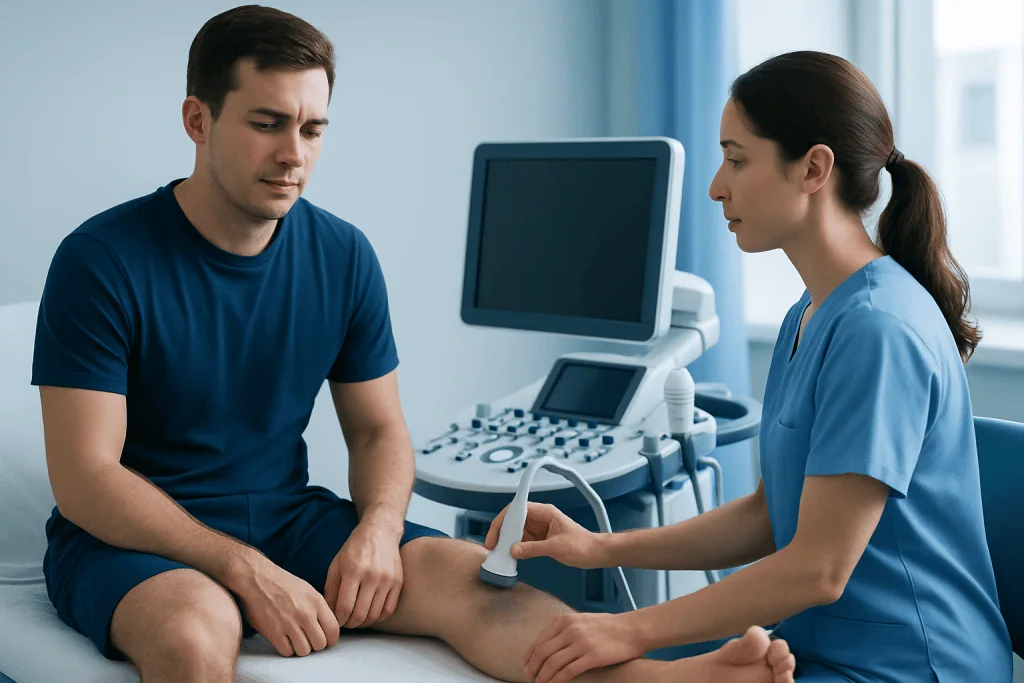
The symptoms of a high ankle sprain can vary from mild discomfort to significant difficulty walking. A person may notice pain above the ankle, tenderness when the area is pressed, swelling, and discomfort when the foot is turned outward or when pushing off while walking. Some people describe a feeling of weakness or instability rather than dramatic swelling.
Compared with a common lateral ankle sprain, bruising and swelling may be less obvious, which can make the injury seem milder than it is. However, pain may increase with weight-bearing, climbing stairs, running, or pivoting. Athletes sometimes first notice it when they cannot cut, sprint, or turn normally.
- Pain above the ankle joint
- Tenderness between the tibia and fibula
- Pain with walking, pivoting, or rising onto the toes
- Swelling around the ankle or lower leg
- Reduced range of motion or a feeling of instability
If the injury is more severe, the person may be unable to bear weight or may also have a fracture. That is one reason medical assessment matters when pain is intense, the mechanism of injury was forceful, or symptoms are not improving as expected.
Causes, Mechanics, and Risk Factors

A high ankle sprain usually happens when the foot is forced outward while the leg rotates inward, or when the foot is trapped and the body twists over it. This motion places stress on the syndesmosis, the ligament complex that stabilizes the lower leg and ankle. Contact sports, skiing, football, basketball, and soccer are common settings, but the same mechanism can occur in non-sport activities.
Several factors can raise the risk of this injury. Sudden changes of direction, uneven ground, previous ankle injuries, poor balance, muscle weakness, and returning to sport too soon after an earlier sprain may all contribute. In some cases, a high ankle sprain occurs together with other ankle damage, which is one reason clinicians may also consider related injuries such as ankle sprain patterns or tendon problems.
Not every twisting ankle injury is a high ankle sprain. Common outer-ankle sprains are far more frequent, and fractures can sometimes mimic sprain symptoms. Distinguishing among these possibilities matters because healing time, rehabilitation, and the need for protection or surgery can differ considerably.
How Doctors Diagnose a High Ankle Sprain
Diagnosis begins with the story of how the injury happened and a focused physical examination. A doctor looks for tenderness over the syndesmosis, checks swelling and bruising, and may perform gentle stress tests to see whether twisting or squeezing the lower leg reproduces pain. The pattern of pain and the injury mechanism often provide important clues.
X-rays are commonly used first to look for fractures and to assess whether the ankle mortise remains aligned. If the ligaments are suspected to be injured but X-rays do not fully explain the symptoms, further imaging may be recommended. MRI can be especially helpful because it shows soft tissues clearly and can reveal the extent of ligament damage. In some situations, MRI helps clarify whether the injury is stable or whether associated damage is present.
Doctors may also evaluate how the person walks and whether weight-bearing is possible. This helps guide both diagnosis and treatment planning. If symptoms are severe, persistent, or suggest more complex damage, a specialist in orthopedic care may be involved to assess stability and discuss the most suitable next steps.
Treatment Options and Recovery
Treatment depends on how severe the injury is and whether the ankle is stable. Many high ankle sprains can be treated without surgery using a period of protection, reduced weight-bearing, and gradual rehabilitation. Early care often includes rest, ice, compression, elevation, and temporary support with a brace, boot, or crutches as advised by a clinician.
As pain begins to settle, rehabilitation focuses on restoring motion, strength, balance, and confidence in the ankle. Physical therapy may be recommended to help the person progress safely from basic movement to walking, then to sport-specific tasks when appropriate. Recovery can take longer than with a common ankle sprain, especially for people whose work or sports involve pivoting, jumping, or rapid directional change.
If the syndesmotic ligaments are severely torn or the ankle is unstable, surgery may be considered to restore alignment and support healing. This may involve fixation to hold the tibia and fibula in the correct position while ligaments recover. In selected cases, evaluation by specialists in sports injury treatment helps match treatment to the person’s activity level and functional goals.
Returning to activity too soon can delay recovery or increase the risk of re-injury. A safe return usually depends on pain control, near-normal strength and motion, good balance, and the ability to perform walking, hopping, or sport-specific movements without symptoms.
Self-care, Prevention, and Common Myths
Self-care is important, but it works best when it supports an accurate diagnosis. In the first days after injury, reducing stress on the ankle and following professional advice can help prevent symptoms from worsening. A person should avoid assuming that all ankle sprains are minor or that walking through the pain is always helpful.
Prevention focuses on lower-limb strength, balance training, proper warm-up, and gradual return to sport after any ankle injury. Supportive footwear and attention to uneven playing surfaces may also help. For athletes, supervised conditioning and rehabilitation are often more useful than simply resting until the pain is gone.
- Build calf, foot, and hip strength
- Practice balance and proprioception exercises
- Use proper technique during sport and training
- Return to activity gradually after an ankle injury
- Seek reassessment if pain persists or keeps returning
A common myth is that swelling always reflects severity; in high ankle sprain, the injury can be significant even if swelling seems modest. Another myth is that normal X-rays always mean a simple sprain. In reality, ligament injuries can still be important, and persistent pain deserves follow-up.
When to Seek Medical Care
Medical care is recommended if there is significant pain above the ankle after a twist, fall, collision, or sports injury, especially if walking is difficult. It is also sensible to seek evaluation if swelling is increasing, the ankle feels unstable, or symptoms are not improving after several days of rest and protection.
Urgent assessment is important if the person cannot bear weight, has obvious deformity, numbness, severe swelling, or pain that feels out of proportion to a routine sprain. These signs may point to a fracture, a severe syndesmotic injury, or another problem that needs prompt treatment.
For international patients who need coordinated evaluation, Acibadem International offers multidisciplinary assessment and treatment through JCI-accredited hospitals. Depending on findings, care may involve orthopedic specialists, imaging, and rehabilitation planning tailored to the individual’s injury and activity needs.
Frequently asked questions
Is a high ankle sprain worse than a regular ankle sprain?
It is not always more severe, but it often takes longer to heal because it affects the ligaments that stabilize the lower leg above the ankle. These ligaments are important for walking, turning, and pushing off, so recovery can be slower than with a typical outer-ankle sprain.
Can a person walk on a high ankle sprain?
Some people can still walk, especially with a milder injury, but walking may be painful and can worsen symptoms if done too soon. In more significant injuries, bearing weight may be very difficult and should be assessed by a clinician.
How is a high ankle sprain diagnosed?
Doctors use the injury history, physical examination, and usually X-rays to rule out fractures and check alignment. If ligament damage is suspected or symptoms persist, MRI or other imaging may be used to better define the injury.
How long does a high ankle sprain take to heal?
Healing time varies widely depending on whether the ligaments are stretched, partially torn, or fully torn, and whether the ankle is stable. Mild cases may improve over weeks, while more serious injuries can take substantially longer and may require structured rehabilitation or surgery.
Does every high ankle sprain need surgery?
No. Many stable injuries are treated successfully with protection, temporary activity reduction, and rehabilitation. Surgery is usually considered when the syndesmosis is unstable, the ligaments are badly torn, or there is associated fracture or misalignment.
What is the difference between a high ankle sprain and a regular ankle sprain?
A regular ankle sprain usually affects the ligaments on the outside of the ankle. A high ankle sprain involves the ligaments above the ankle that connect the tibia and fibula, so pain is often felt higher up and twisting movements may be especially uncomfortable.
This article is for general information only and is not a substitute for professional medical advice. Please consult a qualified doctor about your individual situation.
Joint and spine care in Turkey — expert assessment & treatment
JCI-accredited · board-certified surgeons · reply within 24h
Add us as a Preferred Source to see more of our trusted health content across Google Search, AI Overviews and Discover.

More from the Health Library

Lemon Juice Baking Soda Drink: A Complete Medical Overview

Crossback Squat: An Evidence-Based Guide for Patients

Drinking Saffron Tea — Explained by Medical Evidence, Not Myths

Oolong Tea Benefits: What Patients Need to Know

Asthenia: What Patients Need to Know

Corneal Abrasion: An Evidence-Based Guide for Patients
Orthopedic Surgery & Traumatology Specialists at Acibadem

Dr. Bülent Özmen
Orthopedic Surgery & Traumatology
Dr. Bülent Yücel
Orthopedic Surgery & Traumatology
Prof. Dr. Burak Akan
Orthopedic Surgery & Traumatology
Dr. Burak Boynuk
Orthopedic Surgery & Traumatology