Corneal Abrasion: An Evidence-Based Guide for Patients

A corneal abrasion is a surface scratch on the cornea and can be very painful even when it is small. Common symptoms include eye pain, tearing, redness, blurred vision, and sensitivity to light.
Key Takeaways
- A corneal abrasion is a surface scratch on the cornea and can be very painful even when it is small.
- Common symptoms include eye pain, tearing, redness, blurred vision, and sensitivity to light.
- Prompt medical assessment is especially important after contact lens use, eye trauma, or if symptoms are severe.
- Treatment may include lubricating drops, pain relief, and in some cases antibiotic eye medication.
- Most uncomplicated corneal abrasions heal within 24 to 72 hours, but follow-up may be needed.
- Avoid rubbing the eye and do not wear contact lenses until a doctor says it is safe.
Corneal abrasion is a scratch on the cornea, the clear front surface of the eye. It often causes sudden pain, tearing, light sensitivity, and a gritty feeling, and while many cases heal within a few days, medical assessment is important to protect vision and rule out complications.
Overview: what a corneal abrasion is
A corneal abrasion is a scratch on the cornea, the transparent outer layer at the front of the eye. Even a very small injury can feel intense because the cornea contains many sensitive nerve endings. People often notice sudden pain, tearing, blinking discomfort, or the feeling that something is stuck in the eye.
Many corneal abrasions heal well with prompt care, but they should not be ignored. An eye professional can confirm whether the problem is a simple surface scratch or a more serious eye injury, and can look for complications such as infection, deeper trauma, or a retained foreign body.
For patients, the practical question is not only “Is this a scratch?” but also “What should be done next?” The answer depends on the cause, severity, contact lens use, and whether vision has changed. Early assessment helps guide safe treatment and lowers the risk of ongoing pain or delayed healing.
Symptoms and how it may feel
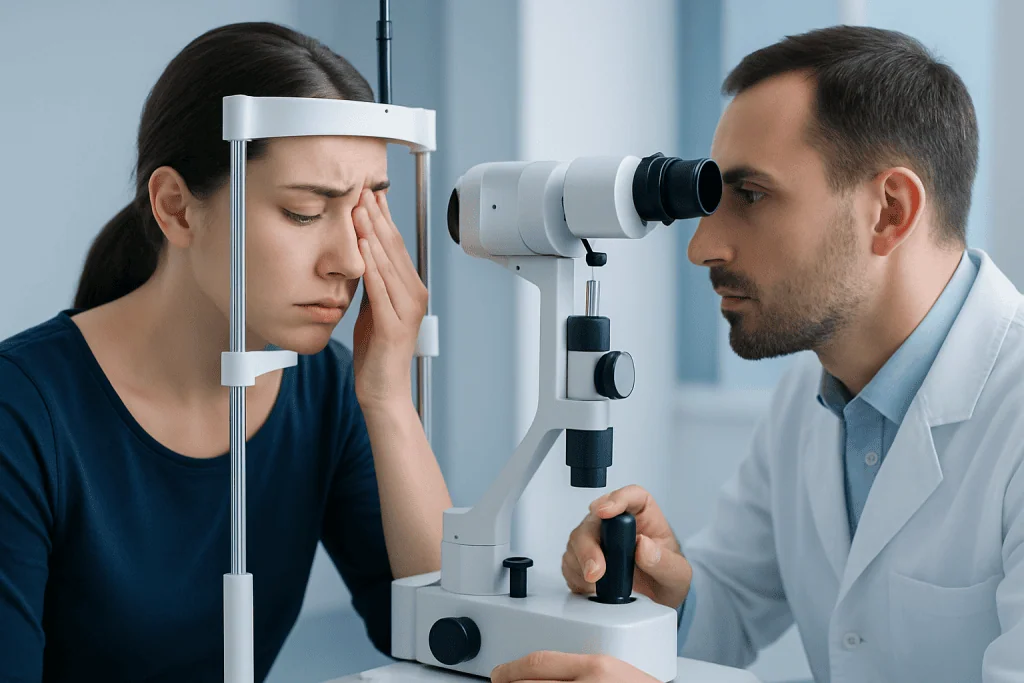
The symptoms of a corneal abrasion usually begin quickly after the eye is injured, although sometimes the exact moment of injury is not noticed. A person may feel sharp pain or a constant gritty sensation, as if sand or dust is trapped under the eyelid. Tearing, redness, and repeated blinking are also common.
Because the cornea helps focus light, a scratch can also lead to blurred vision or the feeling that the eye cannot stay open comfortably. Many people become sensitive to bright light and may prefer dim rooms until the eye improves. The eyelid may spasm or close tightly in response to irritation.
Typical symptoms can include:
- Eye pain or burning
- A foreign-body or gritty sensation
- Tearing or watery eyes
- Redness
- Sensitivity to light
- Blurred vision
- Discomfort when blinking
- Headache around the affected eye
Symptoms alone cannot always distinguish a simple abrasion from other eye conditions. For example, pain and redness can also happen with infection, inflammation, or a deeper corneal injury. That is one reason a professional eye examination is important when symptoms are significant or do not improve quickly.
Causes and risk factors

Corneal abrasions happen when the eye’s surface is rubbed, scraped, or struck. Common causes include a fingernail, makeup brush, tree branch, paper edge, dust, sand, or small particles blown by the wind. Rubbing the eye when something is inside it can worsen the injury and make a small scratch larger.
Contact lenses are an important risk factor. A lens that is damaged, dirty, worn too long, or inserted incorrectly can scrape the cornea. Contact lens use can also raise concern for infection, which is why eye pain in a contact lens wearer deserves careful attention. Related conditions such as keratitis may need to be considered if redness, pain, or discharge is prominent.
Other risk factors include dry eyes, previous eye surgery, certain jobs or sports with dust or flying particles, and reduced blinking during screen use. People with a history of recurrent corneal erosion may have repeat episodes because the corneal surface does not anchor firmly after a prior injury. In some cases, symptoms that seem like a scratch may overlap with other problems such as dry eye or inflammation affecting the eye surface.
How doctors diagnose a corneal abrasion
Diagnosis begins with a careful history. The doctor will ask what happened, whether the person wears contact lenses, if vision changed, and whether chemicals, high-speed particles, or trauma were involved. These details help determine whether the injury is likely to be minor or whether emergency eye care is needed.
The eye is then examined closely. A clinician may use special lights and magnification to inspect the cornea, eyelids, and the inside of the eyelids for trapped debris. Fluorescein dye is often placed on the eye; this harmless dye highlights scratches on the corneal surface and helps show their size and location.
Depending on symptoms, the doctor may also check visual acuity, pupil response, and eye movements. If there is concern for a deeper injury, infection, or another diagnosis, further assessment by an ophthalmologist may be recommended. This can help distinguish a corneal abrasion from issues such as a corneal ulcer or more extensive corneal disease.
Patients should avoid using leftover eye drops from previous illnesses unless advised by a doctor. Some drops can mask symptoms, delay healing, or be unsafe in the setting of an eye injury.
Treatment options and what recovery usually looks like
Treatment depends on the size of the abrasion, the cause, and whether infection is a concern. For many uncomplicated scratches, care focuses on protecting the surface of the eye while it heals. A doctor may recommend lubricating drops or ointment, temporary pain-relieving measures, and antibiotic eye medication when there is a risk of infection, especially in contact lens wearers.
If a foreign body is still in the eye, it may need to be removed by a trained clinician. Contact lenses should not be worn until the eye has fully healed and a doctor confirms it is safe. In more complex cases, an ophthalmologist may suggest close monitoring or specialized care related to corneal treatment if the surface injury is part of a larger corneal problem, although a transplant is not a standard treatment for a routine abrasion.
Most simple corneal abrasions improve within 24 to 72 hours. Larger scratches may take longer, and symptoms such as light sensitivity can persist briefly even as the surface closes. Recovery is usually good, but follow-up is sometimes advised to make sure the cornea is healing well and that no infection or recurrent erosion develops.
People should seek medical guidance before using any eye patch. Routine patching is not appropriate in many cases and may be avoided, especially in contact lens users or when infection is possible.
Self-care, prevention, and what not to do
At home, the safest first steps are simple: stop rubbing the eye, remove contact lenses if present, and blink gently to allow natural tears to help. If a loose particle may be present, rinsing the eye with clean water or sterile saline may help. If pain persists, if the eye remains very red, or if vision is affected, medical evaluation is recommended.
Patients should not try to remove embedded objects from the eye. They should also avoid placing non-sterile products, home remedies, or someone else’s eye drops into the eye. Driving may be unsafe if vision is blurred or if bright light causes marked discomfort.
To lower the risk of future abrasions:
- Wear protective eyewear during sports, yard work, and tasks involving dust or tools.
- Use contact lenses exactly as directed and keep them clean.
- Replace damaged or expired contact lenses and cases.
- Manage eye surface dryness if advised by a doctor.
- Take screen breaks and blink regularly during prolonged device use.
If eye surface problems are ongoing, an ophthalmologist may evaluate for contributing conditions and discuss treatment such as specialized eye procedures or lens-based correction when relevant to broader visual needs, although these are not treatments for an acute abrasion itself. Near the end of the care pathway, some international patients may choose centers such as Acibadem International, where multidisciplinary specialists in JCI-accredited hospitals evaluate and treat eye conditions.
When to seek medical care
Medical care should be sought promptly if there is moderate to severe pain, blurred vision, worsening redness, discharge, or sensitivity to light that does not improve. Evaluation is also important if the injury happened while wearing contact lenses, after a hit to the eye, or after exposure to metal, glass, chemicals, or high-speed particles.
Urgent or emergency assessment is needed if vision suddenly drops, the pupil looks unusual, blood is visible in the eye, or an object seems stuck in the eye. A child with persistent eye pain, excessive tearing, or trouble opening the eye should also be examined. These signs do not always mean serious damage, but they deserve prompt professional attention to protect vision.
Even when symptoms seem mild, a person should see a doctor if the eye is not clearly improving within a day or two. Delayed healing can suggest infection, a retained foreign body, or another eye condition that needs different treatment.
Frequently asked questions
How long does a corneal abrasion take to heal?
Many uncomplicated corneal abrasions heal within 24 to 72 hours. Larger scratches or abrasions related to contact lens use may take longer and may need follow-up to confirm proper healing.
Can a corneal abrasion heal on its own?
Some small corneal abrasions can heal quickly with supportive care, but self-diagnosis is not always reliable. A medical assessment helps confirm that the injury is truly a simple abrasion and not an infection, deeper trauma, or a retained foreign body.
Should someone wear contact lenses with a corneal abrasion?
No. Contact lenses should be removed and not worn again until a doctor says the eye has healed. Wearing lenses too soon can delay recovery and increase the risk of infection.
Is a corneal abrasion the same as an eye infection?
No, a corneal abrasion is a scratch on the eye’s surface, while an infection is caused by microorganisms such as bacteria or viruses. However, an abrasion can increase the risk of infection, which is why prompt care matters.
Can rubbing the eye make a corneal abrasion worse?
Yes. Rubbing can enlarge a scratch, trap debris more deeply, and increase irritation. If the eye feels as though something is in it, gentle rinsing and medical assessment are safer than rubbing.
When is a corneal abrasion an emergency?
It may be an emergency if there is sudden vision loss, severe pain, chemical exposure, blood in the eye, a visible embedded object, or injury from high-speed particles. These situations need urgent evaluation to rule out deeper damage and protect vision.
References
- American Academy of Ophthalmology
- National Eye Institute
- American Optometric Association
- Merck Manual Professional Edition
This article is for general information only and is not a substitute for professional medical advice. Please consult a qualified doctor about your individual situation.
Explore treatments in Turkey — costs, top hospitals & a free quote
JCI-accredited · board-certified surgeons · reply within 24h
Add us as a Preferred Source to see more of our trusted health content across Google Search, AI Overviews and Discover.