Histotripsy Procedure: An Evidence-Based Patient Guide

Histotripsy uses externally delivered focused ultrasound to mechanically disrupt tissue without an incision or needle entering the tumor. Current clinical use is primarily focused on selected liver tumors, including some primary and metastatic cancers.
Key Takeaways
- Histotripsy uses externally delivered focused ultrasound to mechanically disrupt tissue without an incision or needle entering the tumor.
- Current clinical use is primarily focused on selected liver tumors, including some primary and metastatic cancers.
- Eligibility depends on tumor size, location, visibility on imaging, liver function, overall health, and the treatment goal.
- Recovery is often shorter than after surgery, but follow-up imaging remains essential to assess treatment response.
- Histotripsy has limitations and risks, and it does not replace established cancer treatments for every patient.
A histotripsy procedure is a noninvasive treatment that uses focused ultrasound energy to break down targeted tissue, most commonly selected liver tumors. It is an emerging option for carefully chosen patients and should be considered by a multidisciplinary cancer team alongside surgery, ablation, radiation, and systemic therapy.
What is a histotripsy procedure?
A histotripsy procedure is a noninvasive, image-guided treatment that uses focused ultrasound waves to break apart targeted tissue inside the body. The ultrasound energy is delivered from outside the skin. At a precise focal point, it creates tiny gas bubbles that rapidly form and collapse, mechanically disrupting the selected tissue while aiming to limit injury to surrounding structures.
In current clinical practice, histotripsy is mainly used for carefully selected tumors in the liver. It is not a general cure for cancer and is not suitable for every liver tumor. The treatment plan depends on whether the goal is to control one tumor, reduce symptoms, support other cancer treatment, or manage disease when standard local options are not appropriate.
Unlike surgical removal or needle-based thermal ablation, histotripsy does not rely on heat and does not require a probe to be placed through the skin into the tumor. This difference may be useful for certain tumors, but it does not eliminate the need for careful planning, anesthesia, imaging, and specialist follow-up.
How does histotripsy work?
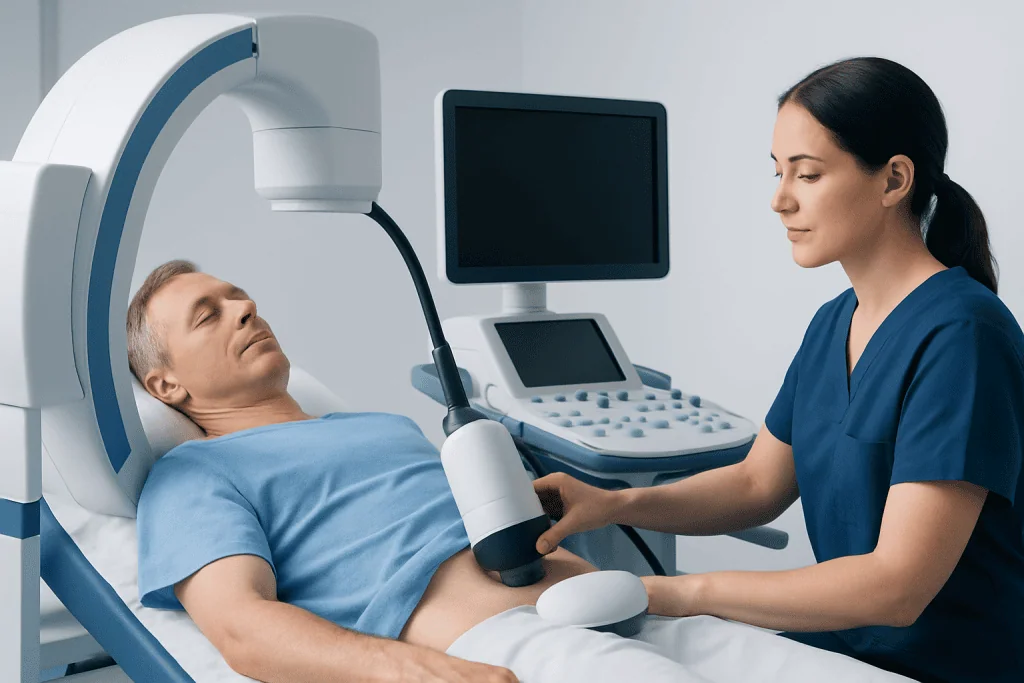
During histotripsy, an ultrasound transducer directs focused sound-wave pulses toward a defined treatment area. Although sound waves pass through the skin, the energy is concentrated at the target rather than throughout the path. At the focal point, a process called cavitation creates a bubble cloud that breaks down tissue at a microscopic level.
Ultrasound imaging is used to help identify the target and monitor treatment. The care team plans the procedure around the tumor’s location and nearby structures, such as blood vessels, bile ducts, bowel, lungs, ribs, or the diaphragm. Breathing motion can also affect accuracy, so anesthetic and positioning plans are individualized.
After treatment, the disrupted tissue is gradually processed by the body. Imaging scans are needed over time to evaluate the treated area and look for remaining or recurrent tumor. A histotripsy paper or early clinical report may describe promising results, but patients should understand that research and longer-term evidence continue to develop.
Which kind of cancer can histotripsy treat?

Histotripsy is currently most relevant to selected tumors in the liver. These may include primary liver cancer, such as hepatocellular carcinoma, and cancers that have spread to the liver from another organ, often called liver metastases. Whether a particular cancer can be treated depends less on its name alone and more on the number, size, position, and imaging characteristics of liver lesions.
For example, a person may have a liver metastasis from colorectal cancer or another cancer type, but still not be a suitable candidate if the lesion cannot be safely targeted. Conversely, some patients who are not candidates for surgery may be evaluated for histotripsy alongside other local treatments. It is one possible tool within a broader cancer-care strategy rather than a standalone approach for all disease.
Patients with primary liver tumors may also be assessed for established approaches such as surgery, transplantation evaluation, thermal ablation, embolization, radiation therapy, or medicines that treat cancer throughout the body. Decisions are ideally made in a multidisciplinary tumor board, where radiologists, surgeons, medical oncologists, radiation oncologists, hepatologists, and interventional specialists review the full clinical picture.
Research is exploring histotripsy for other tumor sites, but availability, approvals, evidence, and clinical recommendations vary by country and institution. Patients should ask whether use for their particular cancer is standard care, available through a clinical trial, or being considered in a highly selected setting.
Who is not eligible for histotripsy?
A patient may not be eligible for histotripsy when the tumor cannot be clearly seen or safely reached with the device and imaging guidance. Tumors that are too large, too numerous, positioned near sensitive structures, or obscured by bone, bowel gas, or other anatomy may be difficult to treat accurately. The exact histotripsy requirements depend on the equipment used, local expertise, and the individual treatment plan.
Some people may be better served by surgery, thermal ablation, radiation, embolization, systemic therapy, or a combination of treatments. Histotripsy may also be unsuitable when extensive cancer requires whole-body treatment rather than treatment of one or a few liver lesions. It may not be recommended if treating a local tumor would not meaningfully support the overall care goal.
Other factors that can affect candidacy include severely impaired liver function, uncontrolled infection, significant bleeding risk, serious anesthesia-related concerns, or inability to lie in the required position. Prior liver treatments, scar tissue, implanted devices, and the location of the tumor relative to major vessels or bile ducts are reviewed individually.
There are no universal histotripsy guidelines that replace clinical judgment. A specialist team uses imaging, blood tests, cancer staging, medical history, and the patient’s priorities to determine whether histotripsy is appropriate and whether another treatment offers a clearer benefit.
What happens during the procedure and recovery?
Before a histotripsy procedure, patients usually have detailed imaging, such as CT or MRI, to map the tumor and plan treatment. They may also have blood tests to assess liver function, kidney function, blood counts, and clotting. The team reviews current medicines, including blood thinners, and provides instructions about eating, drinking, and medication changes before the appointment.
On the procedure day, the patient lies on a treatment table while the team positions the ultrasound device over the abdomen. General anesthesia is often used so that the patient remains comfortable and still and so breathing can be managed consistently. The physician uses live imaging to target the tumor, delivers ultrasound pulses in planned areas, and monitors the treatment throughout.
The procedure length varies with tumor features and the treatment plan. Afterward, patients are observed as anesthesia wears off. Some may go home the same day, while others may need overnight monitoring based on their health, the extent of treatment, pain control needs, and local practice.
Recovery is often measured in days rather than the longer recovery associated with major liver surgery. Temporary fatigue, abdominal soreness, nausea, or discomfort can occur. Follow-up imaging is a central part of care; it confirms the treatment effect and helps the team decide whether further local or systemic therapy is needed.
What are the benefits and downsides of histotripsy?
A potential benefit of histotripsy is that it is noninvasive: there is no surgical incision and no treatment needle passing directly into the tumor. This may reduce some wound-related concerns and may allow a relatively short recovery for appropriate histotripsy patients. Because the method is nonthermal, it may have a different safety profile from heat-based ablation in selected anatomical situations.
However, the downsides of histotripsy are important to understand. It is not available everywhere, has a narrower evidence base than many established cancer treatments, and may not be feasible for lesions that cannot be safely targeted. It can treat a selected area, but it does not address cancer elsewhere in the body and does not prevent new tumors from developing.
Possible risks include pain, bruising, fatigue, nausea, bleeding, infection, injury to nearby tissue, changes in liver blood tests, or complications related to anesthesia. Depending on the target location, there may be risks involving blood vessels, bile ducts, bowel, diaphragm, or other nearby structures. A treated tumor may also have incomplete response, requiring further treatment.
Patients should ask how histotripsy compares with the alternatives in their own situation, what outcome is realistically expected, how response will be measured, and what plan is in place if the tumor is not fully controlled. Clear discussion of uncertainty is especially important with newer technologies.
Will insurance pay for histotripsy?
Insurance coverage for histotripsy varies substantially by country, insurer, policy, hospital, diagnosis, and whether the procedure is considered medically necessary under a particular benefit plan. Because histotripsy is a newer technology, coverage rules may be more variable than for long-established treatments such as surgery or certain forms of ablation.
Before scheduling treatment, patients should contact their insurer or benefits administrator and ask for written confirmation of coverage, authorization requirements, exclusions, co-payments, and any limits related to hospital, clinician, or diagnosis. The treating hospital’s financial counseling or international patient team may help explain documentation and authorization processes, but the insurer makes the coverage decision.
Patients should not delay urgent cancer care while waiting for administrative information. The oncology team can discuss clinically appropriate alternatives if histotripsy is unavailable, not covered, or not the most suitable treatment option.
When to seek medical care
Anyone with a known liver tumor, newly diagnosed cancer, or cancer that may have spread to the liver should discuss treatment options promptly with their oncology team. Histotripsy should be considered only after appropriate imaging and cancer staging, not as a substitute for a full medical assessment.
After histotripsy or any liver-directed procedure, patients should contact their care team for worsening abdominal pain, persistent vomiting, fever, increasing weakness, yellowing of the eyes or skin, unusual bleeding, shortness of breath, or any symptom that feels severe or concerning. Emergency care is appropriate for sudden severe symptoms or signs of a serious allergic reaction or bleeding.
For international patients, Acibadem International’s multidisciplinary specialists and JCI-accredited hospitals can assess liver tumors and coordinate individualized treatment planning. Depending on tumor type and location, the team may discuss liver cancer treatment and related options alongside histotripsy evaluation.
Frequently asked questions
Is histotripsy painful?
Patients are commonly given anesthesia for histotripsy, so they should not feel pain during the treatment itself. Mild abdominal soreness, fatigue, nausea, or discomfort may occur afterward, but the recovery experience varies. The care team can provide an individualized plan for symptom control.
How long does a histotripsy procedure take?
The duration depends on the number, size, and location of tumors, as well as imaging and anesthesia needs. The treatment itself may take a limited period, but preparation and post-anesthesia observation add time. The treating center can provide a more accurate estimate after reviewing imaging.
Can histotripsy replace surgery for liver cancer?
Histotripsy does not replace surgery for every patient with liver cancer. Surgery remains an important option for some resectable tumors, while other patients may benefit more from ablation, embolization, radiation, systemic treatment, or combined care. A multidisciplinary team can compare these choices based on the individual cancer and liver health.
Who is not eligible for histotripsy?
People may be ineligible if their tumor cannot be safely targeted or seen adequately on imaging, is too large or unfavorably located, or if they have medical factors that make anesthesia or liver-directed treatment unsafe. Widespread disease may also require systemic treatment rather than local tumor treatment alone. Eligibility requires individualized review by experienced specialists.
Will insurance pay for histotripsy?
Coverage differs among insurers, countries, policy types, and clinical indications. Patients should obtain written information about authorization and out-of-pocket responsibilities before treatment whenever possible. A hospital financial counselor may assist with the administrative process but cannot guarantee coverage.
What are the downsides of histotripsy?
Histotripsy is a newer treatment with evolving long-term evidence and limited availability. It may not be technically possible for all tumors, and it can still cause side effects, treatment-related complications, or incomplete tumor control. It also treats only the targeted area and may need to be combined with other cancer therapies.
References
- United States Food and Drug Administration
- National Cancer Institute
- American Cancer Society
- European Society for Medical Oncology
- Society of Interventional Radiology
This article is for general information only and is not a substitute for professional medical advice. Please consult a qualified doctor about your individual situation.
Persistent digestive symptoms? Get evaluated in Turkey
JCI-accredited · board-certified surgeons · reply within 24h
Add us as a Preferred Source to see more of our trusted health content across Google Search, AI Overviews and Discover.