Holes in Hand: What Patients Need to Know

“Holes” in the hand may be caused by injury, skin conditions, infection, scarring or changes in tissue beneath the skin. A puncture wound may look small on the surface but can carry bacteria or leave a foreign object beneath the skin.
Key Takeaways
- “Holes” in the hand may be caused by injury, skin conditions, infection, scarring or changes in tissue beneath the skin.
- A puncture wound may look small on the surface but can carry bacteria or leave a foreign object beneath the skin.
- Pain, warmth, swelling, pus, fever, numbness or difficulty moving fingers require prompt medical attention.
- Persistent skin ulcers or pits need assessment, especially in people with diabetes, reduced circulation or reduced immune function.
- Do not attempt to cut, dig into or squeeze a hole, sore or embedded object at home.
Holes in hand can describe several different findings, including small skin pits, puncture wounds, slow-healing sores, scars or dimples in the palm. Many are minor, but persistent, painful, infected-looking or deep changes should be assessed by a qualified healthcare professional.
Overview: What Can Holes in Hand Mean?
Holes in hand is a non-medical phrase that can describe small openings, pits, dents, wounds or sores on the palm, fingers or back of the hand. A visible change may affect only the outer layer of skin, or it may reflect a deeper issue involving tissue beneath the skin. The appearance, location, timing and accompanying symptoms help determine the likely cause.
A fresh hole after contact with a sharp object is often a puncture wound. Small, repeated pits may be linked to irritation, sweating, infection or an inflammatory skin condition. A crater-like area that does not heal may be an ulcer, while a painless indentation in the palm can sometimes result from scarring or tightening of connective tissue.
It is not always possible to identify the cause by appearance alone. A healthcare professional can examine the hand, check sensation and movement, and decide whether wound care, testing or referral to a skin or hand specialist is appropriate.
How the Appearance and Symptoms Can Offer Clues

Looking at the change carefully can help patients describe it clearly during a medical appointment. A newly formed, pinpoint opening may follow a thorn, splinter, needle, animal bite or workplace injury. It may bleed briefly, feel tender or have a small dark spot if debris remains within the skin.
Skin pits may be shallow and clustered, with little or no bleeding. They can occur in areas exposed to friction, moisture, chemicals or repeated handwashing. Some people notice itching, scaling, peeling, blisters or thickened skin around the pits, which can point toward dermatitis or another skin disorder.
A sore that is open, deepening or slow to close deserves particular attention. Signs such as increasing pain, red or purple discoloration, warmth, swelling, drainage, odor, numbness or reduced finger movement can indicate infection, impaired healing or damage to deeper structures. A painless wound can also be important, particularly when sensation or circulation is reduced.
- Palm or finger crease: may be associated with friction, a puncture injury, scar tissue or a condition affecting the tissue beneath the palm.
- Fingertip: may follow a splinter, repeated trauma, skin cracking or a wart-like growth.
- Back of the hand: may be exposed to sun, irritants, minor injuries and inflammatory skin changes.
- Multiple small pits: may occur with moisture-related skin changes, eczema, infection or inherited skin tendencies.
Common Causes of Holes, Pits and Open Areas in the Hand
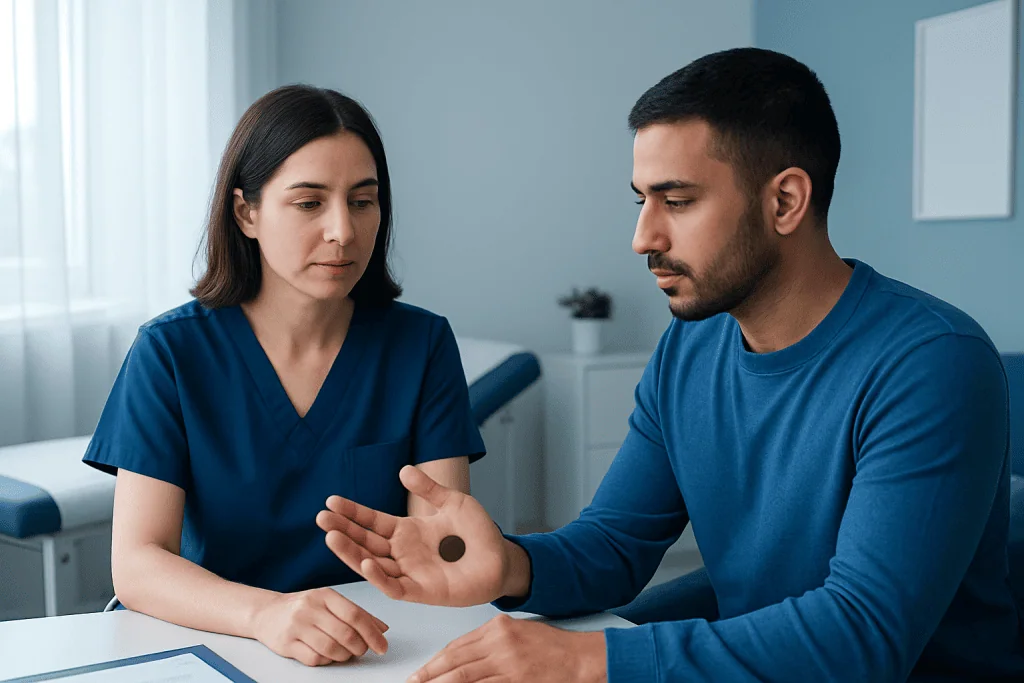
Minor trauma is one of the most common causes. Splinters, thorns, fishhooks, glass, tools and needles can produce a small but deep puncture. These wounds may introduce bacteria into the hand and, because the hand contains tendons, joints and small compartments, an infection can occasionally become serious if not treated promptly.
Dry skin and irritant contact dermatitis can lead to cracks that resemble small holes, especially around the fingertips and knuckles. Frequent exposure to water, soaps, cleaning products, solvents or gloves may weaken the skin barrier. Eczema and allergic contact dermatitis can also cause itching, redness, scaling and painful fissures.
Some infections can alter the surface of the skin. Viral warts may have a rough surface with tiny dark dots, while bacterial infections can cause crusting, drainage or a tender abscess. Fungal infections are more likely to cause scaling and irritation than a true hole, but they can contribute to skin breakdown. A clinician should assess any suspected infection rather than relying on appearance alone.
Less commonly, a persistent open area can be related to reduced blood flow, nerve damage, autoimmune inflammation, pressure injury or certain skin cancers. These causes are not the usual explanation for a small new mark, but they are important to rule out when a lesion persists, enlarges, bleeds repeatedly or does not improve with appropriate care.
Risk Factors for Delayed Healing or Infection
Any break in the skin can become infected, but certain factors increase this likelihood or make healing slower. Diabetes can affect circulation, immune response and sensation, meaning that a wound may not feel as painful as expected. Conditions that reduce blood flow, such as peripheral artery disease, may also affect healing.
Reduced immune function from an illness or medicines, smoking, poor nutrition, long-term steroid use and older age can all affect the body’s ability to repair damaged skin. People whose work or hobbies involve soil, plants, raw fish, animals, metalwork or chemicals may have a higher risk of punctures, embedded material or exposure to bacteria.
Repeated hand friction and frequent wet work can also cause recurring skin barrier damage. Protective gloves suited to the task, gentle cleansing and regular use of fragrance-free moisturiser can help reduce irritation. However, gloves should be changed when wet or damaged, as prolonged moisture can worsen some skin problems.
How Holes in Hand Are Assessed and Diagnosed
A clinician will usually begin by asking when the area appeared, whether there was an injury or exposure, and whether symptoms have changed. They may ask about pain, itching, drainage, fever, hand function, numbness, medicines, allergies, diabetes and previous skin conditions.
During the examination, the clinician may assess the depth and edges of the opening, surrounding skin, circulation, sensation and ability to bend and straighten the fingers. They may look for retained foreign material, infection, a nearby joint or tendon injury, or signs that the issue is part of a wider skin condition.
Not every hand lesion needs testing. If a puncture wound is deep, contaminated or suspected to contain glass, metal or another foreign body, imaging such as an X-ray or ultrasound may be considered. A wound swab may be useful when there is drainage or treatment has not worked. Persistent or unusual lesions may require review by dermatology, hand surgery or another specialist, and occasionally a small tissue sample is examined.
Treatment and Safe Self-Care
Treatment depends on the cause. For a simple superficial cut or puncture, gentle rinsing under clean running water, removal of visible surface dirt and covering the area with a clean dressing may be appropriate. Avoid using harsh chemicals inside a wound, and do not probe deeply with tweezers, needles or other tools. A healthcare professional should remove a deeply embedded splinter or object.
Medical treatment may include professional cleaning, drainage of an abscess, removal of foreign material, wound closure when suitable, tetanus vaccination assessment, or medicine for a confirmed infection. Antibiotics are not needed for every small wound, but they may be recommended for selected injuries or infections. Treatment for dermatitis, eczema, warts or other skin conditions is different and should be guided by a clinician.
For dry, cracked or irritated skin, patients can reduce exposure to known irritants, use lukewarm rather than hot water, pat hands dry and apply a plain moisturiser after washing. Covering painful cracks with an appropriate dressing can protect them while they heal. If a product stings, worsens redness or causes a rash, it should be stopped and discussed with a clinician.
People with diabetes, poor circulation, impaired sensation or immune suppression should seek advice early for any hand wound or unexplained open area. They should not wait for a wound to become painful, because pain may be reduced when nerves are affected.
When to Seek Medical Care
Urgent medical care is appropriate for a deep puncture, a wound from an animal or human bite, an injury involving a dirty or rusty object, or a possible retained piece of glass, metal or wood. Prompt assessment is also important if the wound is near a joint, tendon or nail, or if the person cannot fully move a finger.
Patients should seek same-day advice if redness is spreading, pain or swelling is increasing, pus develops, red streaks appear, fever occurs, or the hand becomes weak, numb, pale or unusually cold. These symptoms may indicate infection or a circulation or nerve concern that needs timely treatment.
A non-urgent appointment is recommended for a pit, sore or indentation that lasts more than a few weeks, repeatedly opens, grows, changes color, bleeds without clear injury or fails to improve with basic skin care. Acibadem International’s multidisciplinary specialists and JCI-accredited hospitals can assess hand skin concerns and injuries for international patients when specialist evaluation is needed.
Frequently asked questions
Are holes in the hand always caused by an injury?
No. Although punctures and splinters are common causes, holes or pits may also be related to dry cracked skin, eczema, infection, scarring or a condition affecting tissue beneath the skin. An examination is helpful when the cause is unclear or the area does not heal.
Can a small puncture wound in the hand become infected?
Yes. Puncture wounds can carry bacteria below the skin even when the surface opening is very small. Increasing redness, warmth, swelling, drainage, worsening pain or fever should be assessed promptly.
Should a splinter be removed at home?
A small, superficial splinter that is fully visible may sometimes be removed with clean tweezers. If it is deep, painful, broken, near a joint or nail, or cannot be removed easily, it is safer to seek medical care rather than digging into the skin.
Why is a hand sore not healing?
A wound may heal slowly because of repeated friction, infection, retained material, ongoing chemical exposure or an underlying health condition affecting circulation, sensation or immunity. A sore that persists, worsens or repeatedly reopens should be evaluated by a healthcare professional.
Do people with diabetes need to take hand wounds more seriously?
Yes. Diabetes can reduce sensation and slow healing, so small injuries may be missed or become complicated more easily. People with diabetes should contact a clinician early if they develop an open sore, puncture, redness, drainage or swelling on the hand.
Can moisturiser help small pits or cracks in the hands?
Moisturiser can help when the changes are due to dryness, frequent washing or irritant dermatitis. A plain fragrance-free product applied regularly may support the skin barrier, but it will not treat a deep wound, embedded object or infection.
References
- American Academy of Dermatology Association
- American Society for Surgery of the Hand
- Centers for Disease Control and Prevention
- National Health Service
- Mayo Clinic
This article is for general information only and is not a substitute for professional medical advice. Please consult a qualified doctor about your individual situation.
Explore treatments in Turkey — costs, top hospitals & a free quote
JCI-accredited · board-certified surgeons · reply within 24h
Add us as a Preferred Source to see more of our trusted health content across Google Search, AI Overviews and Discover.