Holter Monitor: An Evidence-Based Guide for Patients

A holter monitor records heart rhythm continuously during normal daily activities. It is commonly used to investigate palpitations, dizziness, fainting, or unexplained shortness of breath.
Key Takeaways
- A holter monitor records heart rhythm continuously during normal daily activities.
- It is commonly used to investigate palpitations, dizziness, fainting, or unexplained shortness of breath.
- Patients usually keep a diary of symptoms and activities so doctors can match them to the recording.
- The test is painless, noninvasive, and does not send electricity into the body.
- A normal result does not always rule out a rhythm problem if symptoms did not happen during monitoring.
A holter monitor is a small, wearable electrocardiogram device that records the heart’s electrical activity continuously, usually for 24 to 48 hours and sometimes longer. It helps doctors find rhythm problems that may not appear during a short clinic ECG, especially when symptoms come and go.
What a Holter Monitor Is and Why It Is Used
A holter monitor is a portable electrocardiogram, often called an ambulatory ECG, that continuously records the heart’s electrical activity while a person goes about normal daily life. Unlike a standard in-clinic ECG, which captures only a brief snapshot, a holter monitor can record for 24 to 48 hours or sometimes longer. This longer recording period makes it useful for symptoms that happen unpredictably or only from time to time.
Doctors use a holter monitor to look for rhythm disturbances, also called arrhythmias, and to evaluate whether symptoms may be related to the heart. It may be recommended after palpitations, skipped beats, episodes of rapid heartbeat, dizziness, fainting, unexplained fatigue, or chest discomfort. It can also help assess how well certain heart medicines are working or whether a known rhythm disorder is occurring more often than expected.
The main value of a holter monitor is that it observes the heart during everyday conditions such as walking, climbing stairs, working, sleeping, and experiencing stress. This can reveal changes that do not show up during a short office visit. In some cases, it is part of a broader evaluation for arrhythmia or for symptoms that could be related to another heart condition.
How the Test Works and What to Expect
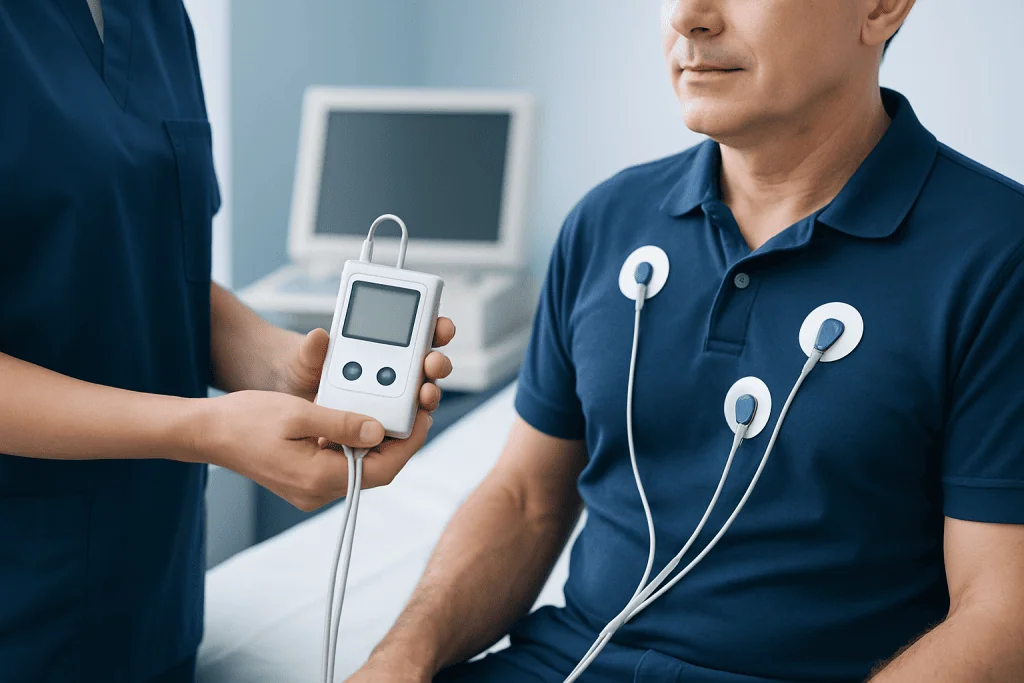
The monitor itself is small and lightweight. Sticky electrode patches are placed on the chest and connected by wires to a recording device worn on a belt, shoulder strap, or adhesive patch system, depending on the model. The device records electrical signals from the heart continuously throughout the monitoring period.
Wearing a holter monitor is painless. It does not shock the heart or deliver any treatment. Most people can continue usual activities, although the device must be kept dry unless the care team specifically provides a waterproof system. Showering, bathing, and swimming are usually restricted until the monitor is removed.
Patients are often asked to keep a symptom and activity diary. This may include the time of symptoms such as fluttering in the chest, dizziness, shortness of breath, or chest pain, along with what the person was doing at that moment. That information helps the doctor compare symptoms with the heart tracing and decide whether there is a meaningful rhythm change.
When the monitoring period ends, the device is returned and the recording is analyzed by specialized software and a clinician. A cardiologist may review the tracings, especially if there are concerning findings or symptoms. In some centers, the test is part of a wider cardiology evaluation when heart rhythm symptoms need closer investigation.
Who May Need a Holter Monitor
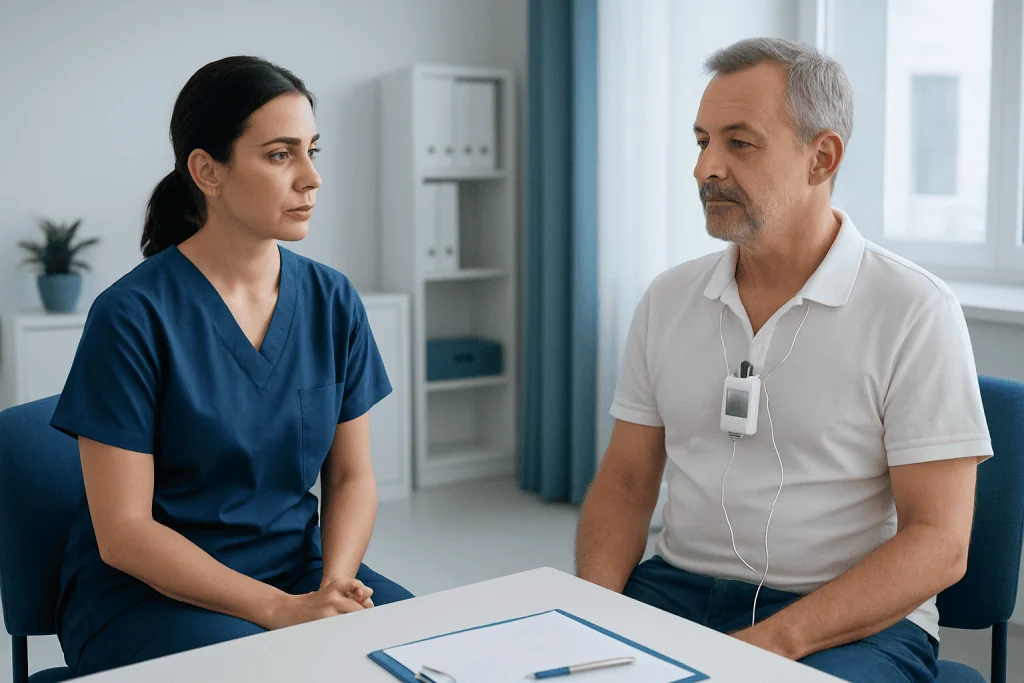
A holter monitor may be helpful when symptoms suggest an intermittent heart rhythm problem. Common reasons for testing include palpitations, a sensation of pounding or racing heartbeat, lightheadedness, fainting, near-fainting, unexplained tiredness, or episodes of breathlessness. It may also be used after a stroke or transient ischemic event when doctors are looking for a hidden rhythm disorder such as atrial fibrillation.
The test can also be useful in people who already have a heart diagnosis. For example, a clinician may order it to see whether treatment is controlling symptoms, whether a pacemaker is functioning as expected, or whether abnormal rhythms are happening without obvious symptoms. Some patients wear it after a hospital stay for chest pain or after a procedure if rhythm monitoring is still needed.
Not every symptom requires a holter monitor. If symptoms happen less often than every day or two, another type of monitor may be more useful, such as an event recorder or patch monitor worn for a longer period. The choice depends on how often symptoms happen, how severe they are, and what the doctor is trying to confirm or rule out.
- Frequent palpitations or skipped beats
- Dizziness, fainting, or near-fainting
- Possible intermittent atrial fibrillation
- Monitoring response to heart rhythm treatment
- Follow-up after certain cardiac evaluations or procedures
Preparing for the Test and Living with the Device
Preparation is usually simple. The care team may ask the patient to wear loose, comfortable clothing and avoid applying oils, creams, or lotions to the chest on the day of the test because these can make the electrodes less secure. In some cases, a small area of chest hair may need trimming so the patches stick well and record clearly.
During monitoring, patients are generally encouraged to continue normal routines unless a doctor gives different instructions. Ordinary activity is important because it allows the recording to reflect real-life conditions. Exercise may be helpful if it tends to bring on symptoms, but it should only be done at a usual and safe level. Any activity that could dislodge leads or damage the monitor should be avoided.
Skin irritation from the adhesive patches can happen, especially in people with sensitive skin, but serious problems are uncommon. If an electrode becomes loose, the care team’s instructions should be followed to reattach it or note the issue. It is also important not to tamper with the device or remove it early unless advised for safety reasons.
Good symptom notes can improve the usefulness of the test. Writing down the time, what was felt, how long it lasted, and what activity was happening at the time can help the doctor interpret whether the recording matches symptoms. This is often more informative than trying to remember events afterward.
What the Results Can Show
A holter monitor can identify many rhythm patterns, including extra beats, slow heart rhythms, fast heart rhythms, pauses, or episodes of irregular rhythm. It may show whether symptoms happen at the same time as a rhythm change or whether the heart rhythm remains normal when symptoms are felt. That distinction can guide the next step in care.
For example, palpitations may correlate with benign extra beats, or they may reveal a more significant arrhythmia that needs treatment. The monitor can also show whether the heart rate becomes too slow during sleep or too fast with mild activity, and whether those changes are appropriate. In some cases, the recording suggests reduced blood flow to the heart, though a holter monitor is not the main test for diagnosing coronary artery disease.
A normal result can be reassuring, but it does not always completely exclude a problem. If symptoms did not happen during the recording period, the monitor may not capture the event. When that happens, a clinician may recommend a longer monitoring strategy or other tests such as an echocardiogram, exercise test, blood tests, or consultation in electrophysiology assessment if a rhythm disorder remains strongly suspected.
Possible Next Steps After Monitoring
Next steps depend on the findings and the person’s symptoms. If the recording shows a harmless pattern and symptoms are mild, reassurance and observation may be enough. If certain triggers seem to worsen symptoms, the doctor may suggest practical changes such as limiting excess caffeine, avoiding stimulant medications when possible, managing stress, or improving sleep.
If a clinically important arrhythmia is found, treatment may include medication, further monitoring, or additional tests to define the rhythm more clearly. Some people may need an echocardiogram to look at heart structure and function. Others may be referred for procedures such as cardiac ablation when an abnormal electrical pathway or recurring rhythm problem is identified and treatment is appropriate.
When symptoms are severe but the holter monitor does not provide an answer, a different device may be chosen. Patch monitors, event recorders, mobile cardiac telemetry, or implantable loop recorders can monitor for longer periods. The most suitable option depends on how often symptoms occur and whether there are high-risk features such as fainting, known heart disease, or a family history of sudden cardiac problems.
Limitations, Safety, and Common Misunderstandings
A holter monitor is very safe and widely used. The most common inconvenience is skin irritation or discomfort from the adhesive electrodes. The test itself is noninvasive and does not expose the body to radiation. It records the heart’s signals but does not interfere with them.
One common misunderstanding is that the monitor can diagnose every cause of chest pain, dizziness, or fatigue. It is specifically a rhythm-recording tool, so its usefulness is greatest when symptoms may be linked to intermittent electrical changes in the heart. Other conditions, including anemia, anxiety, dehydration, lung problems, thyroid disease, or structural heart disease, may require separate evaluation.
Another misunderstanding is that a normal holter result means symptoms are not real or not important. In fact, symptoms can still deserve medical attention even if no rhythm problem is captured. The test result is only one part of the overall picture, along with medical history, physical examination, and any other tests the doctor considers necessary.
When to Seek Medical Care
A holter monitor is usually an outpatient test, but some symptoms should be assessed promptly rather than waiting for routine follow-up. Urgent medical care is appropriate for chest pain that is severe, persistent, or occurs with shortness of breath, fainting, sweating, or nausea. Immediate attention is also important for sudden collapse, ongoing palpitations with dizziness, new confusion, or severe breathlessness.
Even outside emergencies, a person should contact a doctor if symptoms are becoming more frequent, lasting longer, or interfering with daily life. Medical advice is also important if there is a known heart condition, a family history of serious rhythm problems, or recent changes in medication that seem to affect the heartbeat. If a holter monitor has already been prescribed, the care team should be told about any major symptoms that occur during the monitoring period.
For international patients who need further evaluation, Acibadem International’s multidisciplinary specialists in JCI-accredited hospitals diagnose and treat heart rhythm conditions using a range of modern cardiac services. The most appropriate plan depends on the person’s symptoms, history, and test results.
Frequently asked questions
What is the difference between a holter monitor and a regular ECG?
A regular ECG records the heart’s electrical activity for only a few seconds while a person is in the clinic. A holter monitor records continuously over a much longer period, usually 24 to 48 hours or more. This makes it more useful for symptoms that happen intermittently.
Can a holter monitor detect all arrhythmias?
It can detect many rhythm abnormalities, but only if they happen while the device is being worn. If symptoms are rare, the monitor may miss the event simply because it did not occur during the recording period. In that situation, a doctor may suggest a longer-term monitor.
Is wearing a holter monitor uncomfortable or dangerous?
The test is generally safe and painless. The most common issue is mild skin irritation from the adhesive patches. The device only records the heart’s electrical activity and does not deliver electricity to the body.
Can a person sleep and exercise with a holter monitor?
Yes, most people can sleep normally and continue usual daily activities while wearing the monitor. Gentle to moderate exercise is often allowed if it is part of normal routine and does not put the device at risk. The care team will explain any specific limits, especially regarding water exposure.
What should be written in the symptom diary?
It is helpful to note the time symptoms begin, what they feel like, how long they last, and what activity was happening at the time. Patients can also record sleep, exercise, emotional stress, meals, and medications if advised. These details help the doctor match symptoms with the heart recording.
What happens if the holter monitor result is normal?
A normal result may be reassuring, especially if no rhythm problem appears during symptoms. However, it does not always rule out a heart rhythm issue if symptoms did not occur while the monitor was on. A doctor may recommend a different type of monitor or other tests if concern remains.
References
- American Heart Association
- National Heart, Lung, and Blood Institute
- Mayo Clinic
- Cleveland Clinic
- European Society of Cardiology
This article is for general information only and is not a substitute for professional medical advice. Please consult a qualified doctor about your individual situation.
Explore treatments in Turkey — costs, top hospitals & a free quote
JCI-accredited · board-certified surgeons · reply within 24h
Add us as a Preferred Source to see more of our trusted health content across Google Search, AI Overviews and Discover.