Hordeolum vs Chalazion: Key Differences and How Doctors Tell Them Apart

A hordeolum is usually painful, red, and develops quickly, often near the eyelashes. A chalazion is usually a painless or mildly tender, firm lump deeper within the eyelid.
Key Takeaways
- A hordeolum is usually painful, red, and develops quickly, often near the eyelashes.
- A chalazion is usually a painless or mildly tender, firm lump deeper within the eyelid.
- Warm compresses and gentle eyelid hygiene can help both conditions, but squeezing an eyelid bump should be avoided.
- Persistent, recurring, unusually large, or vision-affecting eyelid lumps should be assessed by an eye specialist.
- Antibiotics are not routinely needed for every eyelid bump; treatment depends on the examination findings.
A hordeolum, often called a stye, is usually a tender red eyelid bump caused by an acute infection. A chalazion is generally a firmer, less painful lump caused by blockage and inflammation of an eyelid oil gland; an eye clinician can usually distinguish them through a focused examination.
Hordeolum vs Chalazion: Side-by-Side Comparison
Hordeolum vs chalazion can be distinguished mainly by pain, location, speed of onset, and the underlying cause. A hordeolum is an acute, usually painful inflammation or infection involving an eyelash follicle or eyelid oil gland. A chalazion is a localized inflammatory lump that forms when an oil-producing meibomian gland becomes blocked, and it is often painless after the early stage.
| Feature | Hordeolum (stye) | Chalazion |
|---|---|---|
| Typical cause | Acute bacterial infection of an eyelash follicle or gland | Blocked meibomian oil gland and inflammation |
| Pain | Usually tender or painful | Often painless; may be mildly tender early on |
| Location | Often along the eyelash line; may occur inside the eyelid | Usually deeper within the eyelid, away from the lash line |
| Appearance | Red, swollen bump that may develop a small yellow point | Round, firm lump with less redness |
| Timing | Often develops over days | May grow gradually over days to weeks |
| Usual course | Often drains and improves within days to a few weeks | May take several weeks or longer to settle |
The terms can sometimes overlap in everyday conversation because both cause a lump in the eyelid. In addition, an internal hordeolum can occur deeper in the eyelid and may later evolve into a chalazion after the acute infection and tenderness improve. A clinical examination is the most reliable way to clarify the diagnosis.
What Is a Hordeolum?
A hordeolum is a common eyelid bump caused by acute inflammation, usually involving bacteria that normally live on the skin. An external hordeolum affects an eyelash follicle or nearby glands at the eyelid edge. It is commonly called a stye and may look like a small pimple or boil beside the eyelashes.
An internal hordeolum affects a meibomian gland located within the eyelid. It can cause more widespread eyelid swelling and tenderness than an external stye because the affected gland lies deeper in the tissue. The eyelid may feel sore, heavy, or warm, and the eye can water or feel irritated.
Most hordeola are not dangerous and improve with simple care. However, the surrounding eyelid can occasionally become more inflamed, and symptoms that spread beyond a localized bump need medical review. A person should not try to pop, pierce, or squeeze a hordeolum, as this can worsen irritation or spread infection.
What Is a Chalazion?

A chalazion develops when a meibomian gland becomes blocked and its oily secretion cannot drain normally. The retained material triggers inflammation, forming a rounded lump in the upper or lower eyelid. Chalazia are more often found in the upper eyelid because it contains more meibomian glands.
Unlike a hordeolum, a chalazion is usually not caused by an active infection. It may initially be red and slightly tender, particularly if it begins after an internal hordeolum. Over time, it often becomes a firm, non-tender nodule that can remain noticeable for weeks.
A large chalazion may press on the surface of the eye and temporarily blur vision or cause astigmatism, especially in children. This does not mean every chalazion requires a procedure, but it does make timely assessment important when vision seems affected, the lump is growing, or it does not improve with conservative treatment.
How a Clinician Tells Them Apart
Eye clinicians usually diagnose a hordeolum or chalazion by asking about the timing of symptoms and examining the eyelid closely. Sudden pain, marked redness, and tenderness near the eyelash margin favor a hordeolum. A firm lump deeper in the lid that has developed gradually and is not very painful more strongly suggests a chalazion.
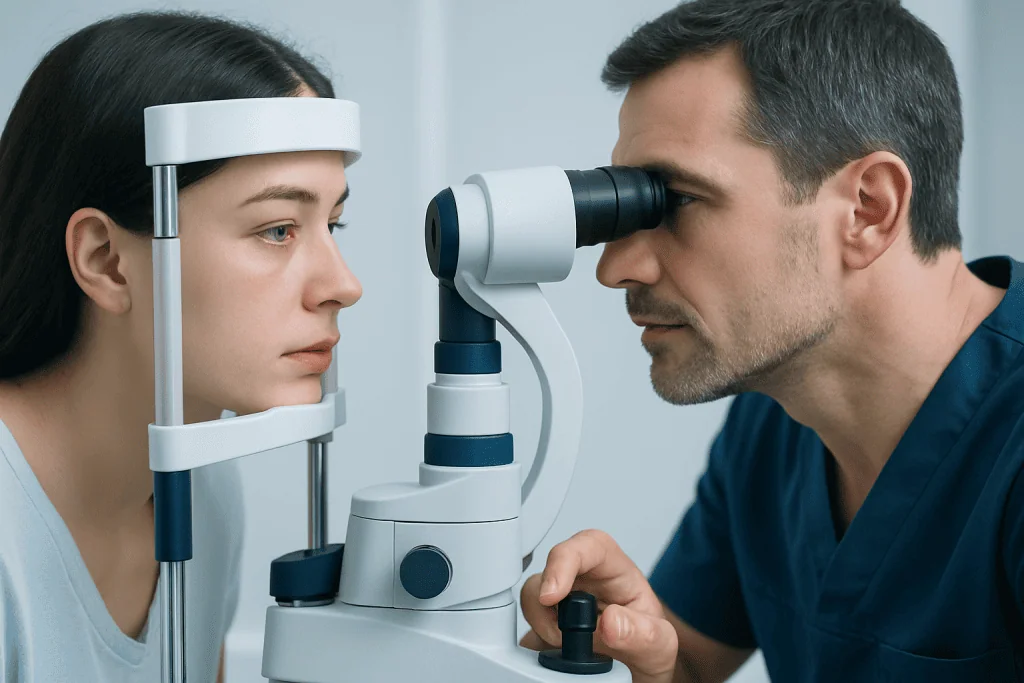
The clinician may gently evert, or turn outward, the eyelid to inspect its inner surface. An internal hordeolum may show a localized tender inflamed area, while a chalazion may create a more defined lump or a pale area on the inner lid. Vision may also be checked if the swelling is large or the person reports blurring.
Testing is not usually necessary for a typical eyelid bump. However, a clinician may consider other diagnoses when a lesion repeatedly returns in the same place, has an unusual appearance, bleeds, causes lash loss, does not respond as expected, or occurs with more extensive eyelid inflammation. In selected persistent cases, a small tissue sample may be recommended to rule out less common conditions.
What to Do for Each Type of Eyelid Bump
Warm compresses are the main first step for both hordeola and chalazia. A clean cloth warmed with comfortably hot, not scalding, water can be placed over the closed eyelid for about 10 to 15 minutes several times a day. This may encourage drainage from a hordeolum and soften thickened gland secretions in a chalazion.
After a warm compress, gentle eyelid massage may be suggested for a chalazion, but it should be done only with clean hands and without pressing hard on a painful or actively infected area. Keeping the eyelids clean, removing eye makeup thoroughly, and pausing contact lens use while the eye is irritated can support healing. Eye makeup should not be shared, and old eye cosmetics may need replacing.
For a hordeolum, an eye clinician may prescribe antibiotic ointment or oral antibiotics when there is significant infection, drainage, associated eyelid skin infection, or another specific indication. For a chalazion that persists or interferes with vision, treatment may include a minor in-office drainage procedure or, in some cases, an anti-inflammatory steroid injection. The choice depends on the size, duration, location, and individual medical history.
- Do not squeeze, lance, or attempt to drain an eyelid bump at home.
- Avoid using leftover antibiotic drops or ointments without medical advice.
- Seek advice before using steroid-containing eye products, which are not appropriate for self-treatment.
Reducing Recurrence and Supporting Eyelid Health
People who develop repeated chalazia or hordeola may have meibomian gland dysfunction, blepharitis, rosacea, dandruff-like skin conditions, or other causes of chronic eyelid inflammation. Regular lid hygiene can be useful in these situations. An eye professional can recommend a safe routine tailored to the person’s symptoms and skin sensitivity.
Helpful habits include washing hands before touching the eyes, removing makeup before sleep, cleaning contact lenses as directed, and avoiding contact lenses during active redness or discharge. Those with recurrent symptoms may benefit from regular warm compresses and gentle cleansing of the lid margins, rather than waiting until another bump appears.
Good general control of underlying skin and inflammatory conditions may also reduce recurrence. Children with recurring eyelid lumps should be assessed, particularly if a lump is large or affects vision. A clinician can help determine whether ongoing lid care, medication, or a procedure is appropriate.
When to Seek Medical Care
Medical assessment is appropriate if an eyelid bump is very painful, rapidly enlarging, lasts longer than several weeks, repeatedly returns, or does not improve with warm compresses. An optometrist, ophthalmologist, or qualified doctor can confirm whether the bump is a hordeolum, chalazion, or another eyelid condition and advise on treatment.
Urgent medical care is needed for reduced vision, pain within the eye rather than just the eyelid, pain with eye movement, marked sensitivity to light, fever, worsening redness spreading around the eye, or swelling that makes it difficult to open the eye. These symptoms can indicate a problem beyond a simple localized eyelid gland blockage and should not be managed with home care alone.
For international patients, Acibadem International’s multidisciplinary specialists and JCI-accredited hospitals can assess and treat eyelid conditions when specialist eye care is needed. A clinician should also evaluate any persistent or recurrent lump to ensure the diagnosis is correct and management is appropriate.
Frequently asked questions
Is a stye the same as a hordeolum?
Yes. A stye is the common name for a hordeolum. It is usually a painful, red bump caused by acute inflammation or infection of an eyelid gland or eyelash follicle.
Can a hordeolum turn into a chalazion?
Yes, this can happen, particularly with an internal hordeolum. As the acute infection and pain settle, a blocked gland may leave behind a firmer, less painful inflammatory lump called a chalazion.
How long does a chalazion usually last?
A chalazion may improve over several weeks with warm compresses and eyelid hygiene. Some last longer and may need an eye specialist to consider drainage or another treatment, especially if they affect vision or recur.
Should an eyelid bump be treated with antibiotics?
Not always. A chalazion usually does not require antibiotics because it is mainly caused by blockage and inflammation rather than active infection. Antibiotics may be used for selected hordeola or when a clinician identifies a related bacterial infection.
Can contact lenses be worn with a hordeolum or chalazion?
It is generally best to avoid contact lenses while the eyelid is red, painful, swollen, or producing discharge. Wearing glasses temporarily can reduce irritation and makes eyelid hygiene easier. Contact lenses should be cleaned or replaced according to professional advice before wearing them again.
Can stress cause a chalazion or hordeolum?
Stress is not considered a direct cause. However, fatigue, reduced attention to eyelid hygiene, rubbing the eyes, and flare-ups of inflammatory skin conditions may contribute indirectly in some people. Recurrent eyelid lumps are worth discussing with an eye clinician.
References
- American Academy of Ophthalmology
- National Eye Institute
- Mayo Clinic
- Merck Manual Consumer Version
This article is for general information only and is not a substitute for professional medical advice. Please consult a qualified doctor about your individual situation.
Chalazion in Turkey — costs, top hospitals & a free quote
JCI-accredited · board-certified surgeons · reply within 24h
Add us as a Preferred Source to see more of our trusted health content across Google Search, AI Overviews and Discover.

Ophthalmology
Comprehensive eye care from laser vision correction to retina, cornea and cataract surgery.
74 specialists in this unitMore from the Health Library



Related Specialists

Assoc. Prof. Dr. Gökhan Karademir
Orthopedic Surgery & Traumatology
Dt. Ayça Aydın Kılavuz
Oral & Dental Health
Dr. Özgün Barış Çolak
Physical Medicine & Rehabilitation
Fzt. A.Sercan Soyarslan
Physical Medicine & Rehabilitation