How Bone and Joint Disease Is Diagnosed

Diagnosis starts with symptoms, medical history, and a hands-on physical examination. Imaging tests such as X-rays, ultrasound, CT, or MRI help show bones, joints, and surrounding tissues.
Key Takeaways
- Diagnosis starts with symptoms, medical history, and a hands-on physical examination.
- Imaging tests such as X-rays, ultrasound, CT, or MRI help show bones, joints, and surrounding tissues.
- Blood tests and sometimes joint fluid analysis can help detect inflammation, infection, or autoimmune disease.
- Early diagnosis may help reduce pain, prevent joint damage, and support better mobility.
- A doctor may refer the patient to an orthopedist, rheumatologist, or other specialist depending on the suspected cause.
Bone and joint disease is usually diagnosed through a careful history, physical examination, and targeted tests. The goal is to identify the cause of pain, swelling, stiffness, or reduced movement so treatment can be tailored appropriately.
Overview
How bone and joint disease is diagnosed depends on the symptoms, the body area involved, and the likely cause. Conditions affecting bones, joints, muscles, tendons, ligaments, or cartilage can overlap, so doctors usually look at the whole picture rather than relying on one test alone.
The first step is often a detailed discussion of the patient’s pain, stiffness, swelling, injury history, daily activities, and any other health conditions. This is followed by a physical examination to assess movement, tenderness, joint stability, alignment, and signs of inflammation. Based on these findings, the doctor may recommend imaging, blood work, or other tests.
Many people worry that a diagnosis will be complicated, but the process is usually organized and stepwise. The aim is to find the most likely cause and rule out conditions that need prompt treatment, such as infection, fracture, or inflammatory arthritis.
Common Symptoms That Prompt Evaluation
People usually seek evaluation because of pain, swelling, stiffness, weakness, or limited movement in a bone, joint, or nearby soft tissue. Symptoms may come on suddenly after an injury or develop gradually over weeks or months.
Doctors pay close attention to whether symptoms are constant or only occur with activity, whether they improve with rest, and whether they are worse in the morning or after sitting still. These patterns can help distinguish arthritis, tendon disorders, mechanical injury, and inflammatory conditions.
Other symptoms can also guide the diagnosis. These may include redness, warmth, clicking or locking in a joint, instability, deformity, numbness, fever, or unexplained weight loss. When symptoms affect several joints or are associated with fatigue, an autoimmune or systemic condition may be considered.
Causes and Risk Factors Doctors Consider

During diagnosis, doctors consider a wide range of possible causes. These include fractures, sprains, osteoarthritis, rheumatoid arthritis, gout, bursitis, tendinitis, bone infection, bone tumors, and age-related wear and tear. Some symptoms are also caused by referred pain from the spine or surrounding muscles.
Risk factors help narrow the possibilities. Age, prior injury, repetitive strain, sports participation, manual labor, obesity, family history, autoimmune disease, osteoporosis, and certain infections can all increase the chance of specific bone or joint problems.
Medical history is especially important. A doctor may ask about recent infections, skin rashes, medication use, previous surgeries, travel, and any history of cancer or metabolic disease. These details can point toward less common but important diagnoses and help shape the next tests.
How the Medical History and Physical Exam Help
The medical history is often the most valuable part of the evaluation. The doctor asks when the symptoms started, what makes them better or worse, where the pain is located, and whether the problem affects sleep, walking, gripping, or daily tasks. The answers help determine whether the cause is inflammatory, mechanical, degenerative, traumatic, or infectious.
During the physical exam, the doctor compares both sides of the body when needed and checks for swelling, tenderness, warmth, range of motion, strength, and joint alignment. Walking pattern, posture, balance, and nerve function may also be assessed, especially when the spine, hip, or knee is involved.
This part of the visit may also include simple movement tests. For example, the doctor may ask the patient to bend, rotate, or bear weight so the location and type of pain can be observed. The physical exam often guides which imaging or blood tests are most useful next.
Imaging Tests Used in Diagnosis
Imaging is commonly used to look more closely at bones and joints. X-rays are often the first test because they can show fractures, joint space narrowing, bone spurs, alignment problems, and some signs of arthritis or bone disease. They are especially helpful when injury or structural changes are suspected.
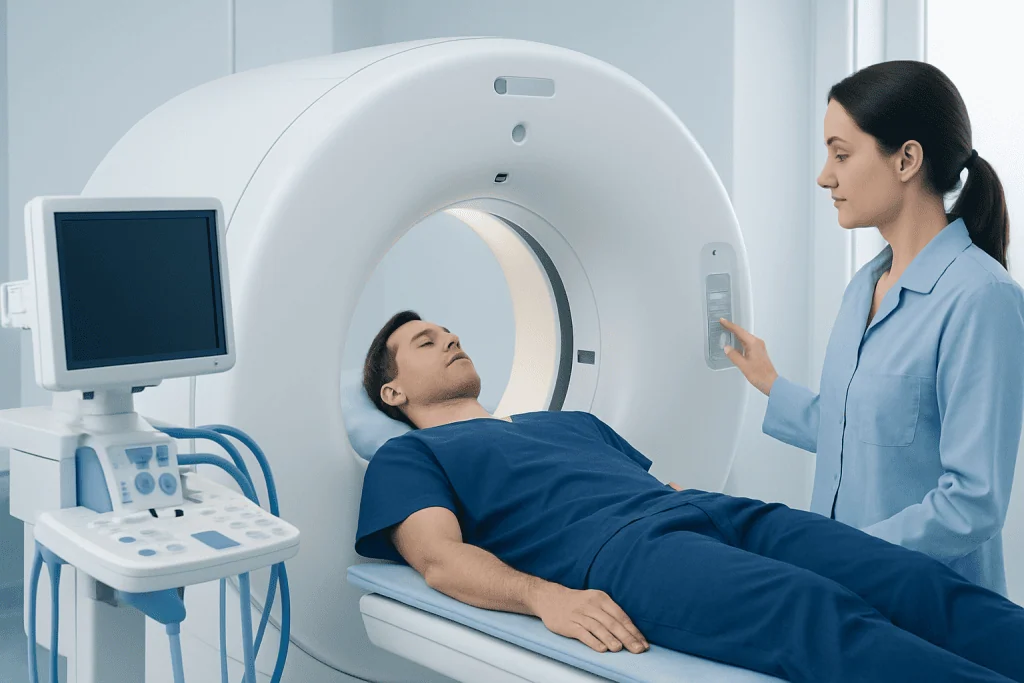
Other imaging tests may be chosen when more detail is needed. Ultrasound can help assess fluid, tendons, and some soft tissue changes. MRI is useful for viewing cartilage, ligaments, tendons, bone marrow, and subtle injuries. CT scans may be used to show complex bone detail or when surgery is being planned.
In some cases, additional studies such as bone scans or specialized imaging are ordered. The choice depends on the suspected condition and the information needed to confirm the diagnosis or guide treatment.
Blood Tests, Fluid Tests, and Other Laboratory Work
Laboratory tests can help identify inflammation, infection, autoimmune disease, or metabolic problems that affect bones and joints. A doctor may order tests such as inflammatory markers, autoimmune screening, uric acid, vitamin levels, calcium balance, or tests related to bone turnover, depending on the situation.
When a joint is swollen, a sample of joint fluid may be taken with a small needle. This can help detect infection, gout crystals, or signs of inflammatory arthritis. Joint fluid analysis is often very helpful when the cause of swelling is not clear.
Some people need a broader workup if the doctor suspects a systemic condition. For example, blood tests may be used to evaluate thyroid disease, kidney function, infection, or other disorders that can affect the skeleton and joints. The exact tests are chosen case by case.
Specialist Evaluation and What It Means
Depending on the findings, the patient may be referred to an orthopedist, rheumatologist, neurologist, physiatrist, or another specialist. Orthopedists commonly evaluate injuries, degenerative joint disease, and problems that may need procedures or surgery. Rheumatologists often diagnose inflammatory and autoimmune diseases that affect the joints and connective tissues.
Specialists can combine exam findings, imaging, and laboratory results to reach a more precise diagnosis. In complex cases, more than one specialist may be involved, especially if symptoms affect several body systems or if the diagnosis is not straightforward.
In some situations, orthopedic surgery consultation is recommended to evaluate fractures, joint damage, deformity, or persistent symptoms that do not improve with conservative care. Even when surgery is not needed, a specialist opinion can clarify the condition and support a more targeted treatment plan.
How to Prepare for the Appointment and When to Seek Care
Preparation can make the visit more helpful. Patients are often advised to bring a list of symptoms, medications, past injuries, prior imaging reports, and any previous diagnoses related to bones or joints. It is also useful to note what activities worsen pain and whether the joint has ever locked, given way, or become swollen.
Before the appointment, it may help to write down questions and a brief timeline of the problem. Photos of swelling, a record of fever, or notes about stiffness and function can also be useful, especially if symptoms come and go. Good communication helps the doctor match the tests to the likely cause.
Medical attention is generally important when joint pain or swelling lasts more than a short time, interferes with daily life, follows an injury, or is associated with fever, redness, inability to bear weight, or sudden loss of function. In such situations, timely evaluation can help identify the cause and prevent further complications. Acibadem International’s multidisciplinary specialists and JCI-accredited hospitals diagnose and treat bone and joint conditions for international patients in a coordinated setting.
Frequently asked questions
What is the first step in diagnosing bone and joint disease?
The first step is usually a detailed medical history and physical examination. The doctor asks about symptoms, injuries, activities, and other health conditions, then checks the affected area for swelling, tenderness, movement, and stability. This helps determine which tests, if any, are needed next.
Do all bone and joint problems need an X-ray?
No, not always. X-rays are common and useful for many conditions, but some problems are better seen with MRI, ultrasound, CT, or laboratory tests. The best test depends on the suspected cause of the symptoms.
Can blood tests diagnose arthritis?
Blood tests can support the diagnosis of some types of arthritis, especially inflammatory or autoimmune forms, but they usually do not diagnose arthritis on their own. Doctors combine blood test results with symptoms, examination findings, and imaging to make the diagnosis.
Why might a doctor test joint fluid?
Joint fluid testing can help determine whether swelling is due to infection, gout, or inflammatory arthritis. It is especially useful when a joint is hot, swollen, and painful, and the cause is not clear from the exam alone.
When should someone see a doctor about joint pain?
A doctor should be seen if joint pain lasts longer than expected, limits daily activities, follows an injury, or is associated with swelling, redness, fever, or inability to bear weight. Early evaluation is especially important when symptoms are sudden or severe.
Which specialists diagnose bone and joint disease?
Orthopedists often evaluate injuries and structural joint problems, while rheumatologists diagnose inflammatory and autoimmune diseases. Depending on the symptoms, other specialists such as neurologists or physiatrists may also be involved.
References
- American Academy of Orthopaedic Surgeons
- Arthritis Foundation
- National Institute of Arthritis and Musculoskeletal and Skin Diseases
- World Health Organization
This article is for general information only and is not a substitute for professional medical advice. Please consult a qualified doctor about your individual situation.
Joint and spine care in Turkey — expert assessment & treatment
JCI-accredited · board-certified surgeons · reply within 24h
Add us as a Preferred Source to see more of our trusted health content across Google Search, AI Overviews and Discover.