

How Digestive Diseases Are Diagnosed: Tests and What to Expect

Diagnosis starts with a careful review of symptoms, medical history, diet, and medications. Blood, stool, and breath tests can help identify inflammation, infection, bleeding, or food intolerance.
Key Takeaways
- Diagnosis starts with a careful review of symptoms, medical history, diet, and medications.
- Blood, stool, and breath tests can help identify inflammation, infection, bleeding, or food intolerance.
- Imaging and endoscopy let doctors examine digestive organs more closely when needed.
- Not every patient needs every test; the plan depends on symptoms, age, risks, and overall health.
- Prompt assessment is especially important for alarm symptoms such as bleeding, weight loss, or trouble swallowing.
Digestive disease diagnosis usually combines medical history, physical examination, laboratory tests, imaging, and sometimes endoscopic procedures. Knowing what each test looks for can help patients feel more prepared and confident during the process.
Overview: How digestive diseases are diagnosed
Digestive diseases can affect the esophagus, stomach, intestines, liver, gallbladder, pancreas, and rectum. Because many conditions share similar symptoms, such as pain, bloating, nausea, diarrhea, constipation, or heartburn, diagnosis is usually a step-by-step process rather than a single test. The goal is to identify the underlying cause as accurately as possible so treatment can be tailored to the individual.
Doctors begin by deciding whether symptoms are more likely to come from a functional problem, inflammation, infection, bleeding, food intolerance, or a structural change in the digestive tract. In some people, symptoms may be short-lived and linked to diet or a minor infection. In others, persistent or severe symptoms may require a more detailed evaluation.
Digestive disease diagnosis often involves several tools used together. These may include a medical history, physical examination, blood and stool tests, breath tests, ultrasound, CT or MRI scans, and procedures such as endoscopy. Each test answers a different question, and not all patients need all of them.
Symptoms and medical history: the first clues
A clear description of symptoms is one of the most important parts of diagnosis. Doctors often ask when symptoms started, how often they happen, whether they are linked to meals, and what seems to make them better or worse. They may also ask about the exact location of pain, whether there is vomiting or fever, and whether bowel habits have changed.
Medical history helps place these symptoms in context. A doctor may ask about previous digestive problems, surgeries, family history of conditions such as inflammatory bowel disease or colorectal cancer, travel, recent infections, smoking, alcohol use, and any medicines or supplements being taken. Anti-inflammatory pain medicines, antibiotics, and some weight-loss drugs, for example, can affect digestion.
Certain symptoms suggest a higher need for prompt testing. These include blood in the stool, black stools, unexplained weight loss, ongoing vomiting, difficulty swallowing, jaundice, anemia, severe abdominal pain, or symptoms that wake a person from sleep. These do not always mean a serious illness, but they deserve timely medical assessment.
Doctors also consider how symptoms affect day-to-day life. This can help distinguish milder conditions from illnesses that need urgent attention or a broader workup, such as Crohn’s disease or other chronic digestive disorders.
Physical examination and basic lab tests

After the history, a physical examination can provide useful clues. The doctor may gently press on the abdomen to check for tenderness, swelling, or enlarged organs. They may listen to bowel sounds, check for signs of dehydration, examine the skin and eyes for jaundice, and look for signs of anemia or nutritional deficiency.
Basic laboratory tests are often the next step. Blood tests may check for infection, inflammation, anemia, liver function, pancreatic enzymes, electrolyte balance, and markers of poor absorption. These tests can help narrow down possible causes, although they do not usually provide a complete diagnosis on their own.
Stool tests are especially helpful for diarrhea, suspected infection, intestinal inflammation, or hidden bleeding. Depending on symptoms, a stool sample may be checked for bacteria, parasites, blood, fat, or inflammatory markers. In some cases, these results can help doctors decide whether a patient is more likely to have an infection, irritation, or a condition such as ulcerative colitis.
Some patients may also have urine tests or tests for celiac disease if symptoms suggest gluten sensitivity or poor nutrient absorption. These simple tests are often a practical and important starting point before moving on to more advanced procedures.
Specialized tests: breath tests, imaging, and ultrasound
When symptoms point to certain specific causes, doctors may recommend specialized noninvasive tests. Breath tests are commonly used to look for lactose intolerance, small intestinal bacterial overgrowth, or Helicobacter pylori infection, which can contribute to gastritis or ulcers. During a breath test, the patient usually drinks a prepared solution and then breathes into a collection device at set intervals.
Imaging tests help doctors see the shape and condition of digestive organs. An abdominal ultrasound is often used to assess the liver, gallbladder, bile ducts, pancreas, and sometimes the intestines. It is painless, uses sound waves rather than radiation, and can be especially useful when gallstones, liver disease, or bile duct problems are suspected.
CT and MRI scans provide more detailed images and may be used when there is significant pain, suspected inflammation, obstruction, abscess, bleeding, or a mass. In certain situations, doctors may request MRI scan studies to look more closely at the liver, pancreas, bile ducts, or small bowel. The choice between CT and MRI depends on the suspected condition, urgency, and the patient’s overall situation.
Sometimes imaging is used to rule out urgent conditions, while at other times it helps plan the next step in care. A doctor will explain why a particular test is being recommended and what preparation, if any, is needed beforehand.
Endoscopy and colonoscopy: looking inside the digestive tract
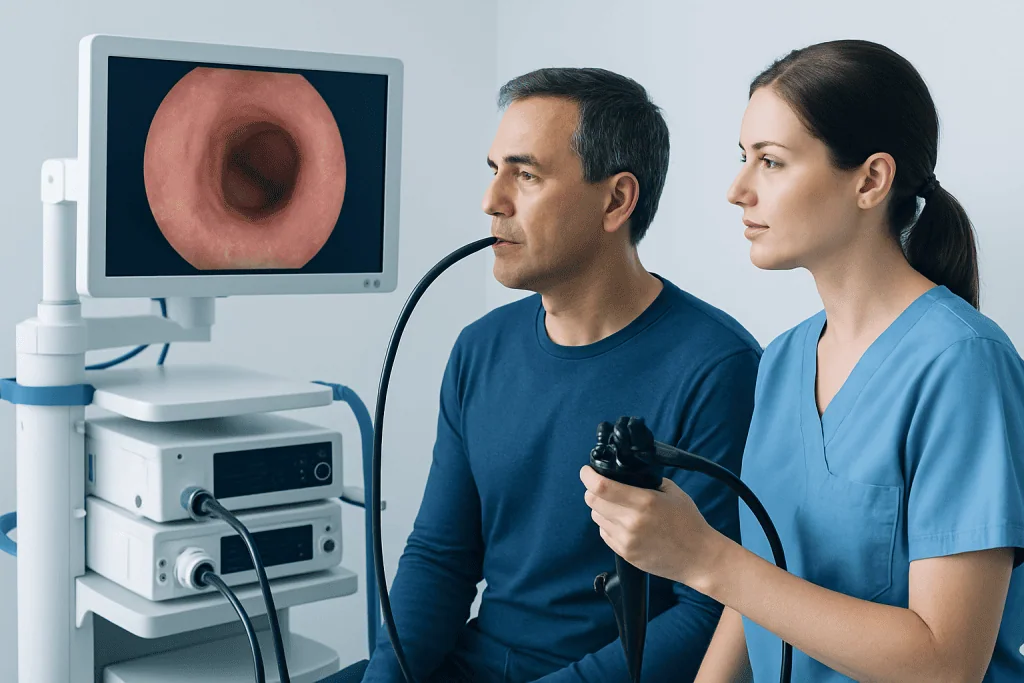
Endoscopic procedures allow doctors to examine the lining of the digestive tract directly. In an upper endoscopy, a thin flexible tube with a camera is passed through the mouth to inspect the esophagus, stomach, and first part of the small intestine. This test may be recommended for persistent heartburn, upper abdominal pain, nausea, vomiting, bleeding, anemia, or trouble swallowing.
A colonoscopy examines the large intestine and rectum and is commonly used for ongoing diarrhea, rectal bleeding, changes in bowel habits, unexplained anemia, or colorectal cancer screening. During the procedure, the doctor may also take small tissue samples, called biopsies, even if the lining looks normal. Biopsies can help diagnose inflammation, infection, microscopic colitis, celiac disease, or other conditions that may not be visible to the eye.
Patients are usually given clear preparation instructions before these procedures. This may include fasting for several hours or, before colonoscopy, following a bowel-cleansing plan so the lining of the colon can be seen clearly. Sedation is often used, which helps many people feel relaxed and comfortable.
Endoscopy and colonoscopy are valuable because they can both diagnose and sometimes treat a problem during the same session. For example, a doctor may remove a polyp, stop certain types of bleeding, or widen a narrowed area if appropriate.
What patients can expect before, during, and after testing
Preparation depends on the test. For blood tests, no preparation may be needed, though some require fasting. Stool tests usually involve collecting a small sample at home using a kit. Imaging may require drinking contrast material, avoiding food for a few hours, or removing metal objects in the case of MRI.
Before endoscopic procedures, the healthcare team explains the purpose of the test, possible risks, and what sedation involves. Patients are usually asked about allergies, medicines, blood thinners, and other health conditions. Following preparation instructions carefully helps improve accuracy and lowers the chance that a test will need to be repeated.
After testing, results may be available right away in some cases, while biopsies and certain lab studies can take several days. It is common for doctors to combine all findings rather than relying on one result alone. This broader view often gives the clearest picture of what is causing symptoms.
Many patients feel anxious before digestive testing, especially if they have never had such tests before. Reassurance, clear instructions, and asking questions in advance can make the process easier. In complex cases, care may involve gastroenterologists, radiologists, surgeons, pathologists, and dietitians working together.
How results guide treatment and follow-up
Once the cause of symptoms is identified, treatment can be more specific. Some conditions improve with dietary changes, hydration, and short-term medicines. Others may need longer-term care, such as treatment for acid reflux, inflammatory bowel disease, gallstones, celiac disease, infection, or liver disease.
Diagnosis also helps doctors decide how urgently treatment is needed. A minor, self-limited problem may only need monitoring and self-care, while more serious findings may require additional imaging, repeat endoscopy, surgery, or referral to another specialist. Follow-up is an important part of digestive care because symptoms can change over time.
When results are unclear, doctors may use a process of observation, symptom tracking, and repeat testing if needed. This does not necessarily mean something severe is being missed; some digestive conditions are diagnosed gradually as patterns become clearer. Good communication between patient and clinician is key.
Near the end of the diagnostic journey, patients may benefit from care at experienced centers. Acibadem International’s multidisciplinary specialists in JCI-accredited hospitals diagnose and treat digestive conditions for international patients, particularly when coordinated testing and specialist review are needed.
When to see a doctor and how to prepare for an appointment
People should consider medical advice if digestive symptoms are frequent, persistent, worsening, or interfering with normal life. It is especially important to seek prompt care for vomiting that does not stop, severe dehydration, strong abdominal pain, blood in vomit or stool, black stools, jaundice, new difficulty swallowing, or unexplained weight loss.
Preparing for an appointment can make the visit more productive. Patients may find it helpful to write down symptoms, their timing, recent foods, medicines, supplements, travel history, and any family history of digestive disease. Bringing previous test results, if available, can also help avoid unnecessary repeat testing.
A symptom diary can be useful when signs come and go. Recording bowel habits, pain, bloating, reflux, and food triggers may help the doctor identify patterns and choose the right tests. Patients should also mention stress, sleep changes, and major life events, as these can affect digestive function.
Early evaluation does not always lead to complex testing. In many cases, a focused history and a few simple investigations are enough. The most important step is not to ignore ongoing symptoms, especially when alarm features are present.
Frequently asked questions
What is usually the first step in digestive disease diagnosis?
The first step is usually a detailed medical history and physical examination. The doctor will ask about symptoms, diet, medicines, bowel habits, and any family history of digestive conditions before deciding which tests, if any, are needed.
Do all digestive symptoms require endoscopy or colonoscopy?
No, not all symptoms require these procedures. Many people can be assessed first with history, blood tests, stool tests, or imaging, and endoscopy is only recommended when symptoms or initial results suggest it would be helpful.
Are digestive tests painful?
Many digestive tests, such as blood tests, stool tests, ultrasound, and most imaging, cause little or no pain. Endoscopy and colonoscopy can be uncomfortable without support, but sedation is often used to help patients stay relaxed and comfortable.
How long does it take to get results?
Some results, such as parts of a physical exam or certain imaging findings, may be discussed the same day. Blood, stool, and biopsy results can take several days, depending on the type of analysis being performed.
What symptoms should never be ignored?
Symptoms that should be assessed promptly include blood in the stool, black stools, persistent vomiting, severe abdominal pain, jaundice, difficulty swallowing, unexplained weight loss, and signs of dehydration. These symptoms do not always mean a serious condition, but they should be evaluated by a qualified doctor.
Can digestive problems be diagnosed with lab tests alone?
Sometimes lab tests provide enough information for a likely diagnosis, especially with infections or certain inflammatory patterns. However, many digestive conditions need a combination of lab tests, imaging, and sometimes biopsies to confirm the cause.
References
- World Gastroenterology Organisation
- National Institute of Diabetes and Digestive and Kidney Diseases
- American College of Gastroenterology
- National Health Service
- Mayo Clinic
This article is for general information only and is not a substitute for professional medical advice. Please consult a qualified doctor about your individual situation.
Persistent digestive symptoms? Get evaluated in Turkey
JCI-accredited · board-certified surgeons · reply within 24h
Add us as a Preferred Source to see more of our trusted health content across Google Search, AI Overviews and Discover.

More from the Health Library



Related Specialists

Dr. Etem Aytaç Yazar
Orthopedic Surgery & Traumatology
Dr. Handan Bilgin
Neurology
Dr. Ümit Ege Canyurt
Acibadem Life Clinical Service
Miray Karaoğlu
Physical Medicine & Rehabilitation