

How Does Sacral Neuromodulation Work?

Sacral neuromodulation targets sacral nerves that help control the bladder, bowel, and pelvic floor. It does not remove the underlying organ; instead, it aims to improve nerve signaling and symptom control.
Key Takeaways
- Sacral neuromodulation targets sacral nerves that help control the bladder, bowel, and pelvic floor.
- It does not remove the underlying organ; instead, it aims to improve nerve signaling and symptom control.
- Treatment usually begins with a test phase to see whether symptoms improve before a permanent device is placed.
- It may help certain people with overactive bladder, non-obstructive urinary retention, and fecal incontinence.
- Follow-up visits are important so the device settings can be adjusted for comfort and effectiveness.
Sacral neuromodulation is a treatment that uses gentle electrical stimulation to help regulate the nerves involved in bladder and bowel control. It is most often considered when symptoms such as urinary urgency, urinary retention, or fecal incontinence have not improved enough with conservative treatments.
Overview of Sacral Neuromodulation
Sacral neuromodulation is a medical treatment designed to improve communication between the brain, spinal pathways, and the nerves that help control the bladder, bowel, and pelvic floor. It uses a small implanted device that sends mild electrical pulses to the sacral nerves, usually through a thin lead placed near the lower spine. These nerves play an important role in storing and releasing urine, controlling bowel function, and coordinating pelvic muscles.
The treatment is generally used for people whose symptoms have not responded well enough to lifestyle changes, pelvic floor therapy, medicines, or other non-surgical approaches. It is commonly considered for conditions such as overactive bladder, urgency urinary incontinence, non-obstructive urinary retention, and some forms of fecal incontinence. In selected cases, it may also be discussed for other pelvic floor dysfunctions, depending on a specialist’s assessment.
Unlike procedures that remove tissue or permanently alter anatomy, sacral neuromodulation works by changing nerve activity. The aim is not to “shut off” the bladder or bowel, but to help restore a more normal pattern of signaling. Because symptom patterns vary from person to person, this treatment is usually tailored to the individual’s response.
How Sacral Neuromodulation Works
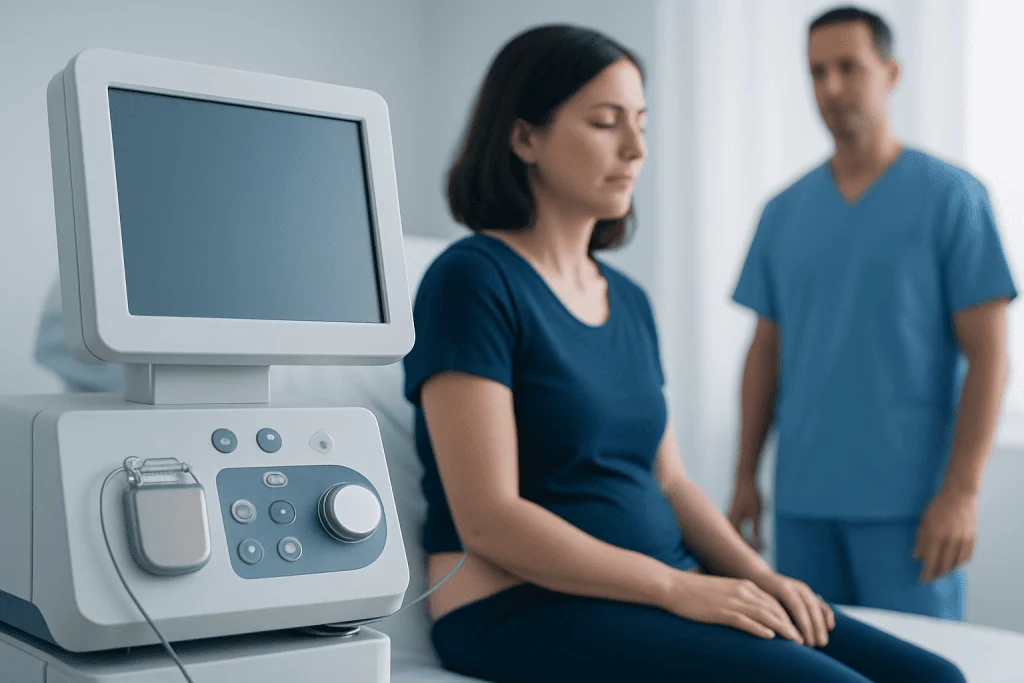
The sacral nerves are located in the lower back and carry signals between the pelvic organs and the nervous system. When these signals are poorly coordinated, a person may feel sudden urgency, frequent urination, trouble emptying the bladder, or loss of bowel control. Sacral neuromodulation sends gentle electrical impulses to these nerves in an effort to rebalance the communication pathways involved in pelvic function.
Doctors do not describe the effect as simply “stimulating a muscle.” Instead, the therapy appears to influence complex nerve networks that affect sensation, reflexes, and muscle coordination. In practical terms, this may reduce urgency, improve bladder emptying, lower the number of leakage episodes, or improve bowel control. The exact mechanism is still being studied, but the treatment has been used for many years in carefully selected patients.
The system usually has two main parts: a thin wire called a lead and a small pulse generator. The lead is placed near a sacral nerve, and the generator provides controlled electrical signals. The device can be adjusted externally by the care team, which allows treatment to be individualized over time.
One important feature of sacral neuromodulation is that it usually begins with a trial or test phase. This helps determine whether the therapy is likely to provide meaningful benefit before a longer-term device is implanted. That step-by-step approach can make the treatment more predictable and patient-centered.
Who May Benefit From It

Sacral neuromodulation is most often considered for adults with symptoms that significantly affect daily life and have not improved enough with first-line treatments. These symptoms may include frequent urination, a strong and sudden urge to urinate, urinary leakage related to urgency, difficulty emptying the bladder without a blockage, or episodes of fecal incontinence. Specialists carefully review symptom history, previous treatments, and overall health before recommending this option.
It is not the right choice for everyone. A person may need additional testing to confirm that symptoms are related to nerve signaling and not caused by another problem such as infection, an untreated obstruction, severe prolapse, or a different neurological disorder. In many cases, sacral neuromodulation is discussed only after conservative treatment has been tried for an appropriate length of time.
Conditions that may lead to evaluation include overactive bladder, certain forms of urinary retention, and bowel control problems. For some patients, specialists may compare it with other options used in urology care or colorectal management, depending on whether bladder or bowel symptoms are most prominent.
- People with urgency urinary incontinence that persists despite medication or behavioral therapy
- People with non-obstructive urinary retention who have difficulty emptying the bladder
- People with fecal incontinence that has not improved enough with diet changes, pelvic floor therapy, or medications
- People able to participate in follow-up visits and device adjustments
Evaluation and Diagnosis Before Treatment
Before sacral neuromodulation is offered, the doctor usually performs a detailed evaluation. This begins with a discussion of symptoms, how long they have been present, what makes them better or worse, and which treatments have already been tried. A bladder diary or bowel diary may be recommended to record frequency, urgency, leakage episodes, fluid intake, and other symptom patterns.
Tests may include a physical examination, urine testing, imaging in selected cases, and studies that assess how the bladder or bowel is functioning. For urinary symptoms, the specialist may measure how well the bladder empties or perform further tests if the diagnosis is uncertain. The goal is to identify who is most likely to benefit and to rule out conditions that need a different treatment first.
For many patients, the next step is a temporary test phase. During this stage, a lead is placed near the sacral nerve and connected to an external stimulator, or a temporary lead may be used depending on the technique. Over several days or weeks, the patient tracks symptom changes. Meaningful improvement during this trial is an important sign that long-term treatment may be worthwhile.
When symptoms involve the urinary tract, this process may happen as part of a broader assessment in specialist urology evaluation. In complex cases with pelvic floor dysfunction, multidisciplinary input can be helpful so that bladder, bowel, and neurological factors are considered together.
How the Procedure Is Performed
The treatment is usually done in two stages. First comes the evaluation or trial stage, which allows the doctor and patient to see whether the therapy improves symptoms enough to justify permanent implantation. If the trial is successful, a small pulse generator is then implanted under the skin, commonly in the upper buttock area, and connected to the lead.
The procedure is generally minimally invasive. Imaging guidance and careful anatomical positioning are used to place the lead near the appropriate sacral nerve. After placement, the settings are adjusted to provide effective stimulation while keeping the sensation comfortable. Some people notice a mild tingling, while others do not feel the stimulation at all.
Recovery after placement is usually measured in days to weeks rather than months, although individual experiences vary. Patients are commonly advised to limit certain movements temporarily while the lead settles into place. Follow-up appointments are important because the device can often be fine-tuned to improve symptom control and comfort.
As part of broader neuromodulation treatment, specialists explain how to use the patient controller, how to recognize changes in symptom patterns, and when to contact the care team. If bowel symptoms are the main concern, coordination with colorectal or pelvic floor specialists may also be recommended.
Benefits, Risks, and Limitations
The main benefit of sacral neuromodulation is that it may improve symptoms without removing organs or relying only on long-term medication. Some patients experience fewer urgency episodes, less leakage, better bladder emptying, or improved bowel control. Another advantage is reversibility: the therapy can often be adjusted, turned off, or removed if needed.
Like any procedure, it also has possible risks and limitations. These can include discomfort at the implant site, movement of the lead, reduced benefit over time, device-related problems, or infection. Some patients may not respond sufficiently during the test phase, which is why the trial period is so important before committing to a permanent implant.
It is also helpful to understand what sacral neuromodulation does not do. It may improve symptoms, but it does not cure every underlying cause of bladder or bowel dysfunction. Ongoing self-care, medical follow-up, and management of related conditions may still be needed. In some cases, doctors may compare it with other treatments such as pelvic floor rehabilitation or medication-based approaches.
People considering the treatment should ask practical questions about daily activities, travel, exercise, future procedures, and device maintenance. A clear discussion of expectations can help patients decide whether this option fits their needs and lifestyle.
Living With the Device and Self-care
After implantation, most people continue normal daily routines, but they may need a short period of activity modification during recovery. The care team usually provides guidance on wound care, safe movement, when to return to work, and when exercise can be resumed. It is important to attend follow-up visits because small programming changes can make a meaningful difference in symptom relief.
Self-care still matters even when the device is working well. Depending on the condition, patients may be advised to manage fluid intake, reduce bladder irritants, prevent constipation, continue pelvic floor exercises, or follow bowel routines. These steps can support the overall effect of treatment and may help reduce symptom flare-ups.
Patients should also inform other healthcare providers that they have an implanted neuromodulation device. This can matter when planning scans, surgeries, or other procedures. The treating specialist can explain any device-specific precautions and what to do if symptoms return or if the stimulation feels different.
For international patients seeking assessment or follow-up, Acibadem International’s multidisciplinary specialists in JCI-accredited hospitals evaluate and treat pelvic floor and nerve-related conditions, including sacral neuromodulation, in a coordinated setting.
When to See a Doctor
A doctor should be consulted when bladder or bowel symptoms are frequent, distressing, or interfering with sleep, work, travel, exercise, or social life. Symptoms such as urgency, leakage, repeated nighttime urination, or difficulty emptying the bladder deserve medical evaluation, especially when they persist despite basic self-care measures.
People who already have a sacral neuromodulation device should contact their care team if they notice increasing pain, redness, swelling, fever, sudden loss of symptom control, or a change in how the stimulation feels. These issues do not always mean a serious problem, but they should be reviewed promptly.
Urgent medical attention is especially important for symptoms such as inability to pass urine, severe worsening pain, signs of infection, or new neurological symptoms. Early assessment helps identify whether the cause is related to the device, the underlying condition, or another health issue entirely.
Frequently asked questions
Is sacral neuromodulation the same as a pacemaker for the bladder?
People sometimes describe it that way because it uses a small implanted device to send electrical signals. However, it does not work exactly like a heart pacemaker. Its purpose is to gently influence the sacral nerves involved in bladder and bowel control.
What conditions can sacral neuromodulation help treat?
It is most commonly used for overactive bladder symptoms, urgency urinary incontinence, non-obstructive urinary retention, and certain cases of fecal incontinence. Whether it is appropriate depends on the cause of symptoms, previous treatments, and the results of the evaluation. A specialist can explain if it fits a person's specific diagnosis.
Does everyone need a trial before permanent implantation?
In most cases, yes. A test phase is an important part of treatment because it shows whether symptoms improve enough to justify a permanent device. This step helps avoid unnecessary implantation when the likely benefit is too limited.
Can the device be adjusted after it is implanted?
Yes. One of the advantages of sacral neuromodulation is that the stimulation settings can often be changed during follow-up visits. Adjustments may improve comfort, reduce side effects, or help maintain symptom relief over time.
Will sacral neuromodulation cure bladder or bowel problems completely?
It may provide meaningful symptom improvement, but it is not a guaranteed cure for every underlying cause. Some people have major relief, while others have partial benefit or do not respond enough. Ongoing medical care and self-management may still be needed.
Is recovery after the procedure long?
Recovery is usually shorter than with many major surgeries because the procedure is minimally invasive. Even so, patients often need to limit certain activities for a period while the lead and device settle. The exact timeline varies based on the stage of treatment and the individual patient's recovery.
References
- National Institute of Diabetes and Digestive and Kidney Diseases
- American Urological Association
- International Continence Society
- National Institute for Health and Care Excellence
- American Society of Colon and Rectal Surgeons
This article is for general information only and is not a substitute for professional medical advice. Please consult a qualified doctor about your individual situation.
Neuromodulation in Turkey — costs, top hospitals & a free quote
JCI-accredited · board-certified surgeons · reply within 24h
Add us as a Preferred Source to see more of our trusted health content across Google Search, AI Overviews and Discover.

More from the Health Library



Related Specialists

Assoc. Prof. Dr. Şule Göncü Ayhan
Gynecology & Obstetrics
Prof. Dr. A. Çağrı Büke
Infectious Diseases & Clinical Microbiology
Dr. Maşallah Candemir
Pediatrics
Pdg. Gizem Sencer
Podiatry & Foot Health