How Does Ubrelvy Work? Causes, Explanations, and Next Steps

Ubrelvy contains ubrogepant, a CGRP receptor antagonist used for acute migraine treatment in adults. It is taken after a migraine attack begins, rather than as a daily preventive medicine.
Key Takeaways
- Ubrelvy contains ubrogepant, a CGRP receptor antagonist used for acute migraine treatment in adults.
- It is taken after a migraine attack begins, rather than as a daily preventive medicine.
- CGRP blocking may reduce migraine pain and associated symptoms such as nausea or sensitivity to light and sound.
- A sudden, severe, new, or unusual headache needs urgent medical assessment rather than self-treatment alone.
- A clinician can help confirm whether migraine is the cause of recurrent headaches and whether Ubrelvy is appropriate.
Ubrelvy is a prescription medicine used to treat migraine attacks in adults. It works by blocking the activity of calcitonin gene-related peptide (CGRP), a protein involved in migraine pain and related symptoms, and it is not intended to prevent migraines or treat every type of headache.
How does Ubrelvy work?
Ubrelvy works by blocking a protein receptor involved in migraine attacks. Its active ingredient, ubrogepant, belongs to a group of medicines called calcitonin gene-related peptide (CGRP) receptor antagonists, sometimes called “gepants.” During a migraine attack, CGRP signaling is thought to contribute to pain transmission and symptoms such as nausea and sensitivity to light or sound. By blocking the CGRP receptor, Ubrelvy can help reduce these processes after an attack has started.
For many people with a familiar pattern of migraine, a migraine attack is painful and disruptive but not dangerous. However, not all severe headaches are migraines. A first-ever severe headache, a sudden “thunderclap” headache, or headache with neurological symptoms requires medical review promptly. A clinician can assess the pattern, examine the person, and decide whether testing or a different treatment is needed.
Ubrelvy is prescribed for the acute treatment of migraine with or without aura in adults. It is not designed to prevent future migraine attacks, and it is not used to treat cluster headache. The exact timing, dose, and maximum use should follow the prescriber’s instructions and the medicine’s approved prescribing information.
What happens during a migraine attack?
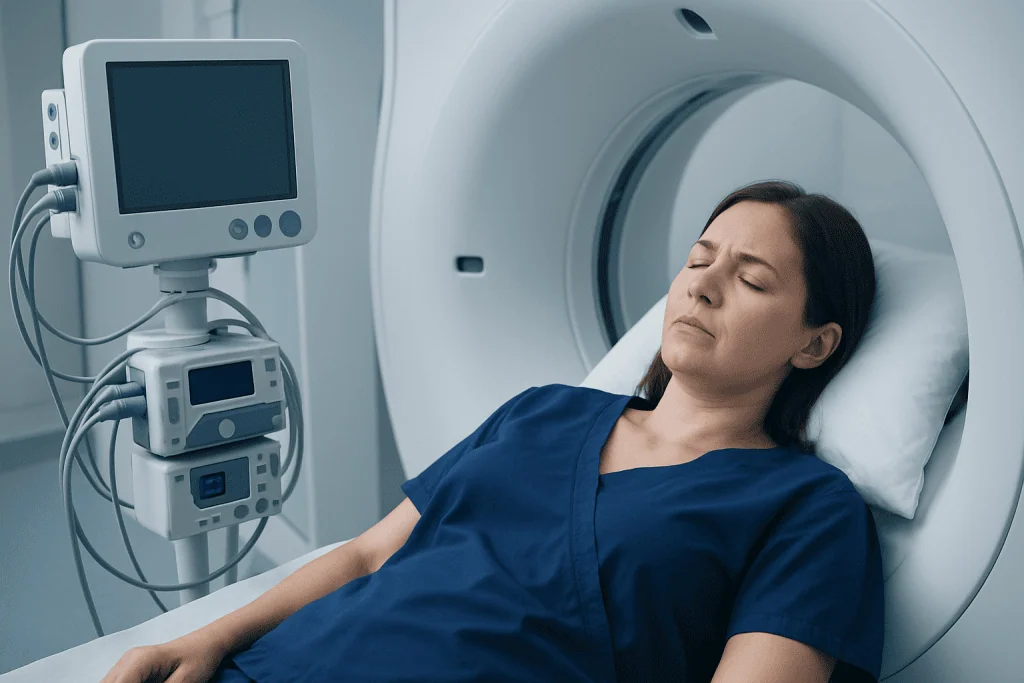
Migraine is a neurological condition, not simply an ordinary headache. An attack may cause throbbing or pulsing head pain, often on one side but sometimes on both sides. It can also involve nausea, vomiting, increased sensitivity to light, sound, or smells, and difficulty concentrating. Symptoms may last from several hours to several days if untreated.
Some people have an aura before or during migraine. Aura symptoms commonly include temporary visual changes, such as flashing lights, zigzag lines, blind spots, or tingling. These symptoms usually develop gradually and resolve, but a new or atypical visual, sensory, or speech symptom should be assessed by a medical professional, particularly if it is sudden or occurs with weakness.
CGRP is one of several chemical messengers involved in the migraine pathway. Its levels can rise during attacks, and it can influence pain-sensitive nerves and blood vessels around the brain. Blocking its receptor does not “switch off” the brain or mask a serious illness; rather, it targets one recognized pathway that can help sustain a migraine attack. More broadly, migraine can be managed with a personalized plan that includes accurate diagnosis, acute treatment, prevention when needed, and lifestyle support.
What Ubrelvy can and cannot do

Ubrelvy is intended to be taken when a migraine attack begins. Some people notice improvement in headache pain and their ability to return to usual activities after treatment, although response varies from person to person and from one attack to another. It may also help with migraine-associated symptoms. It should be used only as prescribed and should not be shared with another person.
It is important to have realistic expectations. Ubrelvy may not stop every attack completely, and it does not cure migraine or prevent all future episodes. If attacks occur often, disrupt work, school, sleep, or family life, a clinician may discuss preventive approaches in addition to acute medicines. Keeping a headache diary can help identify the frequency, duration, symptoms, possible triggers, and response to treatment.
Unlike some older migraine medicines, CGRP receptor antagonists do not work by narrowing blood vessels. Even so, the choice of migraine treatment should be individualized. A clinician will consider the person’s migraine history, other health conditions, current medicines, pregnancy plans where relevant, and prior treatment experiences. Migraine treatment may combine medicines with practical strategies to reduce attack burden.
Who may need extra caution with Ubrelvy?
A prescriber should review all medicines, vitamins, and herbal products before Ubrelvy is started. Ubrogepant is processed in the body through pathways that can be affected by certain medicines. Some drug combinations may raise or lower ubrogepant levels, and some combinations may not be appropriate. Grapefruit or grapefruit juice may also be relevant for some people, so it is sensible to ask the prescriber or pharmacist about food and medicine interactions.
People with liver or kidney problems may need individualized advice. Pregnancy, breastfeeding, and plans to become pregnant should also be discussed with a clinician, because the most appropriate migraine treatment can differ during these periods. The medicine should not be taken by someone with a known serious allergy to ubrogepant or one of its ingredients.
Possible side effects can include nausea, sleepiness, dry mouth, or tiredness. These effects are often manageable, but a person should seek urgent help for signs of a serious allergic reaction, such as swelling of the face, lips, tongue, or throat; trouble breathing; or widespread hives. New or worsening high blood pressure and circulation-related symptoms such as coldness, color changes, or pain in the fingers or toes should also be reported to a healthcare professional.
How doctors evaluate recurrent headaches
Doctors usually diagnose migraine from a careful history and neurological examination. They may ask when headaches began, how quickly they reach peak intensity, where they are felt, how long they last, what symptoms occur alongside them, and whether there is a family history. A headache diary can provide useful detail, especially when symptoms are recurrent or the diagnosis is uncertain.
Imaging tests are not needed for every person with migraine. However, a clinician may recommend brain imaging, blood tests, eye assessment, or other investigations if the headache is new, changing, unusual, associated with abnormal examination findings, or accompanied by warning signs. This approach helps rule out less common but potentially serious causes of head pain.
It is helpful to tell the clinician about over-the-counter pain relievers and migraine medicines already being used. Frequent reliance on acute headache medicines can contribute to medication-overuse headache in some people. A clinician can help create a safe plan for treating attacks while reducing the chance of headaches becoming more frequent.
When to seek medical care
Urgent medical care is important for a sudden, explosive headache that reaches maximum intensity within seconds or minutes, particularly if it is unlike previous headaches. Emergency assessment is also needed for headache after a head injury, headache with fainting, seizure, confusion, fever and a stiff neck, persistent vomiting, or a new headache during pregnancy or soon after giving birth.
A person should seek emergency help if headache occurs with new weakness or numbness on one side of the body, facial drooping, trouble speaking, severe balance problems, loss of vision, or a marked change in consciousness. These symptoms can overlap with migraine aura, but stroke and other urgent conditions must be considered first, especially when symptoms are sudden, unfamiliar, or do not resolve as expected.
A non-urgent medical appointment is appropriate when headaches are becoming more frequent, changing in character, interfering with daily life, or not responding to the current treatment plan. Acibadem International’s multidisciplinary specialists and JCI-accredited hospitals can evaluate and treat migraine and other headache conditions for international patients.
Supporting migraine care between attacks
Medicines are only one part of migraine care. Regular sleep, hydration, balanced meals, gradual physical activity, and stress-management practices may help some people reduce attacks or cope better with them. Skipping meals, dehydration, alcohol, hormonal changes, stress, and disrupted sleep can be triggers for certain individuals, but triggers vary widely and do not mean a person has caused their migraine.
A diary can help identify personal patterns without requiring overly restrictive lifestyle changes. It may include headache days, pain severity, associated symptoms, menstrual timing where relevant, sleep, meals, caffeine, stress, treatments used, and relief obtained. The goal is to find useful trends and share them with a clinician.
People should avoid changing prescribed migraine treatment without medical advice. If Ubrelvy is not providing enough relief, causes troublesome side effects, or is difficult to use safely alongside other medicines, the prescriber can review alternatives. The best plan is one that addresses both the immediate attack and the person’s longer-term migraine needs.
Frequently asked questions
Is Ubrelvy a painkiller?
Ubrelvy is not a conventional painkiller such as an anti-inflammatory medicine. It is a CGRP receptor antagonist that targets a migraine-related signaling pathway. It is prescribed to treat an acute migraine attack in adults.
Does Ubrelvy prevent migraines?
Ubrelvy is used for acute treatment after a migraine attack starts. It is not approved as a daily medicine to prevent migraine attacks. A clinician can discuss preventive options if migraine attacks are frequent or disabling.
How quickly does Ubrelvy work?
The response to Ubrelvy can vary between individuals and between attacks. Some people experience relief after taking it, while others may need a different or additional treatment strategy. It is important to use it exactly as directed by the prescriber.
Can Ubrelvy be taken with other migraine medicines?
Some migraine medicines may be used within an individualized treatment plan, but potential interactions and timing need professional guidance. A person should tell their prescriber and pharmacist about all prescription medicines, over-the-counter products, supplements, and herbal remedies. They should not combine treatments without advice.
What are common side effects of Ubrelvy?
Possible side effects include nausea, sleepiness, dry mouth, and tiredness. Serious allergic reactions are uncommon but need urgent attention if they occur. New or worsening blood pressure concerns or circulation symptoms should be discussed with a healthcare professional.
When is a headache not likely to be a typical migraine?
A sudden severe headache, a new headache after age 50, headache following injury, or headache with fever, stiff neck, confusion, weakness, speech difficulty, or vision loss needs prompt assessment. These features can signal conditions other than migraine. It is safer to seek urgent medical care rather than assume the symptoms are part of a usual migraine.
References
- U.S. Food and Drug Administration
- American Headache Society
- National Institute of Neurological Disorders and Stroke
- Mayo Clinic
- National Health Service
This article is for general information only and is not a substitute for professional medical advice. Please consult a qualified doctor about your individual situation.
Persistent digestive symptoms? Get evaluated in Turkey
JCI-accredited · board-certified surgeons · reply within 24h
Add us as a Preferred Source to see more of our trusted health content across Google Search, AI Overviews and Discover.

More from the Health Library



Related Specialists

Prof. Dr. Aykut Soyder
General Surgery
Dr. Eda Tokuçcu
Cardiology
Dr. Suna Tuzcu
Family Medicine
Assoc. Prof. Dr. Sevgi Topal
Pediatric Intensive Care Unit