How Is Cancer Diagnosed? Tests, Scans, and Biopsy Explained

Cancer cannot usually be confirmed by symptoms alone; testing is needed. Doctors often combine blood tests, imaging, and tissue sampling to make a diagnosis.
Key Takeaways
- Cancer cannot usually be confirmed by symptoms alone; testing is needed.
- Doctors often combine blood tests, imaging, and tissue sampling to make a diagnosis.
- A biopsy is the main way to confirm many types of cancer.
- Imaging scans help show the size, location, and spread of a suspected tumor.
- Early evaluation of concerning symptoms can improve treatment planning.
Cancer diagnosis usually involves several steps, including a medical history, physical exam, laboratory tests, imaging scans, and sometimes a biopsy. The goal is to confirm whether cancer is present, identify its type and stage, and help doctors plan the most appropriate treatment.
Overview: How cancer is diagnosed
Cancer diagnosis is a step-by-step process rather than a single test. Many cancers cause symptoms that can also happen with non-cancerous conditions, so doctors use a combination of medical history, physical examination, blood work, imaging, and tissue tests to understand what is happening.
The purpose of diagnosis is not only to detect cancer, but also to identify the exact type, where it started, and whether it has spread. This information helps determine the stage of the disease and supports decisions about treatment. In some people, cancer is found after symptoms appear. In others, it is detected through routine screening before symptoms begin.
It is important to know that an abnormal scan or blood test does not always mean cancer. Likewise, a normal result on one test may not completely rule it out. Doctors often interpret results together to build a clear picture and decide whether more testing is needed.
Symptoms and warning signs that may lead to testing
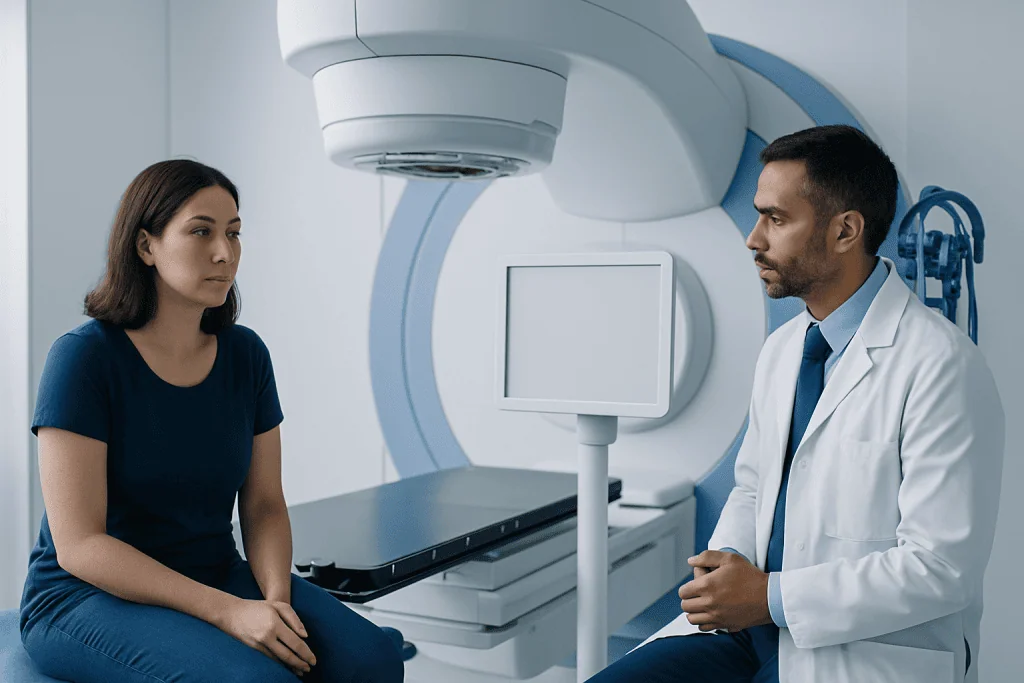
There is no single symptom that proves cancer is present. However, some signs may prompt a doctor to recommend further evaluation, especially if they persist, worsen, or have no clear explanation. Symptoms vary widely depending on the organ involved.
Examples of symptoms that may lead to cancer testing include unexplained weight loss, ongoing fatigue, a new lump, changes in bowel or bladder habits, unusual bleeding, a persistent cough, trouble swallowing, changes in a mole, or pain that does not improve. Some cancers cause very few early symptoms, which is why screening can be important for people at higher risk.
Doctors usually ask when symptoms began, how they have changed over time, and whether there is a personal or family history of cancer. They may also ask about smoking, alcohol use, workplace exposures, infections, hormone use, and other factors that can affect cancer risk.
- Symptoms alone rarely confirm cancer.
- Persistent or unexplained changes deserve medical attention.
- Family history and personal risk factors can guide which tests are most useful.
Medical history, physical exam, and initial laboratory tests

The first part of cancer diagnosis often begins with a detailed conversation and physical exam. A doctor may feel for enlarged lymph nodes, look for skin changes, listen to the lungs, examine the abdomen, or assess other areas depending on the symptoms. This early evaluation helps narrow down possible causes.
Initial laboratory tests may include blood tests, urine tests, or stool tests. These tests do not diagnose most cancers by themselves, but they can reveal signs that something is wrong, such as anemia, abnormal liver function, blood in the stool, or changes in kidney function. In some situations, doctors may also check tumor markers, which are substances that can be higher in certain cancers.
Tumor markers can be helpful in selected cases, but they are not perfect screening tools. Some people with cancer have normal marker levels, and some people without cancer have elevated levels. For this reason, laboratory results are usually considered alongside imaging and, when needed, biopsy findings.
Imaging scans used in cancer diagnosis
Imaging tests allow doctors to look inside the body and find abnormal growths, enlarged organs, or signs that a disease has spread. The type of scan used depends on the symptoms and the body area being examined. Common tests include X-rays, ultrasound, computed tomography (CT), magnetic resonance imaging (MRI), and positron emission tomography (PET), sometimes combined with CT.
Each imaging method has a different role. X-rays may detect lung changes or bone problems. Ultrasound can help evaluate soft tissues and guide needle procedures. CT scans are often used to see detailed cross-sectional images of the chest, abdomen, or pelvis. MRI provides especially detailed images of soft tissues, the brain, spine, liver, and pelvic organs. PET scans can help show areas of increased metabolic activity that may suggest cancer.
Imaging can strongly suggest cancer, but scans usually cannot confirm the exact diagnosis on their own. For example, a mass seen on a scan may represent infection, inflammation, a benign tumor, or a malignant tumor. If imaging finds a suspicious area, the next step is often a biopsy or another focused test.
In many cases, imaging also helps guide care after diagnosis. Doctors may use scans to determine the stage of cancer, plan surgery or radiation, and monitor how well treatment is working. Tests such as PET-CT scanning or MRI can be important parts of this process when clinically appropriate.
Biopsy: why it matters and what to expect
A biopsy is the removal of a small sample of tissue or cells so it can be examined under a microscope. For many cancers, biopsy is the most reliable way to confirm the diagnosis. A pathologist studies the sample to determine whether cancer cells are present and, if so, what type of cancer it is.
There are several kinds of biopsy. A fine-needle aspiration uses a thin needle to collect cells. A core needle biopsy removes a slightly larger sample of tissue. Endoscopic biopsies are taken through a thin camera inserted into the body, such as during colonoscopy or bronchoscopy. In some cases, a surgical biopsy is needed to remove part or all of a suspicious lump.
People often worry that a biopsy will spread cancer, but this concern is uncommon in standard medical practice. Biopsies are carefully planned to minimize risk and are widely used because the information they provide is essential for safe and effective treatment planning. The procedure may be done with local anesthesia, sedation, or general anesthesia depending on the area and technique.
After the sample is collected, the pathology report may include the cancer type, grade, and special features of the tumor cells. Additional laboratory methods can test for receptors, proteins, or genetic changes that help guide modern treatment options, especially in certain breast, lung, blood, or gastrointestinal cancers.
Staging and specialized tests after cancer is confirmed
Once cancer is confirmed, doctors usually perform staging tests. Staging describes how large the cancer is, whether lymph nodes are involved, and whether it has spread to other parts of the body. This step is important because treatment choices often depend on stage as well as cancer type and the person’s overall health.
Specialized tests may include additional scans, bone marrow tests for some blood cancers, endoscopy, or molecular testing of the tumor. Molecular and genetic analyses can identify changes in cancer cells that may respond to targeted treatments or immunotherapy. These tests are now a routine part of care for many cancer types.
Not all cancers are staged in exactly the same way. Solid tumors are often staged using systems such as tumor size and spread, while blood cancers use other methods. For example, the diagnostic approach to leukemia is different from the workup for a solid tumor such as lung cancer. In some situations, doctors may also recommend biopsy of another area if they need to clarify whether the disease has spread.
Screening, early detection, and self-care during testing
Screening tests are used in people without symptoms to look for cancer early or find changes that could become cancer later. Examples include mammography for breast cancer, cervical screening, colon cancer screening, and low-dose CT for some people at high risk of lung cancer. Screening is different from diagnostic testing, which is done when symptoms or abnormal findings are already present.
People can support their health during the diagnostic process by keeping follow-up appointments, bringing a list of symptoms and medications, and asking questions about the purpose of each test. It may also help to bring a family member or trusted friend to appointments. Waiting for results can feel stressful, so clear communication with the care team is important.
General self-care remains valuable even while tests are underway. This includes staying hydrated, eating regular meals as tolerated, resting well, and avoiding tobacco. Emotional support from loved ones, counseling, or patient support services may also be helpful while the cause of symptoms is being investigated.
When to see a doctor and what happens next
A person should consider seeing a doctor if they notice persistent, unusual, or unexplained symptoms, especially if these last for several weeks. Symptoms that worsen, interfere with daily life, or are associated with bleeding, a growing lump, or significant weight loss should not be ignored. Prompt evaluation does not mean cancer is likely, but it helps ensure that serious conditions are not missed.
After testing, the next steps depend on the results. If cancer is ruled out, the doctor may look for other causes of symptoms. If cancer is confirmed, care is usually planned by a multidisciplinary team that may include oncologists, surgeons, radiologists, pathologists, and other specialists. Treatment may involve surgery, systemic therapy, radiation therapy, or a combination of approaches, such as chemotherapy when appropriate.
For international patients seeking evaluation, Acibadem International offers diagnosis and treatment through multidisciplinary specialists in JCI-accredited hospitals. Whatever the setting, patients benefit from understanding their diagnosis, asking about the goals of each test, and discussing the available treatment options with a qualified doctor.
Frequently asked questions
Can cancer be diagnosed with a blood test alone?
Usually not. Blood tests can show abnormalities that suggest a problem, and some tumor markers may support the evaluation, but most cancers cannot be confirmed by blood work alone. A biopsy or other tissue-based test is often needed for a definite diagnosis.
Why is a biopsy often necessary?
A biopsy lets doctors examine actual cells or tissue under a microscope. This helps confirm whether cancer is present and identify the exact type and features of the tumor. That information is important for choosing the most appropriate treatment.
Do imaging scans always show whether a tumor is cancerous?
No. Imaging scans can reveal an abnormal area and provide clues about its size, location, and spread, but they often cannot prove whether it is cancer. Benign conditions, infections, and inflammation can sometimes look similar on scans.
How long does it take to diagnose cancer?
The timing varies depending on the symptoms, the type of tests needed, and how complex the case is. Some results are available quickly, while pathology and specialized testing can take longer. Doctors usually aim to move the process forward as efficiently and safely as possible.
What happens after cancer is confirmed?
After confirmation, doctors usually determine the stage of the cancer and may order additional tests to learn whether it has spread. They then discuss treatment options based on the cancer type, stage, and the person's overall health. A multidisciplinary team often helps create the treatment plan.
Is screening the same as diagnosis?
No. Screening is done in people without symptoms to detect cancer early or find precancerous changes. Diagnosis refers to the tests used to investigate symptoms or confirm whether an abnormal screening result is actually cancer.
References
- World Health Organization
- National Cancer Institute
- American Cancer Society
- National Health Service
- Centers for Disease Control and Prevention
This article is for general information only and is not a substitute for professional medical advice. Please consult a qualified doctor about your individual situation.
Oncology care in Turkey — second opinion and treatment plan
JCI-accredited · board-certified surgeons · reply within 24h
Add us as a Preferred Source to see more of our trusted health content across Google Search, AI Overviews and Discover.

Medical Oncology Department
Medical treatment of cancer with chemotherapy, immunotherapy and targeted therapies under a multidisciplinary tumor board.
60 specialists in this unit