How Is Heart Failure Diagnosed? Tests, Imaging, and Blood Work Explained

Heart failure is diagnosed with a combination of history, physical exam, blood tests, ECG, and imaging rather than a single test. An echocardiogram is one of the most important tests because it shows heart structure and pumping function.
Key Takeaways
- Heart failure is diagnosed with a combination of history, physical exam, blood tests, ECG, and imaging rather than a single test.
- An echocardiogram is one of the most important tests because it shows heart structure and pumping function.
- Blood tests such as BNP or NT-proBNP can support the diagnosis and help distinguish heart failure from other causes of breathlessness.
- Diagnosis also looks for the underlying cause, such as coronary artery disease, valve disease, rhythm problems, or uncontrolled blood pressure.
- Early evaluation can help start treatment sooner and may improve symptoms, daily function, and long-term heart health.
Heart failure diagnosis combines a person’s symptoms, medical history, physical examination, blood tests, and heart imaging. These tests help confirm whether the heart is not pumping or filling well and can also show the likely cause and severity.
Overview: How heart failure is diagnosed
Heart failure diagnosis is a step-by-step process. It does not mean the heart has stopped working. Instead, it means the heart is not pumping blood as effectively as it should, or it is too stiff to fill properly. Because symptoms such as shortness of breath, fatigue, and leg swelling can also occur with other conditions, doctors use several tools together to make an accurate diagnosis.
The evaluation usually begins with a discussion of symptoms, medical history, and a physical examination. A doctor may ask when symptoms started, whether they worsen with activity or lying flat, and whether there is a history of high blood pressure, coronary artery disease, diabetes, valve problems, or previous heart attacks. Family history and current medicines are also important.
After this first assessment, tests are chosen to answer specific questions. Blood work can suggest whether the heart is under strain. An electrocardiogram can show rhythm problems or signs of previous heart damage. Imaging tests, especially an echocardiogram, can show how well the heart pumps and whether its chambers or valves are abnormal. When needed, additional tests help identify the cause and guide the best treatment plan.
Symptoms and signs that prompt testing
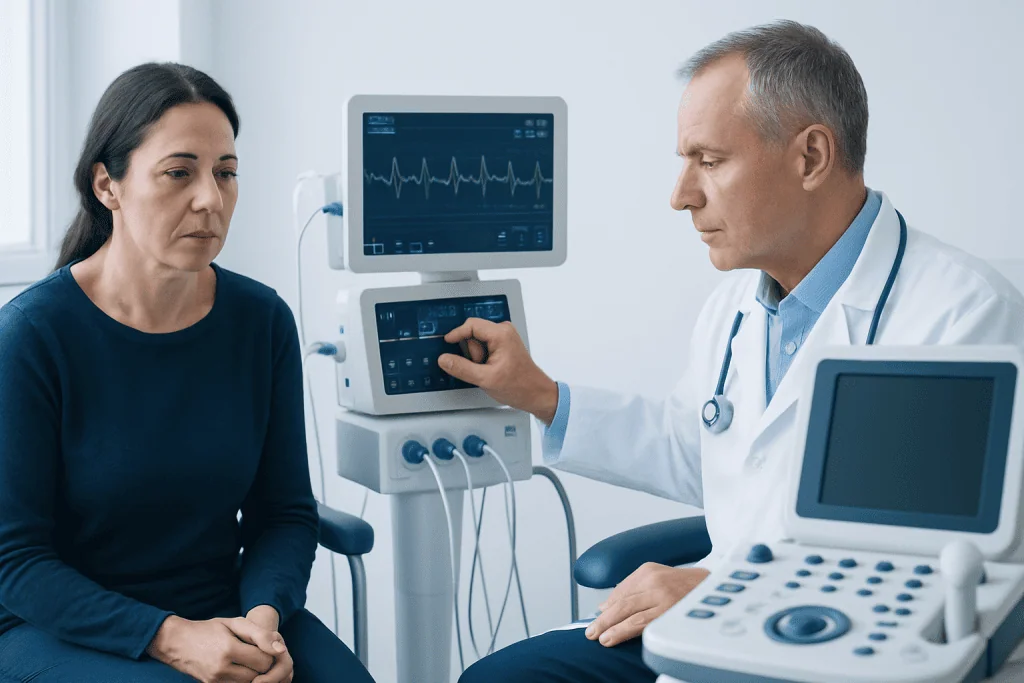
Heart failure may develop gradually or appear more suddenly. Common symptoms that lead to testing include shortness of breath during activity, trouble breathing when lying flat, waking at night feeling breathless, swelling in the ankles or legs, unusual tiredness, and reduced exercise tolerance. Some people also notice rapid weight gain from fluid retention, frequent coughing, or a feeling of chest heaviness.
Symptoms alone cannot confirm heart failure, but they provide important clues. For example, breathlessness may also be caused by lung disease, anemia, kidney disease, or deconditioning. Swelling in the legs may have other causes as well. That is why doctors look at the overall picture rather than relying on one complaint.
During a physical examination, a doctor may look for signs of fluid buildup or strain on the heart. These may include elevated neck veins, crackling sounds in the lungs, swelling in the lower legs, a rapid heart rate, or an extra heart sound. Blood pressure, oxygen level, body weight, and heart rhythm are also checked. These findings help determine how urgent the situation is and which tests are most useful next.
Medical history, risk factors, and possible causes

A careful medical history helps identify whether heart failure is likely and what may be causing it. Several conditions increase risk, including long-standing high blood pressure, coronary artery disease, diabetes, obesity, chronic kidney disease, sleep apnea, and abnormal heart rhythms such as atrial fibrillation. A history of heart attack, chemotherapy exposure, or certain viral infections can also be relevant.
Heart failure itself is not one single disease. It is often the result of another heart problem that has weakened or stiffened the heart muscle over time. Common causes include blocked heart arteries, heart valve disease, cardiomyopathy, congenital heart disease, and uncontrolled hypertension. In some people, the main problem is that the heart muscle is weak and pumps less forcefully. In others, the pumping strength may look preserved, but the heart is stiff and does not relax well.
Doctors also ask about lifestyle factors and triggers. High salt intake, missed medicines, excess alcohol use, recreational drugs, recent infections, and untreated thyroid disease may worsen symptoms or contribute to fluid buildup. Understanding these factors can shape both diagnosis and treatment. If another heart condition is suspected, the evaluation may overlap with testing for coronary artery disease or cardiomyopathy when clinically appropriate.
Blood tests used in heart failure diagnosis
Blood tests are an important part of heart failure diagnosis because they provide information that cannot be seen on a physical exam. One of the most commonly used tests measures BNP or NT-proBNP, substances released when the heart is under stress. Higher levels can support a diagnosis of heart failure, especially in people who come to medical care with unexplained shortness of breath. However, results are interpreted in context because age, kidney function, obesity, and other conditions can affect these values.
Routine blood work also helps doctors look for causes, complications, and conditions that can mimic or worsen heart failure. A complete blood count may identify anemia or infection. Kidney and liver function tests can show whether fluid overload is affecting other organs or whether medicine choices may need adjustment. Electrolyte levels, including sodium and potassium, are checked because they can change in heart failure and may influence treatment decisions.
Other blood tests may be used based on the person’s history. Thyroid tests can be helpful because thyroid disorders may affect heart rhythm and heart function. Blood sugar and cholesterol testing can identify risk factors linked to coronary disease. In selected situations, doctors may also check markers of heart muscle injury or inflammation. These results do not replace imaging, but they help complete the diagnostic picture.
ECG and imaging tests: what they show
An electrocardiogram, or ECG, records the heart’s electrical activity. It is quick, painless, and often one of the first tests ordered. An ECG can show abnormal rhythms, signs of an enlarged heart, evidence of a previous heart attack, or patterns that suggest strain on the heart. While it cannot confirm heart failure by itself, a normal ECG may make some forms of heart failure less likely and an abnormal ECG can point toward the underlying cause.
The most important imaging test for suspected heart failure is usually an echocardiogram, which uses ultrasound to create moving pictures of the heart. This test shows the size of the heart chambers, how well the heart pumps, how the valves are working, and whether parts of the heart wall move normally. It can estimate ejection fraction, a measurement that helps classify heart failure and guide treatment. It can also detect structural problems such as valve disease or thickened heart muscle.
A chest X-ray may also be used to look for fluid in the lungs, an enlarged heart, or another explanation for symptoms. In some cases, doctors may recommend more advanced imaging such as cardiac MRI, CT, or nuclear imaging if the cause remains unclear or if they need more detailed information about the heart muscle, blood flow, or scarring. When evaluating structure and function in detail, testing may naturally lead to echocardiography or other forms of cardiac MRI based on the clinical question.
Additional tests to confirm the cause and severity
If heart failure is diagnosed or strongly suspected, doctors may recommend additional tests to find out why it developed and how advanced it is. Stress testing may be used when symptoms suggest reduced blood flow to the heart or when coronary artery disease is a possible cause. This can be done with exercise or medicine that makes the heart work harder while ECG or imaging is monitored.
In some cases, continuous heart rhythm monitoring is helpful, especially if symptoms come and go or if there is concern for intermittent arrhythmias. Lung function tests may be ordered when it is difficult to tell whether shortness of breath is caused mainly by the heart or the lungs. Sleep studies can also be considered if sleep apnea is suspected, since it can contribute to high blood pressure and worsen heart failure symptoms.
For selected patients, invasive testing may be needed. Coronary angiography can look for blocked heart arteries when symptoms, blood tests, or imaging suggest reduced blood flow to the heart muscle. Cardiac catheterization can also measure pressures inside the heart and lungs in more complex situations. If blocked arteries are found, evaluation may progress to coronary angiography or, when appropriate, treatment planning that may include coronary artery bypass surgery.
How the results guide treatment
The goal of diagnosis is not only to confirm heart failure but also to define the type, severity, and cause. This matters because treatment depends on these details. For example, heart failure with reduced ejection fraction and heart failure with preserved ejection fraction can share symptoms, but they are managed somewhat differently. Valve problems, coronary artery disease, uncontrolled blood pressure, and rhythm disorders may each need specific treatment alongside standard heart failure care.
Test results also help doctors assess how urgently treatment should begin and whether hospital care is needed. Evidence of fluid overload, low oxygen, low blood pressure, kidney dysfunction, or severe rhythm abnormalities may signal a need for closer monitoring. In less urgent cases, treatment often starts with medicines, salt and fluid guidance when appropriate, and careful follow-up to monitor symptoms, weight, blood pressure, and laboratory values.
Because heart failure can change over time, diagnosis is not always a one-time event. Repeat blood tests or imaging may be needed to see whether treatment is working or whether the condition is progressing. Near the end of the care pathway, some international patients may choose centers such as Acibadem International, where multidisciplinary specialists in JCI-accredited hospitals evaluate and treat complex heart conditions with coordinated diagnostic services.
When to seek medical care
Anyone with ongoing shortness of breath, swelling in the legs, unexplained fatigue, or reduced ability to do usual activities should arrange a medical evaluation. These symptoms do not always mean heart failure, but they deserve attention, especially in people with risk factors such as high blood pressure, diabetes, kidney disease, or known heart disease. Early assessment can help find the cause before symptoms become more severe.
Prompt medical care is especially important if symptoms are new, worsening, or interfering with daily life. A doctor can decide which tests are needed and whether treatment should begin right away. Keeping a symptom diary, a medicine list, and recent weight measurements can be helpful during the visit.
Emergency care is appropriate for severe shortness of breath at rest, chest pain, fainting, blue lips, confusion, or sudden rapid swelling with major breathing difficulty. These symptoms may indicate a serious heart or lung problem that needs immediate treatment. Even after diagnosis, sudden symptom changes should not be ignored.
Frequently asked questions
Can heart failure be diagnosed with a blood test alone?
No. Blood tests such as BNP or NT-proBNP can strongly support the diagnosis, but they do not confirm it on their own. Doctors combine blood work with symptoms, a physical exam, ECG findings, and imaging such as echocardiography.
What is the most important test for heart failure?
An echocardiogram is often the key test because it shows the heart’s size, pumping strength, valve function, and overall structure. It helps doctors determine the type of heart failure and plan treatment. Even so, it is usually interpreted together with other tests.
Does a normal ECG rule out heart failure?
Not completely. A normal ECG can make some heart problems less likely, but it does not exclude all forms of heart failure. If symptoms suggest heart failure, further testing such as blood work and an echocardiogram may still be needed.
Why are BNP or NT-proBNP levels checked?
These blood tests measure substances released when the heart is under strain. They can help doctors tell whether shortness of breath may be related to heart failure rather than another cause. Results are not interpreted in isolation because kidney function, age, and other factors can affect the levels.
Can heart failure look like a lung problem?
Yes. Breathlessness, cough, and reduced exercise tolerance can occur in both heart and lung conditions. That is why doctors may use a chest X-ray, blood tests, ECG, and sometimes lung function tests to separate the possible causes.
How long does it take to diagnose heart failure?
Sometimes the diagnosis can be made quickly, especially if symptoms are clear and the first tests strongly support it. In other cases, it may take more time to confirm the diagnosis and identify the underlying cause. The timeline depends on symptom severity, test availability, and whether other conditions need to be ruled out.
References
- American Heart Association
- European Society of Cardiology
- National Heart, Lung, and Blood Institute
- Heart Failure Society of America
- Mayo Clinic
This article is for general information only and is not a substitute for professional medical advice. Please consult a qualified doctor about your individual situation.
Heart Failure in Turkey — costs, top hospitals & a free quote
JCI-accredited · board-certified surgeons · reply within 24h
Add us as a Preferred Source to see more of our trusted health content across Google Search, AI Overviews and Discover.
Check your numbers in seconds
BMI, calories, due date, blood pressure and 30+ more clinical calculators — free, instant, doctor-reviewed ranges.