How Long Does Ovulation Last? A Doctor-Reviewed Answer

The egg released during ovulation survives for about 12 to 24 hours. The fertile window is longer than ovulation itself because sperm can live in the reproductive tract for up to 5 days.
Key Takeaways
- The egg released during ovulation survives for about 12 to 24 hours.
- The fertile window is longer than ovulation itself because sperm can live in the reproductive tract for up to 5 days.
- Ovulation often happens about 14 days before the next period, not always on day 14 of the cycle.
- Mild mid-cycle symptoms can be normal, but severe pain, heavy bleeding, or very irregular cycles should be checked by a doctor.
- Doctors assess ovulation using cycle history, hormone tests, ultrasound, and sometimes ovulation predictor kits.
Ovulation usually lasts about 12 to 24 hours after the ovary releases an egg. In most people, this is a normal part of the menstrual cycle, but cycle changes, severe pain, or trouble getting pregnant may justify medical review.
Overview: how long ovulation really lasts
Ovulation itself is brief. In most cases, once the ovary releases an egg, that egg remains viable for fertilization for around 12 to 24 hours. This means the direct answer to the question how long does ovulation last is usually about one day or less.
What often causes confusion is that the fertile window is longer than ovulation. Pregnancy can happen from intercourse in the days before ovulation because sperm may survive in the female reproductive tract for up to 5 days. As a result, fertility is not limited to the single day the egg is released.
For many people, this timing variation is completely harmless and simply reflects normal biology. Still, if ovulation seems unpredictable, very painful, or hard to identify over many months, a doctor may look for conditions affecting hormone balance, egg release, or the menstrual cycle.
What happens during ovulation
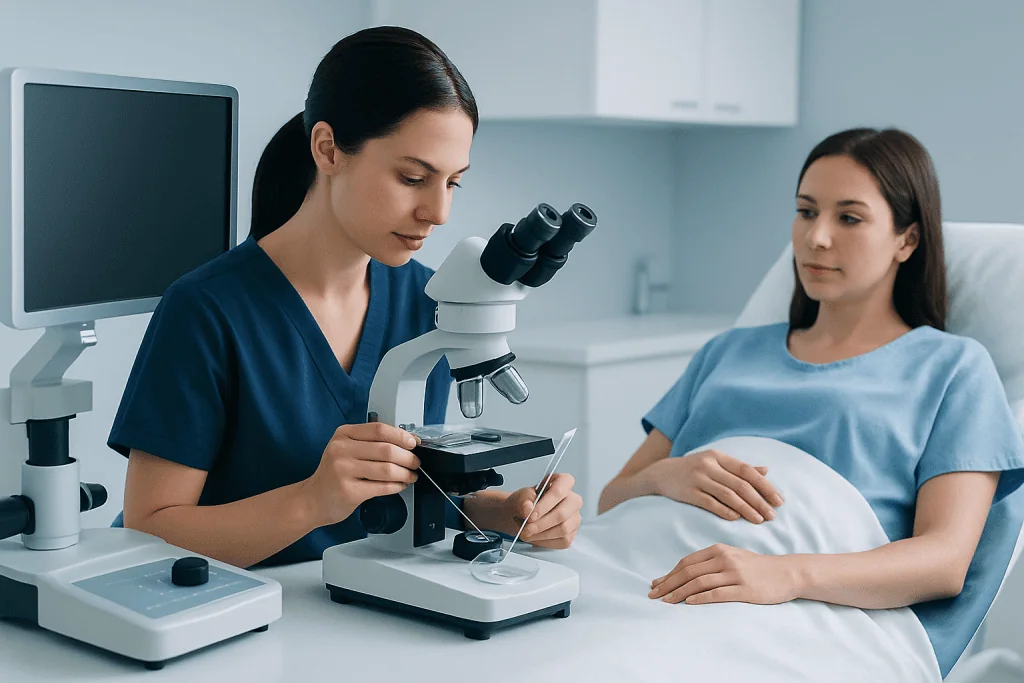
Ovulation is the point in the menstrual cycle when one ovary releases a mature egg. This process is guided by changing hormone levels, especially follicle-stimulating hormone, estrogen, and luteinizing hormone. A surge in luteinizing hormone usually triggers the release of the egg.
After release, the egg enters the fallopian tube, where it may be fertilized by sperm. If fertilization does not happen within roughly 12 to 24 hours, the egg breaks down and the cycle continues toward menstruation. That is why ovulation is considered a short event, even though fertility spans several days.
Ovulation does not always happen on the same calendar day each month. In a 28-day cycle, it often occurs around day 14, but in real life cycles may be shorter, longer, or variable. A more reliable rule is that ovulation usually occurs about 14 days before the next menstrual period.
People trying to conceive, avoid pregnancy, or understand cycle-related symptoms may benefit from learning this difference between ovulation day and the fertile window. Knowing both can make tracking more realistic and less frustrating.
Common ovulation signs and how long they may last
Some people notice ovulation symptoms, while others do not feel any clear changes. Both are normal. When symptoms happen, they often appear shortly before ovulation, on the day of ovulation, or just after it.
Common signs can include:
- Clear, slippery, stretchy cervical mucus similar to raw egg white
- Mild one-sided lower abdominal discomfort, sometimes called mittelschmerz
- A slight rise in basal body temperature after ovulation
- Breast tenderness or bloating
- Increased sexual desire
- Light spotting in some cases
These signs usually do not last long. Ovulation pain may last a few minutes to a few hours, though in some people it can continue for 1 to 2 days. Cervical mucus changes may be noticeable for several days around ovulation, which is one reason the fertile period seems longer than the actual lifespan of the egg.
Symptoms alone cannot confirm ovulation with complete accuracy. A person may feel mid-cycle pain without releasing an egg, or may ovulate without any noticeable symptoms at all. Tracking methods can be useful, but if cycles are confusing or fertility is a concern, a medical evaluation can help clarify what is happening.
The fertile window: why pregnancy is possible beyond one day
Although ovulation lasts only about 12 to 24 hours, the fertile window is usually about 6 days long. This includes the 5 days before ovulation and the day of ovulation itself. The reason is simple: sperm can remain alive long enough to meet the egg after it is released.
The most fertile time is generally the 2 days before ovulation and the day ovulation occurs. For people trying to conceive, timing intercourse across this broader window is often more practical than focusing on a single suspected ovulation day. For those avoiding pregnancy, it is important to remember that cycle timing alone can be unreliable.
Cycle tracking tools may include calendar methods, ovulation predictor kits, cervical mucus observation, and basal body temperature charting. Each has strengths and limitations. Ovulation predictor kits can suggest that the luteinizing hormone surge is happening, but they do not prove that the egg was successfully released.
If conception is not happening as expected, doctors may assess whether ovulation is regular and whether other factors are involved. In some cases, evaluation may overlap with care for polycystic ovary syndrome or other hormone-related conditions that can affect egg release.
What can affect ovulation timing or make it irregular
Ovulation timing can shift from month to month, even in otherwise healthy people. Stress, travel, illness, significant weight change, intense exercise, and changes in sleep patterns can all influence the hormones that control the cycle. One irregular month does not always mean there is a medical problem.
However, frequent irregularity may point to an underlying cause. Examples include thyroid disorders, high prolactin levels, polycystic ovary syndrome, premature ovarian insufficiency, or changes related to perimenopause. Some medications and chronic health conditions can also interfere with ovulation.
Signs that ovulation may not be happening regularly include very unpredictable periods, very long cycles, missed periods, or difficulty becoming pregnant. In these situations, doctors may look for conditions such as endometriosis or hormone imbalances, depending on the person’s symptoms and reproductive goals.
Even when irregular ovulation is present, effective support is often available. Lifestyle measures, targeted testing, and individualized treatment can help identify the cause and guide next steps.
How doctors check ovulation and cycle health
If someone asks a doctor how long ovulation lasts, the answer is usually straightforward. If the bigger issue is whether ovulation is happening normally, the evaluation is more detailed. A clinician will usually begin with menstrual history, symptoms, medical background, current medications, and pregnancy goals.
Doctors may ask about cycle length, bleeding pattern, pain, acne, unwanted hair growth, weight change, headaches, or nipple discharge. These clues can point toward hormone-related causes. A pelvic examination may be recommended in some cases, especially if there is pelvic pain, abnormal bleeding, or concern about another gynecologic condition.
Tests may include blood work to check hormones such as luteinizing hormone, follicle-stimulating hormone, thyroid hormones, prolactin, progesterone, or ovarian reserve markers. Pelvic ultrasound can help assess the ovaries and uterus and may show whether follicles are developing normally.
For people having difficulty conceiving, a doctor may discuss fertility-focused care, including cycle monitoring or IVF treatment when appropriate. In some cases, broader infertility treatment or specialist evaluation is the best way to understand whether ovulation, sperm factors, the fallopian tubes, or the uterus are contributing to the problem.
What helps support regular ovulation
Many people with regular cycles do not need any treatment at all. If ovulation is occurring and there are no troubling symptoms, reassurance and cycle education may be enough. Understanding that ovulation is brief but fertility extends over several days can reduce unnecessary worry.
General self-care can support cycle health. Helpful habits include maintaining a balanced diet, aiming for a stable weight, getting regular sleep, managing stress, and avoiding tobacco. Extreme calorie restriction or overtraining may disturb hormone balance in some people.
When a medical cause is found, treatment depends on the diagnosis. This may include management of thyroid disease, treatment for PCOS, evaluation of painful conditions such as endometriosis, or fertility care if pregnancy is the goal. Some people may also need help addressing irregular bleeding or severe ovulation pain.
Near the end of the care pathway, some international patients choose centers with coordinated women’s health and fertility services. Acibadem International’s multidisciplinary specialists and JCI-accredited hospitals diagnose and treat reproductive and gynecologic conditions, including options such as gynecology care when medically appropriate.
When to seek medical care
Ovulation timing is often a normal source of variation, and occasional cycle changes are common. Still, certain symptoms deserve medical review rather than self-tracking alone.
It is sensible to seek care if there is severe one-sided pelvic pain, pain with fever, fainting, heavy bleeding, bleeding between periods that keeps recurring, or sudden worsening symptoms. Medical attention is also important for cycles that are very irregular, absent for several months, or consistently much shorter or longer than usual.
People trying to become pregnant may also benefit from evaluation if conception is not happening after a reasonable period of trying, or sooner if periods are irregular or there is a known reproductive health issue. A doctor can help determine whether ovulation is occurring and whether other factors may be involved.
Prompt assessment can also rule out less common but important problems, including ovarian cyst complications, hormonal disorders, or other gynecologic conditions. In most cases, the goal is not to assume something serious, but to clarify what is normal and what may need treatment.
Frequently asked questions
How long does ovulation last exactly?
Ovulation usually lasts about 12 to 24 hours after the egg is released from the ovary. That is the time the egg remains available for fertilization. The fertile window is longer because sperm can survive for several days before ovulation.
Can someone get pregnant after ovulation is over?
Pregnancy is most likely before ovulation and on the day of ovulation itself. Once the egg is no longer viable, usually after 12 to 24 hours, pregnancy from that cycle becomes much less likely. Exact timing can be hard to know, so natural cycle tracking is not perfectly precise.
Does ovulation always happen on day 14?
No. Ovulation does not always happen on day 14, even in healthy cycles. It more often occurs about 14 days before the next period, so the calendar day depends on the total cycle length.
How can someone tell if they are ovulating?
Possible signs include clear stretchy cervical mucus, mild one-sided pelvic pain, and a small rise in basal body temperature after ovulation. Ovulation predictor kits may also help identify the luteinizing hormone surge. However, these methods do not confirm ovulation with complete certainty in every case.
Is ovulation pain normal?
Mild mid-cycle discomfort can be normal for some people and may last minutes to a day or two. Severe pain, pain with fever, fainting, or persistent pain is not typical and should be checked by a doctor. Recurring pain may need evaluation for cysts, endometriosis, or other gynecologic causes.
What if periods are irregular and ovulation is hard to predict?
Irregular periods can make ovulation timing difficult to estimate and may mean ovulation is inconsistent. Stress, weight change, thyroid problems, PCOS, and other hormone issues can contribute. A doctor can use cycle history, blood tests, and ultrasound to look for the cause.
References
- American College of Obstetricians and Gynecologists
- Office on Women's Health
- National Health Service
- Mayo Clinic
- American Society for Reproductive Medicine
This article is for general information only and is not a substitute for professional medical advice. Please consult a qualified doctor about your individual situation.
IVF & fertility treatment in Turkey — success rates and costs
JCI-accredited · board-certified surgeons · reply within 24h
Add us as a Preferred Source to see more of our trusted health content across Google Search, AI Overviews and Discover.
Check your numbers in seconds
BMI, calories, due date, blood pressure and 30+ more clinical calculators — free, instant, doctor-reviewed ranges.