How Neurologists Diagnose Sleep Disorders

Diagnosis starts with a detailed review of sleep habits, symptoms, medications, and overall health. A neurological exam can help detect signs of conditions affecting the brain, nerves, or muscles that may disturb sleep.
Key Takeaways
- Diagnosis starts with a detailed review of sleep habits, symptoms, medications, and overall health.
- A neurological exam can help detect signs of conditions affecting the brain, nerves, or muscles that may disturb sleep.
- Tests may include sleep diaries, actigraphy, overnight polysomnography, multiple sleep latency testing, and breathing or movement monitoring.
- Many sleep problems overlap, so neurologists look for more than one cause, such as insomnia combined with sleep apnea or restless legs syndrome.
- Early evaluation can improve sleep quality, daytime function, mood, and safety.
Neurologists diagnose sleep disorders by combining a careful medical history, symptom review, physical and neurological examination, and targeted sleep testing. The goal is to identify the underlying cause of poor sleep, daytime sleepiness, unusual nighttime behaviors, or breathing-related sleep problems so treatment can be tailored to the individual.
Overview: What neurologists look for
When neurologists diagnose sleep disorders, they do more than ask whether a person feels tired. Sleep is closely connected to the brain, nervous system, breathing, movement, mood, and daily routines. A neurologist trained in sleep medicine looks for patterns that explain symptoms such as difficulty falling asleep, repeated awakenings, loud snoring, excessive daytime sleepiness, unusual behaviors during sleep, morning headaches, or sudden muscle weakness associated with strong emotions.
The main aim of diagnosis is to identify the type of sleep disorder and any related medical or neurological condition. Common examples include insomnia, obstructive sleep apnea, narcolepsy, circadian rhythm sleep-wake disorders, restless legs syndrome, and parasomnias such as sleepwalking or acting out dreams. Some patients may also have sleep disruption related to epilepsy, Parkinson’s disease, neuropathy, headache disorders, or other neurological problems.
Because many sleep disorders share similar symptoms, diagnosis usually involves several steps rather than one single test. A careful history remains the foundation. Testing is then chosen based on the most likely causes. This step-by-step approach helps avoid unnecessary tests and supports treatment that is specific, practical, and evidence-based.
Symptoms and clues that guide diagnosis
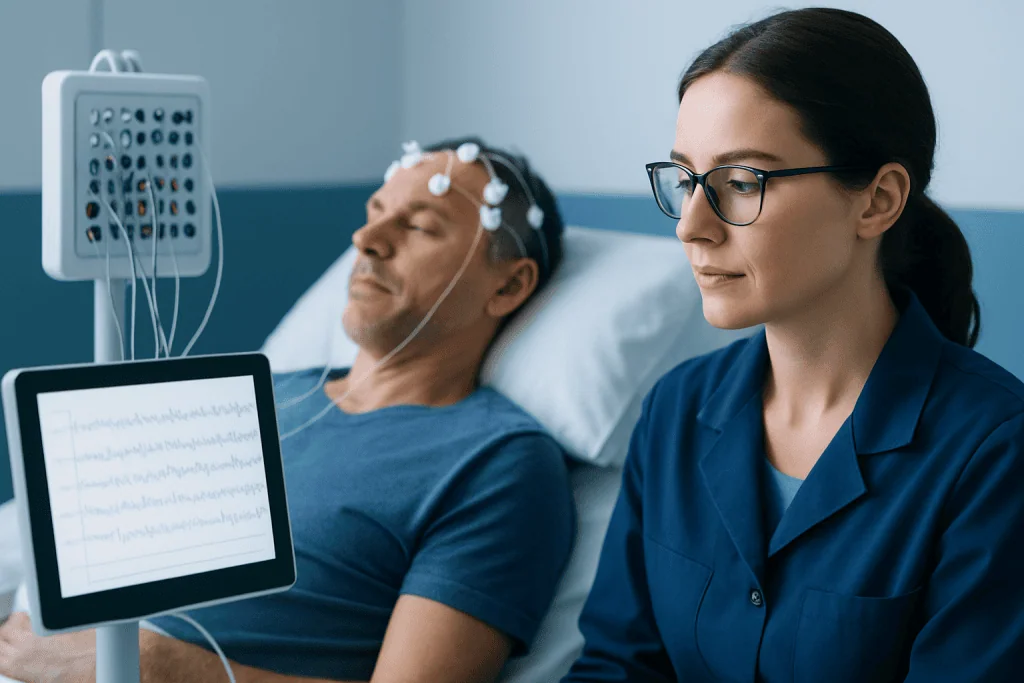
Neurologists begin by understanding exactly what the patient is experiencing during the night and the day. Daytime symptoms may include sleepiness, fatigue, poor concentration, irritability, mood changes, memory difficulties, or a tendency to doze off unintentionally. Nighttime clues can include snoring, pauses in breathing, choking during sleep, repeated leg movements, vivid dreams, sleep paralysis, teeth grinding, or confusion on waking.
It is also important to understand the timing of symptoms. Some disorders mainly affect sleep onset, while others cause sleep to be broken later in the night or lead to very early waking. Certain neurological sleep disorders follow a recognizable pattern. For example, narcolepsy may involve irresistible daytime sleep episodes, dream-like hallucinations as a person falls asleep or wakes, and sleep paralysis. Restless legs syndrome often causes an uncomfortable urge to move the legs in the evening, which improves with movement.
Family members or bed partners can provide useful details, especially when the patient is unaware of what happens during sleep. A partner may notice loud snoring, breathing pauses, complex movements, or talking and shouting during dreams. These observations can strongly influence which tests are needed and whether urgent safety issues should be addressed.
Medical history, sleep history, and neurological examination

A detailed sleep history is one of the most valuable diagnostic tools. The neurologist asks about bedtime and wake time, shift work, travel, caffeine or alcohol intake, screen use, naps, and how symptoms affect daily life. The review also includes current medications, supplements, and any substances that may interfere with sleep or increase sleepiness. Conditions such as anxiety, depression, chronic pain, reflux, asthma, or heart disease can also disturb sleep and need to be considered.
The medical history often explores whether symptoms began suddenly or gradually, and whether there are triggers such as illness, stress, weight changes, pregnancy, or a new medication. A neurologist will also ask about headaches, seizures, fainting, numbness, weakness, tremor, and changes in memory or behavior. This broader history helps distinguish a primary sleep disorder from symptoms caused by another neurological or medical condition.
The physical and neurological examination may include assessment of alertness, memory, coordination, muscle tone, reflexes, gait, and sensation. The doctor may also examine the nose, throat, jaw, tongue, and neck because airway anatomy can contribute to snoring and sleep apnea. In some people, signs from the exam suggest a related condition that needs further evaluation, such as Parkinson's disease or a seizure disorder.
Sleep diaries, questionnaires, and home monitoring
Before ordering advanced tests, neurologists often use simple tools that provide valuable information over time. A sleep diary records bedtimes, wake times, awakenings, naps, caffeine use, medications, and symptoms over one to two weeks or longer. This can reveal patterns such as delayed sleep timing, inconsistent schedules, or sleep restriction that may not be obvious during a clinic visit.
Questionnaires may help measure sleepiness, insomnia severity, restless legs symptoms, or risk for sleep apnea. These tools do not diagnose a condition on their own, but they help structure the evaluation and track response to treatment. In children, older adults, and people with memory problems, caregiver reports can be especially helpful.
Actigraphy is another useful option in selected cases. This involves wearing a small wrist device that estimates sleep-wake patterns based on movement. It is often used when a neurologist suspects a circadian rhythm problem or wants a longer-term view of sleep timing in the home environment. For some patients with a high likelihood of breathing-related sleep problems, a home sleep apnea test may be considered, although not everyone is a suitable candidate.
Sleep studies and specialized neurological testing
The best-known test for many sleep disorders is overnight polysomnography, often called a sleep study. During this test, sensors monitor brain waves, eye movements, muscle activity, heart rhythm, breathing effort, airflow, oxygen levels, and leg movements while the person sleeps. This allows neurologists to see what happens across the sleep stages and identify disorders such as obstructive sleep apnea, periodic limb movement disorder, and certain parasomnias.
If excessive daytime sleepiness is a major concern, the neurologist may recommend a multiple sleep latency test the day after an overnight sleep study. This test measures how quickly a person falls asleep during several scheduled daytime naps and whether rapid eye movement sleep appears unusually early. It can help support the diagnosis of narcolepsy or other disorders of hypersomnolence.
Additional testing is sometimes needed depending on the symptoms. These may include blood tests to look for contributing factors such as iron deficiency or thyroid problems, electroencephalography when seizures are suspected, or imaging when a structural neurological cause needs to be ruled out. In selected patients, especially those with unusual nighttime behaviors, video monitoring can help distinguish parasomnias from nocturnal seizures or other movement disorders. If breathing-related sleep disturbance is confirmed, treatment may involve approaches such as sleep apnea treatment.
How neurologists interpret results and reach a diagnosis
Diagnosis is not based on test results alone. Neurologists interpret all findings together: symptoms, exam, sleep diary, questionnaires, and sleep study data. This is important because a mild abnormality on a test may or may not explain the person’s symptoms. In the same way, a patient can have more than one sleep disorder at the same time, and each condition may need to be addressed separately.
For example, someone with chronic insomnia may also have obstructive sleep apnea, or a person with daytime sleepiness may have both inadequate sleep and a neurological hypersomnolence disorder. Dream enactment behaviors may represent REM sleep behavior disorder, but they can also be confused with other nighttime movements or seizures. Careful interpretation helps avoid oversimplifying the problem.
After diagnosis, the neurologist explains what the findings mean in practical terms. The discussion usually covers severity, possible triggers, related health risks, and how the disorder affects daily functioning, work, school, and driving safety. If a diagnosis such as narcolepsy or epilepsy is considered, the doctor may also discuss longer-term monitoring and coordination with other specialists.
Treatment planning after diagnosis
Treatment depends on the type of sleep disorder and any underlying cause. For some people, the first steps are behavioral and environmental, such as improving sleep habits, stabilizing the sleep schedule, limiting alcohol before bedtime, addressing shift-work challenges, or treating stress and mood symptoms. In insomnia, structured therapy such as cognitive behavioral therapy for insomnia is often recommended. Breathing-related disorders may require devices, positional strategies, weight-related interventions, or ear, nose, and throat evaluation when appropriate.
Neurologists may also use medication when it is clinically indicated, especially for conditions such as narcolepsy, restless legs syndrome, REM sleep behavior disorder, or certain headache and seizure conditions that affect sleep. Medication choice is individualized and considers age, other medical conditions, daytime alertness needs, and possible side effects. Patients should always follow a qualified doctor’s instructions rather than self-treating with sedatives or stimulants.
When sleep disorders are linked to another condition, treatment may involve a broader care plan. This can include neurology care for underlying brain or nerve disorders or epilepsy treatment when seizures are contributing to disturbed sleep. Near the end of the care pathway, some international patients may seek evaluation at centers such as Acibadem International, where multidisciplinary specialists in JCI-accredited hospitals diagnose and treat sleep and neurological conditions.
When to seek medical advice
Occasional poor sleep is common, but persistent symptoms deserve attention. A person should consider medical evaluation if sleep problems last for weeks, interfere with work or school, affect mood or concentration, or cause safety concerns such as drowsy driving. Loud snoring with witnessed breathing pauses, waking up gasping, sudden daytime sleep attacks, or unusual nighttime movements are especially important reasons to seek care.
Urgent assessment is sensible when there is a risk of injury during sleep, possible seizures, severe daytime sleepiness, or symptoms suggesting low oxygen during the night. In children, concern is also warranted if poor sleep affects behavior, learning, growth, or breathing. Older adults may need assessment if confusion, falls, or dream enactment behaviors occur during the night.
Early diagnosis can make a meaningful difference. Better sleep often improves daytime energy, memory, mood, and overall quality of life. A neurologist or sleep specialist can help clarify whether symptoms are due to a primary sleep disorder, a neurological condition, or a combination of factors, and then guide the next steps safely.
Frequently asked questions
Do neurologists treat sleep disorders or only diagnose them?
Neurologists who specialize in sleep medicine often do both. They assess symptoms, order and interpret sleep tests, and create treatment plans, especially when sleep problems involve the brain, nerves, movement, or daytime sleepiness.
What is the difference between a sleep study and a home sleep test?
An overnight sleep study in a sleep lab records many signals at once, including brain waves, breathing, oxygen levels, muscle activity, and leg movements. A home sleep test is more limited and is usually used mainly to evaluate certain patients for obstructive sleep apnea.
Will everyone with sleep problems need polysomnography?
No. Many people are first evaluated with a history, sleep diary, questionnaires, and sometimes actigraphy. A full sleep study is recommended when the symptoms suggest conditions that need overnight monitoring, such as sleep apnea, parasomnias, or unexplained daytime sleepiness.
How should a person prepare for a neurology sleep appointment?
It helps to bring a list of symptoms, medications, supplements, and usual sleep times. If possible, a sleep diary for one to two weeks and comments from a bed partner or family member can provide useful details.
Can anxiety or depression cause symptoms that look like a sleep disorder?
Yes. Mental health conditions can affect sleep quality, sleep timing, and daytime energy, and they often overlap with sleep disorders. A neurologist considers these factors during diagnosis so that treatment addresses the full picture.
When is daytime sleepiness a medical concern?
Daytime sleepiness should be evaluated if it happens regularly, affects concentration, causes unplanned naps, or creates safety risks such as drowsy driving. It may reflect insufficient sleep, medication effects, sleep apnea, narcolepsy, or another medical problem.
References
- American Academy of Sleep Medicine
- National Institute of Neurological Disorders and Stroke
- National Heart, Lung, and Blood Institute
- Centers for Disease Control and Prevention
- World Health Organization
This article is for general information only and is not a substitute for professional medical advice. Please consult a qualified doctor about your individual situation.
Explore treatments in Turkey — costs, top hospitals & a free quote
JCI-accredited · board-certified surgeons · reply within 24h
Add us as a Preferred Source to see more of our trusted health content across Google Search, AI Overviews and Discover.

More from the Health Library



Related Specialists

Prof. Dr. Ayşe Korkmaz Toygar
Neonatal Intensive Care Unit
Prof. Dr. Asim Kaytaz
Otorhinolaryngology
Prof. Dr. Nurdan Tözü̇n
Gastroenterology
Dr. Ali Elibol
Radiology