How Sleep Problems Are Diagnosed in Neurology: Tests, Sleep Studies, and What to Expect

Diagnosis starts with a detailed review of symptoms, sleep habits, medications, and medical history. Sleep studies such as polysomnography can measure brain waves, breathing, oxygen, heart rhythm, and body movements during sleep.
Key Takeaways
- Diagnosis starts with a detailed review of symptoms, sleep habits, medications, and medical history.
- Sleep studies such as polysomnography can measure brain waves, breathing, oxygen, heart rhythm, and body movements during sleep.
- Some people may also need daytime testing, actigraphy, or neurological tests depending on their symptoms.
- The goal is to find the underlying cause, such as sleep apnea, narcolepsy, restless legs syndrome, seizures, or circadian rhythm disorders.
- Preparing well and knowing what to expect can make the testing process easier and more accurate.
Sleep problems can be linked to the brain, nerves, breathing, movement, or daily habits. A neurological sleep evaluation uses medical history, physical examination, and targeted tests to identify the cause and help plan the right treatment.
Overview: Why Neurology May Be Involved in Sleep Problems
Sleep is closely connected to the brain and nervous system. While some sleep problems are mainly related to lifestyle, stress, or breathing, others involve how the brain controls sleep-wake cycles, muscle activity, movement, and alertness. For this reason, neurologists and sleep specialists often work together when symptoms are persistent, unusual, or difficult to explain.
A neurological sleep evaluation may be recommended for people with excessive daytime sleepiness, sudden sleep attacks, unusual movements during sleep, dream-enactment behaviors, nighttime confusion, morning headaches, or suspected seizures that occur during sleep. It can also help when symptoms suggest conditions such as Parkinson’s disease, narcolepsy, restless legs syndrome, REM sleep behavior disorder, or sleep-related epilepsy.
The purpose of testing is not simply to confirm that a person is sleeping poorly. It is to understand why the problem is happening. This includes identifying whether the issue comes from disrupted breathing, abnormal brain activity, movement disorders, circadian rhythm changes, medication effects, or another medical or neurological condition.
Common Symptoms That Lead to Sleep Testing
People are often referred for sleep testing when sleep problems affect daily life, safety, concentration, mood, or overall health. Symptoms can occur at night, during the day, or both. Sometimes a bed partner notices the signs first, especially when the person is unaware of breathing pauses, leg movements, or unusual behaviors while asleep.
Common reasons for evaluation include:
- Loud snoring, gasping, or witnessed pauses in breathing
- Excessive daytime sleepiness or falling asleep unintentionally
- Difficulty staying asleep or waking too early
- Sudden muscle weakness triggered by emotion
- Uncomfortable sensations in the legs with an urge to move
- Talking, shouting, kicking, or acting out dreams
- Episodes that may represent nighttime seizures
- Shift-work related sleep problems or irregular sleep timing
Not every symptom points to a neurological disorder, but patterns matter. A specialist will look at when the symptoms started, how often they happen, whether they are getting worse, and whether they occur with headaches, tremor, memory changes, weakness, or other neurological signs. This helps guide which tests are most useful and whether the person may need both sleep-focused and neurological assessment.
The First Step: Medical History and Neurological Examination

The most important part of diagnosis often begins before any machines or overnight tests are used. The doctor will ask about sleep schedule, bedtime habits, work routine, caffeine and alcohol intake, medications, mental health, and medical conditions such as obesity, heart disease, Parkinsonism, neuropathy, or stroke. Family history may also be relevant, especially in disorders such as narcolepsy or certain movement conditions.
Patients may be asked to describe exactly what happens at night and how they feel during the day. Questions may cover snoring, choking awakenings, dream recall, sleep paralysis, leg discomfort, night wandering, morning refreshment, and unplanned naps. Input from a partner or caregiver can be very helpful, because some sleep-related events are not remembered by the patient.
A neurological examination may assess alertness, memory, eye movements, coordination, reflexes, muscle tone, sensation, and gait. This is especially helpful when doctors suspect that sleep symptoms are linked to a broader neurological condition. In some cases, symptoms may overlap with epilepsy or a movement disorder, and the examination helps narrow the possibilities.
Sleep diaries and symptom questionnaires are often used as well. A diary records bedtimes, wake times, naps, and symptoms over one to two weeks. This simple tool can reveal patterns that are easy to miss in a short clinic visit, especially in insomnia and circadian rhythm disorders.
Sleep Studies and Other Tests Used in Diagnosis
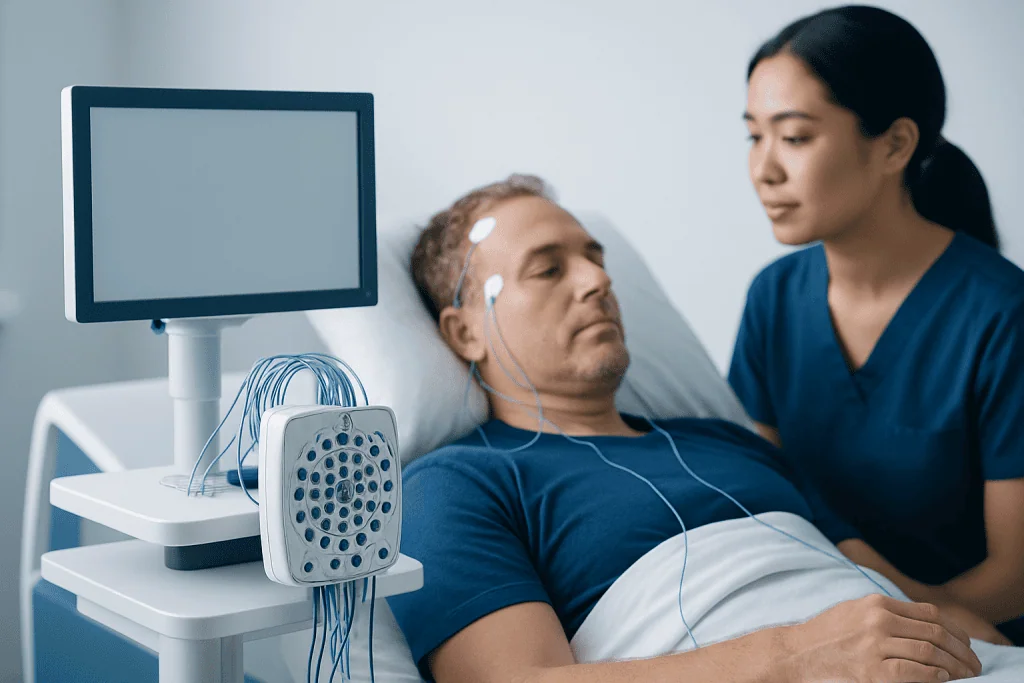
The best-known test is overnight polysomnography, commonly called a sleep study. This test records brain waves, eye movements, muscle activity, breathing, oxygen levels, heart rhythm, and body position during sleep. It can identify conditions such as obstructive sleep apnea, periodic limb movements, REM sleep behavior disorder, and some unusual nighttime events. When needed, doctors may recommend an in-lab evaluation such as polysomnography for a more complete assessment.
If excessive daytime sleepiness is the main concern, a multiple sleep latency test may be done the day after an overnight sleep study. This daytime test measures how quickly a person falls asleep during several scheduled naps and whether REM sleep appears unusually early. It is often used when narcolepsy or idiopathic hypersomnia is suspected.
Not every patient needs an overnight laboratory test. In selected cases, home sleep apnea testing may be used, especially when the main concern is obstructive sleep apnea and there is not a strong suspicion of another neurological sleep disorder. Doctors may also use actigraphy, a wrist-worn device that tracks movement over days or weeks, to evaluate sleep timing and circadian rhythm patterns.
Additional neurological tests may sometimes be needed. These can include electroencephalography if seizures are suspected, brain imaging if symptoms suggest structural causes, or nerve-related testing in people with restless legs symptoms linked to neuropathy. Depending on the findings, the care team may also discuss EEG testing or other assessments to better understand nighttime episodes.
What to Expect During a Sleep Study
Knowing what will happen can reduce anxiety and help people prepare. In an overnight sleep study, the patient usually arrives in the evening. Small sensors are placed on the scalp, face, chest, legs, and fingers with adhesive or soft straps. These sensors are designed to record body signals while the person sleeps, and they do not cause pain.
The room is typically quiet, private, and set up much like a simple hotel room. A camera and microphone may be used so the team can observe body movements and sounds during sleep. Although sleeping in a new place may feel unfamiliar, sleep specialists can usually gather enough information even if the patient does not sleep exactly as they do at home.
Patients are usually advised to follow their usual schedule unless told otherwise. They may be asked to avoid caffeine late in the day, avoid alcohol, and discuss in advance whether to continue regular medications. Bringing comfortable sleepwear, toiletries, and a list of medications can make the experience easier.
For some conditions, additional tests are done the next morning. If a daytime sleepiness disorder is suspected, the person may stay for structured nap testing. If obstructive sleep apnea is found, treatment planning may include options such as sleep apnea treatment after the results are reviewed with the doctor.
How Doctors Interpret Results and Reach a Diagnosis
Sleep test results are interpreted together with the patient’s history, examination, and symptoms. A report may describe sleep stages, total sleep time, breathing interruptions, oxygen drops, limb movements, awakenings, heart rhythm changes, and unusual behaviors recorded during the night. These details help show whether the main issue is related to sleep quality, breathing, movement, circadian timing, or abnormal neurological activity.
Sometimes the diagnosis is straightforward, such as clear obstructive sleep apnea or classic narcolepsy findings. In other cases, results are more complex. A person may have more than one condition at the same time, such as insomnia plus sleep apnea, or Parkinson’s disease plus REM sleep behavior disorder. This is why specialists focus on the whole clinical picture rather than one number alone.
The final diagnosis may include a primary sleep disorder, an underlying neurological condition, or a contributing medical issue such as medication side effects, chronic pain, anxiety, or depression. If a broader neurological disease is suspected, further evaluation may be arranged, including follow-up with neurology, movement disorder specialists, or neurophysiology teams. In some settings, advanced neurology consultation helps coordinate this process.
Treatment Planning After Diagnosis
Treatment depends on the cause of the sleep problem. Breathing-related sleep disorders may be managed with weight-related measures, positional strategies, oral devices, or positive airway pressure therapy. Disorders of alertness, such as narcolepsy, may require a combination of scheduled sleep habits and medication prescribed by a specialist. Movement-related conditions may improve with attention to iron status, medication review, and targeted therapies.
Behavioral and lifestyle strategies are often part of care even when a neurological disorder is present. These may include regular sleep and wake times, reducing alcohol use, reviewing sedating medicines, managing stress, and treating coexisting problems such as pain or reflux. In insomnia, structured behavioral therapy is often more helpful long term than relying only on sleep medicines.
Safety may also be part of the plan. For example, people with dream-enactment behavior may need steps to protect themselves and their bed partner from injury. Those with severe daytime sleepiness may need advice about driving, working at heights, or operating machinery until symptoms are controlled. Follow-up is important because treatment often needs adjustment over time.
Near the end of the diagnostic journey, some patients benefit from coordinated care across specialties. Acibadem International’s multidisciplinary specialists and JCI-accredited hospitals evaluate and treat neurological and sleep-related disorders for international patients when comprehensive assessment is needed.
When to See a Doctor and How to Prepare for the Visit
A medical evaluation is advisable when sleep problems are frequent, persistent, or affecting daytime function. This is especially true if there is choking during sleep, sudden sleep attacks, confusion at night, dream enactment, new tremor or movement changes, or events that could be seizures. Early assessment can help prevent complications and make treatment more effective.
Before the appointment, it helps to write down symptoms, their timing, and any triggers. Patients should bring a list of medications and supplements, note work schedules and caffeine intake, and if possible ask a partner or family member to describe any nighttime behaviors they have observed. A short video of unusual nighttime movements, if safely obtained and culturally appropriate, can sometimes help clinicians understand the episodes.
People should also mention any history of neurological illness, head injury, stroke, anxiety, depression, or chronic pain. These details can influence both the diagnosis and treatment plan. With a careful, step-by-step evaluation, most patients can gain a clearer understanding of their sleep problem and the next steps for managing it.
Frequently asked questions
What does a neurologist look for when evaluating sleep problems?
A neurologist looks at how the brain and nervous system may be affecting sleep, alertness, movement, and nighttime behaviors. The evaluation usually includes symptom history, medication review, sleep habits, and a neurological examination. This helps identify whether the problem is related to breathing, seizures, movement disorders, circadian rhythm changes, or another medical cause.
Is a sleep study always needed?
No. Some people can be diagnosed mainly through history, questionnaires, sleep diaries, and examination. A sleep study is recommended when doctors need objective information about breathing, brain activity, movements, oxygen levels, or unusual nighttime events. The type of test depends on the symptoms and the suspected condition.
What is the difference between a home sleep test and an in-lab sleep study?
A home sleep test is usually used to look mainly for obstructive sleep apnea in carefully selected patients. An in-lab sleep study records more body signals, including brain waves and leg movements, so it can evaluate a wider range of neurological and sleep disorders. Because of this, in-lab testing is often preferred when symptoms are complex or unusual.
Can sleep problems be a sign of a neurological disease?
Yes, sometimes they can. Certain disorders of the brain and nervous system can affect sleep quality, sleep timing, movement during sleep, or daytime alertness. Sleep changes do not always mean a serious neurological illness, but they should be assessed if they are persistent, worsening, or accompanied by other neurological symptoms.
How should someone prepare for a sleep study?
Preparation is usually simple. Patients are often asked to follow their usual routine, avoid alcohol, and limit late caffeine unless their doctor gives different instructions. It also helps to bring comfortable sleepwear, a medication list, and any information about symptoms that a bed partner has noticed.
How long does it take to get results?
Results are usually not given immediately because the recorded data need to be reviewed carefully by trained professionals and interpreted by a specialist. Timing varies by center, but the doctor will usually schedule a follow-up visit to explain the findings and discuss treatment options. This review is important because symptoms and test results need to be considered together.
References
- American Academy of Sleep Medicine
- National Institute of Neurological Disorders and Stroke
- National Heart, Lung, and Blood Institute
- Centers for Disease Control and Prevention
- World Health Organization
This article is for general information only and is not a substitute for professional medical advice. Please consult a qualified doctor about your individual situation.
Explore treatments in Turkey — costs, top hospitals & a free quote
JCI-accredited · board-certified surgeons · reply within 24h
Add us as a Preferred Source to see more of our trusted health content across Google Search, AI Overviews and Discover.