How Social Media Affects Mental Health: Risks, Signs, and Healthy Use

Social media can have both positive and negative effects on mental health. Excessive use may be linked with anxiety, low mood, poor sleep, and social comparison.
Key Takeaways
- Social media can have both positive and negative effects on mental health.
- Excessive use may be linked with anxiety, low mood, poor sleep, and social comparison.
- Warning signs include feeling worse after scrolling, disrupted daily routines, and trouble disconnecting.
- Healthy boundaries, mindful use, and strong offline support can improve digital wellbeing.
- Professional help is important if social media use is affecting mood, relationships, school, or work.
Social media can help people stay connected, learn, and find support, but it can also affect mood, sleep, self-esteem, and stress levels. Understanding the risks, warning signs, and healthy habits can help people use social platforms in a more balanced way.
Overview
The relationship between social media and mental health is complex. Social platforms can help people stay in touch with loved ones, express themselves, build communities, and access education or emotional support. For many people, these benefits are meaningful and real, especially when in-person connection is limited.
At the same time, social media can influence how a person thinks, feels, and behaves. Constant notifications, endless scrolling, upsetting news, online conflict, and comparison with carefully edited images or lifestyles can contribute to stress and emotional strain. The effects vary from person to person and may depend on age, personality, life circumstances, and how social media is used.
Using social media does not automatically cause a mental health condition. However, heavy or unhelpful use may worsen existing emotional difficulties or make it harder to maintain healthy routines such as sleep, movement, face-to-face contact, and focused work or study. A balanced approach is often the most protective.
How Social Media Can Affect Mental Health

Social media may affect mental wellbeing through several pathways. One common factor is social comparison. People often post highlights rather than ordinary or difficult moments, which can create unrealistic expectations about appearance, success, relationships, or happiness. Repeated exposure to these idealized images may leave some users feeling inadequate or left behind.
Another important factor is attention and overstimulation. Frequent alerts, short-form content, and the habit of checking feeds repeatedly can make it harder to rest, concentrate, or be present in daily life. For some people, this pattern increases irritability, mental fatigue, and difficulty switching off.
Emotional exposure also plays a role. Negative comments, cyberbullying, exclusion, misinformation, and distressing world events can all affect mood. In addition, using social media late at night may disrupt sleep, and poor sleep is closely linked with emotional wellbeing. Some people may notice symptoms such as persistent worry, low mood, or social withdrawal, which can overlap with depression or anxiety-related concerns.
Social media can also be helpful when used intentionally. Supportive groups, mental health education, creative communities, and contact with friends can reduce loneliness and normalize help-seeking. The goal is not always to avoid social media completely, but to use it in ways that protect wellbeing.
Common Risks and Warning Signs
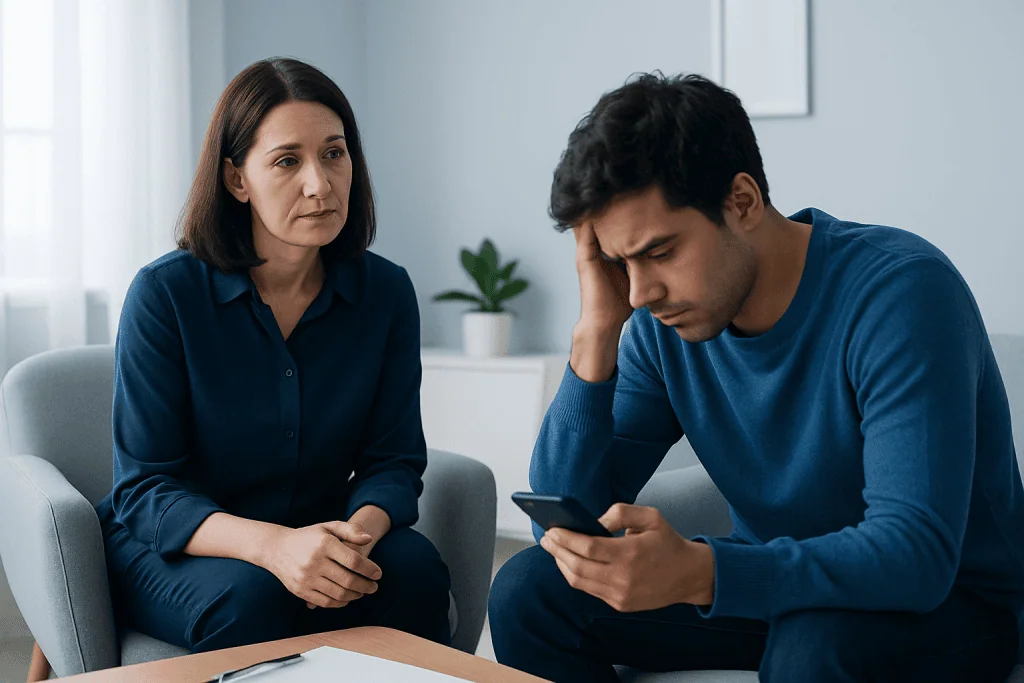
Not everyone experiences harm from social media, but certain patterns may signal that use is becoming unhealthy. A person may find themselves checking platforms automatically, spending much more time online than intended, or feeling restless when unable to access a phone. These habits can gradually interfere with sleep, daily responsibilities, and real-world relationships.
Emotional warning signs are just as important. Someone may notice feeling anxious, sad, angry, or empty after scrolling. Others may become overly focused on likes, views, or comments, using these responses as a measure of self-worth. This can create a cycle in which mood becomes closely tied to online feedback.
Possible warning signs include:
- Feeling worse about appearance, success, or relationships after using social media
- Difficulty sleeping because of late-night scrolling or notifications
- Loss of interest in offline activities, hobbies, or in-person contact
- Trouble concentrating at school or work
- Feeling pressured to post, respond, or stay constantly available
- Repeated exposure to bullying, harassment, or upsetting content
- Using social media to escape difficult emotions all the time
These signs do not necessarily mean a person has a mental health disorder, but they do suggest it may be time to review habits and consider support. If distress becomes persistent or intense, a mental health professional can help assess what is happening.
Who May Be More Vulnerable
Social media can affect anyone, but some groups may be more vulnerable. Children, teenagers, and young adults are often still developing identity, self-esteem, and emotional regulation skills. Because peer approval can feel especially important during these years, online feedback may have a stronger impact.
People who already live with anxiety, depression, body image concerns, loneliness, attention difficulties, trauma-related symptoms, or low self-esteem may also be more sensitive to negative online experiences. In these situations, social media may amplify pre-existing patterns such as reassurance-seeking, rumination, avoidance, or self-criticism.
Life context matters as well. Stressful periods such as exams, bereavement, relationship problems, illness, or social isolation can make online content feel more overwhelming. A person who uses social media mainly out of boredom, loneliness, or emotional distress may have a different experience than someone who uses it for a specific purpose and logs off easily.
How Mental Health Concerns Are Evaluated
There is no single medical test that shows whether social media is harming mental health. Evaluation usually begins with a conversation about symptoms, daily habits, sleep, school or work performance, relationships, and emotional triggers. A doctor, psychologist, or psychiatrist may ask how much time is spent online, what platforms are used, and how the person feels before, during, and after use.
The clinician will also look at the wider picture. Low mood, anxiety, irritability, sleep problems, panic symptoms, eating concerns, or reduced concentration can have many causes. The goal is to understand whether social media is a contributing factor, a coping mechanism, or only one part of a broader mental health issue.
Depending on the situation, a person may benefit from assessment for conditions such as anxiety or other mood-related concerns. If symptoms are ongoing, professional support such as psychiatric evaluation and care or psychological counseling can help clarify needs and guide treatment in a structured, supportive way.
Treatment and Support Options
When social media use is affecting wellbeing, treatment focuses on both symptoms and habits. The most appropriate support depends on the person’s age, symptoms, safety, and overall mental health. For some, simple changes in digital routines may be enough. For others, symptoms such as anxiety, low mood, compulsive checking, or severe sleep disruption may require professional care.
Talking therapies are often helpful. Counseling or psychotherapy can help a person identify triggers, challenge harmful comparison patterns, improve self-esteem, and build healthier coping skills. Techniques from cognitive behavioral therapy may support people who feel stuck in cycles of worry, avoidance, or compulsive use. If emotional distress is more significant, a doctor may discuss broader mental health treatment options.
Support may also include practical strategies such as turning off nonessential notifications, reducing exposure to harmful accounts, improving sleep hygiene, and rebuilding offline routines. Family support can be especially important for children and teenagers. In more serious situations, treatment may address an underlying mental health condition rather than focusing on social media alone.
Near the end of the care journey, some people may benefit from coordinated support across specialties. Acibadem International’s multidisciplinary specialists at JCI-accredited hospitals diagnose and treat mental health concerns for international patients when a comprehensive evaluation is needed.
Healthy Social Media Habits and Prevention
Healthy use starts with intention. It can help to decide why social media is being used before opening an app, such as messaging a friend, learning something specific, or sharing an update. Purposeful use is often easier to manage than automatic scrolling.
Boundaries are also important. Setting time limits, keeping phones away from the bed, scheduling screen-free periods, and turning off unnecessary notifications can reduce mental overload. Many people benefit from checking social media at chosen times instead of throughout the day.
Other helpful habits include:
- Unfollowing accounts that trigger comparison, shame, anger, or distress
- Following content that is educational, supportive, realistic, or inspiring
- Taking regular breaks, including short daily breaks or occasional digital detox periods
- Protecting sleep by avoiding screens close to bedtime
- Making time for in-person connection, exercise, hobbies, and outdoor activity
- Talking openly with children and teenagers about online experiences
Prevention is not about perfection. Most people will have times when social media feels more draining than helpful. What matters is noticing patterns early and making adjustments that support emotional balance.
When to See a Doctor
It is a good idea to speak with a healthcare professional if social media use is consistently affecting mood, sleep, concentration, school, work, or relationships. Help is also important if a person feels unable to cut back despite wanting to, or if online experiences are leading to severe distress, panic, self-neglect, or isolation.
Parents and caregivers should seek advice if a child or teenager becomes withdrawn, secretive, very irritable, sleep-deprived, or unusually preoccupied with online approval. Repeated cyberbullying, exposure to harmful content, or major changes in eating, mood, or school performance should never be ignored.
Urgent help is needed if there are signs of self-harm, suicidal thoughts, threats, or immediate risk to safety. In these situations, the person should contact emergency services or a local crisis resource right away. Early support can make recovery easier and help restore a healthier relationship with technology.
Frequently asked questions
Is social media always bad for mental health?
No. Social media can support connection, learning, creativity, and access to peer or community support. Its effect often depends on how it is used, how much time is spent on it, and how a person feels during and after use.
Can social media cause anxiety or depression?
Social media alone does not explain every case of anxiety or depression, but it can contribute to stress, comparison, poor sleep, and emotional overload in some people. It may also worsen existing symptoms or make recovery more difficult if use becomes overwhelming.
What are signs that social media is affecting mental health?
Common signs include feeling worse after scrolling, loss of sleep, trouble focusing, increased irritability, constant checking, and reduced interest in offline activities. A person may also become overly dependent on likes, comments, or online validation.
How much social media use is too much?
There is no single number that fits everyone. Use may be too much if it disrupts sleep, work, school, relationships, physical activity, or emotional wellbeing. The impact on daily life is usually more important than the exact amount of screen time.
How can someone make social media use healthier?
Helpful steps include setting time boundaries, turning off unnecessary notifications, avoiding screens before bed, and unfollowing distressing accounts. It also helps to spend more time on purposeful, positive interactions and to protect offline routines such as exercise, hobbies, and face-to-face contact.
When should a person seek professional help?
A doctor or mental health professional should be consulted if social media use is linked with persistent anxiety, low mood, sleep loss, isolation, or problems at school, work, or home. Immediate help is needed if there are signs of self-harm, suicidal thoughts, or serious safety concerns.
References
- World Health Organization
- American Psychiatric Association
- National Institute of Mental Health
- American Academy of Pediatrics
- Centers for Disease Control and Prevention
This article is for general information only and is not a substitute for professional medical advice. Please consult a qualified doctor about your individual situation.
Explore treatments in Turkey — costs, top hospitals & a free quote
JCI-accredited · board-certified surgeons · reply within 24h
Add us as a Preferred Source to see more of our trusted health content across Google Search, AI Overviews and Discover.