How to Check Testosterone Levels? Causes, Explanations, and Next Steps

A morning blood test is the standard way to check testosterone levels. Testosterone varies during the day and can temporarily fall during illness, poor sleep, stress, or calorie restriction.
Key Takeaways
- A morning blood test is the standard way to check testosterone levels.
- Testosterone varies during the day and can temporarily fall during illness, poor sleep, stress, or calorie restriction.
- Low testosterone is diagnosed based on compatible symptoms and consistently low blood-test results, not on symptoms or one test alone.
- Doctors may measure total testosterone first, then order free testosterone and other hormone tests when needed.
- Prompt medical assessment is important for sudden testicular changes, severe headaches with vision changes, or delayed puberty.
Testosterone levels are usually checked with a blood test, ideally collected in the morning when levels are naturally highest. A single low result does not always mean a person has a hormone disorder; symptoms, medical history, medications, and repeat testing help a doctor interpret the result accurately.
How testosterone levels are checked
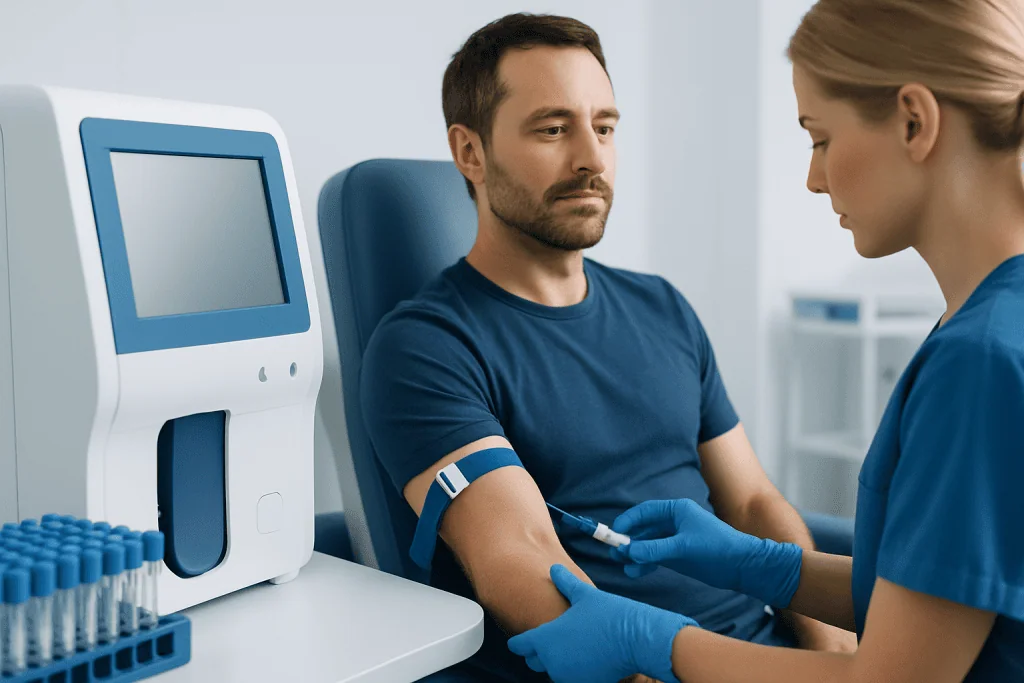
The usual answer to how to check testosterone levels is a blood test ordered by a qualified clinician. For most adults, the first test measures total testosterone, meaning the overall amount of testosterone circulating in the blood. The sample is commonly taken in the early morning, often between about 7 a.m. and 10 a.m., because testosterone follows a daily rhythm and is generally highest after sleep.
Many concerns about testosterone are not caused by a lasting hormonal problem. Temporary changes can occur with poor sleep, acute illness, heavy alcohol use, intense training, emotional stress, undernutrition, and some medicines. For this reason, an abnormal result often needs to be repeated on a separate morning before conclusions are made or treatment is considered.
Home collection kits may be available in some locations, but they cannot replace clinical interpretation. Testing through a medical service is particularly helpful when symptoms are ongoing, results are outside the laboratory reference range, or a person has conditions that can affect hormone levels, such as obesity, diabetes, pituitary disease, or testicular disease.
What testosterone does in the body
Testosterone is a sex hormone produced mainly in the testes in males and, in smaller amounts, in the ovaries and adrenal glands in females. Everyone has testosterone, although typical levels and the effects of changes differ by sex, age, stage of puberty, and individual health. It supports sexual development, reproductive function, bone strength, muscle maintenance, red blood cell production, and aspects of mood and energy.
In males, testosterone rises during puberty and helps drive changes such as genital development, facial and body hair growth, voice deepening, muscle development, and sperm production. Levels commonly decline gradually with age, but ageing alone does not explain every symptom. New or troubling symptoms should not automatically be attributed to testosterone without a broader health assessment.
In females, testosterone contributes to sexual wellbeing, bone and muscle health, and other body functions. Testing may be considered when there are signs of excess androgen activity, such as new coarse facial hair, severe acne, scalp hair thinning, irregular periods, or fertility concerns. The appropriate tests and interpretation are different from those used to assess possible testosterone deficiency in males.
Symptoms that may lead to testosterone testing

In adult males, possible symptoms of low testosterone can include reduced sexual desire, fewer spontaneous or morning erections, erectile difficulties, reduced fertility, low energy, lower physical strength, depressed mood, irritability, difficulty concentrating, reduced shaving frequency, or loss of body hair. Some people may notice reduced muscle mass, increased body fat, breast enlargement, low-trauma fractures, or anemia. These symptoms are common and can have many causes, so they are not proof of low testosterone by themselves.
Symptoms can overlap with sleep apnea, depression, thyroid disorders, chronic pain, diabetes, medication effects, relationship stress, alcohol or substance use, and other medical conditions. Erectile difficulties, for example, can relate to blood vessel, nerve, psychological, medication-related, or hormonal factors. A clinician can help identify the most likely contributors rather than focusing on one hormone result alone.
In children and teenagers, a doctor may investigate testosterone if puberty appears substantially delayed or if expected pubertal changes are not progressing. In females, testing may be part of an assessment for androgen excess rather than low testosterone. Menstrual changes, acne, increased body hair, and unexplained changes in weight or hair growth deserve medical discussion, especially when symptoms develop quickly.
Why testosterone results can be low or high
Persistently low testosterone in males may result from a problem in the testes, sometimes called primary hypogonadism, or from reduced hormone signaling from the brain and pituitary gland, sometimes called secondary hypogonadism. Causes can include genetic conditions, testicular injury or infection, chemotherapy or radiation exposure, pituitary conditions, long-term opioid use, high-dose corticosteroids, obesity, chronic systemic illness, and severe sleep disruption.
Testosterone may also be temporarily lower during an acute illness or while recovering from surgery. Significant weight changes, restrictive eating patterns, excessive endurance exercise, and heavy alcohol use may contribute. Identifying a reversible influence can be important, as managing sleep, nutrition, underlying illness, or medication concerns may improve wellbeing and sometimes hormone results.
Higher-than-expected testosterone results may occur with prescribed testosterone treatment, anabolic steroid use, certain ovarian or adrenal disorders, or laboratory variation. In females, androgen excess may be associated with conditions such as polycystic ovary syndrome, though testing and diagnosis require careful clinical assessment. A result outside the expected range should be reviewed in context rather than interpreted in isolation.
What happens during diagnosis
A doctor begins by discussing symptoms, their timing, puberty and fertility history where relevant, sleep, exercise, nutrition, alcohol or drug use, current medicines, and past medical conditions. The physical examination may include weight and blood pressure assessment and, when appropriate, evaluation of body hair pattern, breast tissue, testicular size, and signs of other hormonal conditions. This sensitive assessment should be carried out respectfully and with informed consent.
If low testosterone is suspected in an adult male, total testosterone is generally measured on at least two separate early-morning occasions when the person is well. Laboratories use different methods and reference ranges, so results should be interpreted against the range shown on that laboratory report. A clinician considers whether the level is consistently low and whether symptoms are consistent with testosterone deficiency.
Further tests may include free testosterone or sex hormone-binding globulin (SHBG), particularly when total testosterone may be misleading. Luteinizing hormone and follicle-stimulating hormone can help show whether the cause may involve the testes or pituitary signaling. Depending on the situation, testing may also include prolactin, thyroid function, blood count, iron studies, glucose or lipid tests, sperm testing, or pituitary imaging. These steps help guide appropriate care and avoid treating an unconfirmed diagnosis.
Understanding results and treatment options
A normal testosterone result does not mean symptoms are unimportant. It means the care team may need to look for other explanations, such as sleep problems, mental health concerns, thyroid disease, anemia, medication side effects, or metabolic conditions. Conversely, a mildly low result after a sleepless night or recent illness may not reflect a permanent problem. Repeat testing is a practical safeguard against unnecessary worry and treatment.
When a confirmed underlying cause is found, treatment focuses on that cause whenever possible. This may involve improving sleep and management of sleep apnea, addressing obesity or diabetes, reviewing medicines with the prescribing clinician, treating a pituitary or testicular condition, or receiving support for nutrition, mood, or substance use. Regular movement, resistance exercise, balanced nutrition, sufficient sleep, and limiting excess alcohol support overall health, although they should not be presented as a substitute for medical care when a disorder is present.
Testosterone replacement therapy may be appropriate for selected people with confirmed testosterone deficiency and relevant symptoms. It is available in forms such as gels, injections, patches, or other preparations, depending on local practice and individual needs. It requires follow-up because it can affect red blood cell levels, fertility, prostate-related monitoring needs, and other aspects of health. Testosterone treatment can reduce sperm production and is generally not the right approach for someone trying to conceive without specialist advice.
When to seek medical care
A routine appointment is appropriate for persistent changes in sexual function, energy, mood, body composition, fertility, menstrual cycles, acne, or hair growth. It is especially useful to seek advice before starting over-the-counter “testosterone boosters,” anabolic steroids, or testosterone obtained without a prescription. These products may be ineffective, contaminated, or unsafe, and non-prescribed testosterone can suppress the body’s own hormone production and affect fertility.
More urgent medical review is needed for severe or sudden testicular pain or swelling, a new testicular lump, severe headache with visual changes, fainting, confusion, or symptoms that suggest a serious illness. A child or teenager with markedly delayed puberty should also be assessed by a pediatrician or pediatric endocrinologist. These signs do not always indicate a serious condition, but timely evaluation is important.
For international patients who need further assessment, Acibadem International’s multidisciplinary specialists and JCI-accredited hospitals can evaluate hormonal symptoms and coordinate testing and treatment plans. The most useful next step is to discuss symptoms and appropriate blood testing with a qualified doctor, who can explain what the results mean for the individual.
Frequently asked questions
Can testosterone levels be checked at home?
Some services offer home blood-collection kits, but results still need professional interpretation. Testosterone changes through the day and may be temporarily affected by illness, sleep, diet, exercise, and medicines. A clinician can determine whether repeat testing or additional hormone tests are needed.
What time of day should testosterone be tested?
Testosterone is usually tested in the early morning, often between 7 a.m. and 10 a.m. This is when levels are commonly highest, particularly in younger and middle-aged males. A doctor may give different instructions based on the person’s age, work schedule, health status, and the laboratory used.
Do I need to fast before a testosterone blood test?
Fasting is not always required for a testosterone test alone. However, a clinician may request fasting if other tests, such as glucose or cholesterol testing, are being done at the same time. It is best to follow the instructions from the laboratory or healthcare team.
Can one low testosterone test confirm low testosterone?
Usually, no. Doctors generally confirm a low result with another early-morning test on a different day, especially if the first level is only mildly low. Diagnosis also depends on whether a person has symptoms that fit testosterone deficiency.
Can poor sleep lower testosterone?
Yes, poor or insufficient sleep can temporarily affect testosterone levels and can also cause fatigue, low mood, and reduced sexual interest. Sleep disorders, including obstructive sleep apnea, may contribute to persistent symptoms. Discussing sleep quality with a doctor is an important part of a hormone assessment.
Should a person take testosterone if they feel tired?
Tiredness alone is not enough to determine whether testosterone treatment is appropriate. Fatigue has many possible causes, including sleep problems, anemia, thyroid conditions, depression, infections, and medication effects. Testosterone should only be considered after a clinician confirms a relevant deficiency and discusses benefits, risks, fertility plans, and monitoring.
References
- Endocrine Society
- American Urological Association
- National Institute of Diabetes and Digestive and Kidney Diseases
- Mayo Clinic
- National Health Service
This article is for general information only and is not a substitute for professional medical advice. Please consult a qualified doctor about your individual situation.
Explore treatments in Turkey — costs, top hospitals & a free quote
JCI-accredited · board-certified surgeons · reply within 24h
Add us as a Preferred Source to see more of our trusted health content across Google Search, AI Overviews and Discover.
Check your numbers in seconds
BMI, calories, due date, blood pressure and 30+ more clinical calculators — free, instant, doctor-reviewed ranges.