How to Cure Achilles Tendonitis Fast? Causes, Explanations, and Next Steps

The fastest safe approach combines relative rest, ice, footwear support, and gradual loading rather than complete immobilization for everyone. Most Achilles tendonitis is not dangerous, but a sudden pop, major weakness, or inability to push off the foot can signal a tear.
Key Takeaways
- The fastest safe approach combines relative rest, ice, footwear support, and gradual loading rather than complete immobilization for everyone.
- Most Achilles tendonitis is not dangerous, but a sudden pop, major weakness, or inability to push off the foot can signal a tear.
- Doctors diagnose Achilles tendonitis mainly through history and physical examination, with ultrasound or MRI used when needed.
- Eccentric and calf-strengthening exercises are often central to recovery and prevention of repeat symptoms.
- Persistent pain may reflect Achilles tendinopathy, bursitis, or a partial tear rather than simple overuse irritation.
How to cure achilles tendonitis fast usually means calming the tendon down quickly, then rebuilding strength safely so the pain does not keep returning. In many people, Achilles tendonitis improves with activity changes, ice, supportive shoes, and a structured rehabilitation plan, but sudden severe pain, marked swelling, or trouble walking should be assessed by a doctor.
How to ease Achilles tendonitis quickly and safely
For people asking how to cure achilles tendonitis fast, the most effective first steps are usually to reduce activities that overload the tendon, apply ice for short periods, wear supportive shoes, and begin a guided recovery plan instead of trying to push through pain. This problem is often manageable and commonly improves without surgery, especially when treated early.
The key is not simply making pain disappear for a day or two, but calming irritation while protecting the tendon from further strain. Gentle movement is often helpful, while repeated sprinting, uphill running, jumping, or sudden increases in training can delay healing.
Some symptoms need faster medical review. A sudden sharp pain in the back of the ankle, a popping sensation, rapid swelling, bruising, or difficulty standing on tiptoe may suggest a partial or complete tear rather than routine tendonitis. If symptoms are severe or not improving, a doctor can confirm whether it is true Achilles tendonitis, an Achilles tendon rupture, bursitis, or another source of heel pain.
When assessment is needed, doctors usually begin with a symptom history, foot and ankle examination, and simple movement tests. Imaging is not always necessary, but ultrasound or MRI may be used if the diagnosis is unclear, symptoms have lasted a long time, or a tear is suspected.
What Achilles tendonitis is
The Achilles tendon is the strong cord that connects the calf muscles to the heel bone. It helps the foot push off the ground during walking, climbing stairs, running, and jumping. Because it handles high loads, it can become painful when stress on the tendon rises faster than it can adapt.
Although many people use the term Achilles tendonitis, ongoing pain is often better described as Achilles tendinopathy. Tendonitis suggests active inflammation, while tendinopathy is a broader term that can include small areas of tendon breakdown, thickening, stiffness, and pain related to overuse. This distinction matters because treatment usually focuses on controlled loading and rehabilitation, not rest alone.
Symptoms may occur in the mid-portion of the tendon, a few centimeters above the heel, or where the tendon inserts into the heel bone. Insertional symptoms can be more sensitive to shoe pressure and to activities that force the ankle into deep upward bending.
Achilles pain may also be confused with related conditions such as retrocalcaneal bursitis or plantar fasciitis. A careful exam helps identify which tissues are involved and guides the most appropriate recovery plan.
Common symptoms and warning signs
Typical Achilles tendonitis symptoms include pain or stiffness in the back of the heel or lower calf, especially with the first steps in the morning or at the start of exercise. Many people notice that the area warms up and feels somewhat better as they move, then becomes more painful again later in the day or after activity.
The tendon may feel tender to touch, thickened, or mildly swollen. Climbing stairs, running, jumping, or walking uphill often increases discomfort. Some people develop a burning or aching sensation after sports, while others feel a persistent tightness that does not fully settle.
It is important to watch for symptoms that are less typical of uncomplicated tendonitis. Red flags include a sudden snapping sensation, abrupt weakness, significant swelling, bruising, fever, redness spreading across the skin, or pain severe enough to limit normal walking. These findings deserve prompt medical attention.
- Morning stiffness in the tendon or heel
- Pain with running, jumping, or pushing off the foot
- Tenderness 2 to 6 cm above the heel or at the tendon insertion
- Visible thickening or mild swelling along the tendon
- Urgent review if there is a pop, bruising, or inability to stand on tiptoe
Why it happens: causes and risk factors
Achilles tendonitis usually develops when the tendon is asked to do more work than it is ready for. This often happens after a sudden increase in training distance, speed, hills, jumping, or frequency of exercise. Weekend sports, returning to activity too quickly after a break, and changing footwear can also trigger symptoms.
Tight calf muscles, limited ankle flexibility, weakness in the calf and hip muscles, and poor movement mechanics may all increase strain on the tendon. Flat feet, very high arches, and shoes with inadequate cushioning or support may contribute in some people, although they are not the sole cause.
Age can play a role because tendons become less adaptable over time. People who run, play court sports, dance, or work in jobs with long periods of standing may be more likely to develop symptoms. Certain medications, including fluoroquinolone antibiotics, have been associated with tendon injury in some cases, and inflammatory conditions can occasionally affect the Achilles region.
Sometimes persistent pain reflects more than simple overuse. If symptoms have been going on for weeks, a clinician may look for tendon degeneration, bursitis, a bone spur, or a partial tear. In selected cases, supportive treatment may include physical therapy and rehabilitation to restore tendon capacity and reduce repeat flare-ups.
What a doctor does to diagnose it
Diagnosis usually starts with a conversation about when the pain began, how activity affects it, whether there was a sudden injury, and what makes symptoms better or worse. Doctors also ask about sports, shoe changes, past ankle problems, and medications that may affect tendons.
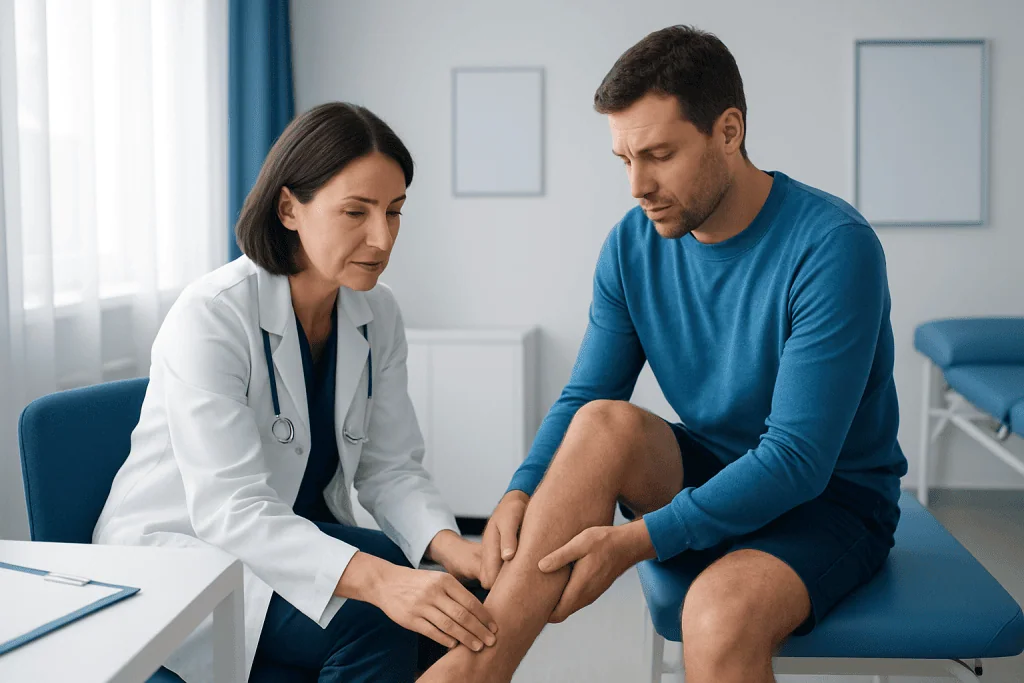
During the examination, the doctor checks for tenderness, swelling, thickening, ankle range of motion, calf tightness, and strength during heel raises. They may gently feel along the tendon to identify the painful area and look for signs of a rupture, such as a gap in the tendon or marked weakness with pushing off.
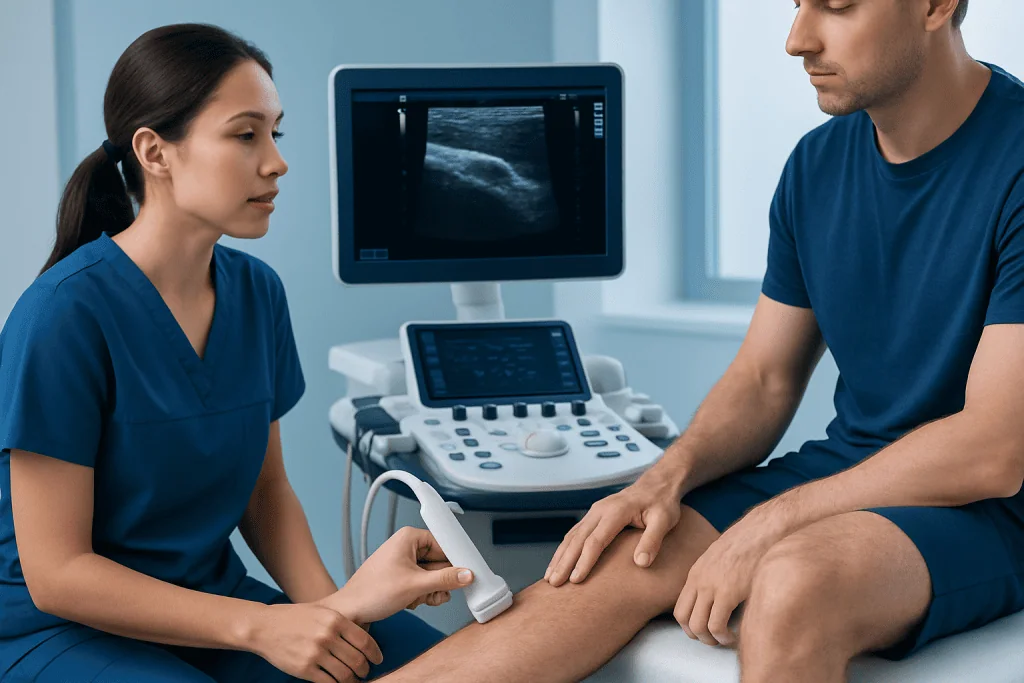
Ultrasound can show tendon thickening, inflammation around the tendon, and some tears. MRI is more commonly used if symptoms are prolonged, if surgery is being considered, or when the diagnosis remains uncertain. X-rays may help identify heel spurs or other bone-related contributors, especially in insertional pain.
If there is significant injury, severe weakness, or concern for a rupture, referral for orthopedic assessment may be appropriate. The aim is to distinguish irritation that can be treated conservatively from structural damage that needs closer follow-up.
Treatment options that support faster recovery
The fastest reliable treatment is not a single medicine or procedure. It is a combination of reducing tendon overload, controlling pain, and rebuilding strength gradually. In the early phase, many clinicians recommend relative rest rather than complete bed rest. That means avoiding the activities that trigger sharp pain while keeping up comfortable daily movement and lower-impact exercise when possible.
Ice may help reduce pain after activity, and some people benefit from short-term use of pain relief recommended by a doctor. Supportive footwear, heel lifts in selected cases, and avoiding worn-out shoes can reduce strain on the tendon. If running is painful, temporary alternatives such as cycling or swimming may allow fitness to continue while symptoms settle.
Rehabilitation exercises are usually central to recovery. Calf strengthening, especially eccentric or slow heavy-load programs, can help the tendon adapt. These exercises should be individualized, because insertional pain may require a different range of motion than mid-portion pain. Stretching can help some people, but aggressive stretching into pain may irritate the tendon further.
If symptoms do not improve, a specialist may consider additional options such as bracing, a walking boot for a limited period, shockwave therapy in selected cases, or image-guided evaluation. Surgery is generally reserved for chronic cases that do not respond to well-supervised conservative care or for major tears. When significant damage is present, Achilles tendon repair may be discussed.
Self-care, recovery timeline, and preventing it from coming back
Recovery time varies. Mild symptoms caught early may improve within a few weeks, while stubborn tendinopathy can take months to settle fully. Trying to return to full activity too quickly is one of the main reasons pain lingers or returns. A safer approach is to increase activity step by step, with attention to pain during exercise and the tendon’s response the next morning.
Helpful self-care measures include wearing stable shoes, warming up before exercise, building calf strength gradually, and avoiding sudden spikes in running or jumping volume. People often do better when they track training changes and allow rest or lighter days after harder sessions.
General prevention also includes calf and ankle mobility work, hip and core strengthening, and replacing worn athletic shoes as needed. If a sport or work activity repeatedly triggers symptoms, a physiotherapist can help identify technique or loading issues that may be contributing.
Near the end of recovery, the focus usually shifts from pain relief to resilience. The tendon should be able to tolerate walking, heel raises, and sport-specific tasks without significant next-day worsening. Acibadem International’s multidisciplinary specialists in JCI-accredited hospitals diagnose and treat Achilles tendon conditions for international patients, including cases that need imaging, rehabilitation, or specialist orthopedic care.
When to seek medical care
Medical review is advisable if Achilles pain lasts more than a week or two despite activity changes, if it keeps returning, or if walking and daily activities are becoming difficult. Early assessment can be helpful for athletes, older adults, and anyone with diabetes, inflammatory arthritis, or a history of tendon problems.
Prompt care is more important if there is a sudden pop in the tendon, immediate weakness, bruising, marked swelling, or inability to rise onto the toes on the affected side. These symptoms can indicate a partial or complete rupture and should not be treated as routine overuse pain.
People should also seek care if there is fever, spreading redness, severe nighttime pain, numbness, or symptoms that do not fit a typical overuse pattern. A doctor can rule out infection, nerve involvement, fracture-related problems, or other causes of heel and ankle pain.
Even when symptoms are not urgent, professional guidance can shorten recovery by matching treatment to the exact problem. This may include exam-based diagnosis, imaging when needed, and referral for sports injuries rehabilitation if pain is limiting a safe return to exercise.
Frequently asked questions
Can Achilles tendonitis heal on its own?
Mild Achilles tendonitis can improve with reduced strain, supportive footwear, and time. However, symptoms often return if the tendon is not gradually strengthened, so guided rehabilitation is commonly important.
Should a person keep walking with Achilles tendonitis?
Gentle walking is often acceptable if it does not sharply increase pain or cause worse stiffness the next day. Activities that involve sprinting, jumping, or uphill walking may need to be reduced temporarily while the tendon settles.
Is ice or heat better for Achilles tendon pain?
Ice is often more helpful in the early painful phase or after activity because it can ease discomfort. Heat may feel soothing for stiffness before movement, but it does not replace rehabilitation or load management.
How long does Achilles tendonitis take to heal?
Recovery can range from a few weeks for mild early cases to several months for persistent tendinopathy. The timeline depends on how irritated the tendon is, how quickly aggravating activities are adjusted, and whether strengthening is progressed appropriately.
What is the fastest exercise-based treatment for Achilles tendonitis?
There is no single fastest exercise for everyone, but calf-loading programs are a common foundation of treatment. A clinician or physiotherapist can choose the right type and range of motion based on whether the pain is in the middle of the tendon or at the heel insertion.
Can Achilles tendonitis turn into a rupture?
Most cases do not progress to rupture, especially when overload is recognized early and managed well. Still, ongoing pain, tendon degeneration, certain medications, or a sudden forceful movement can raise concern, so a pop or sudden weakness should be assessed promptly.
References
- American Academy of Orthopaedic Surgeons
- National Institute for Health and Care Excellence
- American Orthopaedic Foot & Ankle Society
- Mayo Clinic
- National Health Service
This article is for general information only and is not a substitute for professional medical advice. Please consult a qualified doctor about your individual situation.
Joint and spine care in Turkey — expert assessment & treatment
JCI-accredited · board-certified surgeons · reply within 24h
Add us as a Preferred Source to see more of our trusted health content across Google Search, AI Overviews and Discover.

More from the Health Library



Related Specialists

Dr. Çağlar Yazıcıoğlu
Gynecology & Obstetrics
Assoc. Prof. Dr. Fatih Aygün
Pediatric Intensive Care Unit
Prof. Dr. Ayşe Yenigün
Pediatric Allergy
Dr. Seval Karakaya Atınçer
Anesthesiology