How to Dissolve Bone Spurs Naturally? Here Is What the Evidence Says

Bone spurs, also called osteophytes, generally do not dissolve with home remedies, supplements, or diet changes. Many bone spurs are harmless and are found incidentally on X-rays or other scans.
Key Takeaways
- Bone spurs, also called osteophytes, generally do not dissolve with home remedies, supplements, or diet changes.
- Many bone spurs are harmless and are found incidentally on X-rays or other scans.
- Natural measures such as activity modification, physiotherapy, stretching, weight management, and supportive footwear can ease symptoms in some people.
- Red flags include severe pain, sudden weakness, numbness, loss of bladder or bowel control, fever, or inability to bear weight.
- Doctors diagnose troublesome bone spurs based on symptoms, physical examination, and imaging such as X-ray, ultrasound, CT, or MRI.
- If symptoms persist, treatments may include medication, injections, physical therapy, or surgery in selected cases.
Bone spurs usually do not dissolve naturally, and many never need treatment because they cause no symptoms. When they do cause pain or stiffness, the goal is usually to reduce irritation, improve movement, and treat the underlying joint problem rather than trying to "melt" the spur away.
Overview: Can Bone Spurs Be Dissolved Naturally?
For most people, the short answer to how to dissolve bone spurs naturally is that bone spurs usually do not dissolve on their own or with natural remedies. A bone spur is an extra area of bone growth, also called an osteophyte, that forms over time where joints, tendons, or ligaments are under repeated stress. Many are harmless and cause no symptoms at all.
That is why a bone spur itself is often not the main problem. Pain usually happens when the spur irritates nearby tissue, narrows a space, or develops alongside arthritis, inflammation, or tendon wear. In those cases, conservative care may help reduce discomfort and improve movement even if the spur remains visible on imaging.
This distinction matters because many online claims suggest that certain foods, supplements, massage tools, or detox methods can “break down” or “dissolve” bone spurs. Current medical evidence does not support those claims. Natural and non-surgical care can still be useful, but mainly for symptom control, function, and slowing the underlying wear-and-tear process.
Bone spurs can develop in the spine, heel, shoulder, knee, hip, hands, and other joints. They may be linked with age-related joint changes, overuse, prior injury, poor mechanics, or inflammatory conditions. When symptoms are ongoing, a doctor can help confirm whether the spur is truly the source of pain or whether another condition, such as arthritis, tendon disease, or nerve compression, is responsible.
Common Symptoms and Why Many Bone Spurs Cause No Trouble
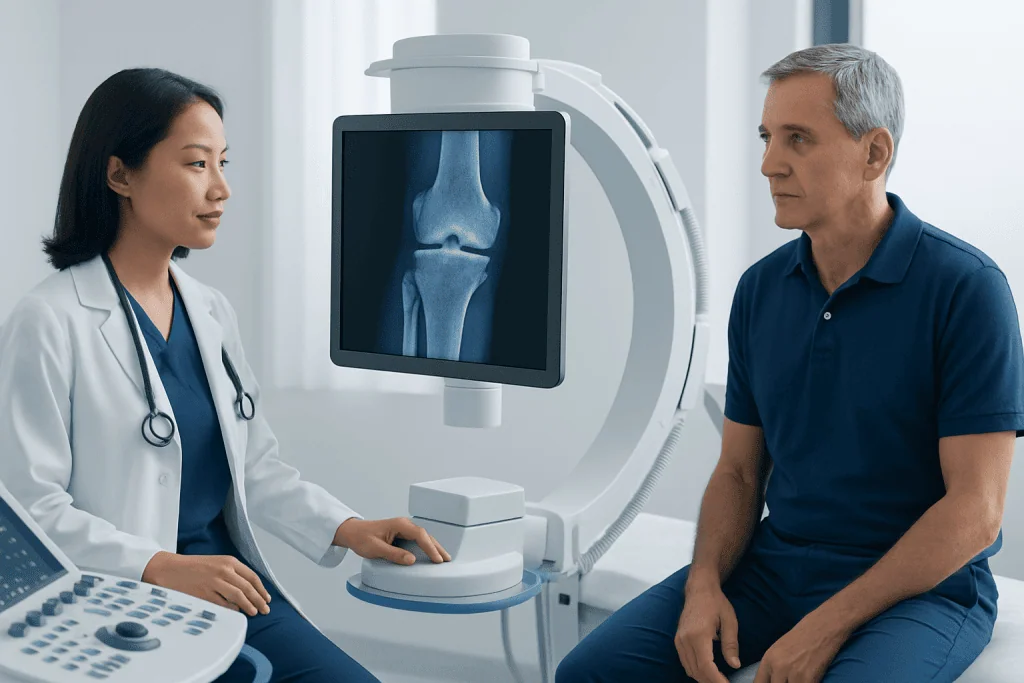
Many bone spurs are discovered by chance during an X-ray done for another reason. In these cases, they often do not need any treatment. A person may have a heel spur, a small spur in the spine, or bony changes around a joint without ever noticing them.
When symptoms do occur, they depend on the location. A spur in the heel may be linked with pain during the first steps in the morning, especially if plantar fascia irritation is also present. A spur in the neck or lower back may contribute to stiffness, localized pain, or symptoms from nerve irritation. Spurs around the shoulder, knee, or hip can sometimes limit movement or create a catching sensation.
Symptoms may include:
- Localized pain or tenderness
- Joint stiffness
- Reduced range of motion
- Swelling from nearby tissue irritation
- Numbness, tingling, or weakness if a nerve is compressed
- Pain with specific movements, walking, or prolonged standing
It is also important to know that the size of a bone spur does not always match the level of pain. A small spur can be bothersome if it presses on a sensitive structure, while a larger one may cause no symptoms at all. This is one reason self-diagnosis can be misleading and why a clinical assessment is helpful when pain lasts or worsens.
What Causes Bone Spurs and Who Is More Likely to Get Them?

Bone spurs usually form as the body responds to repeated stress, friction, or joint instability. Over time, extra bone may develop at the edges of a joint or where tendons and ligaments attach. This is commonly part of the broader process of osteoarthritis and age-related degeneration, but it can also happen after injury or from repetitive movement patterns.
Common contributors include joint wear, cartilage loss, chronic inflammation, abnormal posture or gait, previous fractures, high-impact sports, and jobs that involve repeated lifting or kneeling. Excess body weight can also increase pressure on weight-bearing joints such as the knees, hips, and feet.
Some bone spurs are associated with specific conditions affecting tendons or fascia. For example, a heel spur may occur with chronic strain of the plantar fascia, and shoulder spurs may be seen with rotator cuff problems or impingement. In the spine, bone spurs may develop with disc degeneration and may sometimes contribute to narrowing around the nerves.
Risk tends to rise with age, but younger adults can also develop bone spurs, especially with repetitive athletic activity, structural foot differences, obesity, inflammatory joint disease, or prior trauma. Understanding the underlying cause helps guide treatment, because managing the associated condition is often more effective than focusing on the spur alone.
What the Evidence Says About Natural Remedies
Current evidence does not show that natural remedies can dissolve a true bony growth. No diet, herbal product, supplement, vinegar preparation, or massage technique has been proven to remove a bone spur once it has formed. This can be disappointing, but it also helps set realistic goals and reduce exposure to unsupported or risky treatments.
That said, conservative and lifestyle-based measures can make a meaningful difference in symptoms. Rest from aggravating activities, structured stretching, strengthening exercises, weight management, and supportive shoes or inserts may reduce mechanical stress around the affected area. Cold packs or heat may also provide symptom relief for some people depending on whether pain is linked more to inflammation or muscle tightness.
Physical therapy is often one of the most useful non-surgical approaches. A therapist may work on flexibility, joint mechanics, balance, core strength, and movement patterns that reduce pressure on painful tissues. For foot and heel symptoms, calf and plantar fascia stretching may help. For shoulder, hip, or spine symptoms, exercise plans are tailored to the person and diagnosis.
Patients should be cautious with supplements marketed for “bone spur removal.” Some may interact with medicines or cause side effects, and evidence for benefit is often weak. If symptoms are persistent, it is safer to discuss them with a qualified clinician rather than relying on unproven claims. In some cases, evaluation also helps rule out related problems such as lumbar disc herniation when pain radiates into the leg.
How Doctors Diagnose a Painful Bone Spur
Because many bone spurs are harmless, diagnosis starts with symptoms rather than imaging alone. A doctor usually asks where the pain is, what movements trigger it, how long it has been present, and whether there are warning signs such as weakness, fever, recent injury, or nighttime pain. A physical examination helps assess tenderness, range of motion, swelling, gait, strength, and any signs of nerve involvement.
Imaging may be used to confirm the diagnosis and look for the underlying cause. X-rays are often the first test because they show bony changes well. Ultrasound can be useful for some tendon-related problems, while CT gives more detail about bone structure. MRI is helpful when soft tissues, nerves, discs, or joint cartilage need closer assessment.
The key point is that doctors do not usually treat an image in isolation. A visible bone spur may be unrelated to the symptoms, while another problem may be the real cause. For example, heel pain may come mainly from plantar fascia irritation, and shoulder pain may relate more to tendon inflammation than to the bony prominence itself.
If symptoms involve nerve pressure, specialists may recommend further testing or referral. Depending on the area affected, care may involve orthopedics, physical medicine and rehabilitation, neurology, pain management, or podiatry. In more complex cases, tools such as MRI scanning can help clarify whether the spur is narrowing a space or whether another structure is inflamed or injured.
Treatment Options When Symptoms Persist
When home care is not enough, treatment focuses on reducing pain, maintaining mobility, and treating the associated joint or tendon condition. This may begin with supervised exercise, temporary activity modification, anti-inflammatory medicines when appropriate, bracing or orthotics, and formal rehabilitation. For many people, these measures provide enough relief to avoid more invasive treatment.
If inflammation is a major part of the problem, doctors may consider targeted injections in selected cases. The aim is not to dissolve the spur but to reduce irritation around it. For example, a painful joint, tendon sheath, or bursa may improve after image-guided treatment when carefully chosen for the right diagnosis.
Surgery is usually reserved for cases in which symptoms remain significant despite conservative treatment or when a spur is clearly compressing a nerve or mechanically limiting function. The procedure depends on the location and may involve removing the spur, enlarging a narrowed space, or addressing related joint damage. In some people with advanced degeneration, broader procedures may be discussed, such as knee replacement or hip replacement if the main issue is severe joint arthritis rather than the spur alone.
Care should be individualized. A person with mild heel pain does not need the same approach as someone with progressive weakness from a spinal spur. Near the end of the care pathway, some international patients choose multidisciplinary assessment at Acibadem International, where specialists in orthopedics, rehabilitation, and imaging in JCI-accredited hospitals diagnose and treat bone spur-related conditions.
Prevention and Self-care That May Help
Although it is not always possible to prevent bone spurs completely, some habits may lower joint stress and help reduce symptoms. Maintaining a healthy weight can ease load on the feet, knees, hips, and spine. Regular low-impact activity, such as walking, cycling, swimming, or guided strengthening, supports joint function and muscle balance.
Footwear and ergonomics also matter. Cushioned, well-fitting shoes may help people with foot or heel symptoms, while good workstation setup and body mechanics may reduce repetitive strain in the neck, shoulders, and back. Warm-up routines before exercise and gradual training progression are especially important for people returning to sports or physically demanding work.
Self-care strategies often include:
- Gentle stretching and strengthening based on the affected area
- Short-term reduction of activities that trigger sharp pain
- Use of ice or heat for comfort
- Supportive shoes, insoles, or braces when recommended
- Attention to posture, lifting technique, and movement patterns
- Following a tailored rehabilitation program
If pain is frequent, it is wise to avoid aggressive self-treatment such as repeated deep tissue pressure over a painful spur, unverified injections, or prolonged immobilization without guidance. A clinician or physiotherapist can help determine which measures are likely to help and which may worsen irritation.
When to Seek Medical Care
Because many bone spurs are harmless, not every ache requires urgent review. Still, medical advice is important when pain lasts more than a few weeks, keeps returning, interferes with sleep, limits walking or daily activity, or does not improve with reasonable self-care. An assessment is also helpful if there is uncertainty about the diagnosis or concern that another joint, tendon, or nerve problem may be present.
More urgent evaluation is needed for red flags such as sudden weakness, numbness, pain after a significant injury, fever, unexplained weight loss, a hot swollen joint, or loss of bladder or bowel control. These features may point to nerve compression, fracture, infection, or another condition that needs prompt treatment.
People with diabetes, inflammatory arthritis, poor circulation, osteoporosis, or a history of cancer should also seek medical advice sooner if new bone or joint pain develops. These conditions can change the range of possible causes and influence the safest treatment plan.
A timely review is reassuring as well as practical. In many cases, the problem can be managed conservatively once the source of pain is clearly identified. If symptoms are more complex, doctors can guide next steps, which may include imaging, rehabilitation, injections, or referral for procedures such as arthroscopy when appropriate.
Frequently asked questions
Can bone spurs go away on their own?
Bone spurs usually do not disappear once they have formed. However, symptoms can improve or even settle completely when inflammation is controlled and stress on the area is reduced.
What is the best natural treatment for bone spurs?
There is no natural treatment proven to dissolve a bone spur. The most helpful non-surgical steps are usually weight management, appropriate exercise, stretching, supportive footwear, and physical therapy tailored to the affected area.
Are heel spurs the main cause of heel pain?
Not always. Many people with heel spurs have no pain, and heel discomfort often relates more to irritation of the plantar fascia or nearby soft tissues than to the spur itself.
Do supplements help dissolve bone spurs?
There is no strong medical evidence that supplements can dissolve bone spurs. Some products may still be used for general joint health, but they should not replace proper diagnosis or evidence-based treatment.
When is surgery needed for a bone spur?
Surgery is usually considered only when symptoms remain significant despite conservative care or when a spur clearly compresses a nerve or limits joint function. The decision depends on the location, severity of symptoms, and the underlying joint problem.
How do doctors know whether a bone spur is causing the pain?
Doctors compare the person's symptoms and physical examination findings with imaging results. This matters because a visible spur on an X-ray may be unrelated to the pain, while another issue such as arthritis, tendon irritation, or nerve compression may be the main cause.
References
- American Academy of Orthopaedic Surgeons
- National Institute of Arthritis and Musculoskeletal and Skin Diseases
- National Health Service
- American College of Rheumatology
- Mayo Clinic
This article is for general information only and is not a substitute for professional medical advice. Please consult a qualified doctor about your individual situation.
Joint and spine care in Turkey — expert assessment & treatment
JCI-accredited · board-certified surgeons · reply within 24h
Add us as a Preferred Source to see more of our trusted health content across Google Search, AI Overviews and Discover.

More from the Health Library



Related Specialists

Dr. Elidor Agolli
Interventional Radiology
Fzt. Atilla Murat Ünver
Physical Medicine & Rehabilitation
Prof. Dr. Ertap Akoğlu
Otorhinolaryngology
Assoc. Prof. Dr. Fahrettin Kılıç
Radiology