How to Do Pilates? Here Is What the Evidence Says
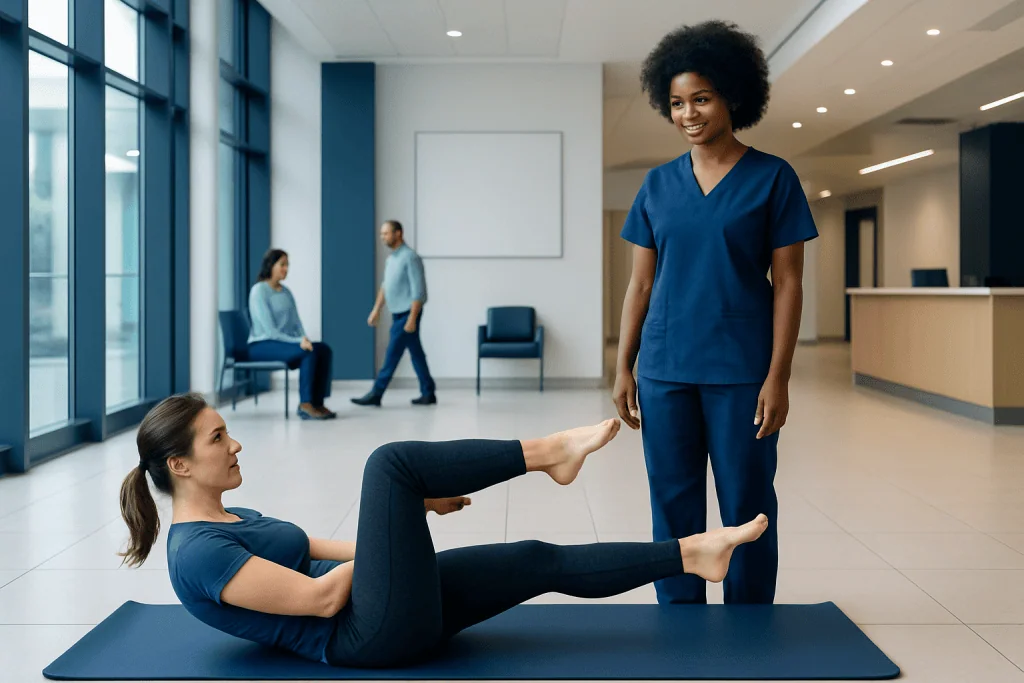
Pilates focuses on breathing, alignment, core control, and precise movement rather than speed. Beginners often do best with basic mat exercises before trying advanced routines or equipment.
Key Takeaways
- Pilates focuses on breathing, alignment, core control, and precise movement rather than speed.
- Beginners often do best with basic mat exercises before trying advanced routines or equipment.
- Mild muscle effort is expected, but sharp pain, numbness, dizziness, or chest discomfort are not normal.
- Good technique matters more than doing many repetitions.
- People with pregnancy, osteoporosis, recent surgery, or spine and joint conditions may need professional guidance.
How to do Pilates safely usually begins with slow, controlled movements, steady breathing, and attention to posture rather than intensity. For most people, Pilates is a gentle, low-impact form of exercise, but pain, dizziness, chest symptoms, or worsening back or joint problems should prompt medical review before continuing.
Overview: What Pilates Is and How to Start
How to do Pilates can be answered simply: start with slow, controlled exercises that coordinate breathing, posture, and core muscle engagement. For many people, Pilates is a safe and low-impact way to improve strength, balance, flexibility, and body awareness. It is usually less about exhausting the body and more about moving with precision.
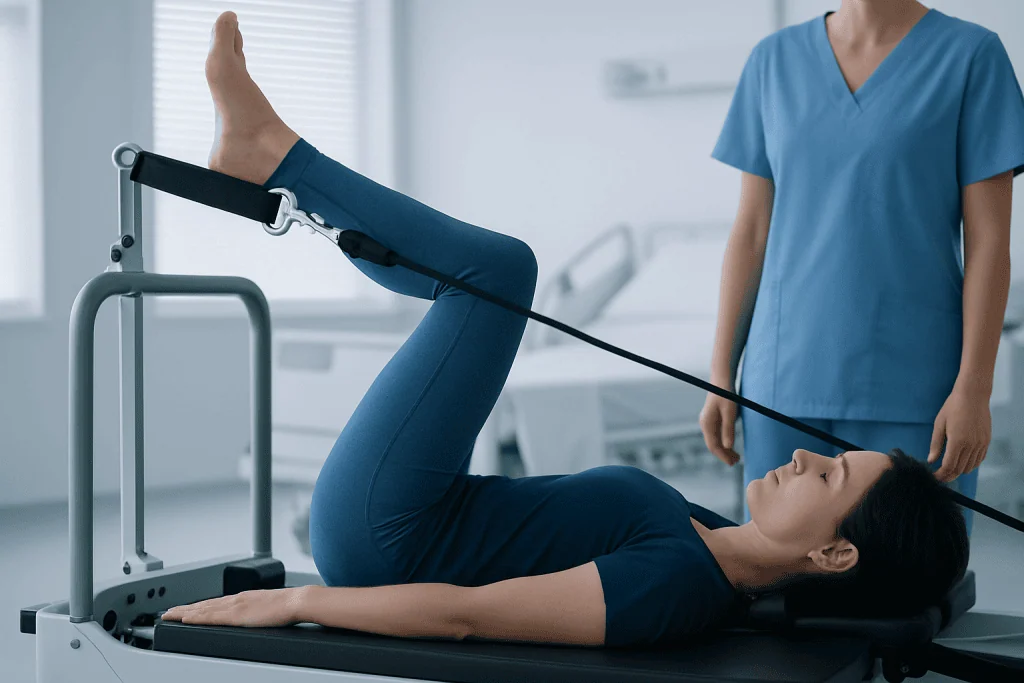
Pilates can be done on a mat or with specialized equipment such as a reformer. Beginners generally start with mat-based exercises because they are more accessible and easier to learn step by step. A short routine done consistently is often more useful than a long session performed with poor form.
The basic principles of Pilates include breathing, concentration, control, centering, precision, and smooth movement. In practical terms, this means keeping the spine and pelvis in a comfortable, supported position, moving with intention, and avoiding unnecessary strain in the neck, shoulders, or lower back.
Evidence suggests Pilates may help improve core endurance, flexibility, posture, and some types of back pain when taught appropriately. Like any exercise method, results depend on correct technique, regular practice, and choosing movements that fit the person’s age, fitness level, and medical history.
Core Principles That Make Pilates Effective
People often think Pilates is only about the abdominal muscles, but its method is broader. The goal is coordinated support from the deep trunk muscles, diaphragm, pelvic floor, hips, and shoulder stabilizers. This can help the body move more efficiently during daily activities.
Breathing is central to Pilates. A common approach is to inhale to prepare and exhale during the effort phase of a movement. This pattern can help support trunk control and reduce tension. Breathing should stay steady and natural rather than forced.
Alignment also matters. Many Pilates exercises begin in a neutral spine and pelvis, meaning the back is not flattened aggressively or overarched. The neck remains long, shoulders relaxed, and ribs softly connected to the torso. These details may seem small, but they help spread effort across the body instead of overloading one area.
- Move slowly enough to stay in control.
- Keep breathing throughout each repetition.
- Use a comfortable range of motion rather than forcing flexibility.
- Stop if pain increases or technique falls apart.
A Step-by-Step Beginner Pilates Routine
A simple beginner session can last 10 to 20 minutes. It often starts with lying on the back or side, learning how to breathe into the ribs, gently engage the lower abdomen, and position the pelvis comfortably. The aim is not to pull the stomach in as hard as possible, but to create gentle, steady support.
Common starter movements include pelvic tilts, knee folds, heel slides, bridges, side-lying leg lifts, and modified dead bug variations. These exercises train coordination and control without requiring advanced flexibility or strength. Repetitions are usually low to moderate, with close attention to quality.
As confidence improves, a beginner may add exercises such as the hundred preparation, single-leg stretch, swimming preparation, or modified plank work. Each movement should feel deliberate. If the neck grips, the lower back strains, or breathing becomes difficult, the exercise is probably too advanced or being done with poor form.
A balanced Pilates session usually includes a warm-up, core and hip work, upper-body stabilization, gentle spinal mobility, and a cool-down. Resting briefly between movements is acceptable, especially early on. Progress comes from consistency, not from rushing into complex routines.
How Often to Do Pilates and What Results to Expect
Many beginners start with Pilates two or three times a week. This schedule usually gives the body enough repetition to learn technique while allowing recovery. Short sessions can still be effective, especially when the focus stays on control and regular practice.
Results vary, but many people notice improved body awareness, better posture, and easier movement before visible physical changes. Over time, Pilates may contribute to stronger trunk and hip muscles, better balance, and improved flexibility. Some people also find it helpful as part of a plan for recurring back pain when guided by a qualified clinician or therapist.
Pilates is not the only exercise a person may need. For overall health, it can work well alongside walking, strength training, and aerobic activity. Combining movement types may support heart health, bone strength, and long-term function more completely than relying on one exercise method alone.
If the goal is symptom relief rather than fitness alone, progress may be slower and more individualized. A clinician might also recommend physical therapy and rehabilitation to help match movements to the person’s condition and reduce the risk of aggravation.
Common Mistakes and How to Avoid Injury
The most common beginner mistake is trying to make Pilates look advanced instead of learning the basics. Lifting the head too high, gripping the hip flexors, holding the breath, or forcing the spine into a large range can all reduce the exercise benefit and increase strain.
Another frequent problem is assuming discomfort means the exercise is working. Muscle effort and mild fatigue can be normal, but sharp pain, catching sensations, tingling, or increasing joint pain are warning signs. Good Pilates should feel challenging yet controlled.
People with neck pain may need head support during abdominal work. Those with knee, hip, or shoulder limitations may need exercise modifications. Individuals with osteoporosis, recent surgery, pregnancy, pelvic floor symptoms, or known spinal disorders should not copy online routines without professional input, because some movements may need to be avoided or adapted.
If someone repeatedly develops back pain during exercise, a medical review can help identify whether the issue relates to technique, underlying spinal mechanics, or another condition. In some cases, assessment through orthopedics or spine care may be appropriate if symptoms are persistent or progressive.
When to Seek Medical Care
Pilates-related soreness is often harmless, especially when starting a new routine. Mild muscle fatigue for a day or two can happen as the body adapts. However, exercise should not cause severe pain or symptoms that continue to worsen.
Medical care is advisable if Pilates brings on chest pain, marked shortness of breath, fainting, severe headache, loss of balance, or new weakness. It is also important to seek review for back or neck pain that shoots into the arms or legs, numbness, bowel or bladder changes, or pain after a fall or injury.
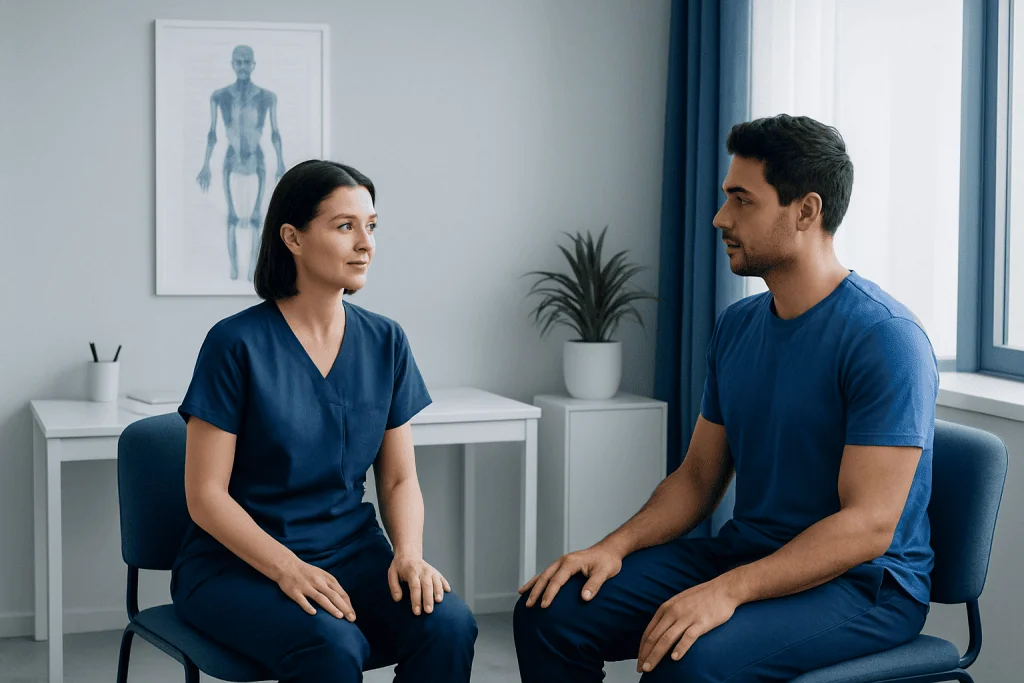
A doctor will usually begin by asking when symptoms started, which movements trigger them, whether there is a history of injury, and what other medical conditions are present. The physical exam may include posture, joint motion, muscle strength, nerve function, gait, and areas of tenderness. If needed, the clinician may recommend imaging or referral to a rehabilitation, orthopedic, or neurology specialist.
People with chronic pain, known disc disease, inflammatory arthritis, osteoporosis, or recent operations often benefit from an individualized plan rather than general online instruction. At Acibadem International, multidisciplinary specialists in JCI-accredited hospitals evaluate movement-related pain and guide treatment for international patients when Pilates or other exercise raises concerns.
How Doctors and Therapists Tailor Pilates to Health Conditions
Pilates is sometimes used as part of rehabilitation, but it is not one-size-fits-all. A trained clinician or therapist may modify positions, tempo, and range of motion based on the person’s diagnosis, pain pattern, and goals. This is especially useful for people recovering from injury or learning how to move with less strain.
For example, someone with persistent neck tension may need fewer curl-up exercises and more focus on shoulder blade control and breathing. A person with hip pain may need to adjust leg alignment and avoid deep ranges that compress the joint. Those with pelvic floor symptoms may need coaching on pressure management and breathing strategy before progressing.
In people with recurring low back symptoms, the emphasis is often on symptom-free control rather than aggressive abdominal work. If scoliosis, disc problems, or spinal stenosis are suspected, a clinician may first evaluate whether another condition such as scoliosis is contributing to the problem. This helps ensure exercise supports recovery instead of masking an issue that needs attention.
Rehabilitation-based Pilates may be delivered as part of a broader care plan that includes education, activity pacing, manual therapy, strength training, and ergonomic advice. This blended approach can be more practical than relying on a single exercise style alone.
Practical Self-Care Tips for Doing Pilates Well
Comfortable clothing, a supportive mat, and a quiet space can make Pilates easier to learn. Beginners often benefit from a mirror, a live class with a qualified instructor, or a basic introductory program that explains breathing and setup positions clearly. Starting with simple exercises is not a setback; it is often the safest way to build skill.
A short warm-up can help prepare the joints and muscles. Gentle marching in place, shoulder rolls, easy spine mobility, or a few minutes of walking may reduce stiffness before mat work. Hydration and normal breathing should continue throughout the session, and breath-holding should be avoided.
Progression should be gradual. Increasing exercise difficulty by changing only one thing at a time, such as repetitions, lever length, or balance challenge, makes it easier to tell what the body tolerates well. Recovery matters too, especially for people who are new to exercise or returning after illness.
- Choose technique over speed.
- Use pain as a signal to modify or stop.
- Build frequency before adding advanced exercises.
- Ask for professional guidance if there is a medical condition or persistent pain.
Frequently asked questions
Is Pilates good for beginners?
Yes, Pilates can be very suitable for beginners because it is usually low impact and can be adapted to different fitness levels. Most people do best by learning basic breathing, posture, and mat exercises before trying advanced movements or equipment.
How long should a beginner Pilates session be?
A beginner session can be as short as 10 to 20 minutes if the exercises are performed with good control. Consistency is usually more helpful than doing long sessions with poor technique.
Should Pilates hurt?
Pilates should not cause sharp or worsening pain. Mild muscle effort or next-day soreness can be normal, but nerve-like pain, dizziness, chest symptoms, or joint pain that increases during exercise should be checked by a clinician.
Is Pilates better on a mat or reformer?
Neither option is automatically better for everyone. Mat Pilates is often a practical starting point, while reformer Pilates may offer useful support or resistance when supervised by a trained instructor.
Can Pilates help back pain?
It may help some people with back pain by improving movement control, strength, and body awareness. However, it should be tailored carefully, because certain movements may aggravate symptoms in people with disc problems, nerve irritation, or other spinal conditions.
How often should someone do Pilates?
Many people begin with two or three sessions per week. The ideal frequency depends on overall fitness, recovery, symptoms, and whether Pilates is being used for general wellness or as part of rehabilitation.
Who should speak to a doctor before starting Pilates?
People with recent surgery, pregnancy-related concerns, osteoporosis, significant heart or lung disease, severe joint problems, or ongoing neck or back pain should consider medical advice first. A doctor or physical therapist can help decide which exercises are safe and which should be modified.
References
- World Health Organization
- American College of Sports Medicine
- National Institute for Health and Care Excellence
- National Center for Complementary and Integrative Health
- American Physical Therapy Association
This article is for general information only and is not a substitute for professional medical advice. Please consult a qualified doctor about your individual situation.
Joint and spine care in Turkey — expert assessment & treatment
JCI-accredited · board-certified surgeons · reply within 24h
Add us as a Preferred Source to see more of our trusted health content across Google Search, AI Overviews and Discover.