How to Get Rid of Red Spots on Face? Causes, Explanations, and Next Steps

Red spots on the face are common and are often linked to irritation, acne, eczema, allergies, or sun damage. The best treatment depends on the exact cause, so avoiding harsh products and identifying triggers is an important first step.
Key Takeaways
- Red spots on the face are common and are often linked to irritation, acne, eczema, allergies, or sun damage.
- The best treatment depends on the exact cause, so avoiding harsh products and identifying triggers is an important first step.
- Warning signs include fever, swelling, severe pain, blisters, eye involvement, bleeding, or spots that do not heal.
- Doctors diagnose red facial spots by examining the skin, reviewing triggers, and sometimes using patch tests, swabs, or a biopsy.
- Persistent or unexplained facial redness may need treatment from a dermatologist.
How to get rid of red spots on face depends on what is causing them. Many spots are harmless and improve with gentle skin care and trigger avoidance, but red spots that persist, spread, hurt, bleed, or come with other symptoms should be assessed by a doctor.
Overview: What red spots on the face usually mean
For many people, the answer to how to get rid of red spots on face starts with a simple point: these spots are often harmless and temporary. They may appear after skin irritation, a new cosmetic product, acne, dry weather, heat, or sun exposure. In many cases, the spots improve once the skin barrier is protected and the trigger is removed.
That said, not every red spot has the same cause. Some are related to inflammation, such as eczema or rosacea, while others may come from infection, allergy, broken blood vessels, or less commonly, precancerous or cancerous skin changes. Because different conditions can look similar, the most effective next step is to think about the pattern: when the spots started, whether they itch or hurt, and what else changed in the skin-care routine or general health.
A reassuring approach is to first look for red flags. Red spots deserve medical review if they are rapidly spreading, very painful, blistering, bleeding, associated with fever, affecting the eyes, or not healing over time. If none of these warning signs are present, gentle self-care is often a reasonable first measure while watching for improvement.
Common symptoms and patterns to notice
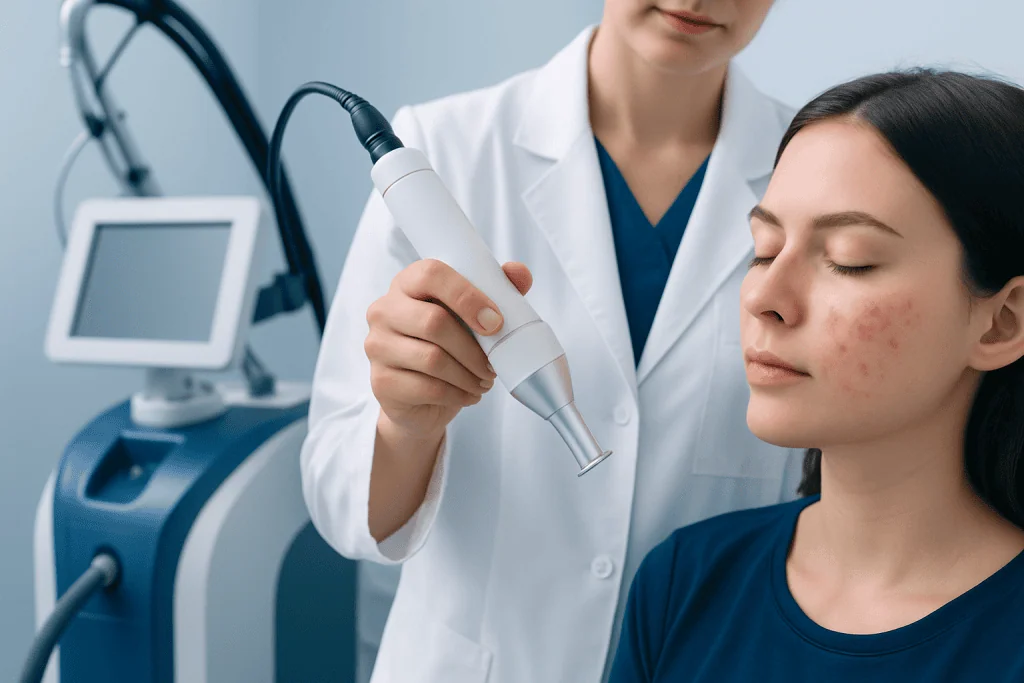
Red spots on the face can vary widely in appearance. Some are tiny and flat, while others are raised, flaky, pimple-like, or clustered. They may show up on the cheeks, nose, forehead, chin, or around the mouth and eyes. The exact appearance often gives clues about the cause.
It can help to note whether the spots are itchy, burning, tender, dry, scaly, warm, or filled with fluid or pus. Also important is whether the redness comes and goes with triggers such as sun exposure, exercise, stress, spicy foods, alcohol, shaving, or new skin products. A diary of symptoms and triggers can be useful if medical care is needed.
- Itchy and dry: often seen with eczema, contact dermatitis, or irritation
- Pimple-like bumps: may suggest acne, folliculitis, or rosacea
- Flushing with visible vessels: can be linked to rosacea
- Scaly rough patches: can occur with dermatitis, sun damage, or other inflammatory skin conditions
- Bright red pinpoint spots: may represent tiny broken vessels or minor bleeding under the skin
If the spots are accompanied by swelling of the lips or eyelids, trouble breathing, or widespread hives, urgent medical attention is needed. These symptoms can indicate a more serious allergic reaction rather than a simple skin flare.
Causes and risk factors

There is no single answer to how to get rid of red spots on face because the causes are varied. Very common triggers include over-cleansing, exfoliating too aggressively, retinoids, acne products, fragrances, shaving irritation, and weather extremes. Skin that becomes dry or inflamed is more likely to develop visible red patches or spots.
Inflammatory skin conditions are another major cause. These include eczema, seborrheic dermatitis, acne, and rosacea. Rosacea often affects the central face and may cause persistent redness, flushing, and acne-like bumps. Acne can also leave inflamed red marks during healing. Some people develop redness around the mouth or nose from perioral dermatitis, which may worsen with steroid creams or heavy facial products.
Allergic contact dermatitis happens when the skin reacts to an ingredient in cosmetics, sunscreen, hair dye, fragrance, or skin-care products. Infection is another possibility, especially if the skin is crusted, painful, oozing, or suddenly worsening. Viral rashes, fungal infection, and bacterial folliculitis can all affect the face. In some cases, sun damage causes rough red patches that should be evaluated, especially if they persist or repeatedly return in the same place.
Risk factors include sensitive skin, a history of allergies or eczema, heavy sun exposure, frequent product changes, use of harsh active ingredients, and a family history of inflammatory skin conditions. People with autoimmune conditions or weakened immunity may also be more vulnerable to some facial rashes and infections.
What to do at home first
If the spots are mild and there are no warning signs, starting with simple skin-calming steps is often helpful. The main goal is to reduce irritation and support the skin barrier. This means pausing harsh scrubs, exfoliating acids, strong acne treatments, fragranced products, and any new item that may have triggered the flare.
A gentle routine usually includes washing with lukewarm water and a mild cleanser, then applying a fragrance-free moisturizer. Daily sun protection is also important because ultraviolet light can worsen redness and slow healing. Products labeled for sensitive skin may be better tolerated than formulas with multiple active ingredients.
- Stop using newly introduced cosmetics or skin-care products
- Avoid picking, squeezing, or scrubbing the spots
- Use broad-spectrum sunscreen daily
- Keep showers and face washing lukewarm rather than hot
- Choose simple, fragrance-free moisturizers and cleansers
Home care should not include self-prescribing strong steroid creams for the face unless a doctor has advised it. On facial skin, inappropriate steroid use can worsen some conditions, including perioral dermatitis and rosacea. If the redness does not begin improving or if it worsens, a medical review is the safest next step.
How doctors diagnose the cause
When red spots on the face do not settle, the most useful medical step is identifying the underlying cause rather than only trying random creams. A doctor or dermatologist usually begins by asking when the spots started, whether they itch, burn, or bleed, what products are used on the skin, whether there are known allergies, and whether symptoms flare with sun, heat, stress, or foods.
The skin is then examined closely for pattern, scale, pustules, visible blood vessels, crusting, distribution, and signs of infection. This is often enough to narrow down the cause. If allergy is suspected, patch testing may be recommended. If infection is possible, a swab or scraping may be taken. In some persistent or unusual cases, a small skin biopsy may be needed to confirm the diagnosis.
This stepwise process matters because several conditions can mimic each other. For example, acne, rosacea, dermatitis, and folliculitis may all cause red facial bumps, but treatment differs. In selected cases, a doctor may also review whether symptoms could be linked to related skin disorders such as eczema or other inflammatory conditions affecting the face.
Treatment options based on the cause
The most effective way to manage red spots is to treat the underlying condition. If irritation or contact dermatitis is the cause, stopping the trigger and repairing the skin barrier may be enough. If the cause is rosacea, acne, seborrheic dermatitis, or infection, targeted treatment may be needed. A doctor may recommend medicated creams, gels, short courses of anti-inflammatory treatment, antifungal therapy, or other prescription options depending on the diagnosis.
Some people with ongoing redness, visible tiny vessels, or repeated inflammatory flares may benefit from specialist dermatology care. When acne-like lesions or persistent inflammation are part of the problem, medical assessment helps avoid treatments that might make the skin more reactive. In certain cases, care may overlap with dermatology evaluation or targeted acne treatment if acne is contributing to the red spots.
If redness is linked to flushing, visible vessels, or chronic sensitivity, a doctor may discuss management approaches used for rosacea treatment. For rough or sun-damaged patches that do not heal, a doctor may also consider whether they need closer monitoring or treatment. At the end of the evaluation pathway, patients who need advanced care may be supported by multidisciplinary specialists; Acibadem International’s JCI-accredited hospitals diagnose and treat skin conditions for international patients.
When to seek medical care
Most red spots on the face are not dangerous, but some situations should not be ignored. Medical review is important if spots last more than a few weeks, recur often, or do not respond to simple skin-care changes. It is also wise to seek advice if the redness is affecting confidence, sleep, or daily comfort, since ongoing symptoms are often treatable.
Urgent assessment is needed if red spots are associated with fever, severe facial swelling, blisters, pus, rapidly spreading redness, significant pain, or eye symptoms such as redness, pain, or blurred vision. Spots that bleed, crust repeatedly, form a sore that does not heal, or change in shape or texture should also be evaluated to rule out more serious skin disease.
Parents should seek care sooner for infants and children with facial rash if there is poor feeding, lethargy, fever, or a rapidly changing rash. In adults, anyone with a weakened immune system or a history of skin cancer should also have a lower threshold for medical review.
Frequently asked questions
What is the fastest way to get rid of red spots on face?
The fastest safe approach is to stop any irritating products, use a gentle cleanser, apply a fragrance-free moisturizer, and protect the skin from sun exposure. If the spots are caused by rosacea, infection, allergy, or another skin condition, faster improvement usually requires treatment targeted to that cause.
Are red spots on the face usually harmless?
Often, yes. Many red spots are due to mild irritation, acne, dryness, or a temporary reaction to products or weather. However, persistent, painful, bleeding, blistering, or rapidly spreading spots should be checked by a doctor.
Can stress cause red spots on the face?
Stress can contribute indirectly by triggering flushing, worsening rosacea, or aggravating inflammatory skin conditions. It may also lead people to pick at the skin or change routines in ways that increase irritation. Stress is rarely the only cause, so other triggers should still be considered.
Should steroid cream be used on red spots on the face?
Not without medical advice. Facial skin is delicate, and steroid creams can sometimes worsen conditions such as rosacea or perioral dermatitis. A doctor can advise whether a steroid is appropriate and, if so, which type and for how long.
How does a doctor tell the difference between acne, rosacea, and dermatitis?
Doctors look at the location, pattern, and appearance of the spots, along with symptoms such as itching, burning, flushing, scaling, and visible blood vessels. They also ask about triggers, skin-care products, and how the rash changes over time. In some cases, testing such as patch testing or a skin swab may be needed.
When should someone worry about red spots on the face?
A medical review is important if spots do not heal, keep returning, or come with pain, swelling, pus, or fever. Attention is also needed if the spots involve the eyes, bleed easily, or form a persistent crusted or rough patch. These features can suggest infection, significant inflammation, or a skin lesion that needs diagnosis.
References
- American Academy of Dermatology
- National Institute of Arthritis and Musculoskeletal and Skin Diseases
- Mayo Clinic
- NHS
- MedlinePlus
This article is for general information only and is not a substitute for professional medical advice. Please consult a qualified doctor about your individual situation.
Explore treatments in Turkey — costs, top hospitals & a free quote
JCI-accredited · board-certified surgeons · reply within 24h
Add us as a Preferred Source to see more of our trusted health content across Google Search, AI Overviews and Discover.