How to Make a Tourniquet in an Emergency? Here Is What the Evidence Says
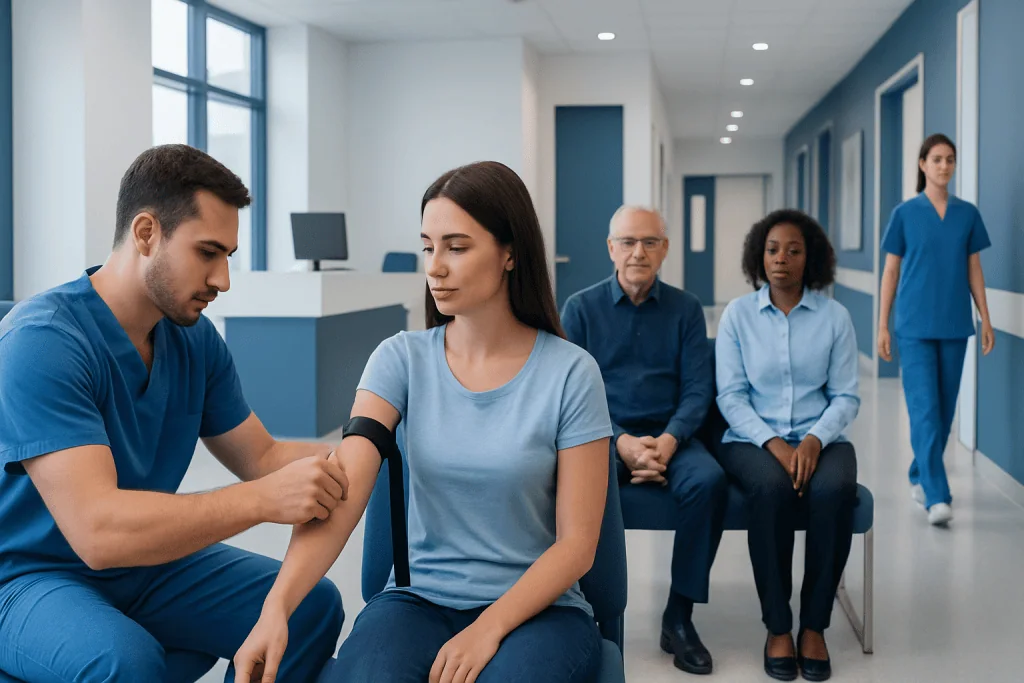
A tourniquet is for life-threatening bleeding from an arm or leg when direct pressure is not enough or cannot be maintained. A purpose-made commercial tourniquet is safer and more reliable than an improvised device.
Key Takeaways
- A tourniquet is for life-threatening bleeding from an arm or leg when direct pressure is not enough or cannot be maintained.
- A purpose-made commercial tourniquet is safer and more reliable than an improvised device.
- Place the tourniquet 5 to 7 centimetres above the wound, never over a joint, and tighten until bleeding stops.
- Do not loosen, remove, or periodically release a tourniquet once it has been applied.
- Call local emergency services promptly and keep the injured person warm, still, and reassured while waiting for help.
Most everyday cuts and scrapes stop bleeding with firm direct pressure and do not need a tourniquet. To make a tourniquet in an emergency, use a commercial device if available, place it above life-threatening bleeding from an arm or leg, tighten it until bleeding stops, record the time, and seek emergency help immediately.
Overview: When a Tourniquet Is Needed
Most bleeding from minor cuts, nosebleeds, and shallow wounds is not life-threatening. It can usually be controlled by applying steady, firm pressure with clean gauze, a dressing, or a clean cloth. A tourniquet is not a routine first-aid tool for minor injuries because it deliberately restricts blood flow to a limb.
A tourniquet may save a life when there is severe, uncontrolled bleeding from an arm or leg. Warning signs include blood that is spurting or flowing continuously, a rapidly enlarging pool of blood, clothing becoming soaked with blood, or bleeding that does not stop with firm direct pressure. It may also be appropriate when direct pressure cannot be maintained, such as during an unsafe situation or when one person must care for more than one injured person.
Tourniquets should only be used on limbs. They must not be used for bleeding from the neck, chest, abdomen, groin, or torso. For these wounds, firm direct pressure and, where appropriate, wound packing are generally the preferred first-aid measures while emergency help is arranged.
Immediate Priorities Before Applying a Tourniquet

Personal safety comes first. Before helping, check that there is no ongoing danger from traffic, fire, violence, unstable structures, or other hazards. If possible, wear disposable gloves. If gloves are not available, helping may still be appropriate in a life-threatening emergency; avoid direct contact with blood when practical and wash hands thoroughly afterwards.
Call the local emergency number, or ask a bystander to call while first aid begins. State that the person has severe bleeding, describe the location, and follow instructions from the emergency dispatcher. If the person is conscious, explain calmly that help is being arranged and that pressure is needed to control bleeding.
For severe limb bleeding, begin with firm direct pressure over the wound if this can be done without delaying care. A commercial tourniquet should be applied promptly if bleeding is massive, if pressure is ineffective, or if the situation does not allow sustained pressure. Do not spend time trying several less effective methods when bleeding is clearly life-threatening.
How to Apply a Commercial Tourniquet
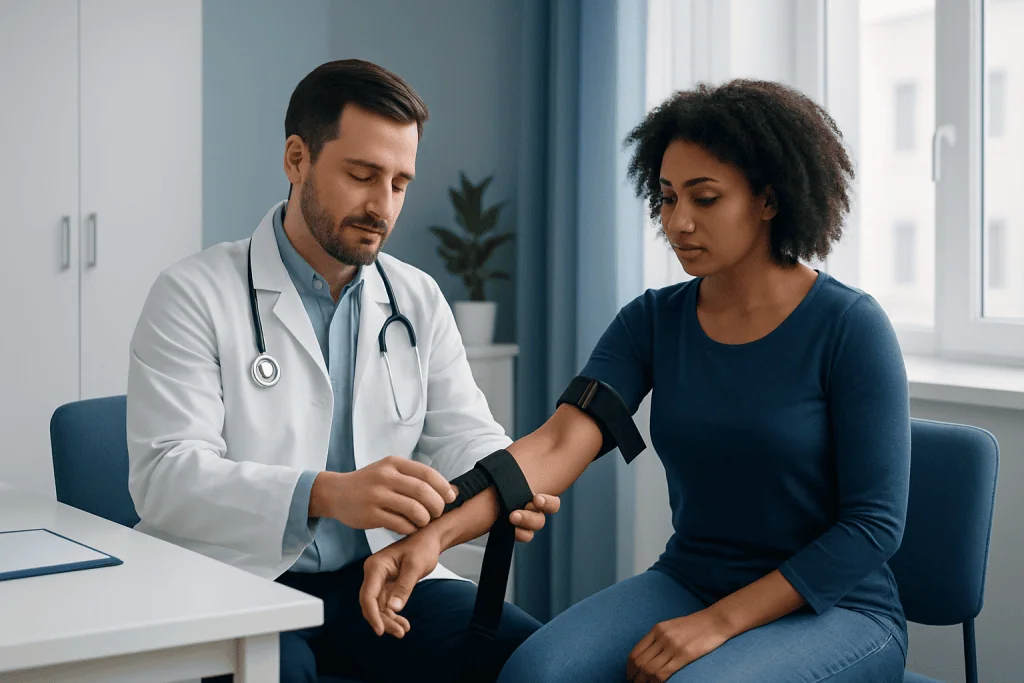
A commercially manufactured tourniquet, often called a windlass tourniquet, is the preferred option because it is designed to apply enough pressure safely and consistently. Follow the manufacturer’s instructions whenever possible. If the wound can be clearly seen, place the tourniquet about 5 to 7 centimetres above it, between the wound and the heart.
Do not place the device directly over a joint, such as the elbow or knee, or over a bulky object in a pocket. If the exact site of bleeding cannot be quickly identified, there are multiple wounds, or there is no time to assess the injury, place the tourniquet high on the injured arm or leg: high on the upper arm for an arm injury, or high on the thigh for a leg injury.
Pull the strap as tight as possible, secure it, and turn the windlass or tightening mechanism until bleeding stops. The tourniquet should be painful, but it needs to be tight enough to stop blood flow beyond the injury. If bleeding continues, tighten it further. If a second commercial tourniquet is available and the first does not control bleeding, apply the second one above the first.
Write down or clearly communicate the time the tourniquet was applied. Leave it visible for emergency clinicians. Once in place, do not loosen, remove, or periodically release it; this can restart dangerous bleeding. Continue to monitor the person’s breathing and responsiveness until help arrives.
If No Commercial Tourniquet Is Available
An improvised tourniquet is a last-resort measure for life-threatening arm or leg bleeding when a commercial tourniquet is unavailable and direct pressure is not controlling the bleeding. Improvised devices are less reliable and may cause more tissue injury if they are too narrow or cannot be tightened sufficiently. If possible, continue direct pressure while someone looks for a first-aid kit, emergency kit, or commercial device.
If an improvised device is the only option, use a broad, strong material that is at least several centimetres wide, such as a folded triangular bandage, wide cloth strip, or similar material. Avoid thin materials such as wire, string, shoelaces, belts with narrow edges, or cords. These can damage skin and nerves without stopping the bleeding effectively.
Place the broad material above the wound and tie it securely. A rigid object, such as a short stick-like item, may be placed over the knot and twisted to tighten the band until bleeding stops, then secured so it cannot unwind. This approach is difficult to perform correctly, which is why prompt emergency assistance and a commercial tourniquet remain important.
Never use an improvised tourniquet on the neck, torso, or any area other than an arm or leg. Do not cover it with clothing or a blanket, as medical teams need to see it. Note the application time and do not remove it before trained emergency personnel take over.
What to Do While Waiting for Emergency Help
After bleeding is controlled, help the person lie down if it is safe and comfortable, especially if they feel faint. Keep them warm with a coat or blanket, but leave the tourniquet and wound area visible. Reassure them, as anxiety can make the experience more difficult, and discourage eating or drinking in case urgent surgery or procedures are needed.
Watch for changes in breathing, alertness, skin colour, or responsiveness. If the person becomes unresponsive and is not breathing normally, begin cardiopulmonary resuscitation if trained and follow dispatcher guidance. If they are breathing but drowsy or nauseated, keep monitoring them and avoid moving them unnecessarily unless there is immediate danger.
Do not place additional dressings between the tourniquet and the skin once it has been tightened, and do not cover the device. If there is bleeding from another site, use direct pressure there if possible. Emergency clinicians will assess blood loss, circulation, nerve function, and associated injuries after arrival.
When to Seek Medical Care
Emergency medical care is needed immediately for any injury requiring a tourniquet, any bleeding that does not stop with firm pressure, or any deep wound caused by a knife, machinery, glass, a road collision, or a firearm. Emergency assessment is also important if the person is pale, confused, faint, unusually sleepy, breathing rapidly, or showing other signs that may suggest significant blood loss.
Even when bleeding has stopped, a wound may need cleaning, closure, tetanus protection, pain management, antibiotics in selected situations, or evaluation for damage to tendons, nerves, blood vessels, or bone. A clinician may examine movement and sensation beyond the wound, check circulation, and use imaging such as X-rays or ultrasound when an injury is suspected beneath the skin.
Smaller wounds should also be medically reviewed if they are deep, contaminated, caused by an animal or human bite, involve the face or hand, have separated edges, or show signs of infection such as increasing redness, warmth, swelling, pus, fever, or worsening pain. These concerns are usually manageable with timely care.
Prevention, Training, and Preparedness
Learning basic first aid can make it easier to respond calmly and effectively. Hands-on training through recognized first-aid organizations teaches how to use direct pressure, wound packing, tourniquets, and cardiopulmonary resuscitation. Training is particularly useful for people who work with tools, drive regularly, participate in outdoor activities, or care for children or older adults.
A well-stocked first-aid kit may include gloves, gauze, pressure dressings, trauma shears, and a commercially manufactured tourniquet. It is helpful to store kits where they can be reached quickly, such as at home, in a vehicle, or in a workplace, while keeping them away from young children. Family members should know where supplies are kept.
In a serious bleeding emergency, early action and a clear handover to emergency clinicians matter most. Acibadem International’s multidisciplinary specialists and JCI-accredited hospitals diagnose and treat traumatic injuries for international patients when hospital-based care is required.
Frequently asked questions
Can a belt be used as a tourniquet?
A belt is generally not a good choice because it may be too narrow, difficult to tighten, or unable to stay securely in place. A commercial windlass tourniquet is preferred. If no commercial device is available and bleeding is life-threatening, a broad improvised band with a windlass may be considered as a last resort.
How tight should an emergency tourniquet be?
It should be tightened until the severe bleeding stops. This usually causes significant discomfort and may eliminate the pulse below the tourniquet. A loose tourniquet is not effective and can allow continued blood loss.
Should a tourniquet be loosened every few minutes?
No. Once applied for life-threatening bleeding, a tourniquet should not be loosened or removed by a bystander. Releasing it can allow severe bleeding to restart and should be left to trained emergency or hospital clinicians.
Can a tourniquet be placed over clothing?
Yes, if removing clothing would delay control of life-threatening bleeding. A tourniquet can be applied over clothing, provided it is not placed over a joint or a hard object in a pocket. It should remain visible after application.
What if blood continues to flow after the tourniquet is applied?
First, tighten the tourniquet further until bleeding stops. If it remains uncontrolled and a second commercial tourniquet is available, place it above the first one. Emergency services should be contacted immediately, or their instructions followed if already on the line.
Is a tourniquet needed for a deep cut that is not spurting?
Not always. Many deep cuts can be managed initially with firm, continuous direct pressure while emergency help is sought. A tourniquet is appropriate when bleeding is severe and uncontrolled from an arm or leg, regardless of whether it is visibly spurting.
References
- American College of Surgeons Committee on Trauma
- American Red Cross
- Stop the Bleed Program
- World Health Organization
- National Health Service
This article is for general information only and is not a substitute for professional medical advice. Please consult a qualified doctor about your individual situation.
Explore treatments in Turkey — costs, top hospitals & a free quote
JCI-accredited · board-certified surgeons · reply within 24h
Add us as a Preferred Source to see more of our trusted health content across Google Search, AI Overviews and Discover.