

How to Remove Nasal Polyps Yourself? Causes, Explanations, and Next Steps
Nasal polyps are soft, noncancerous growths that commonly develop in both sides of the nose or sinuses. Trying to remove nasal polyps yourself can cause bleeding, infection, scarring, and delayed diagnosis of another condition.
Key Takeaways
- Nasal polyps are soft, noncancerous growths that commonly develop in both sides of the nose or sinuses.
- Trying to remove nasal polyps yourself can cause bleeding, infection, scarring, and delayed diagnosis of another condition.
- Saline rinses and prescribed nasal corticosteroid sprays may reduce inflammation and improve symptoms, but should be used correctly.
- An ear, nose, and throat specialist can examine the nose with an endoscope and may request a CT scan when needed.
- Persistent one-sided blockage, nosebleeds, facial swelling, vision symptoms, or severe pain should be assessed promptly.
Nasal polyps should not be cut, pulled, burned, or otherwise removed at home. They are usually benign growths, but safe treatment begins with a medical assessment to confirm the diagnosis and address the inflammation causing them.
Can Nasal Polyps Be Removed at Home?
People searching for how to remove nasal polyps yourself should know that it is not safe to cut, pull, squeeze, burn, or insert tools into the nose to remove them. Nasal polyps are soft, painless, noncancerous growths that arise from inflamed lining tissue inside the nose and sinuses. Although they are often not dangerous, attempting to remove them at home can lead to bleeding, infection, injury to the nasal lining, scarring, and worsening blockage.
Many nasal polyps are harmless in the sense that they are benign, and some small polyps cause few or no symptoms. However, their presence can signal ongoing inflammation that deserves attention, particularly when symptoms affect breathing, sleep, smell, or daily comfort. The safest next step is a review by a qualified clinician, who can confirm whether the growth is truly a polyp and recommend treatment that addresses both the polyp and its underlying cause.
Home care can support medical treatment but does not physically remove a polyp. Gentle saline nasal rinsing, avoiding known irritants, and using prescribed medicines as directed can help control inflammation. If symptoms continue despite appropriate treatment, an ear, nose, and throat specialist may discuss office-based assessment or surgery rather than leaving a person to manage the problem alone.
What Nasal Polyps Feel Like
Nasal polyps are often described as pale, grape-like or teardrop-shaped swellings inside the nasal passages. Small polyps may not be noticed. Larger polyps, or multiple polyps, can reduce airflow and interfere with normal sinus drainage. They do not usually hurt when touched because they contain little sensation, but the inflammation around them can cause significant discomfort.
Common symptoms include long-lasting nasal congestion, a runny nose, mucus draining down the throat, reduced sense of smell or taste, facial pressure, snoring, and a feeling that the nose is always blocked. Some people develop recurrent sinus infections or notice that asthma symptoms are more difficult to control. These symptoms can overlap with allergies, a deviated nasal septum, common colds, and other nasal conditions, so symptoms alone cannot reliably confirm polyps.
Polyps commonly occur on both sides of the nose. A new blockage on only one side, especially if it is associated with repeated bleeding, a visible mass, worsening pain, or a change in facial appearance, should not be assumed to be a routine polyp. A clinician can assess these symptoms carefully and rule out other causes.
Why Nasal Polyps Develop

Nasal polyps develop when long-term inflammation causes the lining of the nose and sinuses to become swollen. They are strongly associated with chronic rhinosinusitis, a condition in which nasal and sinus symptoms last for 12 weeks or longer. Inflammation may persist even without a bacterial infection, which is why antibiotics are not always useful for nasal polyps.
People with asthma, allergic rhinitis, recurrent sinus inflammation, or sensitivity to aspirin and certain nonsteroidal anti-inflammatory drugs may have a higher chance of developing polyps. The combination of asthma, nasal polyps, and respiratory reactions to aspirin or similar medicines is sometimes called aspirin-exacerbated respiratory disease. Not everyone with polyps has allergies, and not everyone with allergies develops polyps.
Other contributing factors may include family tendency, exposure to tobacco smoke or workplace irritants, and certain immune conditions. In children, nasal polyps are less common and may prompt clinicians to consider conditions that affect mucus production or immune function. Identifying contributing factors can help make treatment more effective and lower the chance of recurrence.
Red Flags and When to Seek Medical Care
Routine medical review is appropriate for nasal blockage that lasts more than a few weeks, reduced smell, frequent sinus symptoms, or a suspected growth inside the nose. A primary care clinician or ear, nose, and throat specialist can determine whether symptoms are due to polyps, allergies, infection, structural changes, or another condition. Early assessment is reassuring for many people and helps avoid unsafe attempts at self-removal.
More urgent medical advice is needed for heavy or recurrent nosebleeds, a rapidly enlarging swelling, significant facial pain or swelling, high fever with severe illness, eye swelling, double vision, reduced vision, confusion, neck stiffness, or a severe unusual headache. Emergency assessment is especially important if nasal symptoms occur with swelling around the eyes or changes in eyesight, as sinus complications are uncommon but require prompt care.
A one-sided nasal mass or one-sided persistent obstruction should also be examined by a specialist, even if it is not painful. Nasal polyps are usually bilateral, so clinicians take unilateral symptoms seriously and may investigate them further. This does not mean a serious cause is likely, but it is important not to delay a proper diagnosis.
How Doctors Diagnose Nasal Polyps
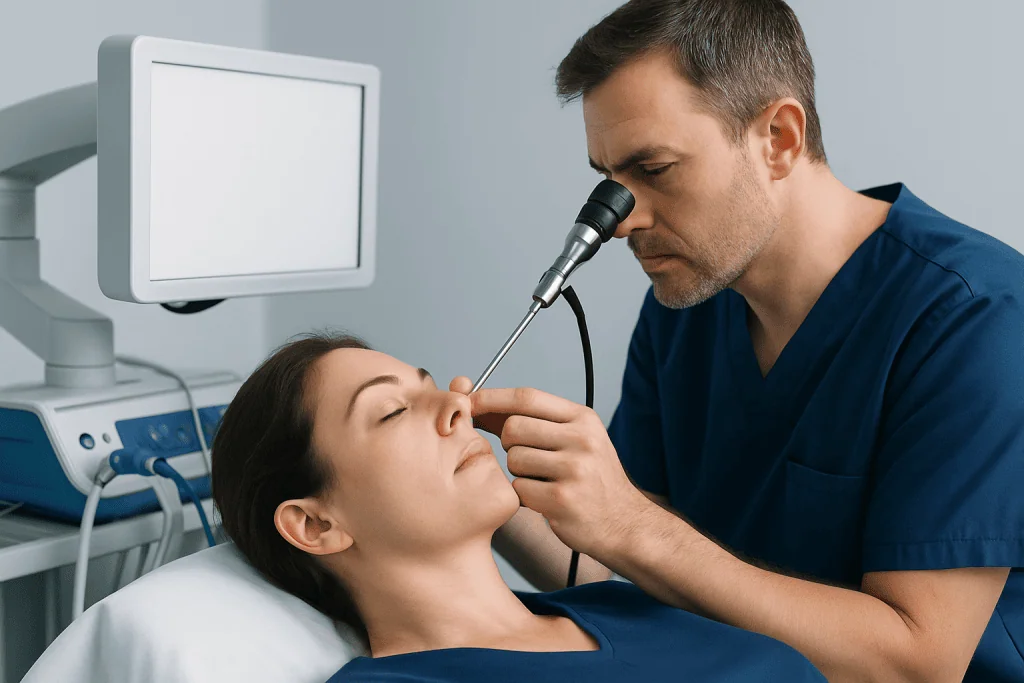
A clinician will begin by asking about nasal blockage, smell changes, allergies, asthma, sinus infections, medication reactions, sleep quality, and previous treatments. They will examine the nose using a lighted instrument. In many cases, an ear, nose, and throat specialist uses a thin flexible or rigid nasal endoscope to view deeper areas of the nasal passages. This examination is usually brief and helps distinguish polyps from swollen nasal tissue, mucus, or other growths.
A CT scan of the sinuses may be recommended when symptoms are persistent, when surgery is being considered, or when the diagnosis is unclear. The scan shows the sinuses and helps clinicians understand how extensive inflammation is. Allergy testing, breathing tests, or evaluation for asthma may be appropriate for selected people, particularly when symptoms suggest an allergic or respiratory contribution.
Biopsy is not routinely needed for typical polyps on both sides of the nose. However, a specialist may recommend tissue testing when a growth looks unusual, occurs only on one side, bleeds easily, or does not have the expected appearance. This careful approach helps ensure treatment is matched to the correct diagnosis.
Safe Treatment Options
Treatment aims to shrink polyps, relieve symptoms, improve sinus drainage, and control the inflammation that caused them. Saline irrigation can help wash away mucus and irritants. For safety, rinsing devices should be cleaned after use, and only sterile, distilled, or previously boiled and cooled water should be used. Tap water should not be used directly for nasal rinsing.
Intranasal corticosteroid sprays or drops are commonly the first medical treatment. They reduce inflammation gradually and may shrink polyps over time when used consistently and with correct technique. A clinician may sometimes prescribe a short course of oral corticosteroids for severe symptoms, but these medicines are not suitable for everyone and require medical supervision because they can cause side effects.
For people with severe chronic rhinosinusitis with nasal polyps that remains uncontrolled, specialist options may include biologic medicines or endoscopic sinus surgery. During surgery, the surgeon removes polyps and improves sinus drainage using instruments passed through the nostrils, without external facial incisions in most cases. Polyps can return after treatment, so continued anti-inflammatory care and follow-up are often important.
Self-Care That Supports Medical Treatment
While self-care cannot remove nasal polyps, it may ease congestion and support a treatment plan. Regular saline rinsing can reduce mucus and crusting, while adequate hydration may help keep nasal secretions thinner. People should follow instructions carefully for any prescribed nasal spray, as directing the spray slightly outward toward the ear rather than toward the center wall of the nose may reduce irritation and improve delivery.
Avoiding cigarette smoke, vaping aerosols, strong fragrances, and other personal triggers may reduce nasal irritation. If allergies contribute to symptoms, a clinician may recommend an allergy management plan. People with asthma should continue their established asthma care and mention any worsening wheeze, cough, or breathlessness to their healthcare professional.
It is best to avoid using over-the-counter decongestant nasal sprays for more than a few days unless a clinician advises otherwise, as prolonged use can worsen congestion. Do not share nasal devices, and do not use cotton swabs, tweezers, or other objects to explore a blocked nostril. Acibadem International’s multidisciplinary specialists and JCI-accredited hospitals can assess and treat nasal and sinus conditions for international patients when specialist care is needed.
Frequently asked questions
Can a nasal polyp fall out on its own?
A nasal polyp is unlikely to simply fall out on its own. Symptoms may improve if inflammation decreases and the polyp shrinks with treatment, but a person should not try to pull out anything from the nose. A clinician can confirm what the tissue is and advise on safe treatment.
Can nasal polyps be removed without surgery?
Yes, some nasal polyps improve with medical treatment, especially corticosteroid nasal sprays or drops used under clinical guidance. Saline rinses can also help relieve congestion and support nasal hygiene. Surgery may be considered when symptoms remain significant despite appropriate medical care.
Are nasal polyps cancerous?
Typical nasal polyps are benign, meaning they are not cancer. However, not every nasal growth is a polyp, and one-sided, bleeding, painful, or unusual-looking growths need professional assessment. An examination helps ensure the correct diagnosis.
What happens if nasal polyps are left untreated?
Small polyps that cause no symptoms may not need immediate treatment, but persistent inflammation can lead to ongoing congestion, reduced smell, sleep disturbance, and recurrent sinus symptoms. Untreated blockage may also make asthma harder to manage in some people. A clinician can help decide whether monitoring or treatment is appropriate.
Do nasal polyps come back after surgery?
They can return because surgery removes existing polyps but does not completely eliminate the underlying tendency toward inflammation. Continued use of prescribed nasal treatments and follow-up care can reduce recurrence risk. The likelihood of recurrence varies according to factors such as asthma, allergies, and the severity of sinus inflammation.
Can allergies cause nasal polyps?
Allergies can contribute to nasal inflammation and may occur alongside nasal polyps, but they are not the only cause. Polyps are also linked with chronic rhinosinusitis, asthma, and aspirin sensitivity. Managing allergies may improve symptoms for people in whom allergies are a contributing factor.
References
- American Academy of Otolaryngology–Head and Neck Surgery
- National Institute of Allergy and Infectious Diseases
- Mayo Clinic
- National Health Service
- European Position Paper on Rhinosinusitis and Nasal Polyps
This article is for general information only and is not a substitute for professional medical advice. Please consult a qualified doctor about your individual situation.
Explore treatments in Turkey — costs, top hospitals & a free quote
JCI-accredited · board-certified surgeons · reply within 24h
Add us as a Preferred Source to see more of our trusted health content across Google Search, AI Overviews and Discover.

More from the Health Library



Related Specialists

Assoc. Prof. Dr. Mine Yavuz Taşlıpınar
Clinical Laboratory
Dr. Uğur Oğul
Neurosurgery
Assoc. Prof. Dr. Muhammet Ahmet Karakaya
Anesthesiology
Prof. Dr. Koray Güven
Radiology