How to Stop a Nosebleed? A Doctor-Reviewed Answer

Most nosebleeds come from the front of the nose and stop with pressure. To stop a nosebleed, sit up, lean forward, and pinch the soft part of the nose continuously for 10-15 minutes.
Key Takeaways
- Most nosebleeds come from the front of the nose and stop with pressure.
- To stop a nosebleed, sit up, lean forward, and pinch the soft part of the nose continuously for 10-15 minutes.
- Tilting the head back or repeatedly checking too early can make bleeding last longer.
- Medical care is needed if bleeding is heavy, lasts more than 20 minutes, follows a significant injury, or happens often.
- Dry air, nose picking, colds, allergies, and blood-thinning medicines are common triggers.
Most nosebleeds are harmless and stop with simple first aid. Knowing exactly how to stop a nosebleed, what not to do, and when medical care is needed can help a person respond calmly and safely.
Overview: What to Do Right Away
Most nosebleeds are not dangerous. In many cases, they begin in the front part of the nose, where small blood vessels lie close to the surface and can break easily from dryness, irritation, or minor trauma.
For anyone wondering how to stop a nosebleed, the safest first step is simple: sit upright, lean slightly forward, and pinch the soft part of the nose just below the bony bridge. Pressure should be held continuously for 10 to 15 minutes while breathing through the mouth. An ice pack or cool compress over the bridge of the nose or cheeks may help, but direct pressure is the main treatment.
It is important not to tilt the head back. This can cause blood to run into the throat, leading to coughing, nausea, or vomiting, and it does not stop the bleeding source. It also helps not to release pressure every minute to check, because this can disturb clot formation and restart the bleed.
If the bleeding is heavy, follows a significant facial injury, causes trouble breathing, or does not stop after 20 minutes of correct pressure, medical assessment is important. Repeated or unexplained nosebleeds should also be evaluated by a doctor, especially if the person takes blood thinners or has other bleeding symptoms.
Why Nosebleeds Happen
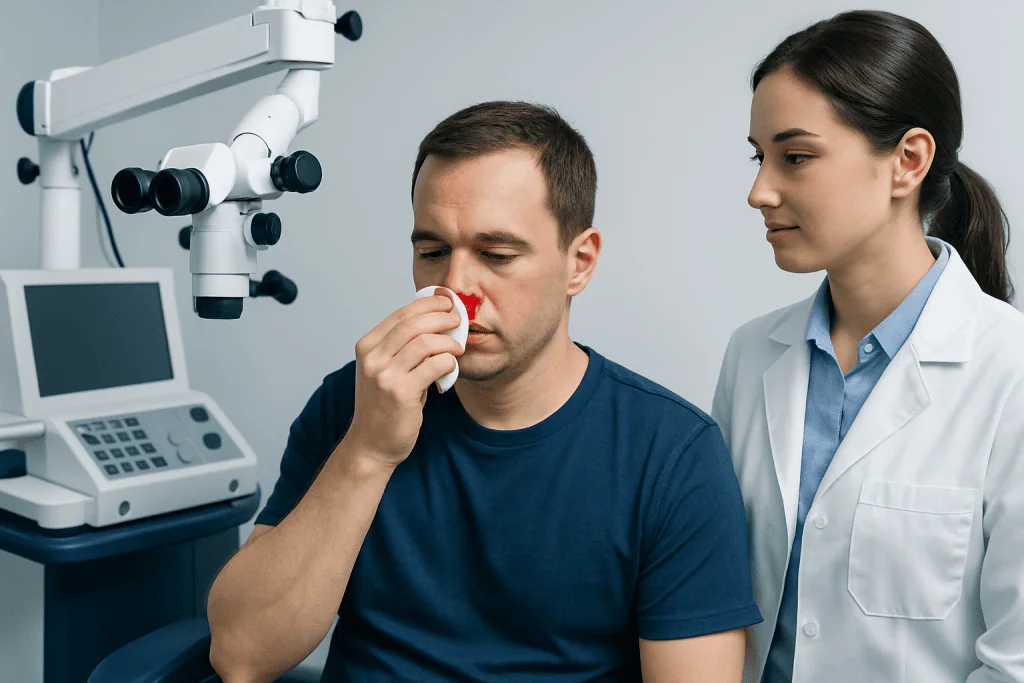
The medical term for a nosebleed is epistaxis. Most nosebleeds are anterior nosebleeds, meaning they come from the front part of the nasal septum, the wall that separates the nostrils. This area contains many delicate blood vessels that can rupture with even mild irritation.
Common triggers include dry indoor air, frequent nose blowing, allergies, colds, and nose picking. These causes can dry or inflame the lining of the nose, making the tissue fragile. Even gentle rubbing or sneezing may then start bleeding.
Less often, a nosebleed comes from deeper in the nose. These posterior nosebleeds are more common in older adults and in people with high blood pressure or blood vessel disease. They may cause heavier bleeding and are more likely to require medical treatment by an ear, nose, and throat specialist.
Occasional nosebleeds may happen on their own and never return. However, frequent episodes may point to persistent nasal irritation, a structural problem inside the nose, medication effects, or a bleeding disorder that deserves further review.
Step-by-Step: How to Stop a Nosebleed Safely

A clear sequence can make first aid more effective. First, the person should stay calm and sit upright rather than lie down. Leaning forward reduces pressure in the nasal veins and prevents blood from flowing backward into the throat.
Next, the soft part of the nose should be pinched firmly between the thumb and index finger. The pressure needs to be constant, not intermittent, for 10 to 15 minutes. A clock or timer is useful because many people let go too early. If bleeding continues after the first attempt, pressure can be repeated once more for another 10 to 15 minutes.
These steps can help:
- Sit upright and lean slightly forward.
- Pinch the soft part of the nose, below the bony bridge.
- Breathe through the mouth while holding pressure.
- Apply a cool compress to the nose or cheeks if available.
- After bleeding stops, avoid blowing, picking, or rubbing the nose for several hours.
After the nosebleed has stopped, it is best to rest quietly and avoid heavy lifting, strenuous exercise, hot showers, alcohol, or forceful nose blowing for the rest of the day. These can reopen the fragile clot. If the inside of the nose feels dry, a doctor may suggest a saline spray or moisturizing gel to help protect the lining.
What Not to Do During a Nosebleed
Some common habits can make a nosebleed harder to control. Tilting the head backward is one of the most frequent mistakes. Although it may look as if the bleeding has slowed, blood may simply be draining into the throat instead.
Another mistake is stuffing tissues or cotton deep into the nostril without guidance. This may further irritate the inside of the nose and can disturb the developing clot when removed. If absorbent material is used at all, it should be gentle and not pushed deeply.
Repeatedly checking the nose too soon can also restart bleeding. Clot formation takes time, so steady pressure without interruption is more effective than frequent short attempts. Talking, coughing forcefully, or bending over can also increase pressure and interfere with clotting.
If the person feels faint, weak, or short of breath, or if there is a large amount of blood, first aid should continue while medical help is arranged. Children may need reassurance and careful supervision so they keep the right position and do not swallow blood.
Common Causes and Risk Factors
The most common reasons for nosebleeds are everyday irritants rather than serious illness. Dry climates, heated indoor air, upper respiratory infections, and seasonal allergies can all inflame the nasal lining. Frequent use of decongestant sprays may also dry the nose if they are used too often.
Minor injury is another leading cause. This may include nose picking, forceful nose blowing, contact sports, or accidental bumps to the face. Structural issues such as a crooked nasal septum can create areas of airflow turbulence and dryness, which may make bleeding more likely over time.
Some medicines increase the chance of bleeding or make it harder for bleeding to stop. These include blood-thinning medicines and, in some cases, anti-inflammatory pain relievers. People should not stop prescribed medication on their own, but they should tell their doctor if nosebleeds become frequent.
Less common causes include uncontrolled high blood pressure, chronic sinus disease, nasal polyps, liver disease, inherited bleeding disorders, or a growth inside the nose. If nosebleeds happen repeatedly or are linked with blockage, facial pain, or other symptoms, an ENT evaluation may look for nasal polyps or other nasal conditions.
When to Seek Medical Care
Many nosebleeds can be managed at home, but some situations need prompt medical attention. A doctor should assess bleeding that does not stop after 20 minutes of correct pressure, bleeding that is very heavy, or a nosebleed that starts after a significant injury to the head or face.
Medical review is also important if the person feels weak, dizzy, or short of breath; if blood seems to be flowing mostly down the throat; or if the person is taking anticoagulants or has a known bleeding disorder. Nosebleeds in very young children or older adults may also deserve closer attention, especially if they are repeated.
Frequent nosebleeds should not be ignored, even if each episode stops. Recurrent bleeding may point to ongoing nasal dryness, persistent inflammation, an abnormal blood vessel, or a deeper ENT problem. If there are related symptoms such as chronic congestion, facial pressure, or repeated sinus infections, a doctor may also consider conditions such as sinusitis.
In an emergency setting, clinicians first make sure the airway is clear and the bleeding source is identified. This is especially important if the bleeding is brisk, the patient is swallowing blood, or there has been trauma.
How Doctors Diagnose and Treat Persistent Nosebleeds
When a person sees a doctor for repeated or severe nosebleeds, the evaluation usually starts with a medical history and physical examination. The doctor may ask how often the nosebleeds happen, whether they come from one nostril or both, what medications are used, and whether there are signs of easy bruising or bleeding elsewhere.
An examination of the nose may be done with a light, a speculum, or an endoscope to look for a visible bleeding point, crusting, inflammation, a deviated septum, or other structural problems. If bleeding has been recurrent or unusually heavy, blood tests may be ordered to look at blood counts and clotting function.
Treatment depends on the cause and the bleeding site. In some cases, the doctor can stop a small recurring bleed with cautery, which seals the blood vessel. A specialist may also use nasal packing when pressure alone is not enough. If structural problems contribute, further ENT management may be recommended, including septoplasty in selected patients with a troublesome deviated septum.
For patients with repeated, difficult-to-control nosebleeds, ENT care may involve endoscopic assessment and targeted treatment. In appropriate cases, this can include endoscopic sinus surgery when a related nasal or sinus problem is identified. Near the end of the care pathway, Acibadem International’s multidisciplinary specialists in JCI-accredited hospitals also diagnose and treat nosebleeds and their underlying causes for international patients.
Prevention and Self-Care After a Nosebleed
Preventing future episodes usually focuses on protecting the lining of the nose. Keeping indoor air comfortably humid, especially in winter or in dry climates, can reduce irritation. Many people also benefit from saline nasal spray or a doctor-recommended moisturizing gel to keep the inside of the nose from drying out.
Gentle nose care matters. Fingernails should be kept short in children, and nose picking should be discouraged. When blowing the nose, it helps to do so gently rather than forcefully. Allergies and frequent colds should be managed appropriately so ongoing inflammation does not continue to damage fragile blood vessels.
If a nosebleed has just stopped, the clot needs time to stabilize. Helpful aftercare includes:
- Avoid bending over, lifting heavy objects, or vigorous exercise for the rest of the day.
- Do not blow or pick the nose for several hours, or longer if a doctor advises it.
- Sneeze with the mouth open if possible to reduce pressure inside the nose.
- Use prescribed or doctor-recommended nasal care products as directed.
People who have frequent episodes should keep a brief record of when nosebleeds happen, how long they last, and possible triggers such as dry air, colds, or medications. This information can help a doctor identify patterns and choose the most appropriate treatment.
Frequently asked questions
How long should pressure be held to stop a nosebleed?
Pressure should be held continuously for 10 to 15 minutes without letting go to check too early. If the bleeding continues, the same step can usually be repeated once more for another 10 to 15 minutes.
Should the head be tilted back during a nosebleed?
No. The person should sit upright and lean slightly forward instead. Tilting the head back can cause blood to run into the throat and stomach, which may lead to coughing or nausea.
Why do nosebleeds often happen at night or in winter?
Dry indoor air is a common reason. Heating systems and low humidity can dry the nasal lining, making delicate blood vessels more likely to crack and bleed.
Are repeated nosebleeds a sign of something serious?
Not always, but repeated nosebleeds should be assessed if they happen often, are hard to stop, or occur with other symptoms. A doctor may check for nasal dryness, allergies, structural issues, medication effects, or a bleeding problem.
Can children get nosebleeds easily?
Yes. In children, nosebleeds are often linked to dry air, colds, allergies, or nose picking. Most are harmless, but a doctor should review frequent episodes, heavy bleeding, or bleeding after injury.
What if a person is taking blood thinners and gets a nosebleed?
The same first-aid steps still apply, but medical advice may be needed sooner because bleeding can last longer. A person should not stop prescribed blood thinners without speaking to the doctor who manages that medication.
References
- American Academy of Otolaryngology–Head and Neck Surgery
- Cleveland Clinic
- Mayo Clinic
- Merck Manual Consumer Version
- National Health Service
This article is for general information only and is not a substitute for professional medical advice. Please consult a qualified doctor about your individual situation.
Explore treatments in Turkey — costs, top hospitals & a free quote
JCI-accredited · board-certified surgeons · reply within 24h
Add us as a Preferred Source to see more of our trusted health content across Google Search, AI Overviews and Discover.
Check your numbers in seconds
BMI, calories, due date, blood pressure and 30+ more clinical calculators — free, instant, doctor-reviewed ranges.