HPV Warts: What Patients Need to Know

HPV warts are caused by specific strains of human papillomavirus and are different from HPV-related cancers. Warts can look and feel different depending on where they appear, including common, plantar, flat, and genital warts.
Key Takeaways
- HPV warts are caused by specific strains of human papillomavirus and are different from HPV-related cancers.
- Warts can look and feel different depending on where they appear, including common, plantar, flat, and genital warts.
- Some HPV warts clear on their own, but treatment may help relieve symptoms, improve appearance, and lower transmission risk.
- Vaccination, skin protection, and safer sexual practices can help prevent HPV infection and related warts.
- Medical assessment is especially important for genital warts, persistent growths, pain, bleeding, or uncertainty about the diagnosis.
HPV warts are growths caused by certain types of human papillomavirus, and they can appear on the hands, feet, face, or genital area. Many warts are benign and may go away over time, but evaluation is important to confirm the diagnosis, discuss treatment, and reduce spread.
Overview: What HPV Warts Are
HPV warts are growths on the skin or mucous membranes caused by certain types of human papillomavirus. The term covers several kinds of warts, including common warts on the hands, plantar warts on the soles of the feet, flat warts on the face or legs, and genital warts in the intimate area. These growths are usually noncancerous, but they can be bothersome, uncomfortable, or emotionally distressing depending on their location.
Human papillomavirus is a large family of viruses. Some HPV types are linked to warts, while others are associated with changes in cells that can raise the risk of cancers such as cervical, anal, penile, vulvar, vaginal, and some throat cancers. Having HPV warts does not mean a person has cancer, but it does mean the virus is present and deserves proper evaluation.
HPV spreads through direct contact. Skin-to-skin contact can spread common warts, while genital HPV is most often spread through sexual contact. Small breaks in the skin can make transmission easier, and a person may spread the virus even when a wart is very small or not yet noticed.
How HPV Warts Can Look and Feel
HPV warts vary widely in appearance. Common warts are often rough, raised, and flesh-colored or slightly darker than the surrounding skin. They tend to appear on fingers, hands, knees, or around the nails. Plantar warts on the feet may grow inward because of pressure from walking, sometimes causing tenderness or the feeling of stepping on a small stone.
Flat warts are usually smaller and smoother than common warts. They may appear in clusters on the face, neck, hands, wrists, or legs. Genital warts may be tiny and hard to see or larger and more cauliflower-like. They can appear on the vulva, vagina, cervix, penis, scrotum, groin, anus, or surrounding skin.
Many warts do not cause pain, but some can itch, bleed if irritated, or become uncomfortable with friction. Plantar warts can be painful during walking, and genital warts may affect comfort during sexual activity or personal hygiene. Because other skin conditions can look similar, self-diagnosis is not always reliable.
- Common warts: rough, raised, often on hands and fingers
- Plantar warts: thickened areas on the soles, sometimes painful
- Flat warts: smooth, small, often in clusters
- Genital warts: soft growths on genital or anal skin
Causes, Spread, and Risk Factors

HPV warts develop when the virus enters the skin or mucous membrane through tiny cuts, irritation, or areas of friction. After exposure, the virus may stay quiet for weeks or months before a wart appears. This delayed timing can make it difficult to know exactly when or from whom the infection was acquired.
Different HPV types prefer different body sites. The strains that cause common skin warts are not usually the same as those that cause genital warts. Genital warts are most often caused by low-risk HPV types, especially types 6 and 11. These are considered low-risk because they are not the types most strongly linked to cancer, although a person can have more than one HPV type at the same time.
Certain factors may make HPV infection and wart formation more likely. These include close skin contact with someone who has warts, sexual contact, shaving or skin irritation in affected areas, walking barefoot in shared wet spaces, and a weakened immune system. Children, teenagers, and people with conditions or medicines that affect immunity may be more prone to recurrent or stubborn warts.
Genital warts are part of the broader group of HPV infections. Some people also ask whether warts are related to other sexually transmitted infections. While they are caused by HPV, evaluation may sometimes include screening for other conditions if a clinician thinks it is appropriate.
How Doctors Diagnose HPV Warts
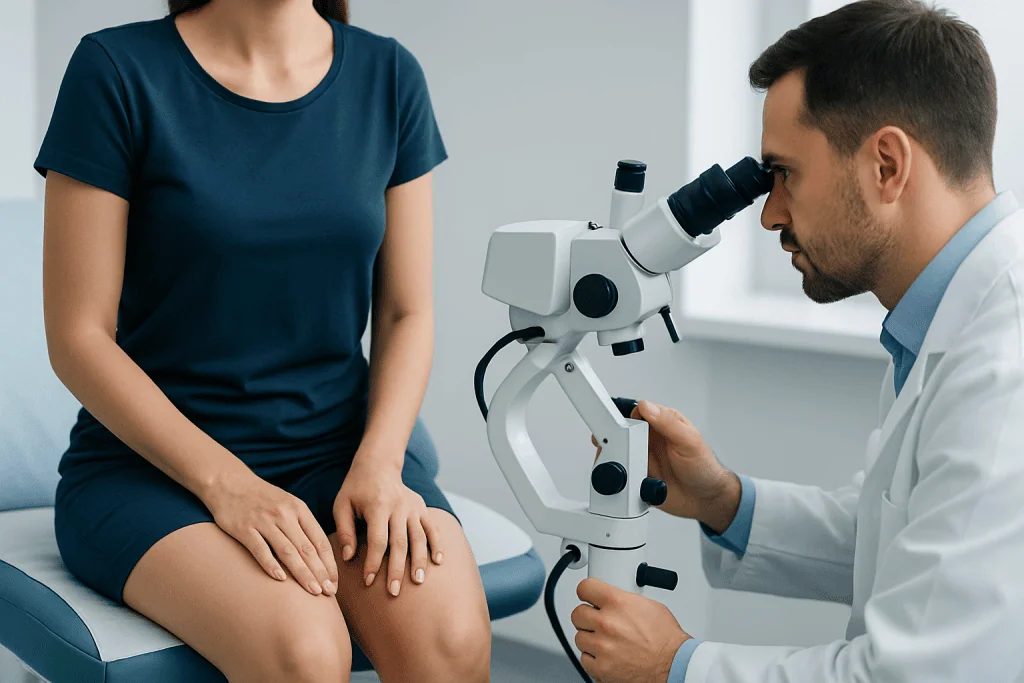
Diagnosis usually begins with a medical history and physical examination. A clinician looks at the shape, texture, number, and location of the growths and asks how long they have been present, whether they are changing, and whether there is pain, itching, bleeding, or recent exposure. In many cases, the appearance of a wart is typical enough for diagnosis during the visit.
For genital warts, the examination may include the external genital area and, when needed, internal evaluation depending on symptoms and sex. The main goal is to identify the growth correctly and distinguish it from other causes of bumps or sores, such as skin tags, molluscum contagiosum, benign pigment changes, or less commonly precancerous lesions.
Not everyone with visible warts needs extensive testing. HPV testing is not generally used to diagnose ordinary skin warts, and it is not typically used to diagnose visible genital warts either. However, age-appropriate cervical screening remains important because the HPV types that cause warts are not the same as the high-risk types checked in cervical screening programs. If a lesion looks unusual, grows rapidly, ulcerates, or does not respond to treatment, a doctor may recommend biopsy or referral to a specialist in dermatology care or gynecology.
Treatment Options and What to Expect
Treatment depends on the type of wart, where it is located, how many are present, symptoms, cosmetic concerns, and a person’s immune status. Some warts go away without treatment as the immune system gradually controls the virus. Even so, treatment may still be helpful if the wart is painful, spreading, persistent, or causing emotional discomfort.
Common treatments for skin warts include topical medicines, freezing therapy, and other office-based procedures. For some persistent warts, a clinician may suggest more targeted approaches through specialist skin treatment. Genital wart treatment may involve prescription topical therapy, cryotherapy, cautery, or procedural removal depending on size, number, and location. In selected cases, minor surgical removal may be considered when warts are large, recurrent, or difficult to treat with simpler methods.
It is important to know that treatment removes visible warts but may not immediately eliminate the virus from nearby tissue. Because of this, recurrence can happen, especially in the first months after treatment. Follow-up may be needed to assess healing, repeat therapy, or review prevention. Patients should avoid over-the-counter wart products on the genital area unless specifically advised by a clinician, because these products can irritate delicate tissue.
If warts are related to broader gynecologic concerns, a doctor may also discuss evaluation through gynecologic assessment or appropriate screening. Treatment decisions are individualized, and a qualified clinician can explain the benefits, side effects, and expected recovery for each option.
Prevention, Self-care, and Protecting Others
Prevention starts with reducing exposure and supporting skin health. Avoid picking, shaving over, or scratching warts, as this can spread the virus to nearby skin. Hands should be washed after touching a wart, and personal items such as razors, nail tools, socks, or towels should not be shared. In shared pool or locker room areas, wearing footwear can lower the chance of exposure to plantar wart viruses.
For genital HPV, vaccination is one of the most effective preventive steps. HPV vaccines help protect against the HPV types most commonly linked to genital warts and several HPV-related cancers. Vaccination does not treat existing warts, but it can still be beneficial for eligible people who have not completed the recommended vaccine series.
Safer sexual practices can also reduce transmission, although they do not eliminate risk completely because HPV can affect areas not covered by a condom. Open communication with partners, avoiding sexual contact when visible genital warts are present, and following treatment advice can help. People with recurrent or widespread warts may benefit from medical review to check whether there are contributing skin or immune factors.
Near the end of the care pathway, some patients seek coordinated specialist assessment for diagnosis, removal options, and follow-up. Acibadem International’s multidisciplinary specialists at JCI-accredited hospitals evaluate and treat HPV-related conditions for international patients when needed.
When to Seek Medical Care
A doctor should assess any new genital bump, persistent wart, or growth that is changing in appearance. Medical advice is especially important if there is pain, bleeding, discharge, ulceration, rapid growth, or uncertainty about whether a lesion is truly a wart. In children, facial lesions, lesions near the eyes, or numerous spreading warts also deserve professional review.
People with diabetes, poor circulation, or weakened immunity should not try to treat foot warts on their own without guidance. Self-treatment in sensitive areas can cause burns, infection, scarring, or delay the diagnosis of another condition. If a wart keeps returning or does not improve with standard care, a clinician may recommend further assessment.
Genital warts may be diagnosed and treated by primary care doctors, dermatologists, gynecologists, urologists, or other specialists depending on the case. Prompt evaluation can clarify the diagnosis, support symptom relief, and ensure that appropriate screening or follow-up is not missed.
Frequently asked questions
Are HPV warts the same as genital warts?
Genital warts are one type of HPV wart, but not all HPV warts are genital. HPV can also cause common, plantar, and flat warts on other parts of the body. The location and the HPV type involved help determine the kind of wart.
Do HPV warts always mean cancer risk?
No. The HPV types that usually cause visible warts are generally considered low-risk and are different from the HPV types most strongly associated with cancer. However, routine screening such as cervical screening should still be followed according to medical guidance.
Can HPV warts go away on their own?
Yes, some HPV warts clear without treatment as the immune system suppresses the virus. This can take months or sometimes longer. Even if a wart may resolve naturally, medical review can still be helpful if it is painful, spreading, or located in the genital area.
Can a person spread HPV if a wart is not visible?
Yes, HPV can sometimes be transmitted even when no wart is obvious. This is one reason the virus can spread without a person realizing it. Visible warts may increase concern for transmission, but absence of warts does not guarantee absence of HPV.
Should over-the-counter wart treatments be used for genital warts?
No, standard over-the-counter wart products should not be used on genital skin unless a clinician specifically advises it. The genital area is delicate, and these products can cause irritation or injury. A doctor can recommend safer and more appropriate treatment options.
Does the HPV vaccine help if someone already has HPV warts?
The vaccine does not treat existing warts. However, it may still help protect against other HPV types included in the vaccine if the person is eligible and has not completed vaccination. A doctor can advise whether vaccination is appropriate in an individual case.
This article is for general information only and is not a substitute for professional medical advice. Please consult a qualified doctor about your individual situation.
Explore treatments in Turkey — costs, top hospitals & a free quote
JCI-accredited · board-certified surgeons · reply within 24h
Add us as a Preferred Source to see more of our trusted health content across Google Search, AI Overviews and Discover.

More from the Health Library

Genetic Test of Fetus: A Complete Medical Overview

Cilantro: What Patients Need to Know

COPD Alternative Remedies: An Evidence-Based Guide for Patients

D Aspartic Acid: What Patients Need to Know

Simmer Pot: A Complete Medical Overview