Human Brain Basics: What It Is and How It Works

The brain controls thinking, memory, movement, sensation, emotions, and many automatic body functions. Different brain regions have specialized roles, but they work together through complex nerve networks.
Key Takeaways
- The brain controls thinking, memory, movement, sensation, emotions, and many automatic body functions.
- Different brain regions have specialized roles, but they work together through complex nerve networks.
- The brain communicates through nerve cells called neurons and chemical messengers called neurotransmitters.
- Sleep, exercise, nutrition, social connection, and managing health conditions all support brain health.
- Sudden weakness, speech trouble, seizures, severe headache, or confusion need urgent medical attention.
The human brain is the body’s control center, coordinating thoughts, movement, memory, emotions, and vital automatic functions. Understanding basic brain structure and function can help people recognize how this remarkable organ supports everyday life and why brain health matters.
Overview: What Is the Human Brain?
The human brain is a highly complex organ that serves as the command center of the nervous system. It receives information from the body and the environment, processes that information, and sends signals back out to guide movement, behavior, and body functions. It is responsible not only for conscious tasks such as speaking, reading, and decision-making, but also for automatic processes such as breathing, heart rate regulation, and sleep-wake cycles.
The brain works closely with the spinal cord and nerves throughout the body. Together, they form the central and peripheral nervous systems. This network allows a person to feel touch, respond to danger, store memories, regulate emotions, and adapt to changing situations. Although many brain functions can be described by region, the brain is best understood as an organ whose parts are constantly communicating.
Because the brain influences nearly every aspect of health, even small changes in brain function can affect daily life. Learning the basics of how it is built and how it works can make common symptoms easier to understand and may help people know when to seek medical care.
Main Parts of the Brain and What They Do
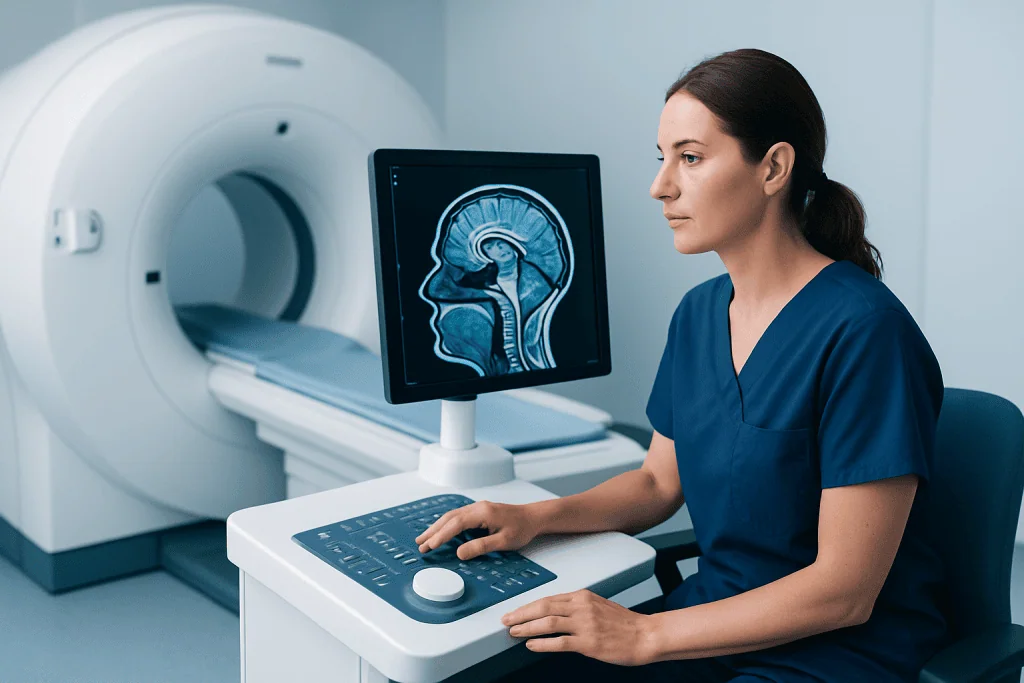
The brain has several major regions, each with important responsibilities. The cerebrum is the largest part. It is involved in thought, memory, language, sensory processing, and voluntary movement. The cerebrum is divided into two hemispheres, right and left, and each hemisphere contains lobes with different functions. For example, the frontal lobe helps with planning, judgment, and movement, while the temporal lobe is important for hearing and memory.
The cerebellum sits at the back of the brain and plays a key role in balance, coordination, and fine motor control. It helps movements become smooth and accurate. The brainstem connects the brain to the spinal cord and controls many life-sustaining functions, including breathing, heart rate, swallowing, and alertness. Even though it is relatively small, it is essential for survival.
Other important structures lie deeper in the brain. These include the thalamus, which helps relay sensory information, and the hypothalamus, which helps regulate temperature, hunger, thirst, hormones, and sleep. The limbic system, which includes structures such as the amygdala and hippocampus, is involved in emotion and memory. Problems in these areas can affect mood, learning, and behavior.
- Cerebrum: thinking, language, sensation, voluntary movement
- Cerebellum: balance, posture, coordination
- Brainstem: breathing, heart rate, consciousness
- Thalamus: sensory relay
- Hypothalamus: body temperature, hormones, appetite, sleep
- Limbic system: memory and emotion
How the Brain Works
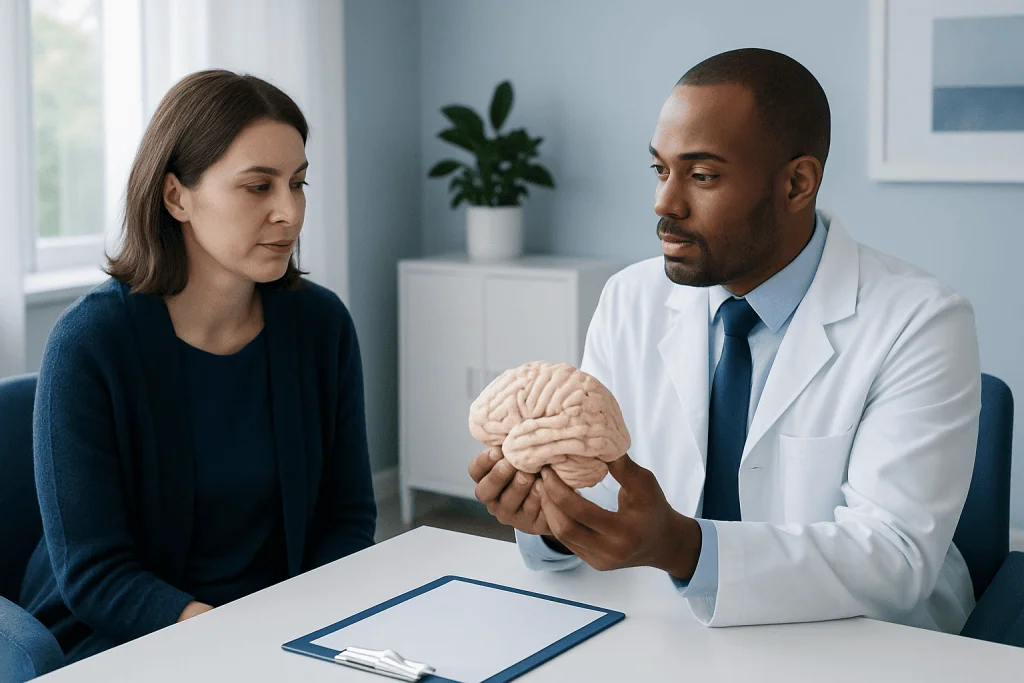
The brain is made up of billions of nerve cells called neurons, along with supporting cells called glial cells. Neurons communicate by sending electrical signals along their length and passing chemical messages across tiny gaps called synapses. These chemical messengers are known as neurotransmitters. This constant signaling allows the brain to process information quickly and coordinate complex tasks.
Brain cells form circuits and networks. Rather than working in isolation, different regions activate together to perform tasks such as understanding language, recognizing faces, or making decisions. For example, seeing a cup, reaching toward it, and lifting it involve visual processing, planning, muscle control, balance, and sensory feedback, all happening in a coordinated way.
The brain is also adaptable. This ability, called neuroplasticity, means the brain can reorganize some of its connections over time. Learning new skills, recovering from certain injuries, and adapting to life experiences all depend in part on this flexibility. Neuroplasticity does not mean that all damage can be reversed, but it helps explain how rehabilitation and practice can improve function.
The brain also relies on a steady supply of oxygen and nutrients from the blood. When blood flow is interrupted, brain cells can be injured quickly. This is why conditions such as stroke require immediate evaluation and treatment.
Brain Functions in Daily Life
Many everyday abilities depend on healthy brain function. Memory allows people to learn, store, and recall information. Attention helps the brain focus on what matters while filtering distractions. Language makes it possible to understand others and express thoughts. Executive functions, often linked to the frontal lobe, support planning, problem-solving, impulse control, and decision-making.
The brain also manages movement and sensation. It helps a person walk, write, swallow, and maintain posture. At the same time, it interprets signals from the eyes, ears, skin, nose, and tongue. This allows people to see, hear, feel temperature and pain, and coordinate their responses to the world around them.
Emotions, stress responses, and social behavior are also tied to brain networks. The brain helps regulate fear, pleasure, motivation, and emotional balance. Sleep is another major brain function. During sleep, the brain supports memory processing, restoration, and overall regulation of mental and physical health. When sleep is poor, concentration, mood, and reaction time may all suffer.
Some neurological conditions can change how the brain handles these tasks. For example, epilepsy may disrupt normal electrical activity and cause seizures, while disorders that affect brain chemistry or structure can influence movement, memory, or mood.
What Can Affect Brain Health?
Brain health is shaped by many factors across a person’s lifetime. Age, genetics, medical conditions, and lifestyle all play a role. High blood pressure, diabetes, high cholesterol, smoking, and obesity can harm blood vessels and reduce healthy blood flow to the brain. Head injuries, infections, sleep disorders, and substance misuse can also affect brain function.
Mental stimulation, regular physical activity, social engagement, and a balanced diet may help support brain function over time. Good sleep is especially important because it allows the brain to restore itself and process information. Managing stress can also help, as long-term stress may affect concentration, sleep quality, and emotional health.
Brain function can change temporarily or more persistently. Temporary symptoms might come from dehydration, lack of sleep, medication effects, fever, or low blood sugar. Longer-lasting problems may be related to structural, vascular, inflammatory, or degenerative disorders. Examples include traumatic brain injury, tumors, movement disorders, and memory disorders such as Alzheimer’s disease.
Protecting the brain involves both prevention and early medical attention when symptoms appear. Even subtle changes in memory, balance, speech, or behavior are worth discussing with a qualified doctor if they persist or worsen.
How Brain Problems Are Evaluated
Doctors assess brain health by combining a medical history, symptom review, physical examination, and neurological examination. They may ask about headaches, weakness, dizziness, memory changes, sleep, mood, coordination, speech, or seizures. The neurological exam often checks strength, reflexes, sensation, balance, vision, and mental status.
If more information is needed, imaging tests and other studies may be recommended. Brain imaging can help show structure, blood flow, or signs of injury and disease. Common tools include MRI and CT scan, which can help evaluate bleeding, stroke, tumors, inflammation, or other abnormalities. In some cases, blood tests, electroencephalography (EEG), or lumbar puncture may also be used.
Evaluation depends on the person’s symptoms and medical history. Not every symptom points to serious disease, and common concerns such as headaches or mild forgetfulness can have many possible causes. A careful assessment helps guide next steps and avoids unnecessary worry or treatment.
Treatment, Rehabilitation, and Supporting Brain Function
Treatment for brain-related conditions depends on the underlying cause. Some problems improve with rest, hydration, sleep, medication review, or treatment of conditions such as infection or high blood pressure. Others may need specialist care from neurologists, neurosurgeons, rehabilitation physicians, psychologists, or other experts.
Options may include medicines, physical therapy, occupational therapy, speech therapy, counseling, or procedures and surgery. When structural problems such as certain tumors, bleeding, or pressure changes are present, doctors may consider neurosurgery. Rehabilitation is especially important after injury or illness because it can help people regain strength, coordination, communication skills, and independence.
Brain support is not limited to medical treatment. Regular exercise, a nutritious eating pattern, good sleep habits, limiting alcohol, avoiding tobacco, staying mentally active, and managing chronic conditions can all help maintain brain function. Hearing and vision care also matter, since untreated sensory problems can affect communication, balance, and cognition.
For people needing expert assessment and coordinated care, Acibadem International’s multidisciplinary specialists and JCI-accredited hospitals diagnose and treat brain and nervous system conditions for international patients.
When to See a Doctor
Many brain-related symptoms are mild and temporary, but some need prompt medical attention. A doctor should evaluate persistent headaches, repeated dizziness, new memory problems, ongoing numbness, tremors, balance trouble, changes in speech, or unexplained changes in mood or behavior. Symptoms that interfere with work, school, or daily routines are also worth discussing.
Urgent care is especially important for sudden symptoms. Emergency evaluation is needed for sudden weakness or numbness on one side, trouble speaking, severe confusion, seizures, fainting, sudden vision loss, a new severe headache, or a head injury followed by vomiting, drowsiness, or behavior changes. These can be signs of a serious brain problem requiring immediate treatment.
People do not need to diagnose the cause on their own. Early evaluation can be reassuring when symptoms are benign, and it can also lead to faster treatment when a more serious condition is present. In brain health, paying attention to warning signs is an important part of prevention and care.
Frequently asked questions
What is the main function of the human brain?
The brain acts as the body’s control center. It manages thought, memory, movement, sensation, emotions, and many automatic functions such as breathing and sleep.
How does the brain communicate with the body?
The brain sends and receives signals through the spinal cord and nerves. It uses electrical activity and chemical messengers to help body systems respond quickly and work together.
Can the brain heal itself?
The brain has some ability to adapt and reorganize, a process called neuroplasticity. Recovery depends on the cause, severity, location of injury, and the person’s overall health, and rehabilitation can support improvement.
What helps keep the brain healthy?
Healthy habits such as regular physical activity, enough sleep, a balanced diet, stress management, social connection, and avoiding smoking can support brain health. Managing blood pressure, diabetes, and cholesterol is also important.
What symptoms might suggest a brain problem?
Possible warning signs include persistent headaches, memory changes, weakness, numbness, balance problems, speech changes, seizures, or sudden confusion. While these symptoms can have different causes, they should be assessed if they are new, severe, or ongoing.
When is a brain symptom an emergency?
Sudden one-sided weakness, trouble speaking, a seizure, a severe new headache, fainting, sudden vision loss, or confusion need urgent medical attention. These symptoms may signal a stroke or another serious neurological problem.
References
- World Health Organization
- National Institute of Neurological Disorders and Stroke
- National Institute on Aging
- Centers for Disease Control and Prevention
- MedlinePlus
This article is for general information only and is not a substitute for professional medical advice. Please consult a qualified doctor about your individual situation.
Heart care in Turkey — expert evaluation and treatment
JCI-accredited · board-certified surgeons · reply within 24h
Add us as a Preferred Source to see more of our trusted health content across Google Search, AI Overviews and Discover.
Check your numbers in seconds
BMI, calories, due date, blood pressure and 30+ more clinical calculators — free, instant, doctor-reviewed ranges.