Hybrid Operating Room: Real-Time Imaging During Complex Procedures

A hybrid operating room brings advanced imaging, surgical equipment, anesthesia, and specialist teams into one sterile environment. Real-time imaging helps doctors guide catheters, stents, valves, grafts, and surgical instruments with high precision.
Key Takeaways
- A hybrid operating room brings advanced imaging, surgical equipment, anesthesia, and specialist teams into one sterile environment.
- Real-time imaging helps doctors guide catheters, stents, valves, grafts, and surgical instruments with high precision.
- Hybrid ORs are commonly used in cardiovascular, vascular, neurosurgical, orthopedic, trauma, and some oncologic procedures.
- The approach may reduce the need to move a patient between rooms and can allow teams to switch from minimally invasive treatment to open surgery when needed.
- Radiation exposure, contrast dye use, anesthesia, and procedure-specific risks are carefully assessed before treatment.
A hybrid operating room combines a fully equipped surgical suite with advanced imaging systems, allowing doctors to see anatomy and devices in real time during complex procedures. This technology can support precise planning, minimally invasive treatment, and rapid decision-making in selected patients.
Overview: What Is a Hybrid Operating Room?
A hybrid operating room, often called a hybrid OR, is a specialized surgical suite that combines the functions of a traditional operating room with high-quality medical imaging. In this environment, surgeons, interventional specialists, anesthesiologists, nurses, and imaging technologists can work together while viewing detailed images of the body during a procedure.
The key feature is real-time imaging. Depending on the procedure, this may include fluoroscopy, angiography, computed tomography-like imaging, ultrasound, or image fusion technologies that combine previous scans with live images. These tools help the care team guide instruments through small incisions or blood vessels and confirm the result before the patient leaves the operating room.
Hybrid operating rooms are most often used for complex procedures where anatomy is delicate, access is challenging, or decisions may need to be made quickly. They are especially valuable in heart and vascular care, but they are also used in neurosurgery, orthopedics, trauma surgery, and some cancer-related procedures.
How Real-Time Imaging Supports Complex Procedures
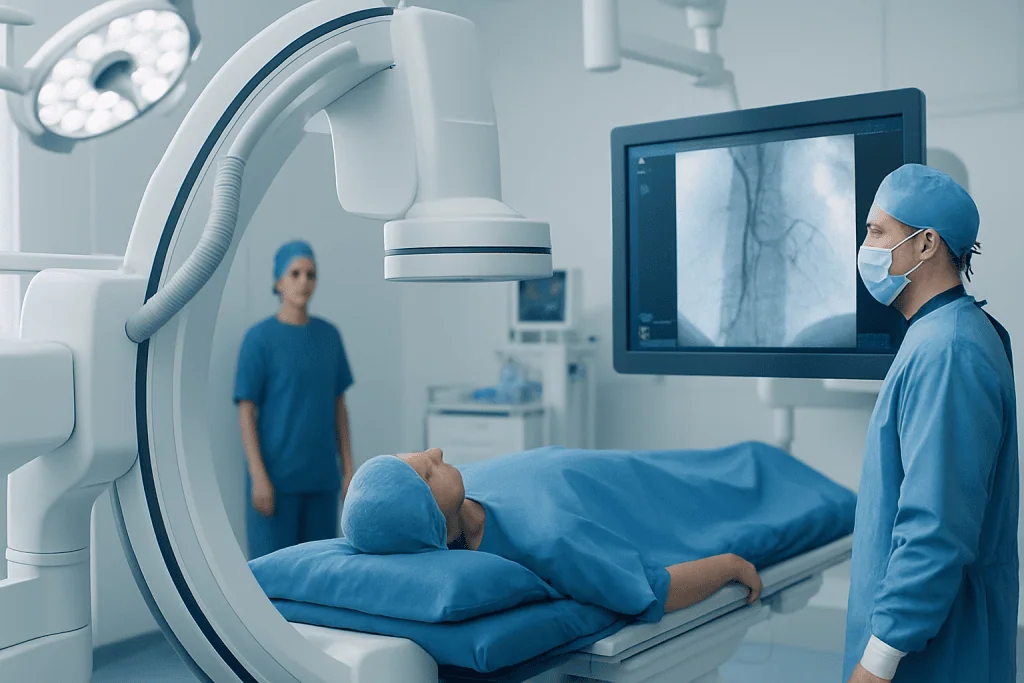
In many modern procedures, doctors do not need to directly expose the entire treatment area through a large incision. Instead, they may use catheters, wires, endoscopes, stents, valves, screws, or other devices that are guided to the target area. Real-time imaging acts like a visual map, helping the team understand where the instruments are and how the body is responding.
For example, in a vascular procedure, live angiography can show blood flow before and after a stent is placed. In certain heart procedures, imaging can help guide a valve or device into position. In spine or trauma surgery, three-dimensional imaging can help confirm alignment or implant placement during the operation rather than after it.
This immediate feedback can be important because anatomy varies from person to person. A hybrid OR allows the team to adjust the plan during the procedure based on what is seen on the imaging screens. It can also help confirm that the intended treatment goal has been achieved, such as improved blood flow, accurate device placement, or adequate repair.
Common Procedures Performed in a Hybrid OR

Hybrid operating rooms are used when a procedure benefits from both surgical readiness and advanced imaging. Not every surgery needs this level of technology, but it can be helpful in selected patients with complex anatomy, multiple medical conditions, or procedures that combine open and endovascular techniques.
Examples may include:
- Cardiovascular procedures: transcatheter valve procedures, selected aortic repairs, and complex rhythm or structural heart interventions.
- Vascular surgery: endovascular aneurysm repair, peripheral artery interventions, hybrid bypass and stenting procedures, and treatment of complex vessel narrowing.
- Neurosurgery: selected brain and spine procedures where imaging helps localize anatomy or confirm implant position.
- Orthopedic and trauma surgery: complex fracture repair, spine stabilization, or procedures requiring precise navigation.
- Oncologic and interventional procedures: selected tumor treatments, biopsies, or targeted therapies when advanced imaging improves guidance.
The exact use depends on the hospital’s equipment, the expertise of the medical team, and the patient’s diagnosis. The decision to use a hybrid OR is made after reviewing imaging studies, overall health, treatment goals, and available alternatives.
Potential Benefits for Patients and Care Teams
The main advantage of a hybrid operating room is integration. Instead of separating imaging, intervention, anesthesia, and surgical care into different locations, the necessary technology and specialists are available in one sterile space. This can reduce the need to move a patient between departments during a complex procedure.
For suitable patients, a hybrid OR may support minimally invasive or less invasive treatment approaches. Smaller access points may be used in some procedures, and real-time imaging helps guide the devices with precision. In certain cases, this may be associated with shorter hospital stays or faster recovery compared with more extensive surgery, although outcomes depend on the individual condition and procedure.
Another important benefit is flexibility. If an unexpected finding occurs, or if a minimally invasive approach is not sufficient, the team may be able to modify the plan in the same room. This is one reason hybrid ORs are useful for high-complexity cardiovascular and vascular procedures, where both catheter-based treatment and open surgical capability may be needed.
For the care team, imaging during the procedure can improve communication. Surgeons, interventional physicians, anesthesiologists, and nurses view the same information in real time, which supports coordinated decision-making.
Safety Considerations: Radiation, Contrast Dye, and Anesthesia
Like all medical technologies, hybrid operating rooms are used with careful safety planning. Many image-guided procedures use X-ray-based imaging, which involves radiation exposure. The medical team uses the lowest practical exposure needed to obtain useful images, and protective equipment and monitoring are used for staff and patients.
Some procedures require contrast dye to make blood vessels or organs visible on imaging. Before treatment, doctors review kidney function, allergy history, medications, hydration status, and other risk factors. Patients with kidney disease, previous contrast reactions, or certain chronic illnesses may need additional precautions or alternative imaging strategies.
Anesthesia is another important part of care. Depending on the procedure, the patient may receive local anesthesia with sedation, regional anesthesia, or general anesthesia. The anesthesiology team monitors breathing, heart rhythm, blood pressure, oxygen levels, pain control, and overall stability throughout the procedure.
Patients should understand that a hybrid OR does not remove all risks. Possible risks depend on the specific procedure and may include bleeding, infection, blood vessel injury, device-related complications, reaction to medication or contrast, and the need for additional treatment. The doctor explains these risks in the informed consent discussion.
Preparing for a Procedure in a Hybrid Operating Room
Preparation usually begins with a detailed evaluation. The care team may review blood tests, electrocardiogram results, echocardiography, CT, MRI, ultrasound, angiography, or other imaging studies. These tests help the team plan the safest access route, choose appropriate devices, and decide whether a hybrid OR is the best setting.
Patients are usually asked about allergies, previous anesthesia experiences, implanted devices, kidney disease, diabetes, bleeding disorders, and all medications or supplements. Blood thinners, diabetes medicines, and certain other drugs may need special instructions, but patients should not stop any prescribed medication unless their doctor tells them to do so.
Before the procedure, patients may receive guidance about fasting, bathing, arrival time, and what to bring to the hospital. A family member or caregiver may be asked to accompany the patient, especially if sedation or anesthesia will be used. The team also explains what will happen before, during, and after the procedure so the patient knows what to expect.
Good preparation includes asking questions. Patients may want to ask why a hybrid OR is recommended, what alternatives exist, what type of anesthesia will be used, how long recovery may take, and what symptoms should be reported after discharge.
Recovery and Follow-Up After Image-Guided Procedures
Recovery depends on the type of procedure, the patient’s general health, and whether the treatment was minimally invasive, open, or a combination of both. After the procedure, the patient is monitored in a recovery area, intensive care unit, or hospital ward. Nurses and doctors check vital signs, pain level, the access site or incision, circulation, and overall comfort.
If a catheter was inserted through the groin, wrist, arm, or neck, the access site may need to be kept still for a period of time. Patients may be asked to report swelling, increasing pain, bleeding, numbness, weakness, fever, shortness of breath, chest discomfort, or any sudden change in symptoms. These instructions are specific to the procedure and should be followed closely.
Follow-up may include wound checks, blood tests, medication adjustments, physical rehabilitation, or repeat imaging to confirm that the treatment remains effective. For example, vascular repairs may require surveillance imaging, while orthopedic or spine procedures may require activity guidance and rehabilitation planning.
Patients should attend all scheduled follow-up visits, even if they feel well. Many conditions treated in a hybrid OR require long-term monitoring to protect the result and manage underlying risk factors such as high blood pressure, diabetes, cholesterol, or smoking.
When to Discuss a Hybrid OR With a Specialist
A patient may wish to ask about a hybrid operating room when facing a complex procedure involving the heart, blood vessels, brain, spine, major trauma, or advanced image-guided treatment. The most appropriate setting depends on the diagnosis, the risks of different approaches, available expertise, and the patient’s personal health goals.
It is especially reasonable to discuss this option if the procedure may involve both catheter-based and surgical techniques, if prior imaging shows complex anatomy, or if the care team has mentioned advanced imaging guidance. A qualified specialist can explain whether a hybrid OR adds value in that individual case.
Patients seeking care away from home should also ask how records, imaging, language support, travel timing, and follow-up will be coordinated. Acibadem International’s multidisciplinary specialists and JCI-accredited hospitals evaluate and treat complex conditions, including procedures that may be performed in hybrid operating rooms, for international patients when clinically appropriate.
A hybrid operating room is best understood as a tool that supports expert care rather than a treatment by itself. The most important decision is choosing a treatment plan that is medically appropriate, clearly explained, and tailored to the patient’s condition.
Frequently asked questions
What makes a hybrid operating room different from a standard operating room?
A hybrid operating room includes advanced imaging equipment inside a fully sterile surgical suite. This allows the team to perform surgery and obtain real-time images without moving the patient to another imaging department. It is designed for complex procedures where both surgical access and imaging guidance may be needed.
Does a hybrid OR mean the procedure is always minimally invasive?
Not always. Many hybrid OR procedures use minimally invasive or catheter-based techniques, but some involve open surgery or a combination of approaches. The surgical plan depends on the condition, anatomy, and safest treatment option for the patient.
Is real-time imaging during surgery safe?
Real-time imaging is widely used in modern medical care and is performed with safety protocols. If X-ray imaging is used, the team works to limit radiation exposure while still obtaining the images needed for safe guidance. The benefits and risks are discussed before the procedure.
Will the patient be awake during a hybrid OR procedure?
This depends on the procedure and the patient’s health. Some procedures are performed with local anesthesia and sedation, while others require general anesthesia. The anesthesiology team explains the plan and monitors the patient throughout the procedure.
Who decides whether a hybrid operating room is needed?
The treating specialist or multidisciplinary team decides based on the diagnosis, imaging findings, procedure complexity, and patient safety. A hybrid OR is recommended when its imaging and surgical capabilities are expected to support the treatment plan.
What should patients ask before a procedure in a hybrid OR?
Patients can ask why the hybrid OR is recommended, what alternatives are available, what type of imaging and anesthesia will be used, and what risks apply to their situation. They should also ask about recovery time, follow-up imaging, medication changes, and warning symptoms after discharge.
References
- World Health Organization
- American College of Radiology
- European Society of Cardiology
- Society for Vascular Surgery
- American Society of Anesthesiologists
This article is for general information only and is not a substitute for professional medical advice. Please consult a qualified doctor about your individual situation.
Explore treatments in Turkey — costs, top hospitals & a free quote
JCI-accredited · board-certified surgeons · reply within 24h
Add us as a Preferred Source to see more of our trusted health content across Google Search, AI Overviews and Discover.