Hyperpigmentation drawing: Symptoms, Causes, and Treatment — Complete Patient Guide

Hyperpigmentation is common and usually appears as flat brown, tan, gray, or darker patches on the skin. Sun exposure, acne, eczema, hormones, skin injury, and some medicines can trigger or worsen pigment changes.
Key Takeaways
- Hyperpigmentation is common and usually appears as flat brown, tan, gray, or darker patches on the skin.
- Sun exposure, acne, eczema, hormones, skin injury, and some medicines can trigger or worsen pigment changes.
- A dermatologist often diagnoses hyperpigmentation by examining the skin and asking about symptoms, products, sun exposure, and medical history.
- Treatment may include sun protection, topical medicines, peels, laser-based procedures, and management of the underlying condition.
- New, rapidly changing, painful, or bleeding dark spots should be checked by a doctor to rule out other skin conditions.
Hyperpigmentation drawing generally refers to the visible pattern or mapped appearance of darker skin patches caused by extra melanin. It is a symptom rather than a disease itself, and treatment depends on the cause, skin type, and how deep the pigment lies in the skin.
Overview: what hyperpigmentation drawing means
Hyperpigmentation drawing usually describes the visible pattern, outline, or distribution of darker areas on the skin. People may use this phrase when searching for an explanation of patchy facial discoloration, acne marks, sun spots, or other pigment changes that seem to form shapes or zones on the skin. In medical terms, hyperpigmentation means the skin is producing or holding more pigment than usual in certain areas.
This change happens because melanin, the natural pigment that gives skin its color, increases in the epidermis, the dermis, or both. The result may look like freckles, larger patches, post-acne marks, or symmetrical darkening across the cheeks, forehead, or upper lip. The appearance can vary widely depending on a person’s skin tone, sun exposure, hormones, and any underlying skin inflammation.
Hyperpigmentation is not one single disease. It is a sign with many possible causes, including sun damage, healing after irritation, hormonal changes, and inflammatory skin conditions. Because treatment works best when matched to the cause, a proper skin assessment is often more helpful than trying multiple products without guidance.
How hyperpigmentation can look and feel
Hyperpigmentation usually appears as flat areas of skin that are darker than the surrounding skin. These spots or patches may be light brown, dark brown, gray-brown, or almost black, depending on the person’s natural skin tone and the depth of the pigment. Some areas are small and sharply defined, while others are larger, more diffuse, or symmetrical.
It often develops on the face, hands, shoulders, chest, and other places that receive regular sun exposure. It can also appear wherever the skin has been inflamed or injured, such as after acne, a rash, burns, insect bites, or cosmetic procedures. In these cases, the dark area may remain after the original redness or irritation has settled.
Hyperpigmentation itself is usually not painful. However, the skin condition that caused it may have been itchy, inflamed, or uncomfortable. A clinician will also look for features that suggest something other than simple pigment change, such as a raised lesion, irregular border, crusting, bleeding, or one spot that changes quickly.
- Flat brown or gray patches
- Symmetrical facial darkening, especially on the cheeks or forehead
- Marks left after acne or eczema
- Sun-related spots on exposed skin
- Color changes after friction, irritation, or injury
Common causes and risk factors
One of the most common causes of hyperpigmentation is sun exposure. Ultraviolet light stimulates melanin production, and over time this can lead to darker spots or uneven tone, especially on the face and hands. Even when pigment starts for another reason, sunlight often makes it more visible and harder to treat.
Another frequent cause is post-inflammatory hyperpigmentation, which appears after the skin has been irritated or injured. Acne, eczema, allergic reactions, shaving bumps, burns, and cosmetic irritation can all leave lingering dark marks. This is especially common in medium to deeper skin tones, where pigment-producing cells may respond strongly to inflammation.
Hormonal changes can also trigger hyperpigmentation, particularly melasma, which often causes symmetrical patches on the face. Pregnancy, birth control pills, and hormone-related conditions may contribute. Other triggers include certain medications, friction, heat, and rarely some medical conditions that affect the skin or hormones. For people with persistent acne-related marks, understanding the original breakout can be helpful, including evaluation for acne.
Risk tends to be higher in people with greater sun exposure, a personal or family history of melasma, darker natural skin tones, chronic inflammatory skin conditions, or frequent use of irritating skin products. Picking at the skin or overusing harsh exfoliants can worsen both inflammation and the marks that follow.
Types of hyperpigmentation doctors often consider
Clinicians often group hyperpigmentation by its cause and pattern rather than by the color alone. Melasma commonly affects the cheeks, forehead, nose, or upper lip and often has a symmetrical pattern. Post-inflammatory hyperpigmentation follows acne, eczema, or skin injury. Solar lentigines, sometimes called sun spots, are linked to cumulative ultraviolet exposure and usually appear on sun-exposed areas.
There are also less common patterns, such as medication-related pigmentation, friction-related darkening, or pigment changes associated with underlying medical disorders. Some conditions can look similar to hyperpigmentation, including certain moles, fungal conditions, or skin cancers, which is why a skin examination matters if the diagnosis is uncertain.
The depth of pigment is important because it influences treatment response. Pigment limited to the superficial skin layers often responds more readily to topical treatment and careful sun protection. Deeper pigment can be slower to fade and may need more specialized approaches. When inflammation from eczema or another skin disorder is ongoing, controlling that problem is an important part of treatment.
How hyperpigmentation is diagnosed
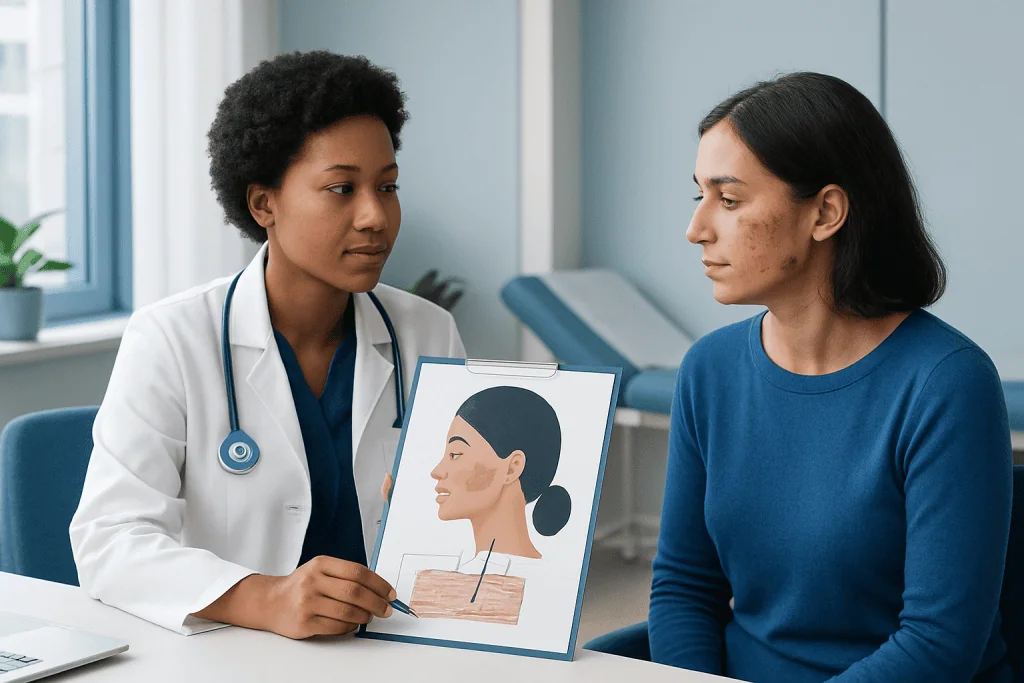
Diagnosis usually begins with a medical history and skin examination. A doctor may ask when the discoloration started, whether it followed acne, a rash, pregnancy, new medications, or a skin treatment, and whether it becomes darker with sun exposure. Information about skin care products, hair removal methods, and any history of irritation can also be useful.
In many cases, the diagnosis can be made clinically by looking at the pattern and location of the pigment. A dermatologist may use a special light or magnification tool to assess the skin more closely and estimate how deep the pigment sits. Photos can help monitor changes over time and compare response to treatment.
If a spot looks unusual, a doctor may recommend further evaluation to rule out other conditions. This might include dermoscopic assessment or, in selected cases, a skin biopsy. Testing is especially important when a lesion is asymmetrical, raised, rapidly changing, or associated with symptoms such as bleeding or persistent crusting.
Treatment options for hyperpigmentation
Treatment depends on the cause, the depth of the pigment, the body area involved, and the person’s skin type. The first step is usually to reduce triggers, especially sun exposure and ongoing skin irritation. Daily broad-spectrum sunscreen, protective clothing, and gentle skin care are central to nearly every treatment plan because pigment often returns or worsens without sun protection.
Topical treatments may be recommended to reduce pigment production, speed cell turnover, or calm inflammation. Doctors sometimes use lightening agents, retinoid-based creams, azelaic acid, or other prescription and nonprescription options based on the diagnosis. It is important that these products are used appropriately, because overuse or irritation can make pigmentation worse rather than better.
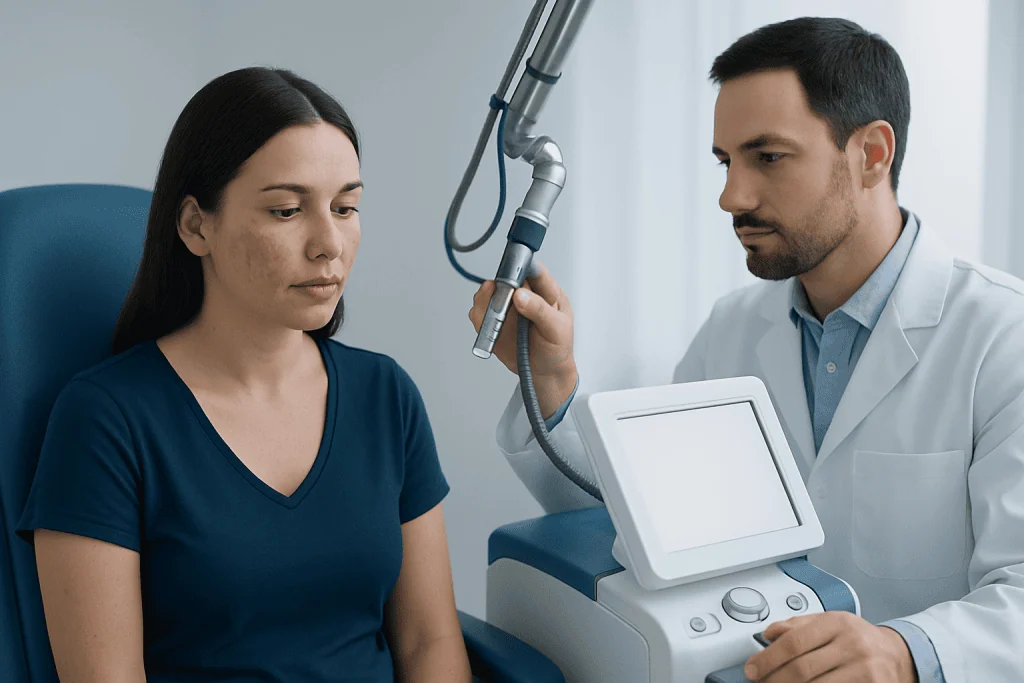
For selected patients, procedures may also help. These can include carefully chosen chemical peels, laser or light-based treatments, and other dermatologist-led approaches. Not every procedure is suitable for every skin tone or pigment type, so professional assessment matters. In people whose pigmentation follows chronic breakouts or textural skin concerns, treatment may also include acne treatment or, in appropriate cases, laser skin resurfacing.
Results usually take time. Hyperpigmentation often fades gradually over weeks to months, and deeper pigment can take longer. A realistic plan focuses on steady improvement, prevention of new darkening, and safe care tailored to the individual’s skin.
Self-care, prevention, and daily habits
Prevention is often easier than treatment. Consistent sun protection is one of the most effective steps, even on cloudy days or when spending short periods outdoors. A broad-spectrum sunscreen, reapplication when needed, and physical barriers such as hats can help prevent existing pigment from deepening and reduce the risk of new patches forming.
Gentle skin care also matters. Over-scrubbing, picking, aggressive exfoliation, and frequent use of irritating products can trigger inflammation and lead to more discoloration. People who are prone to acne or eczema may benefit from an early treatment plan to limit the inflammation that often leaves marks behind.
It can also help to introduce new active skin care products slowly and with professional advice when possible. If a product causes burning, rash, or worsening discoloration, it is wise to stop using it and seek guidance. Toward the end of care planning, some patients may choose consultation at centers such as Acibadem International, where multidisciplinary specialists in JCI-accredited hospitals evaluate skin conditions and treatment options for international patients.
When to seek medical care
Medical advice is recommended if hyperpigmentation appears suddenly, spreads quickly, or does not improve despite careful sun protection and gentle skin care. A doctor should also assess dark patches that are associated with itching, pain, redness, scaling, or repeated inflammation, because the underlying cause may need treatment.
Prompt evaluation is especially important for a single dark spot that changes in size, shape, or color, becomes raised, bleeds, forms a crust, or looks very different from other spots on the body. These features do not always mean something serious, but they should be checked to rule out other skin disorders.
People who develop hyperpigmentation during pregnancy, after starting a new medicine, or after a cosmetic procedure may also benefit from professional guidance. Early advice can help avoid treatments that irritate the skin and support a safer, more effective plan for improvement.
Frequently asked questions
Is hyperpigmentation harmful?
Hyperpigmentation itself is often harmless and mainly a cosmetic concern. However, some dark spots can resemble other skin conditions, so new or changing lesions should be examined by a qualified doctor.
Can hyperpigmentation go away on its own?
Yes, some forms can fade gradually, especially post-inflammatory marks after acne or irritation. The process may take weeks to months, and sun exposure can slow improvement or make the pigment darker.
What is the difference between melasma and post-inflammatory hyperpigmentation?
Melasma usually appears as symmetrical patches, often on the face, and is commonly linked to hormones and sun exposure. Post-inflammatory hyperpigmentation develops after the skin has been inflamed or injured, such as after acne, eczema, or a rash.
Does sunscreen really help hyperpigmentation?
Yes, sunscreen is one of the most important parts of treatment and prevention. It helps stop existing pigment from getting darker and reduces the chance of new discoloration forming.
Are home remedies safe for dark spots?
Some home approaches may be too harsh and can irritate the skin, which may worsen pigmentation. It is safer to use gentle, evidence-based products and seek medical advice before trying strong acids, scrubs, or unverified remedies.
Which doctor treats hyperpigmentation?
A dermatologist is the specialist who most often evaluates and treats hyperpigmentation. They can identify the cause, rule out look-alike conditions, and recommend a plan suited to the person's skin type and medical history.
References
- American Academy of Dermatology
- National Health Service
- Mayo Clinic
- DermNet
- National Institute of Arthritis and Musculoskeletal and Skin Diseases
This article is for general information only and is not a substitute for professional medical advice. Please consult a qualified doctor about your individual situation.
Explore treatments in Turkey — costs, top hospitals & a free quote
JCI-accredited · board-certified surgeons · reply within 24h
Add us as a Preferred Source to see more of our trusted health content across Google Search, AI Overviews and Discover.

More from the Health Library



Related Specialists

Prof. Dr. Sefa Müezzinoğlu
Orthopedic Surgery & Traumatology
Fzt. Dilek Küçükvardar
Physical Medicine & Rehabilitation
Gülçin Selen Akgün
Physical Medicine & Rehabilitation
Dr. Nuri Soysal
Aesthetic Plastic & Reconstructive Surgery