Imperforate Anus Surgery: Procedure, Recovery and Results

Imperforate anus is a congenital condition in which the anal opening is absent or not connected normally to the rectum. Many children need staged care, which may include a temporary colostomy, reconstructive surgery and later colostomy closure.
Key Takeaways
- Imperforate anus is a congenital condition in which the anal opening is absent or not connected normally to the rectum.
- Many children need staged care, which may include a temporary colostomy, reconstructive surgery and later colostomy closure.
- Recovery involves wound care, pain management, gradual feeding and, in some cases, anal dilations to help prevent narrowing.
- Long-term bowel function differs between children; some need an individualized bowel-management program.
- Ongoing follow-up with pediatric surgery, gastroenterology, urology and other specialists can support bowel, urinary and developmental health.
Imperforate anus surgery is a series of carefully planned operations that creates or reconstructs the anal opening in babies born with an anorectal malformation. The type of repair, recovery period and long-term bowel control vary with the child’s anatomy and whether other organs are affected.
Overview: what imperforate anus surgery does
Imperforate anus surgery treats an anorectal malformation, a condition present at birth in which the anus and rectum have not formed or connected in the usual way. The goal is to create a safe route for stool to leave the body and, whenever possible, position the rectum within the muscles that contribute to bowel control.
The operation is usually performed during infancy by a pediatric surgeon with experience in colorectal conditions. Some babies can have a primary repair soon after birth, while others first need a temporary colostomy to divert stool through an opening in the abdomen until reconstructive surgery can be performed safely.
Families should know that surgery is an important step, but not always the final stage of care. Bowel continence, constipation, urinary function and growth are assessed over time, particularly as the child develops and begins toilet training.
How serious is an imperforate anus?

Imperforate anus is a serious congenital condition because a baby may not be able to pass stool normally. Without prompt assessment and treatment, bowel blockage can lead to abdominal swelling, vomiting, feeding difficulties and infection. Newborn care teams therefore evaluate suspected cases urgently after birth.
Its long-term outlook is highly individual. Some children have a relatively simple form of anorectal malformation and may achieve good bowel control after repair. Others have a more complex connection between the rectum and the urinary or reproductive tract, less developed pelvic muscles, nerve-related differences, or associated conditions affecting the spine, kidneys, heart or limbs.
Care commonly involves several specialties. Pediatric surgery coordinates the repair, while pediatric urology, gastroenterology, radiology, cardiology, genetics and rehabilitation professionals may be involved according to the child’s needs. Early treatment and regular follow-up help address complications and support healthy development.
Who may need surgery and how the team plans care
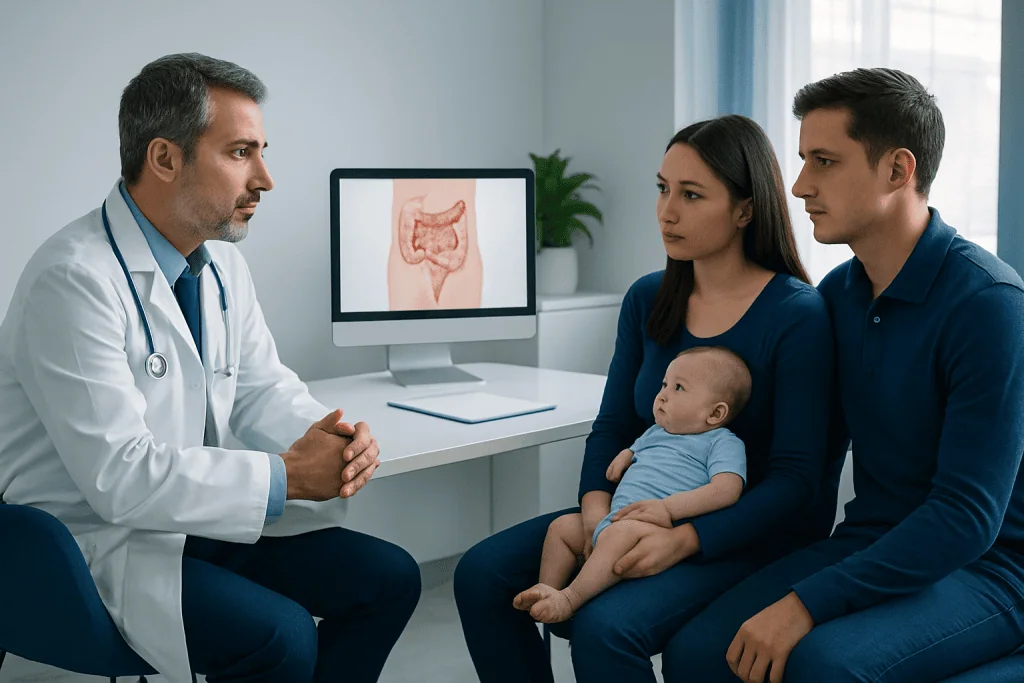
All babies diagnosed with imperforate anus require surgical assessment. The specific plan depends on where the rectum ends, whether there is a fistula (an abnormal connection) to the urinary tract or genital area, and whether stool can leave through an unusual opening. Physical examination and imaging help the team understand the anatomy before deciding on the safest timing and approach.
Tests may include abdominal and pelvic imaging, spinal imaging, echocardiography and kidney or bladder assessment. These investigations are not only for planning the repair; they also look for associated congenital differences that may influence anesthesia, surgery and long-term follow-up.
In a stable baby with anatomy suitable for early repair, surgery may be completed without a colostomy. In more complex cases, a colostomy may be recommended first. This allows stool to pass safely while the baby grows and enables detailed imaging of the distal bowel before the definitive reconstruction.
- Primary repair: reconstructive surgery performed early without a preceding colostomy in selected cases.
- Staged repair: colostomy, later anorectal reconstruction, then colostomy closure after healing.
- Individualized planning: based on anatomy, general health and associated medical conditions.
How imperforate anus surgery works: step by step
The most common reconstructive approach is called posterior sagittal anorectoplasty, often shortened to PSARP. Under general anesthesia, the surgeon makes an incision in the midline between the buttocks, identifies the rectum and surrounding pelvic muscles, and carefully brings the rectum through the muscle complex to form an anal opening in the appropriate position.
If a fistula is present, it is separated and closed or reconstructed as needed. In some complex malformations, surgeons may use abdominal, laparoscopic or combined approaches to mobilize the rectum safely. The technique is selected according to the child’s individual anatomy rather than a single standard operation.
After the reconstruction, the surgical team monitors breathing, comfort, feeding, wound healing and bowel output. When a colostomy is part of the plan, it remains in place while the new anal opening heals. Before the colostomy is closed, the team confirms that healing is satisfactory and discusses the preparation needed for the next procedure.
Parents receive practical teaching before discharge. This may include colostomy care, keeping the surgical area clean, recognizing signs of infection or blockage, and performing anal dilations when prescribed. Dilations are not required in every child, but they may help reduce the risk of scar-related narrowing after repair.
How long does it take to recover from imperforate anus surgery?
Initial hospital recovery after reconstructive surgery often takes several days, but the complete healing process continues for weeks. The exact length of stay depends on the type of repair, the child’s age, feeding progress, pain control, wound healing and whether there are other medical conditions requiring care.
During the first weeks at home, parents usually focus on protecting the incision, following feeding guidance and attending scheduled surgical reviews. If anal dilations are recommended, the team explains when to start, how often to perform them and when the schedule can be reduced. Families should not begin or change a dilation plan without clinical instruction.
For children undergoing staged repair, recovery includes separate periods after the colostomy, definitive reconstruction and colostomy closure. Bowel habits may remain unpredictable during infancy and early childhood. Long-term adjustment can take months or years because bowel control depends on anatomy, muscles, nerves, diet, constipation prevention and developmental readiness for toilet training.
Benefits, risks and long-term results
The central benefit of imperforate anus surgery is that it enables stool to pass through a reconstructed anal opening and reduces the immediate risks of bowel obstruction. Positioning the rectum as appropriately as possible within the sphincter muscles gives the child the best opportunity for bowel control, although no operation can guarantee continence.
As with other major operations, potential risks include bleeding, infection, reactions to anesthesia, wound separation and injury to nearby structures. Longer-term concerns can include anal narrowing, rectal prolapse, constipation, soiling, bowel-control difficulties and, in some children, urinary or sexual health concerns later in life. The likelihood of these issues depends substantially on the original malformation and associated conditions.
Many children benefit from a structured bowel-management plan. This may involve regular toilet sitting when developmentally appropriate, dietary adjustments, medicines prescribed by the clinician, enemas or other approaches to achieve predictable emptying. The plan is tailored to the child and should be reviewed as growth, school routines and symptoms change.
Acibadem International’s multidisciplinary specialists and JCI-accredited hospitals provide evaluation and treatment for international patients with complex pediatric surgical conditions, with follow-up planned around each child’s clinical needs.
How do you poop after a sphincterotomy?
A sphincterotomy is not the usual name for imperforate anus reconstruction. It is a different procedure in which a surgeon cuts part of a sphincter muscle, most commonly to treat a painful anal fissure. After a sphincterotomy, stool still passes through the anus in the usual way; the procedure is intended to reduce muscle spasm and pain during bowel movements.
For children after imperforate anus repair, stool passes through the newly created or reconstructed anal opening once the surgeon confirms it is safe. If the child has a temporary colostomy, stool will initially leave through the stoma on the abdomen until a later colostomy closure reconnects bowel flow to the reconstructed anus.
Following any anorectal procedure, families should follow the surgeon’s instructions about feeding, hydration, stool-softening medicines or other bowel care. Straining, severe pain, persistent vomiting, a swollen abdomen, fever or an inability to pass stool should be assessed promptly by the treating team.
When to seek medical care
A newborn who has not passed meconium, has no visible anal opening, develops a swollen abdomen, vomits green fluid, feeds poorly or appears unwell needs urgent medical assessment. These symptoms can occur with intestinal obstruction and should not be managed at home.
After surgery, parents should contact the surgical team promptly for fever, increasing redness or drainage from the wound, worsening pain, repeated vomiting, a markedly swollen abdomen, reduced wet diapers, unusual sleepiness, or concerns about the colostomy. Emergency care is appropriate if the child appears severely unwell, has breathing difficulty or cannot be awakened normally.
Long-term review is also important if constipation, stool leakage, recurrent urinary infections, difficulty urinating or concerns about growth and toileting affect daily life. Early support can improve comfort, protect urinary and bowel health, and help families establish manageable routines.
Frequently asked questions
What is imperforate anus surgery?
Imperforate anus surgery is reconstructive treatment for a baby born without a normal anal opening or with an abnormal connection between the rectum and nearby organs. The surgeon creates an opening for stool and positions the rectum as appropriately as possible within the pelvic muscles. Some children need a temporary colostomy before the definitive repair.
How long does it take to recover from imperforate anus surgery?
The first recovery period in hospital is often several days, while wound healing continues over the following weeks. Children with a staged repair have recovery periods after more than one operation. Longer-term bowel function develops over time and may require ongoing follow-up and bowel-management support.
How serious is an imperforate anus?
Imperforate anus requires urgent newborn assessment because stool may be unable to leave the body normally. Long-term severity varies widely according to the specific anatomy, pelvic muscles, nerves and any associated conditions. With appropriate surgery and follow-up, many children can grow and participate fully in daily life.
How do you poop after a sphincterotomy?
After a sphincterotomy, stool usually passes through the anus normally; the procedure relaxes part of the muscle to help a different condition, such as an anal fissure. In imperforate anus repair, stool passes through the reconstructed opening after healing. If a temporary colostomy is present, stool passes through the stoma until it is later closed.
Is imperforate anus considered a disability?
Imperforate anus itself does not automatically determine disability status. Some children have few ongoing limitations after treatment, while others may have bowel, bladder, mobility or associated health needs that affect daily activities. Eligibility for disability support depends on local laws, functional impact and clinical documentation.
Will a child need lifelong care after imperforate anus repair?
Many children benefit from long-term follow-up, especially through toilet-training years and adolescence. Follow-up can identify constipation, soiling, narrowing, urinary concerns and psychosocial challenges early. The intensity of care depends on the type of malformation and the child’s symptoms.
References
- American Pediatric Surgical Association
- National Institute of Diabetes and Digestive and Kidney Diseases
- MedlinePlus
- Children’s Hospital of Philadelphia
- Cleveland Clinic
This article is for general information only and is not a substitute for professional medical advice. Please consult a qualified doctor about your individual situation.
Persistent digestive symptoms? Get evaluated in Turkey
JCI-accredited · board-certified surgeons · reply within 24h
Add us as a Preferred Source to see more of our trusted health content across Google Search, AI Overviews and Discover.

More from the Health Library



Related Specialists

Dr. Neşe Ergül
Pediatrics
Assoc. Prof. Dr. Süleyman Şahin
Medical Oncology
Dyt. Beyza Erdoğan Aksan
Nutrition & Diet
Assoc. Prof. Dr. Barış Görgün
Orthopedic Surgery & Traumatology