Implantation Estimator: How It Works, Recovery, and What to Expect

An implantation estimator provides general guidance, not a diagnosis or final treatment recommendation. Dental implant planning usually includes an oral examination and 3D imaging to assess jawbone and nearby structures.
Key Takeaways
- An implantation estimator provides general guidance, not a diagnosis or final treatment recommendation.
- Dental implant planning usually includes an oral examination and 3D imaging to assess jawbone and nearby structures.
- Implant treatment may involve tooth removal, bone grafting, implant placement, healing, and fitting a final crown.
- Healing times vary, but the implant commonly needs several months to bond with the jawbone.
- Good oral hygiene, avoiding tobacco, and attending follow-up visits support long-term implant health.
An implantation estimator is a planning tool that can help a person understand whether dental implants may be appropriate, the likely treatment stages, and the recovery factors involved. It cannot replace a dental examination, because bone health, gum condition, medical history, and imaging findings all influence an individual treatment plan.
What Is an Implantation Estimator?
An implantation estimator is usually an online questionnaire, calculator, or initial planning resource used to help people learn whether dental implant treatment may be relevant to their situation. It may ask about missing teeth, general health, smoking, gum problems, prior dental treatment, and personal treatment goals. The result is an educational starting point rather than a clinical decision.
Dental implants are small posts, commonly made from titanium or a titanium-based material, that are placed in the jawbone to support a replacement tooth, bridge, or denture. The implant functions as an artificial tooth root. After healing, a connector called an abutment and a custom-made restoration are attached to restore appearance and chewing function.
An estimator cannot show the amount or quality of jawbone, identify active gum disease, or assess the position of nerves and sinuses. These details require an in-person dental assessment and imaging. A dentist or oral and maxillofacial surgeon uses this information to determine whether implants are suitable and to discuss alternatives when they are not.
How Dental Implant Planning Works
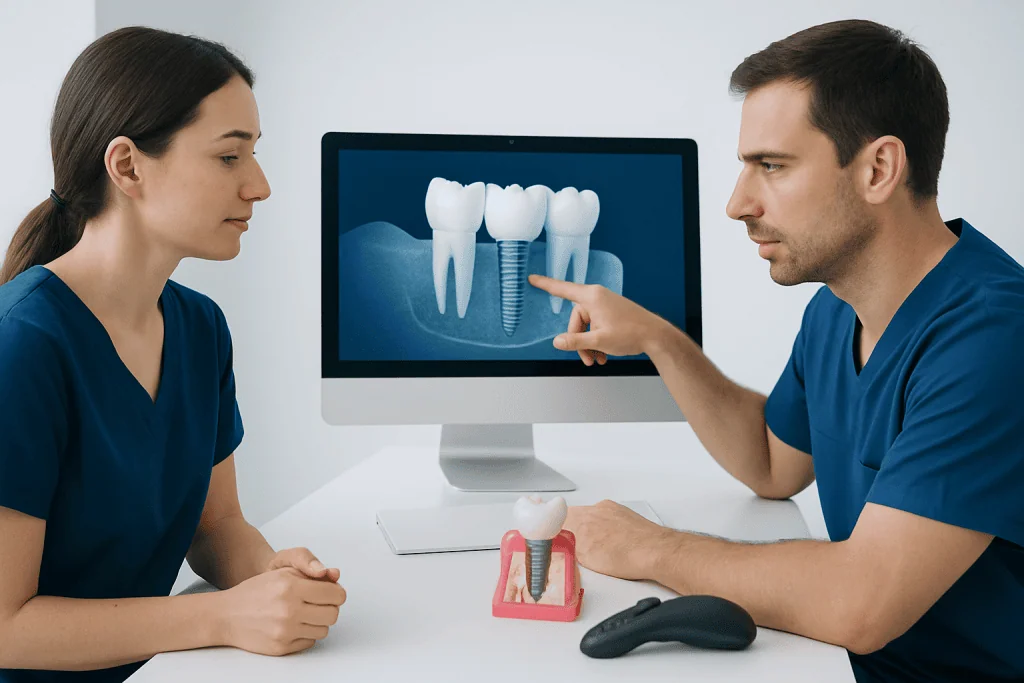
Dental implant planning begins with a discussion of the person’s symptoms, dental history, health conditions, medicines, and expectations. The clinician examines the teeth, gums, bite, and areas where teeth are missing or need to be removed. Existing infection, untreated tooth decay, teeth grinding, and gum disease may need attention before implant surgery is considered.
Dental X-rays and, in many cases, cone-beam computed tomography (CBCT) provide detailed views of the jaw. These images help the care team measure available bone and plan implant position while avoiding important structures such as nerves in the lower jaw and the maxillary sinus in the upper jaw. Digital scans may also be used to design the final crown, bridge, or denture.
A useful implantation estimator should therefore be understood as a way to prepare for this consultation. It may outline typical stages and questions to ask, but it cannot reliably predict whether bone grafting, sinus lifting, sedation, temporary teeth, or other procedures will be needed. A personalized plan is based on clinical findings, not on a calculator result alone.
Who May Be a Candidate for Dental Implants?

Many adults with one or more missing teeth can be considered for dental implants. Suitable candidates generally have healthy gums or gum disease that has been treated, enough bone to support an implant or the possibility of rebuilding bone, and a commitment to ongoing oral care. Implants can replace a single missing tooth, several missing teeth, or support a full-arch denture in selected cases.
Age alone does not usually determine eligibility. However, jaw growth should be complete before implant placement, so implants are not commonly placed in children and younger adolescents. The clinician also considers the cause of tooth loss, bite forces, oral hygiene habits, and whether a person is able to attend treatment and follow-up appointments.
Some health factors require careful planning rather than automatically ruling out treatment. These include poorly controlled diabetes, immune-suppressing conditions or medicines, a history of head and neck radiation, bleeding disorders, and medicines that affect bone turnover. Tobacco use can increase the chance of healing problems and implant complications. A person should share their full medical and medication history so their dental and medical teams can coordinate care safely.
Step-by-Step: What Happens During Implant Treatment?
The first stage may involve preparing the mouth for implant placement. If a damaged tooth must be removed, the implant may sometimes be placed at the same visit, but this is not appropriate in every case. If infection, bone loss, or gum disease is present, treatment and healing may be needed first. Some people require a bone graft to create a stable foundation, which can extend the overall timeline.
During implant placement, the clinician numbs the area with local anesthesia. Sedation may be available for some patients when clinically appropriate. A small opening is made in the gum, the implant site is prepared in the jawbone, and the implant is inserted. The gum may be closed over the implant or a healing cap may remain visible. The procedure is commonly performed as an outpatient treatment.
Over the following weeks to months, bone gradually heals around the implant in a process called osseointegration. Once the implant is stable, the clinician attaches an abutment and takes digital or physical impressions for the final restoration. A dental laboratory creates a crown, bridge, or implant-supported denture designed to match the person’s bite and surrounding teeth. The final fitting includes checks for comfort, appearance, and bite balance.
In selected situations, a temporary tooth may be fitted soon after implant placement. Immediate temporary restoration does not mean that the implant has fully healed, and it may require a softer diet and careful follow-up. The safest timing for each stage depends on implant stability, bone quality, the location in the mouth, and the type of restoration planned.
Recovery Timeline and What to Expect
After implant placement, mild swelling, tenderness, minor bruising, and small amounts of bleeding can occur for several days. These symptoms often improve gradually. The clinician may recommend a soft diet, gentle cleaning around the surgical area, and pain relief or other medicines when appropriate. Following the specific aftercare instructions is important because needs vary by procedure and medical history.
Many people return to routine daily activities within one or two days, depending on the extent of surgery and the nature of their work. More involved procedures, such as bone grafting or placement of multiple implants, may require additional recovery time. Strenuous exercise, alcohol use, and smoking are commonly discouraged in the early healing period because they may interfere with recovery.
The visible gum healing often occurs within one to two weeks, while the deeper bone-healing process usually takes several months. The final crown or other restoration is placed only when the clinician confirms that the implant and surrounding tissues are ready. This longer timeline is a normal part of creating a stable connection between the implant and jawbone.
Good long-term care includes brushing twice daily, cleaning between teeth and around implant restorations as advised, and attending regular dental visits. Implants cannot develop tooth decay, but the gums and bone around them can become inflamed. Ongoing maintenance helps detect concerns early and protects both implants and natural teeth.
Benefits, Limitations, and Possible Risks
Dental implants can provide a fixed, stable way to replace missing teeth. They may improve chewing comfort, speech, and confidence in appearance, and they do not require preparation of neighboring teeth in the way that a conventional tooth-supported bridge often does. In areas where bone has been lost after tooth removal, implants may also help preserve bone stimulation through normal chewing forces.
However, implants are not maintenance-free and are not the best option for every person. Treatment can take months, especially when grafting or staged healing is required. A removable denture, fixed bridge, or other restorative plan may be more suitable depending on the number and position of missing teeth, oral health, general health, preferences, and clinical findings.
Potential complications include infection, delayed healing, bleeding, pain, swelling, damage to nearby structures, implant movement or failure to integrate with bone, and gum or bone inflammation around an implant. Upper-jaw implant procedures may involve sinus-related considerations, while lower-jaw procedures require careful protection of nearby nerves. Thorough planning and follow-up reduce risks, but no procedure can eliminate them completely.
Peri-implant mucositis is inflammation of the soft tissue around an implant and may be reversible when recognized early. Peri-implantitis involves inflammation with bone loss and requires professional assessment and treatment. Excellent plaque control, regular reviews, and management of gum disease are central to reducing these risks.
When to Seek Medical Care
A person should contact their dental team promptly if pain, swelling, or bleeding becomes worse rather than improving after surgery. Other reasons to seek advice include fever, pus or a bad taste from the surgical area, persistent numbness, difficulty swallowing or breathing, a loose implant or restoration, or a bite that suddenly feels incorrect. Trouble breathing or swallowing needs urgent medical assessment.
People who are considering implants should arrange a dental consultation if they have a missing tooth, loose denture, difficulty chewing, recurring infection around a damaged tooth, or concerns about the appearance of a gap. Earlier assessment can help identify treatable gum disease or bone loss before it becomes more advanced. It also allows a discussion of all suitable replacement options.
Acibadem International’s multidisciplinary dental and surgical specialists at JCI-accredited hospitals assess and treat dental implant needs for international patients, with planning based on individual oral and general health findings. A qualified clinician can explain the expected treatment stages, recovery needs, and alternatives in a way that supports informed decision-making.
Frequently asked questions
Is an implantation estimator accurate?
An implantation estimator can be useful for general education and for identifying questions to discuss at a consultation. It cannot accurately confirm eligibility or predict a final treatment timeline because it does not include an oral examination, imaging, or detailed medical assessment. A dentist must evaluate the jawbone, gums, bite, and overall health.
How long does dental implant treatment take?
The full process may take several months because the implant usually needs time to bond with the jawbone before the final restoration is fitted. The timeline can be shorter or longer depending on whether a tooth needs to be removed, whether bone grafting is needed, and how healing progresses. The dental team can provide a more individualized estimate after assessment.
Is dental implant surgery painful?
The procedure is generally performed with local anesthesia, so the surgical area should be numb during treatment. Mild soreness, swelling, or bruising can occur afterward and is commonly manageable with the aftercare plan recommended by the clinician. Pain that worsens or does not improve should be reported to the dental team.
Can smokers have dental implants?
Smoking does not always prevent implant treatment, but it can increase the risk of impaired healing, infection, and implant-related complications. A clinician will assess the individual situation and may recommend stopping smoking before and after surgery. Long-term tobacco cessation supports both oral and general health.
What happens if there is not enough jawbone for an implant?
Limited jawbone does not necessarily mean implants are impossible. Depending on the area and the amount of bone available, a clinician may discuss bone grafting, sinus-related procedures in the upper jaw, different implant designs, or alternative tooth replacement options. Imaging is needed to determine which approaches may be appropriate.
How long do dental implants last?
Dental implants are designed as a long-term tooth replacement option, but their longevity varies among individuals. Implant health depends on surgical planning, bone and gum health, bite forces, oral hygiene, tobacco use, and regular professional care. The crown or other restoration attached to an implant may also need maintenance or replacement over time.
References
- American Dental Association
- American Academy of Periodontology
- National Institute of Dental and Craniofacial Research
- European Federation of Periodontology
- Mayo Clinic
This article is for general information only and is not a substitute for professional medical advice. Please consult a qualified doctor about your individual situation.
Explore treatments in Turkey — costs, top hospitals & a free quote
JCI-accredited · board-certified surgeons · reply within 24h
Add us as a Preferred Source to see more of our trusted health content across Google Search, AI Overviews and Discover.