Incentive Spirometer: What Patients Need to Know

An incentive spirometer encourages slow, deep breathing to help keep the lungs open. It is often recommended after surgery, prolonged bed rest, or some lung illnesses.
Key Takeaways
- An incentive spirometer encourages slow, deep breathing to help keep the lungs open.
- It is often recommended after surgery, prolonged bed rest, or some lung illnesses.
- Correct technique matters more than forcing the number on the device higher.
- Regular use can help reduce the risk of atelectasis and support recovery.
- Patients should seek medical advice if breathing becomes harder, painful, or associated with fever or bluish lips.
An incentive spirometer is a simple breathing device that helps a person take slow, deep breaths so the lungs expand more fully. It is commonly used after surgery or during recovery from illness to support lung function and lower the risk of complications such as shallow breathing and mucus buildup.
Overview: What an Incentive Spirometer Does
An incentive spirometer is a handheld device that helps a person practice taking slow, deep breaths. It is designed to encourage the lungs to expand fully, which can be especially helpful after surgery, during a hospital stay, or while recovering from a condition that leads to shallow breathing. In simple terms, it gives visual feedback while the patient inhales, helping them breathe in a controlled and effective way.
Unlike inhalers or oxygen equipment, an incentive spirometer does not deliver medicine or oxygen. Instead, it supports a breathing exercise. This makes it different from many devices patients may see in hospitals. Its main purpose is to help prevent the small air sacs in the lungs from collapsing and to reduce mucus buildup that can occur when someone is not taking deep enough breaths.
Doctors and nurses often recommend this device after chest or abdominal surgery, because pain, anesthesia, and reduced movement can all make breathing more shallow. It may also be used during recovery from some respiratory illnesses, prolonged bed rest, or conditions that raise the risk of lung complications. In some cases, the overall recovery plan may also involve care for related conditions such as lung cancer or treatment approaches like thoracic surgery when clinically appropriate.
Why It Is Commonly Used During Recovery
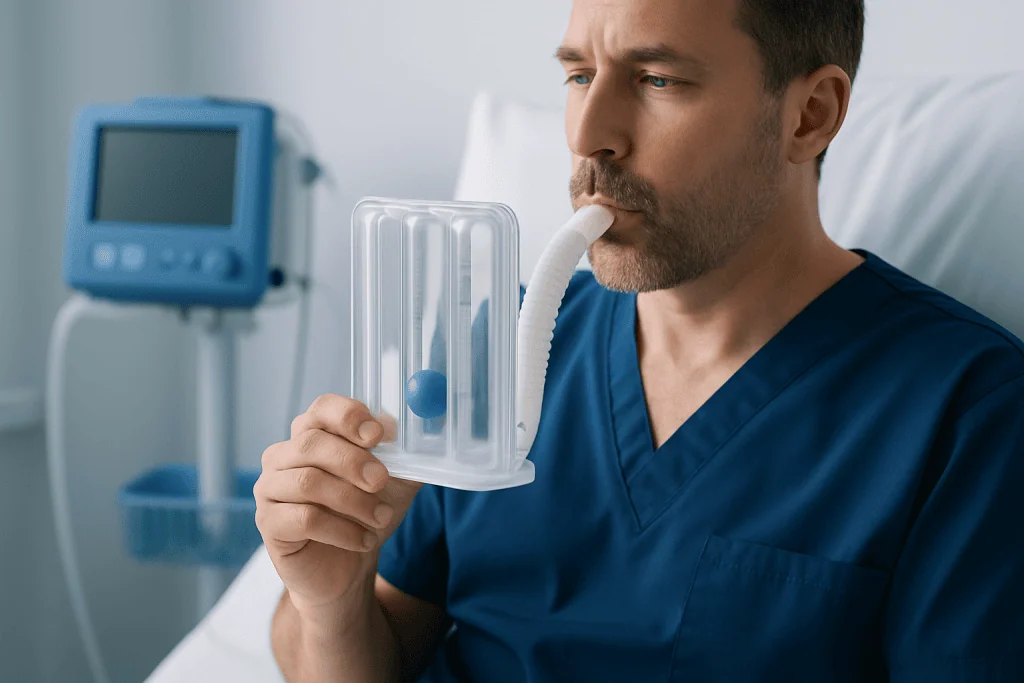
After surgery or illness, many people naturally take shorter, shallower breaths. This can happen because of pain, fatigue, sedation, weakness, or simply spending more time lying down. When the lungs do not expand well, mucus can collect and parts of the lung may temporarily collapse, a problem called atelectasis. An incentive spirometer is used to counter this by promoting regular deep breaths.
Its role is preventive and supportive. The device does not treat the underlying cause of breathing difficulty, but it can help maintain better airflow in the lungs during recovery. This is why it is often included as part of a broader care plan that may also involve early walking, coughing exercises, pain control, and physical therapy.
For some patients, using the device can feel reassuring because it provides a clear routine and visible goal. It also helps patients stay actively involved in their recovery. Even so, the target reading itself is not the main point. Steady, comfortable inhalation with correct technique is usually more important than trying to force a higher number.
- Common situations where it may be prescribed include recovery after abdominal or chest surgery
- Hospital stays involving limited movement or bed rest
- Recovery after some respiratory infections or flare-ups
- Conditions that make clearing mucus more difficult
How to Use an Incentive Spirometer Correctly

Patients should always follow the instructions given by their doctor or nurse, because the recommended technique and frequency can vary. In general, the person sits upright if possible, seals their lips around the mouthpiece, and breathes in slowly and deeply. The goal is a smooth inhalation rather than a quick gasp. Most devices show a rising marker or piston that helps guide the breath.
After inhaling fully, the patient may be asked to hold the breath briefly before removing the mouthpiece and breathing out normally. This short pause gives the lungs time to stay expanded. The exercise is then repeated as instructed, often several times each hour while awake in the early recovery period.
It is normal to feel mild effort when starting, especially after surgery. However, the exercise should not cause severe pain, marked dizziness, or distress. If discomfort is limiting, medical staff may need to address pain control so that breathing exercises are more effective. In some recovery pathways, related support such as physical therapy and rehabilitation may help patients move more comfortably and breathe more deeply.
- Sit up straight or as upright as possible
- Exhale normally before placing the mouthpiece
- Inhale slowly and steadily, watching the indicator rise
- Hold the breath briefly if advised
- Repeat as directed by the care team
Common Mistakes and What Patients May Feel
One of the most common mistakes is breathing in too fast. This may cause the indicator to rise quickly without allowing the lungs to expand evenly. Another frequent issue is focusing only on reaching a number, which can lead to straining. The best result usually comes from slow, controlled breathing with relaxed shoulders and a good seal around the mouthpiece.
Some patients cough after using the device. This is often expected and can be helpful, because deep breathing may loosen mucus. A care team may suggest coughing gently after a series of breaths, sometimes while supporting the incision area with a pillow if the patient has had surgery. Mild tiredness from the exercise can also happen early on, but it should improve with practice.
If a patient feels faint, has chest pain, or becomes more short of breath, the exercise should be paused and a clinician should be informed. These symptoms do not necessarily mean something serious is wrong, but they should be assessed rather than ignored. Patients with known lung conditions such as COPD or asthma may need more individualized guidance as part of their breathing care plan.
Who May Benefit Most
An incentive spirometer is most often recommended for people who are at higher risk of lung complications from reduced breathing effort. This includes patients recovering from surgery, especially procedures involving the chest or upper abdomen, because pain in these areas can discourage deep inhalation. Older adults and people who have been less mobile during hospitalization may also benefit.
People with existing lung disease may be advised to use the device in selected situations, though it is not appropriate for every breathing problem. It works best when the person can understand the instructions and actively participate. In young children or patients who are unable to use the mouthpiece correctly, other breathing support strategies may be preferred.
Use of the device should be individualized. Some patients need it only for a short period in the hospital, while others are told to continue at home for part of their recovery. In more complex cases, a multidisciplinary team may combine breathing exercises with evaluation by respiratory and surgical specialists, including approaches such as robotic surgery when relevant to the underlying condition.
Benefits, Limits, and What It Cannot Do
The main benefit of an incentive spirometer is that it gives a simple structure for deep-breathing exercises. Regular use may help open the lungs more fully, support secretion clearance, and lower the chance of problems linked to shallow breathing. It can also help patients monitor progress during recovery, since many people gradually see improvement in their inspiratory effort over time.
At the same time, it is important to understand its limits. The device is not a cure for pneumonia, asthma, chronic lung disease, or blood clots in the lungs. It also does not replace prescribed medications, oxygen therapy, walking, or other parts of the treatment plan. If a person has significant shortness of breath, wheezing, or low oxygen levels, they need proper medical assessment rather than relying only on the spirometer.
In practice, the best results usually come when the device is used consistently alongside other recovery measures. These may include staying as mobile as advised, changing position in bed, drinking enough fluids if appropriate, and following instructions for pain relief and coughing exercises. Used this way, the incentive spirometer is a supportive tool rather than a stand-alone treatment.
Cleaning, Self-care, and Safe Use at Home
If a patient is sent home with an incentive spirometer, they should ask their care team how often to use it and how long to continue. Instructions can differ depending on the surgery or illness involved. A simple written schedule can make it easier to remember regular breathing sessions while awake.
Keeping the device clean is also important. Patients should follow the manufacturer’s instructions or the advice given by the hospital. In general, the mouthpiece and tubing should be kept dry and clean between uses, and the device should not be shared with anyone else. Hand hygiene before handling the equipment is a sensible precaution.
Self-care during recovery also includes watching for signs that breathing is improving or worsening. Better stamina, easier coughing, and more comfortable deep breaths can suggest progress. Acibadem International’s multidisciplinary specialists in JCI-accredited hospitals diagnose and treat respiratory and surgical conditions for international patients, and can guide patients who need coordinated follow-up after hospitalization or surgery.
When to Seek Medical Care
Patients should seek medical advice if they are unsure how to use the incentive spirometer, cannot perform the exercise because of pain, or notice that breathing is becoming more difficult instead of easier. This is especially important after surgery, when new symptoms should not be assumed to be a normal part of recovery.
Urgent medical attention may be needed if symptoms include chest pain, severe shortness of breath, high fever, confusion, bluish lips or fingertips, coughing up blood, or a sudden drop in the ability to breathe deeply. These symptoms can have several possible causes and should be assessed promptly by a qualified clinician.
Even less urgent concerns deserve attention if they persist. Ongoing cough, increasing mucus, wheezing, dizziness with use of the device, or pain that prevents deep breathing may indicate the need for changes in treatment or closer follow-up. A doctor can review whether the spirometer is being used correctly and whether other tests or therapies are needed.
Frequently asked questions
What is an incentive spirometer used for?
An incentive spirometer is used to encourage slow, deep breaths that help expand the lungs. It is commonly recommended after surgery or during recovery when a person may be breathing too shallowly.
How often should a patient use an incentive spirometer?
The schedule depends on the person's condition and the care team's instructions. Many patients are asked to use it several times each hour while awake during the early recovery period.
Can an incentive spirometer prevent pneumonia?
It may help lower the risk of lung complications by promoting deeper breathing and helping keep airways clearer. However, it does not guarantee prevention of pneumonia and should be used as part of the full recovery plan.
Is it normal to cough after using an incentive spirometer?
Yes, a mild cough can be normal and may even be helpful because deep breaths can loosen mucus. If coughing is severe, painful, or associated with blood, a doctor should be informed.
What if using the device makes a patient dizzy?
Mild lightheadedness can happen if a person is breathing too quickly or forcing the exercise. The patient should stop, rest, and inform a healthcare professional if dizziness continues or feels significant.
Can someone use an incentive spirometer at home?
Yes, some patients are asked to continue using it at home after leaving the hospital. They should follow the exact instructions given by their doctor or nurse about technique, frequency, and cleaning.
References
- American Lung Association
- National Heart, Lung, and Blood Institute
- MedlinePlus
- Centers for Disease Control and Prevention
- American Association for Respiratory Care
This article is for general information only and is not a substitute for professional medical advice. Please consult a qualified doctor about your individual situation.
Explore treatments in Turkey — costs, top hospitals & a free quote
JCI-accredited · board-certified surgeons · reply within 24h
Add us as a Preferred Source to see more of our trusted health content across Google Search, AI Overviews and Discover.