Indirect Hernia: An Evidence-Based Guide for Patients
An indirect hernia follows the path of the inguinal canal and is the most common type of inguinal hernia in children. A groin bulge that becomes more noticeable with standing, coughing, lifting, or straining is a common sign.
Key Takeaways
- An indirect hernia follows the path of the inguinal canal and is the most common type of inguinal hernia in children.
- A groin bulge that becomes more noticeable with standing, coughing, lifting, or straining is a common sign.
- Surgery is the only treatment that permanently repairs a hernia; the timing depends on symptoms, age, and individual risk.
- Sudden severe pain, a firm non-reducible bulge, vomiting, or abdominal swelling requires urgent medical care.
- Avoiding constipation, treating persistent cough, and using safe lifting techniques may reduce strain but cannot close an existing hernia.
An indirect hernia is a type of groin (inguinal) hernia in which abdominal tissue, such as fat or intestine, enters the inguinal canal through an opening that did not close fully before birth. It may cause a painless or uncomfortable groin bulge, and medical assessment is important because a hernia does not heal on its own and can occasionally become trapped.
Overview: what is an indirect hernia?
An indirect hernia, also called an indirect inguinal hernia, occurs when tissue from inside the abdomen pushes into the inguinal canal, a passage in the groin. In males, this canal extends toward the scrotum; in females, it travels toward the labia. The hernia follows this natural route, which is why it is described as “indirect.”
Before birth, the testicles move from the abdomen into the scrotum through a temporary channel. This channel normally closes. If it remains partly open, it can create a potential pathway for abdominal tissue later in life. In females, a similar developmental opening can also persist. Although this underlying anatomy is present from birth, a bulge may not become noticeable until childhood or adulthood.
An indirect hernia differs from a direct inguinal hernia. A direct hernia pushes through a weakened area of the lower abdominal wall, while an indirect hernia enters the inguinal canal through its internal opening. Both can produce similar symptoms, and a clinician may not be able to confirm the exact type until imaging or surgery.
How an indirect hernia may feel or appear
The most familiar symptom is a visible or palpable lump in the groin. In males, the bulge may extend into the scrotum; in females, it may be felt near the labia. It may appear when a person stands, coughs, laughs, lifts, or strains during a bowel movement, then become smaller or disappear when lying down.
Some people have no pain. Others notice pressure, heaviness, pulling, burning, or aching in the groin, especially after activity or at the end of the day. The discomfort can be mild and intermittent. A small hernia may be detected during a routine examination before it causes noticeable symptoms.
Infants and young children may have a swelling in the groin or scrotum that is more evident when crying, coughing, or straining. A child with a new groin or scrotal bulge should be assessed by a clinician, even if the child otherwise seems well. In babies, hernias are usually repaired because they have a meaningful risk of becoming trapped.
Not every groin lump is a hernia. Enlarged lymph nodes, fluid around the testicle, vein problems, skin conditions, and other causes can produce swelling in this area. A physical examination helps distinguish these possibilities.
Why indirect hernias develop and who is more likely to have one

The key factor in an indirect hernia is a persistent opening related to fetal development, often called a patent processus vaginalis. This does not mean that a person did anything wrong. Many people have this opening without developing a hernia; a hernia forms when abdominal contents are able to move through it.
Anything that repeatedly increases pressure inside the abdomen can make a pre-existing weak point more likely to become apparent. Examples include chronic coughing, ongoing constipation and straining, difficulty urinating due to prostate enlargement, pregnancy, heavy physical work, or frequent strenuous lifting. These factors may contribute, but they are not the sole cause.
Indirect inguinal hernias are especially common in male infants and children, including babies born prematurely. They can also occur in adults of any sex. A family history of hernias, connective-tissue conditions, prior hernia on the other side, and conditions associated with persistent coughing may increase likelihood.
Exercise does not usually create the developmental opening that causes an indirect hernia. However, a person may first notice an existing hernia during exercise or heavy lifting. It is sensible to stop or modify activities that cause pain or make the bulge larger until medical advice is obtained.
How clinicians diagnose an indirect hernia
Diagnosis usually begins with a medical history and physical examination. A clinician may examine the groin while the person is standing and may ask them to cough or gently bear down. These actions can make a small hernia easier to feel. The examination also assesses whether the bulge can be gently returned to the abdomen and whether there are signs of a complication.
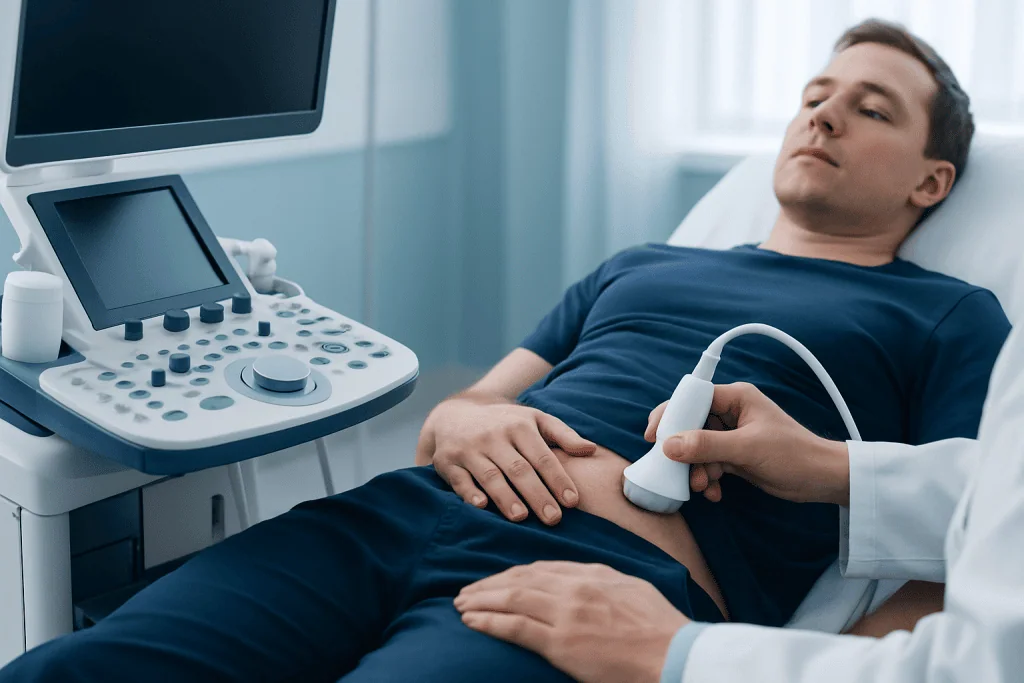
Imaging is not always needed when the examination clearly identifies a hernia. Ultrasound may be useful if the diagnosis is uncertain, if a lump is difficult to examine, or if another condition is suspected. In selected situations, computed tomography (CT) or magnetic resonance imaging (MRI) can provide more detailed information, particularly for complex, recurrent, or less obvious groin pain.
Clinicians also consider whether symptoms could arise from the hip, muscles and tendons, lymph nodes, urinary tract, testicles, ovaries, or bowel. For women with a suspected groin hernia, careful assessment is particularly important because femoral hernias, which occur slightly lower in the groin, have a higher chance of becoming trapped.
A confirmed hernia is generally described by its location, size, symptoms, whether it is reducible, and whether it has happened before. These details help guide decisions about monitoring or repair.
Treatment options and what surgery involves
A hernia will not close with medication, exercise, or a support garment. Surgery is the only treatment that repairs the opening permanently. The purpose of repair is to return protruding tissue to the abdomen and reinforce or close the weak area, helping to relieve symptoms and reduce the risk of incarceration or strangulation.
For adults with pain, activity limitation, an enlarging bulge, or recurrent symptoms, elective surgical repair is commonly advised. In men with a minimally symptomatic inguinal hernia, watchful waiting may be an appropriate option after discussion with a surgeon, provided they understand symptom monitoring and when to seek urgent help. Many people who initially choose observation later elect surgery because symptoms progress.
Repair may be performed through open surgery or minimally invasive laparoscopic or robotic-assisted approaches. The best approach depends on factors such as the hernia’s size and location, whether it is on one or both sides, previous abdominal surgery, overall health, and surgeon expertise. Mesh is commonly used in adult repairs to strengthen the area; pediatric repairs generally use a different technique and typically do not require mesh.
Recovery varies by procedure and individual health. Walking is generally encouraged soon after surgery, while returning to strenuous activity should follow the surgical team’s advice. Temporary soreness, bruising, or swelling can occur. A surgeon can explain expected recovery, anesthesia options, potential complications, and the likelihood of recurrence in an individual case.
Daily measures while waiting for assessment or repair
Self-care cannot cure an indirect hernia, but it can reduce avoidable strain and improve comfort. Maintaining regular bowel movements through adequate fluids, fiber-rich foods, and clinician-recommended treatment for constipation may help avoid repeated straining. Persistent cough should also be assessed and treated appropriately.
When lifting is necessary, using safe technique, avoiding sudden heavy loads, and asking for help can reduce pressure on the groin. People should pay attention to activities that reliably trigger discomfort and consider temporarily modifying them. Maintaining a weight that supports overall health may also reduce abdominal pressure for some individuals.
Hernia belts or trusses may hold a reducible bulge in temporarily, but they do not repair the underlying defect and are not suitable for everyone. They should only be used after advice from a healthcare professional. A truss should never be used to force back a painful, firm, or non-reducible bulge.
It is helpful to note changes in size, pain, and the ability to gently reduce the hernia while lying down. This information can assist the clinician. However, repeated forceful attempts to push a bulge back are not recommended, particularly if there is pain or nausea.
When to seek medical care
A person should arrange a non-urgent medical appointment for any new or persistent groin bulge, groin discomfort associated with coughing or exertion, or swelling that extends into the scrotum or labia. Early assessment can confirm the cause and allow time to discuss treatment choices before symptoms become more disruptive.
Urgent medical care is needed if a hernia suddenly becomes very painful, tender, firm, discolored, or unable to be pushed back when it previously could be. These signs can indicate incarceration, meaning tissue has become trapped. If the trapped tissue loses its blood supply, called strangulation, prompt treatment is essential.
Emergency evaluation is also important for a painful groin bulge accompanied by nausea, vomiting, fever, increasing abdominal swelling, or inability to pass stool or gas. These symptoms may suggest bowel obstruction or a compromised hernia. It is safer not to eat or drink while awaiting urgent assessment unless a clinician advises otherwise.
Acibadem International’s multidisciplinary specialists and JCI-accredited hospitals assess and treat hernia conditions for international patients, including evaluation of suitable surgical approaches. Individual recommendations should always be based on a person’s symptoms, examination findings, and overall health.
Frequently asked questions
Is an indirect hernia dangerous?
Many indirect hernias are not immediately dangerous, particularly when the bulge is soft, reducible, and causes little discomfort. However, any hernia can occasionally become trapped, and a trapped hernia can compromise blood flow to tissue. Medical assessment helps determine the appropriate plan and explains warning signs requiring urgent care.
Can an indirect hernia heal without surgery?
No. The opening involved in an indirect hernia does not close on its own after a hernia has developed. Lifestyle measures may reduce strain and symptoms, but surgery is the only permanent repair. In selected adults with few symptoms, a clinician may support watchful waiting rather than immediate surgery.
What is the difference between a direct and indirect inguinal hernia?
An indirect hernia enters the inguinal canal through a natural opening that has remained open from development before birth. A direct hernia pushes through a weak area in the abdominal wall beside that opening. The symptoms and treatment principles can be similar, and the precise type may be confirmed during surgery.
Can someone exercise with an indirect hernia?
Gentle activity may be possible if it does not cause pain or enlargement of the bulge, but advice should be individualized. Heavy lifting, intense straining, and activities that trigger symptoms may need to be avoided until a clinician has assessed the hernia. Walking and other low-impact activity are often better tolerated.
How quickly does an indirect hernia need surgery?
The timing depends on age, symptoms, examination findings, and whether the hernia is reducible. Children are generally referred for repair after diagnosis because of the risk of trapping. Adults with significant symptoms or concerning features may need prompt repair, while some minimally symptomatic adults can discuss monitored observation with a surgeon.
Can an indirect hernia cause testicular pain?
A hernia that extends toward the scrotum can create pressure or discomfort in the groin or scrotal area. Testicular pain has several possible causes, including some that need urgent treatment, so it should not automatically be attributed to a hernia. Sudden severe testicular pain requires urgent medical evaluation.
References
- National Institute of Diabetes and Digestive and Kidney Diseases
- American College of Surgeons
- European Hernia Society
- National Health Service
This article is for general information only and is not a substitute for professional medical advice. Please consult a qualified doctor about your individual situation.
Persistent digestive symptoms? Get evaluated in Turkey
JCI-accredited · board-certified surgeons · reply within 24h
Add us as a Preferred Source to see more of our trusted health content across Google Search, AI Overviews and Discover.

More from the Health Library



Related Specialists

Prof. Dr. Mehmet Akif Özdemir
Pediatrics
Dr. Çiğdem Kurt Yavrucu
Pediatrics
Assoc. Prof. Dr. Şevket Tolga Tombul
Urology
Fzt. Elif Tokgöz Nizam
Physical Medicine & Rehabilitation