

Infected Gums: An Evidence-Based Guide for Patients

Infected gums are commonly linked to plaque buildup, gingivitis, or periodontitis. Typical signs include redness, swelling, bleeding, bad breath, gum tenderness, and sometimes pus or loose teeth.
Key Takeaways
- Infected gums are commonly linked to plaque buildup, gingivitis, or periodontitis.
- Typical signs include redness, swelling, bleeding, bad breath, gum tenderness, and sometimes pus or loose teeth.
- Prompt dental evaluation is important because untreated gum infection can progress and damage supporting tissues.
- Treatment may include professional cleaning, improved oral hygiene, antiseptic care, and sometimes antibiotics or periodontal procedures.
- Daily brushing, flossing, and routine dental visits are the main ways to prevent infected gums.
Infected gums usually mean inflammation or bacterial infection of the gum tissue, most often related to gingivitis or periodontitis. Early treatment can relieve symptoms, protect the teeth and bone, and reduce the chance of more serious dental problems.
Overview: what infected gums usually mean
Infected gums usually refer to gums that are inflamed and affected by harmful bacteria, most often because dental plaque has built up around the teeth and gumline. In many people, the process starts as gingivitis, a milder and often reversible form of gum disease. If it is not treated, it can progress to deeper infection and inflammation in the tissues that support the teeth.
Patients may notice sore, swollen, or bleeding gums, especially during brushing or flossing. Some also develop persistent bad breath, a bad taste in the mouth, or tenderness when eating. In more advanced cases, the gums may pull away from the teeth, pockets can form, and teeth may begin to feel loose.
Although the term “infected gums” sounds alarming, early care is often very effective. The key is not to ignore ongoing symptoms. A dentist can identify whether the problem is simple irritation, gingivitis, periodontitis, or another oral condition that needs treatment.
Symptoms and signs to watch for

The symptoms of infected gums can vary from mild irritation to more noticeable signs of infection. Healthy gums are usually firm and pale pink, though normal color varies among individuals. Gums that are infected or inflamed often look redder, feel puffy, and bleed more easily than usual.
Common symptoms include discomfort when brushing, tenderness along the gumline, and ongoing bad breath that does not improve with regular mouth care. Some people feel a throbbing sensation in one area, especially if a local abscess is developing. Others notice that the gums seem to recede, making teeth look longer.
- Red, swollen, or shiny gums
- Bleeding during brushing or flossing
- Bad breath or a persistent bad taste
- Pain or tenderness in the gums
- Pus between the teeth and gums
- Receding gums or teeth that seem longer
- Loose teeth or changes in bite in more advanced disease
Not every case is painful at first. That is one reason gum disease can be missed until it becomes more advanced. Bleeding gums should not be considered normal, even if they are not causing major discomfort.
Causes and risk factors
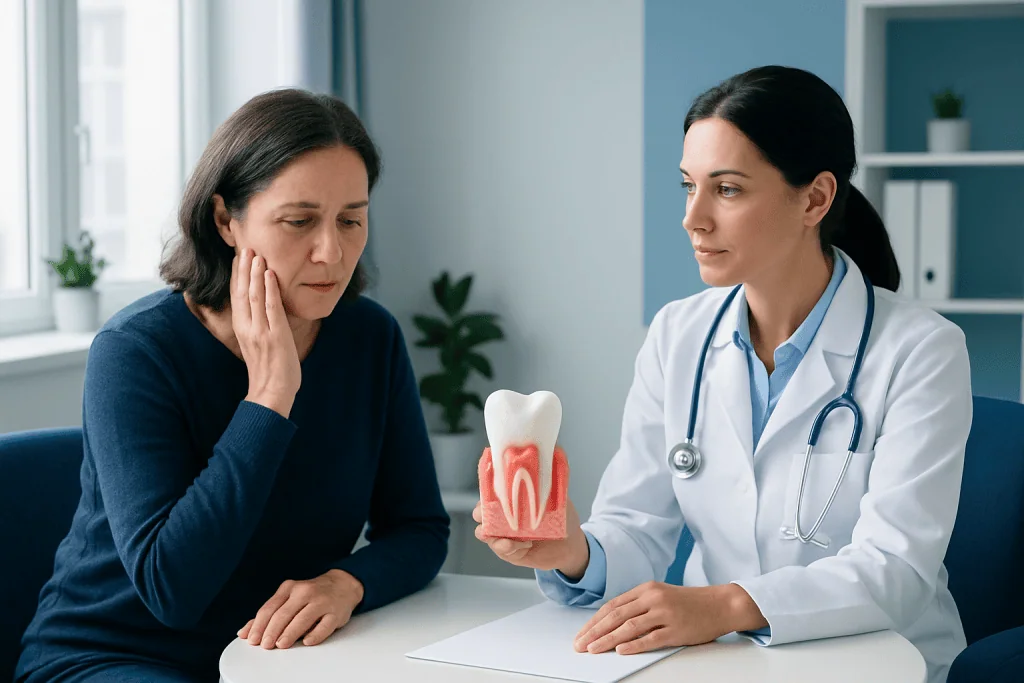
The most common cause of infected gums is bacterial plaque, a sticky film that forms on the teeth every day. When plaque is not removed well enough through brushing and cleaning between the teeth, it can harden into tartar. Tartar makes it easier for more bacteria to collect and harder for home brushing alone to clean the area properly.
Several factors can increase the risk of gum infection or make inflammation worse. Smoking and other tobacco use are among the strongest risk factors because they reduce healing and can mask early signs such as bleeding. Diabetes, hormonal changes, dry mouth, stress, certain medications, and a weakened immune system can also play a role.
In some cases, infected gums are linked to a local dental problem rather than generalized gum disease. Food trapping, poorly fitting dental appliances, tooth crowding, untreated tooth decay, or an infection around a tooth root may trigger localized swelling. When this happens, the dentist may need to assess both the gums and the tooth itself, sometimes with root canal treatment or other dental care if the source is deeper than the gumline.
How dentists diagnose infected gums
Diagnosis begins with a dental examination and a review of symptoms, oral hygiene habits, and medical history. The dentist looks at the color and shape of the gums, checks for bleeding, and evaluates whether there is plaque or tartar accumulation. They may also gently measure the spaces between the teeth and gums, called periodontal pockets.
Shallow pockets are more typical of healthy gums or mild gingivitis, while deeper pockets can suggest periodontitis. The dentist may check whether any teeth are loose or whether the gums have receded. This helps determine how much support the teeth have lost, if any.
Dental X-rays are sometimes needed to look for bone loss, hidden decay, or infection around the roots. This is especially important if symptoms are persistent, localized, or associated with pain and swelling. In many cases, a clear diagnosis can guide whether the best next step is a professional cleaning, periodontal treatment, treatment of a tooth infection, or a combination of approaches.
Treatment options for infected gums
Treatment depends on the cause and severity of the problem. For early gum inflammation, the main step is removing plaque and tartar through professional cleaning. Once the bacterial buildup is reduced, many mild cases improve significantly when patients also clean carefully at home every day.
If gum disease is more advanced, the dentist or periodontist may recommend deeper cleaning below the gumline. This may include scaling and root planing, which removes deposits from root surfaces and helps the gums heal more closely around the teeth. In selected situations, antiseptic rinses or antibiotics may be used, but they are usually an addition to cleaning rather than a substitute for it.
When a pocket of pus or a gum abscess is present, urgent treatment may be needed to drain the infection and address the underlying cause. If a damaged tooth, severe decay, or extensive infection is involved, additional dental procedures may be necessary. In some patients with significant tissue damage, surgical periodontal care can help manage deeper disease and protect the remaining tooth support. If teeth are missing or need removal because disease is too advanced, restorative options such as dental implants may be discussed after the infection is controlled.
Treatment plans are individualized. They often include education on brushing technique, cleaning between the teeth, and regular follow-up visits to monitor healing. Good long-term results usually depend on a partnership between professional dental care and daily home care.
Prevention and self-care at home
The most effective way to prevent infected gums is consistent plaque control. This means brushing twice a day with fluoride toothpaste and cleaning between the teeth once a day using floss, interdental brushes, or another tool recommended by a dental professional. Technique matters as much as frequency, so asking for a demonstration can be very helpful.
Regular dental checkups and cleanings are also important because tartar cannot be removed by normal brushing alone. Professional visits can catch gingivitis early, before it progresses to deeper gum disease. For people with previous gum problems, tobacco use, diabetes, or braces, more frequent follow-up may be advised.
General health habits support gum health too. Avoiding smoking, controlling blood sugar if diabetes is present, staying hydrated, and eating a balanced diet can all help reduce risk. If the gums are already irritated, gentle but thorough cleaning is usually better than avoiding brushing; skipping oral hygiene often allows more plaque to build up and can worsen inflammation.
Home care can ease mild symptoms, but it should not replace evaluation if bleeding, swelling, or pain continues. Mouth rinses may be useful in some cases, but they work best when chosen with professional advice and used as part of a full oral hygiene routine rather than on their own.
When to seek medical care
It is sensible to arrange a dental appointment if the gums bleed repeatedly, stay swollen for more than a few days, or remain tender despite good oral care. Early assessment is especially important if symptoms keep returning or if there is visible gum recession. A dentist can identify whether there is gum disease, a tooth-related infection, or another issue affecting the mouth.
More urgent care is needed if there is severe pain, facial swelling, pus, fever, difficulty opening the mouth, difficulty swallowing, or a loose tooth that develops quickly. These signs can suggest a more serious or spreading infection and should not be managed with home remedies alone. People with diabetes, weakened immunity, or recent major illness should seek prompt advice because infections may become more complicated.
For patients seeking specialist evaluation, Acibadem International’s multidisciplinary dental specialists in JCI-accredited hospitals diagnose and treat gum and tooth conditions for international patients. The most appropriate care may involve general dentists, periodontists, endodontists, or restorative dentists depending on the source of the problem.
Frequently asked questions
Can infected gums heal on their own?
Mild gum irritation may improve if plaque is removed effectively and a dentist confirms there is no deeper disease. However, ongoing bleeding, swelling, or pain should not be assumed to resolve fully without professional care. Established gum disease and abscesses usually need dental treatment.
Are bleeding gums always a sign of infection?
Bleeding gums often indicate inflammation, commonly from gingivitis, but they are not always caused by a true bacterial abscess. They can also be linked to brushing technique, medications, or other medical factors. Because persistent bleeding is not considered normal, a dental check is advisable.
What is the difference between gingivitis and periodontitis?
Gingivitis is inflammation limited mainly to the gums and is often reversible with professional cleaning and better oral hygiene. Periodontitis is a more advanced form of gum disease that affects the deeper tissues and bone supporting the teeth. It may lead to gum recession, pockets, and tooth loosening if untreated.
Do antibiotics cure infected gums?
Antibiotics can help in selected cases, especially when there is a spreading infection, abscess, or specific periodontal indication. Still, they usually do not solve the problem by themselves because plaque, tartar, or the source of infection must also be removed. A dentist decides whether antibiotics are appropriate.
Can infected gums cause bad breath?
Yes. Bacteria and inflammation in the gums can produce persistent bad breath or a bad taste in the mouth. If bad breath continues despite brushing, tongue cleaning, and hydration, gum disease is one possible cause that should be evaluated.
Is a gum infection an emergency?
Not every gum infection is an emergency, but some situations need urgent care. Severe pain, swelling, pus, fever, facial swelling, or trouble swallowing can signal a more serious infection. Rapid dental assessment is important in those cases.
References
- American Dental Association
- National Institute of Dental and Craniofacial Research
- Centers for Disease Control and Prevention
- American Academy of Periodontology
- World Health Organization
This article is for general information only and is not a substitute for professional medical advice. Please consult a qualified doctor about your individual situation.
Explore treatments in Turkey — costs, top hospitals & a free quote
JCI-accredited · board-certified surgeons · reply within 24h
Add us as a Preferred Source to see more of our trusted health content across Google Search, AI Overviews and Discover.

More from the Health Library

Hydromassage: What Patients Need to Know

Popliteal Pulse: A Complete Medical Overview

Wrist Exercises: An Evidence-Based Guide for Patients

Aloe Vera Juice: A Complete Medical Overview

Rarest Eye Color: A Complete Medical Overview

Tickling on Feet: An Evidence-Based Guide for Patients
Oral & Dental Health Specialists at Acibadem

Dt. Ayşe İleyda Konya
Oral & Dental Health
Dt. Ayşe Nur Gümüş
Oral & Dental Health
Dt. Ayşe Selçuk Bayram
Oral & Dental Health
Dt. Ayşegül Coşkun
Oral & Dental Health